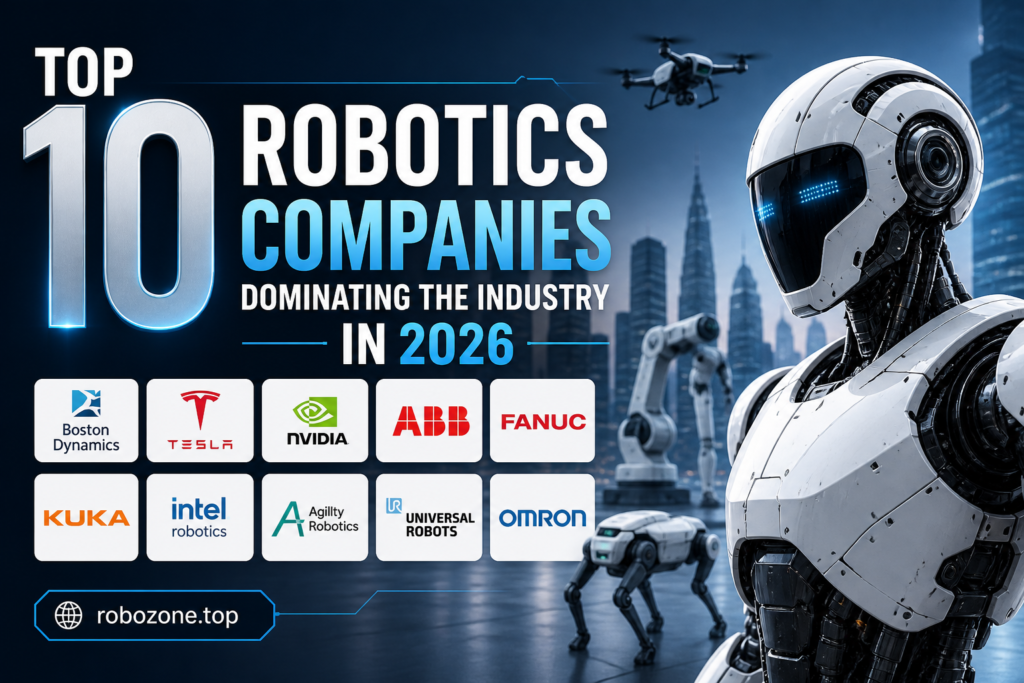
Today, we delve into the ten robotics companies setting the pace in this technological renaissance. Companies that aren’t just players in the field but flag bearers of innovation, technical prowess, and adaptability in ever-evolving market dynamics.
Watch the video on the YouTube channel RoboZone @robozonetop:
2026 Robotics Landscape Breakthroughs Market Impact and Future Outlook
The Rise of Robotics: A Narrative of Innovation
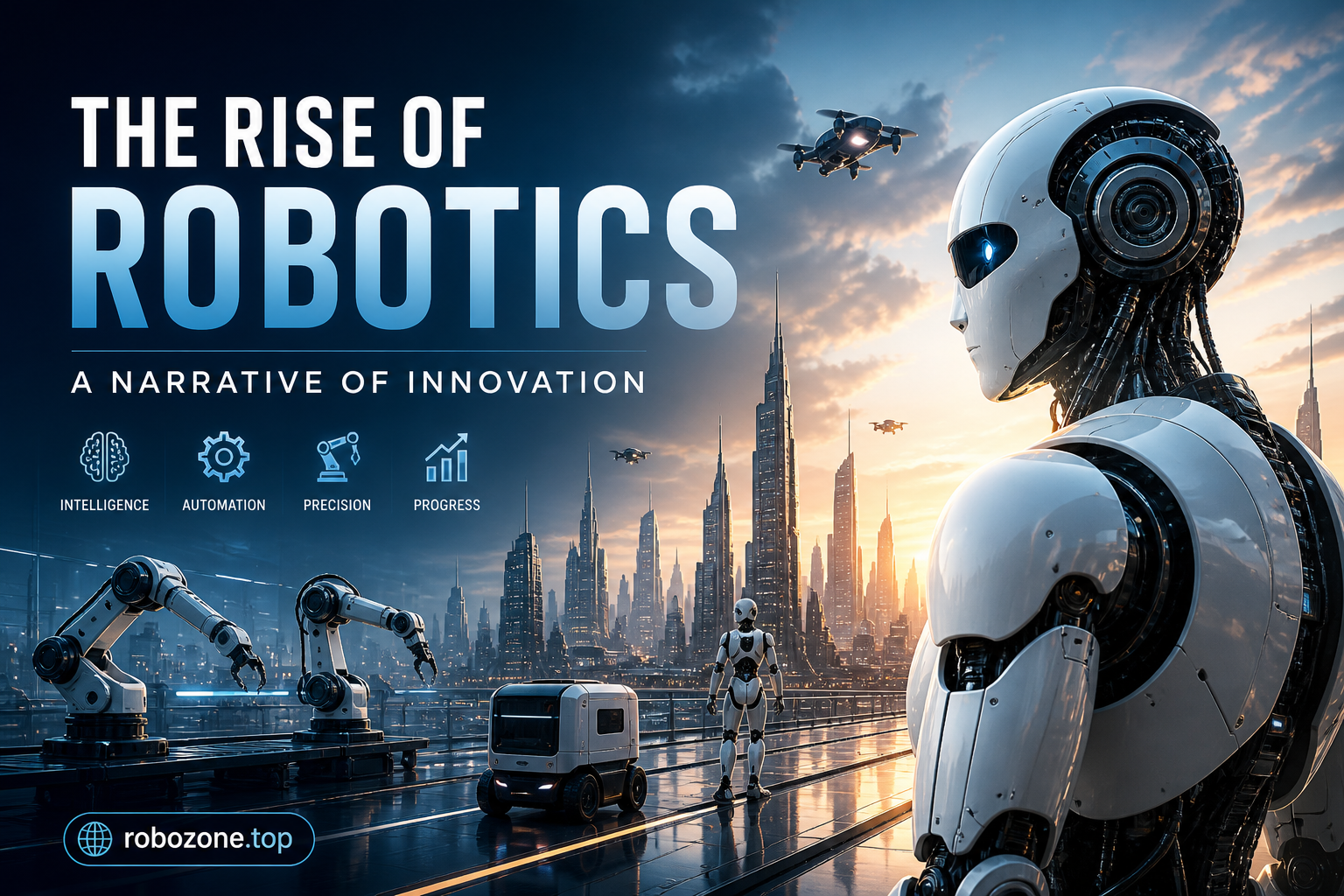
Over the past decade, robotics has transcended its early experimental phases to become a cornerstone of technological evolution. Much like the microprocessor boom of the late 20th century, robots have swiftly transitioned from factory lines to everyday companions, working tirelessly alongside humans. It’s an audacious transformation. Desperate attempts of the past to create mechanical aids with limited capabilities have developed into us actively depending on them for the simplification of complex tasks. No doubt, today’s robots indulge in everything from heavy industrial tasks to intricate surgical procedures in the medical field.
NVIDIA, the juggernaut in AI-driven innovation, plays a crucial role here. Their advancements in GPUs have developed AI capabilities that revolutionize robotic control systems—allowing for unprecedented levels of autonomy and learning. Armed with sensors and intricate AI models, these robots are much more than their predecessors’ brute strength—they’ve been endowed with intelligence capable of decision-making and adaptation.
Artificial intelligence, combined with machine learning algorithms, has equipped robots with the ability to learn from their environment, develop skills over time, and improve their performance. This new wave of robotics has created a zealous pursuit of machines that mimic, assist, or enhance human capabilities without error or fatigue.
Real-World Applications of Robotics
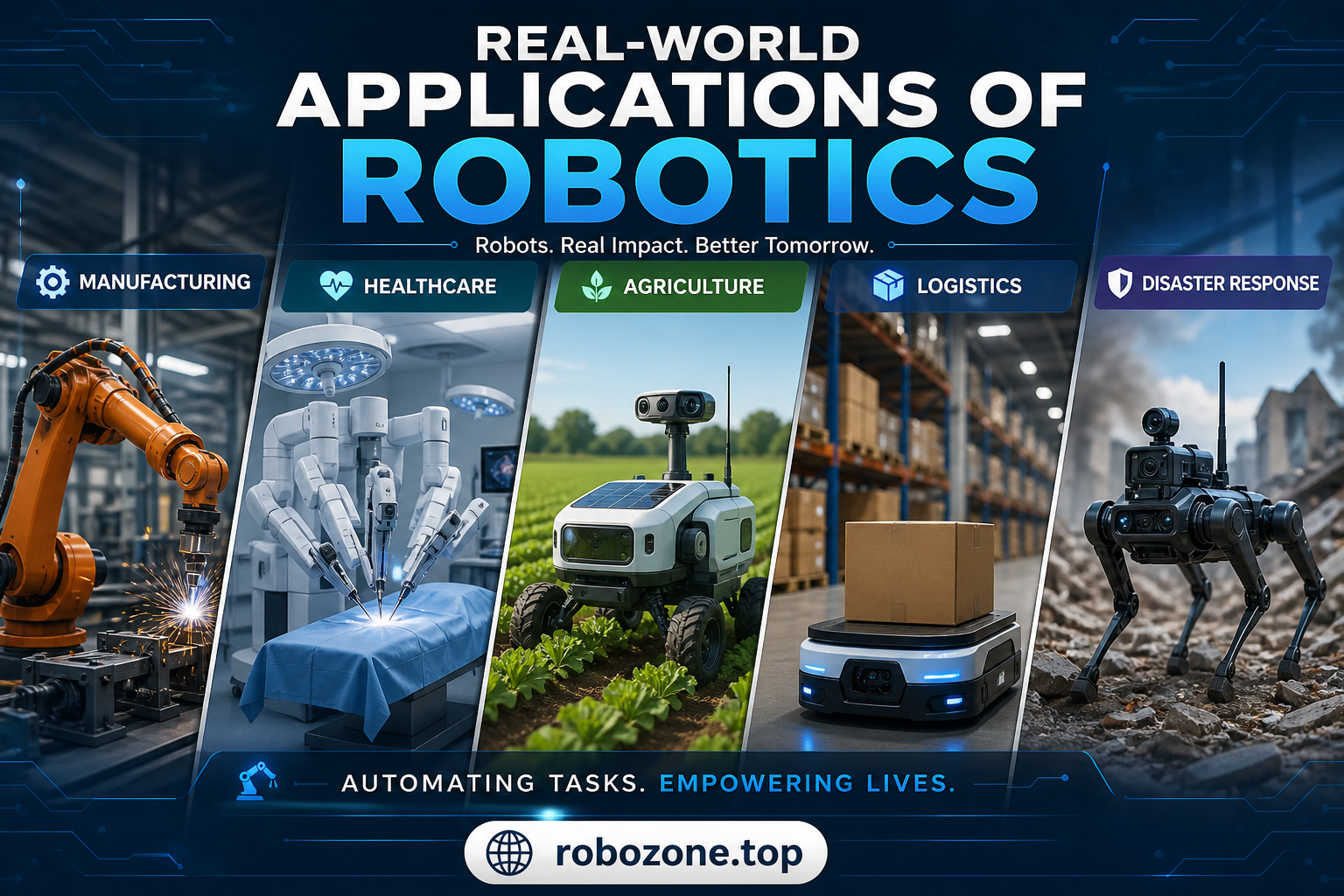
Gone are the days when discussions about robots mirrored science fiction narratives. Today, these machines are rooted in tangible applications that have permeated a plethora of industries. In homes worldwide, robotic vacuum cleaners have alleviated household chores, something you’d wish a younger sibling could pick up but wouldn’t!
In the industrial realm, robots work hand-in-hand with humans on the assembly line. Companies like Boston Dynamics have pushed boundaries with robots that not only perform repetitive tasks but can also respond flexibly to changes, ensuring a higher level of precision and efficiency. Industrial robots today possess capabilities that allow for a safer working environment as they take up potentially dangerous tasks, leaving humans to focus on areas needing critical-thinking skills.
Healthcare, perhaps the most crucial beneficiary of robotic technology, has been transformed significantly. Surgical robots, like the da Vinci Surgical System, enable superhuman precision during complex surgeries. And then there’s the budding sector of elderly care, where robots assist caregivers in supporting an aging population. Their roles range from medication reminders to companionship, mitigating loneliness — Thomas Huynh would likely appreciate the rebellion of robots against loneliness!
Market Analysis and Economic Impact

The robotics market, not unlike a young artist whose potential is yet unbounded, has witnessed remarkable growth. According to a report by the International Federation of Robotics, the robotics industry experienced double-digit growth year on year from 2020 onwards. As of 2026, the economic impact is staggering, with automation punctuating discussions in boardrooms globally.
Companies that have aligned with this transformative wave have documented significant increases in productivity. For example, Tesla’s Gigafactories, where substantial automation facilitates rapid production of electric vehicles, have drawn attention worldwide. Goldman Sachs postulates that such technological adoptions will propel businesses into market leadership, shaping an intelligent economy where robots free humans from mundane tasks to focus on innovation and strategy.
Investors have keen eyes on AI-driven companies for well-rounded portfolios. Venture capitalists discern no hesitation in backing robotics advancements given their tangible returns and potential revolutionary impacts on human life. There is a contagious optimism in how robotics will influence market dynamics positively, redefining competitive advantage among industry leaders.
Challenges and Limitations: Not Always as Easy as Robotics Pie
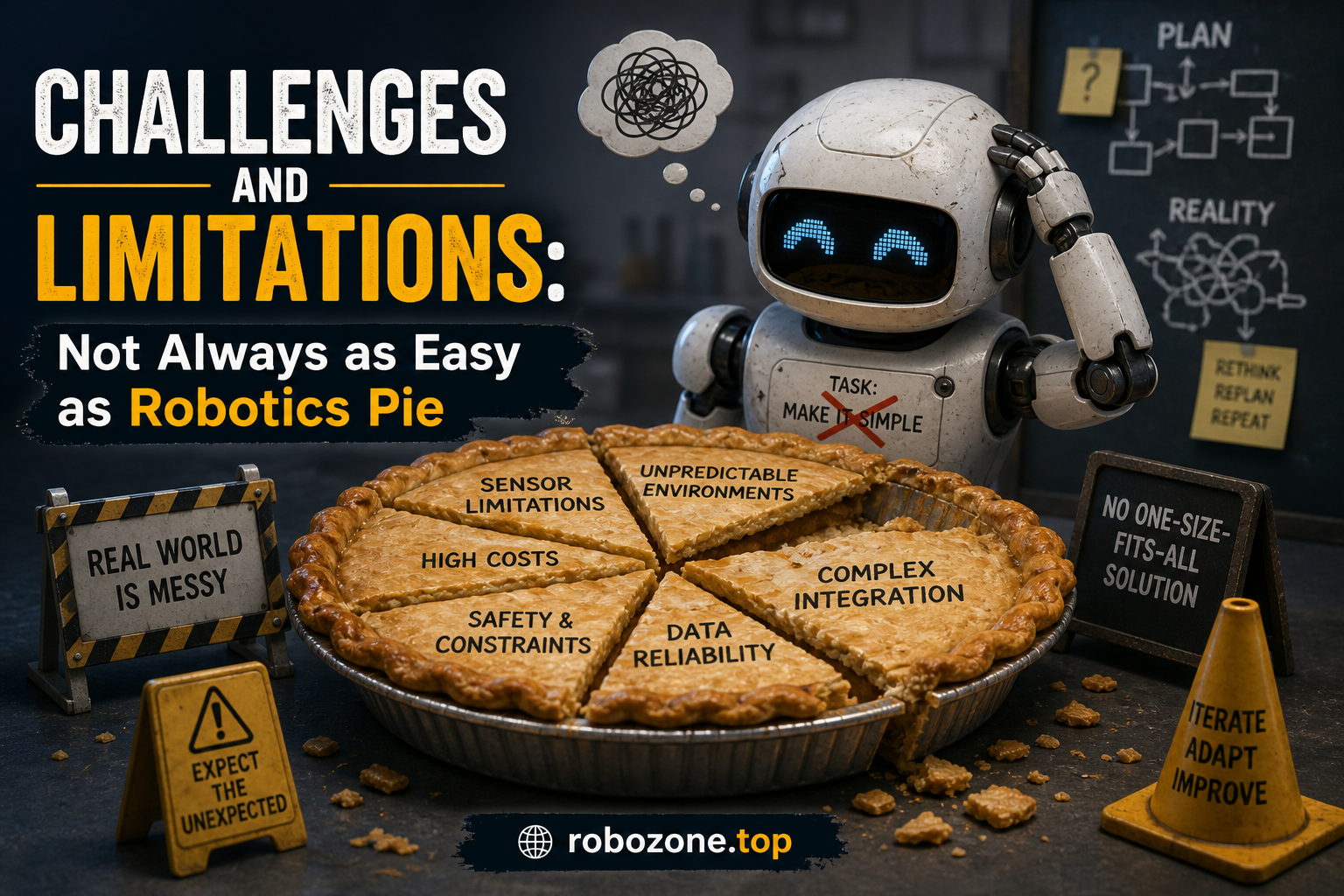
As with all pioneering endeavors, the journey isn’t without its bumps. Robotics, despite its successes, carries challenges that require serious deliberations. Hardware constraints, AI biases, and ethical considerations are but the tip of the iceberg. AI, while transformative, struggles with biases inherent in training data. A seemingly mild issue but when considering judicial or recruitment platforms powered by AI, it’s the proverbial elephant in the room.
Similarly, safety remains a significant consideration for human-robot interaction. While the machines at places like Ford’s assembly line show how well humans can work in tandem with machines, concerns regarding safety protocols and regulatory frameworks persist. Issues of reliability, ‘who gets the blame’ in cases of malfunctions, and privacy concerns in field-intense data-gathering robots add layers to these challenges.
Technical limitations, such as power supply constraints and the continuous need for improved sensory systems, are ongoing puzzles. As battery technology continues to trail behind other advancements, robots remain somewhat tethered, affecting their deployment and efficiency.
Technological Advancements: An Outlook for the Future
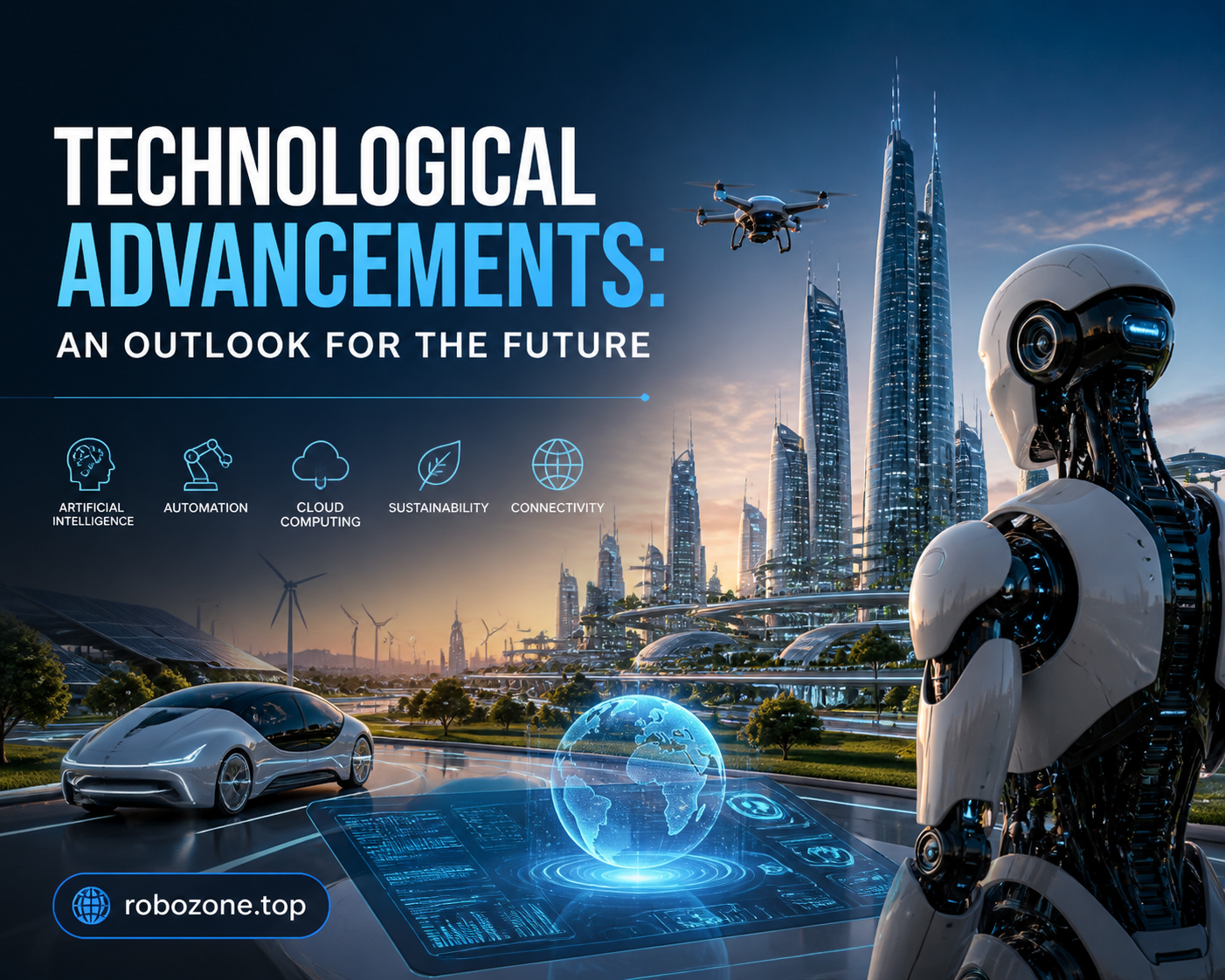
Gliding toward horizons yet uncharted, the next few years promise exciting developments in robotics. As Thomas Huynh often claims, ‘the pace is unruly, but the journey is captivating.’ Autonomous robots capable of maintaining independent operations for extended periods are no longer a distant dream. Companies are investing heavily in revolutionary AI models that complement their robotic systems’ existing hardware.
With institutions like Stanford AI Lab leading pioneering research on enhanced machine-learning capabilities, these robots are set to manage larger and more complex datasets, allowing for richer interaction with their environments. NVIDIA’s continuous advancement in AI-driven hardware will precipitate smaller, more efficient, and more intelligent robotic systems, pushing the boundaries of what’s achievable.
Expectations also hinge on integrating robotics with other bleeding-edge technologies like the Internet of Things (IoT) and quantum computing. These synergistic integrations could lead to quantum leaps in operational efficiencies and novel use cases unforeseen today.
Strategic Insights for Businesses, Developers, and Users
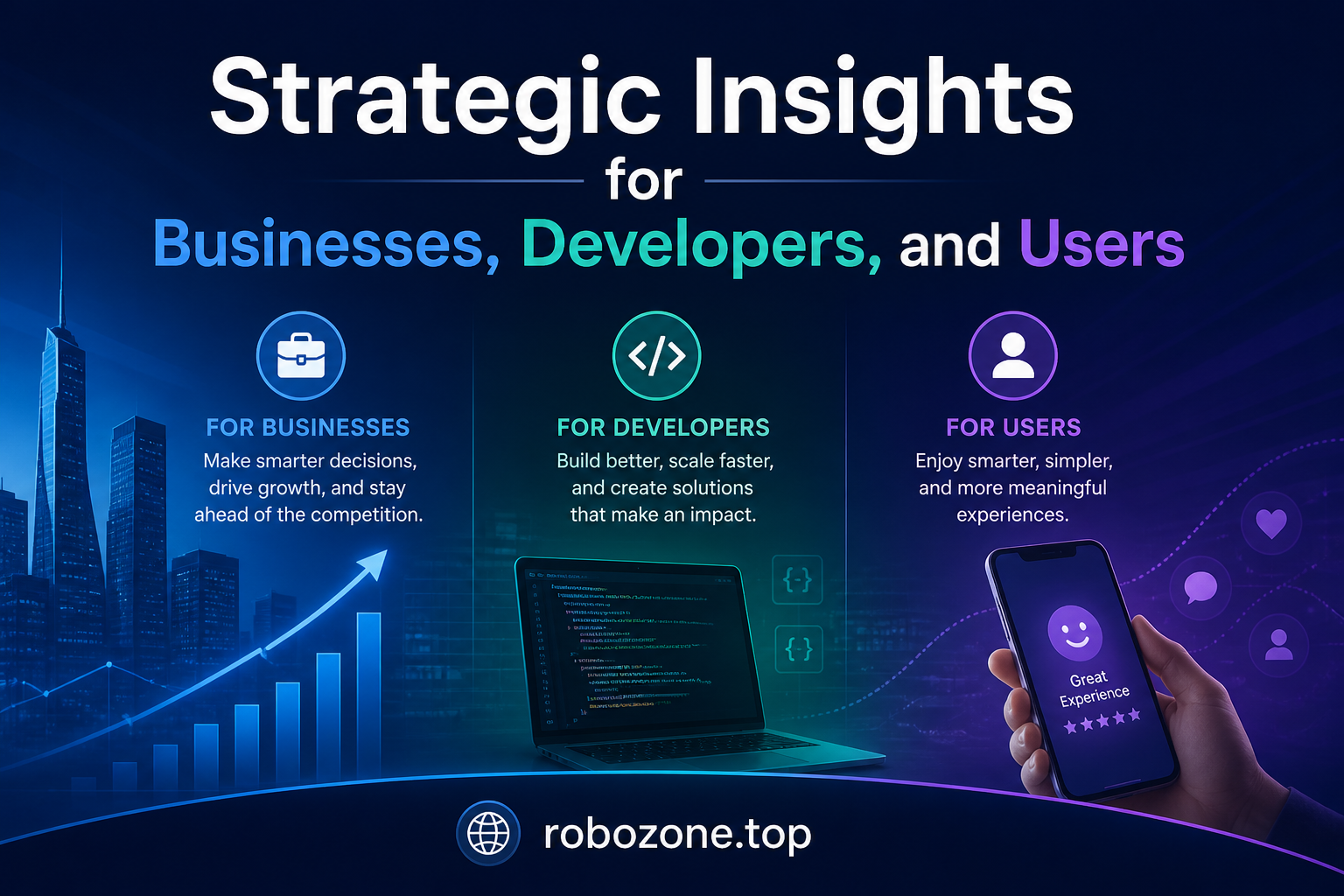
In the face of such rapid evolution, the question becomes not about extending our capabilities but optimally aligning strategies to make the most of impending advancements. Companies need to initiate robust strategies focusing on R&D with a flexible innovation culture, leveraging insights from sources like McKinsey & Company and IEEE Spectrum to navigate tomorrow’s challenges today.
For developers, the opportunities lie in bridging the gap between user intentions and robotic functionalities. Creating flexible, modular systems can accelerate development cycles and amplify robot-specific functions tailored to distinct industry requirements. Engaging with communities around open-source robotics could also facilitate faster turnaround in problem-solving.
Users, both corporate and individual, should embrace robotics as a tool rather than a threat. While automation will demand an adjustment period in workplace dynamics, the inherent value lies in enhancing productivity, not replacing jobs. Preparing for this inevitable shift involves cross-training and upskilling the workforce to identify with more analytical and creative roles.
So where does this leave us? Standing at the precipice of an age where robotics will weave seamlessly into the fabric of our everyday lives. As these technologies mature, strategic implementations will determine their impact. The pursuit shared by companies, researchers, and innovators alike is to realize a world where robots add exponential value to human existence, demonstrating that the road less traveled is often the one with the most enticing views.
In the bustling corridors of innovation, what we need isn’t more competition, but a harmonious blend of human foresight and mechanical prowess. This era of automated assistance isn’t just about machines taking center stage, but about them being excellent supporting actors in the grand, complex play of human progress.
Thomas Huynh – Admin of RoboZone.top
References & Further Reading:
- MIT Technology Review — https://www.technologyreview.com/
- IEEE Spectrum — https://spectrum.ieee.org/
- McKinsey & Company — https://www.mckinsey.com/
- Stanford AI Lab — https://ai.stanford.edu/
- NVIDIA Research — https://research.nvidia.com/
- International Federation of Robotics — https://ifr.org/
- World Economic Forum — https://www.weforum.org/
– – – – – – – – – – – – – – – – – – – – – – – – – – – – – –
Love this content? Support the blog by checking out these items:
If you buy through these links, I may earn a small commission at no extra cost to you. Thank you for supporting the blog!