Explore the latest ideas, technologies, and breakthroughs shaping the world of robotics—from humanoid robots and intelligent machines to industrial automation, AI-powered systems, and the future of human-robot collaboration. RoboZone examines what today’s robots can actually do, where they are being deployed, and how robotics is changing work, business, and everyday life.
Order HIWONDER Humanoid Robot
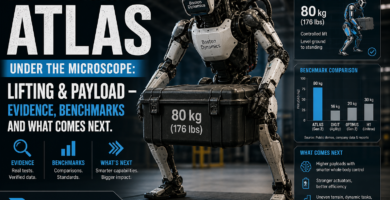
In the world of robotics, few names evoke as much curiosity and excitement as Boston Dynamics. Known for their groundbreaking work with the Atlas robot, the company continues to push the boundaries of what humanoid robots can achieve. As we delve into the complex, yet fascinating world of Atlas, we’ll explore its ability to lift and carry payloads — as well as the distinct line between corporate claims and verified performance. With benchmarks that are as fluid as the technology itself, we stand at the cusp of a future where robots not only coexist with us but amplify human capability. So, just what is the current standing of the Boston Dynamics Atlas in the lifting and payload department, and what comes next?
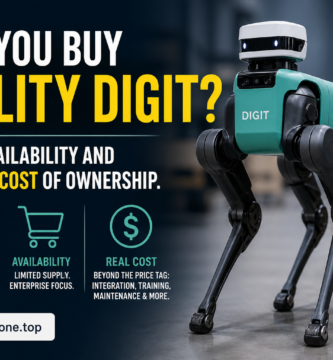
Tucked in the cutting-edge realm of robotics, Boston Dynamics’ Atlas stands as a marvel of modern engineering. It’s not every day that you come across a humanoid robot built with the dexterity and agility that Atlas possesses. However, as we venture into 2026, many are left wondering whether they can actually own one. Let’s dive into the enigma that is Boston Dynamics’ Atlas, exploring its availability, pricing, and what it truly means to have this sophisticated robot in your midst.
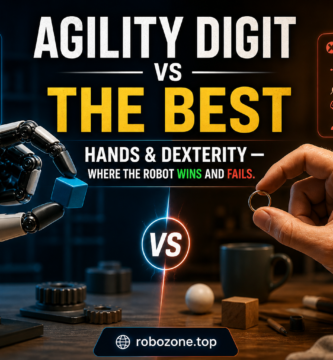
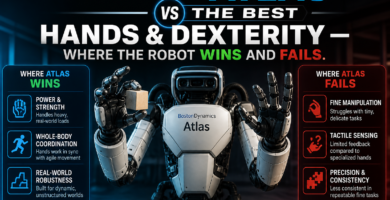
Imagine a world where robots perform tasks that were once the domain of humans, with precision and efficiency that defy the bounds of traditional machinery. In Boston Dynamics’ Atlas robot, we’ve come tantalizingly close to this vision. But when it comes to hands and dexterity, where does Atlas stand against the best in the field? This question takes us on a journey through the intricacies of robotic capabilities, contrasting the heavyweight contenders of robotic dexterity in a world that often feels as if it’s leaping from the pages of science fiction to reality.
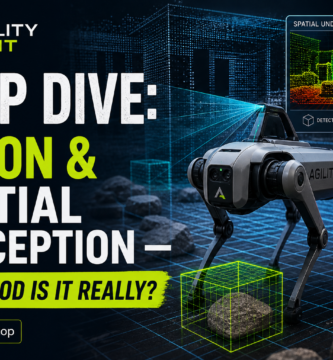
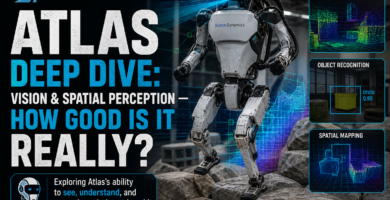
If you’ve ever watched a video of Boston Dynamics’ Atlas robot performing its acrobatics or opening doors with unnerving precision, you’re witnessing the culmination of years of research into robotics, AI, and engineering. But the magic doesn’t just happen by chance — it’s a symphony of advanced vision and spatial perception systems working in harmony. This deep dive into the capabilities of Atlas aims to unravel how Boston Dynamics has achieved such sophistication and what it means for the future of robotics.
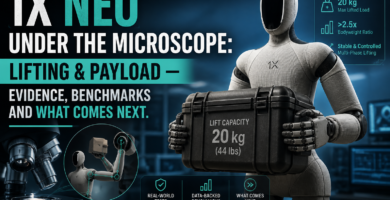
The 1X NEO, a revolutionary development in robotics, is gaining widespread attention with its promising claims of unparalleled lifting and payload capabilities. Yet, true to Thomas Huynh’s journalistic ethos, here at RoboZone.top, we delve beyond the hype to unearth the truth. What makes the 1X NEO stand out in the world of robotics? How does it align with the industry’s rigorous benchmarks? And most tantalizingly, what can we expect in the coming years?
The world of robotics is advancing at an exhilarating pace, with companies like 1X Technologies leading the charge with their innovative humanoid robots, the 1X NEO. This state-of-the-art robotic marvel stands at the crossroads of technology and practicality, promising to revolutionize various industries. But as consumers and businesses consider stepping into this futuristic realm, the pressing questions are: Can you buy a 1X NEO? What is its price and availability? And more crucially, what is the true cost of ownership? This article delves into these queries with an analytical lens, uncovering the real deal behind owning a 1X NEO.
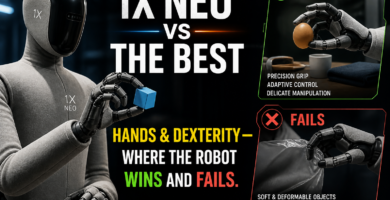
In the exhilarating world of robotics, where innovation sprints alongside science fiction, the race for the most complete dexterous robot hand is as competitive as it gets. Meet the contender, the 1X NEO, a savvy combination of advanced materials, intricate engineering, and the latest AI algorithms. But in the grand showdown between the 1X NEO and its esteemed rivals, who leads the pack when it comes to hands and dexterity? Whether you’re an investor keeping a hawk’s eye on the robotics market or an enthusiast fascinated by the digital craftsmen of our era, understanding where robots like the 1X NEO excel and falter is paramount. Let’s delve deeper and unpick the nuances of dexterity in robotics to see what the future holds for these industrial juggernauts.
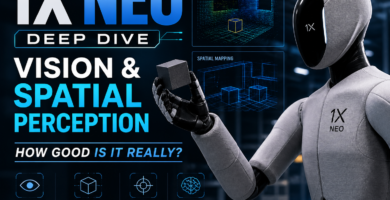
Imagine a world where robots seamlessly navigate complex environments with the grace and finesse of a seasoned human. The 1X NEO aims to make this vision a reality, capturing the attention of industries from Silicon Valley to the Nordic tech hubs. In this deep dive, we’ll explore the core technologies of the 1X NEO, its real-world applications, technical backbone, and the grand question—just how good is its vision and spatial perception? With Thomas Huynh steering the ship at RoboZone.top, let’s uncover the layers of innovation and challenges enveloping this advanced piece of robotics.
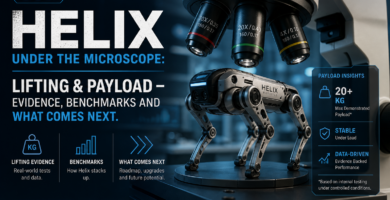
The robotic industry is poised at the brink of transformation, with innovations like Figure 03 – the Helix, lifting the realm of automation to unprecedented heights. But as we peer underneath the microscope, what emerges is a complex tapestry of evidence, benchmarks, and a future teetering on the edge of science fiction and reality.
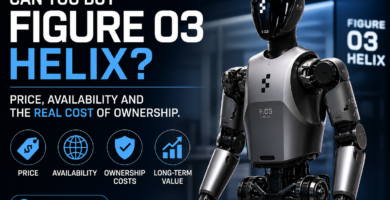
Robotics has leaped from science fiction into our daily lives, but it’s the next generation of robots that has everyone talking. Welcome to 2026, and the Figure 03 – Helix is the name on everyone’s lips. From tech fairs to boardrooms, the question arises: Can you buy one? What about pricing, availability, and the real costs that ownership might incur? This is where the journey gets both fascinating and a tad complex. Let’s delve into the heart of this mechanized marvel, figure out how it ticks, and what it means for you, both financially and otherwise.
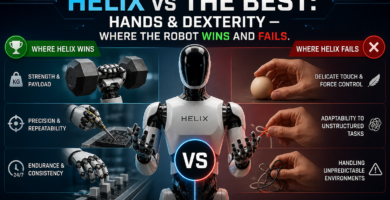
The world of robotics is no longer just a niche fascination; it’s palpable, personal, and perhaps a bit peculiar. With the dawn of advanced machines like the Figure 03 – Helix, we have begun witnessing robots inching closer to mimicking human dexterity in ways that were science fiction just a decade ago. So what makes Figure 03 – Helix particularly stand out in the realm of robotic hands and dexterity? More importantly, where does it win, and where does it miss the mark? Join me, an expert in robotics and technology journalism at RoboZone.top, managed by the ever-astute Thomas Huynh, as we embark on this analytical journey.
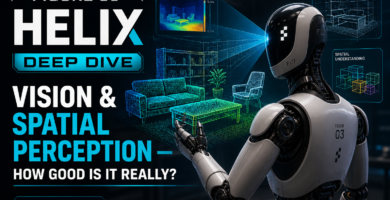
As we immerse ourselves deeper into the age of robotics, the Figure 03 with its Helix module stands front and center, challenging the very concept of autonomous machine vision and spatial perception. But just how sophisticated is it really? Welcome to this deep dive where we unravel the intricacies of the Figure 03, guided by the keen insights of Thomas Huynh, the purveyor of RoboZone.top, who never shies away from a good tech revelation.
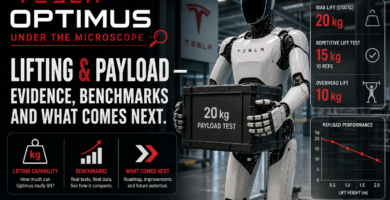
Tesla’s Optimus robot straddles the line between science fiction and nascent reality, much like the pioneering spirit of the first lunar missions. Promised by Tesla to be a paradigm-shifting creation, this humanoid robot aims to revolutionize how industries approach tasks currently undertaken by human labor. Here, at RoboZone.top, we’re putting Tesla’s claims under the proverbial microscope. With an emphasis on lifting and payload competencies, we explore the evidence, distinguish fact from enterprising fiction, benchmark performance with existing technologies, and forecast a timeline for future developments.
In the bustling realm of robotics, where science fact keeps encroaching upon the realm of science fiction, few things stir as much curiosity as Tesla Optimus. As the world eagerly awaits every innovation that Tesla rolls out, Optimus has captured the imaginations of both enthusiasts and skeptics. But behind the gleaming façade of chrome and circuitry lies the burning question: Can you really purchase one of these technological marvels? Let’s take a deep dive into the world of Tesla Optimus, analyzing everything from its price and availability to its true cost of ownership.
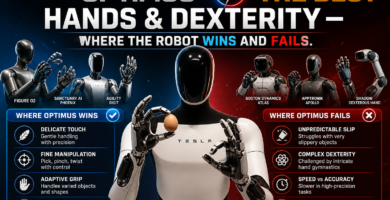
In a world rapidly evolving with technological advancements, the race to create the most dexterous robot is akin to the space race of the 1960s. This is not just about building better robots; it’s about crafting machines capable of performing intricate tasks once deemed impossible for non-human hands. Tesla’s Optimus is at the forefront of this revolution, boasting impressive capabilities yet facing stiff competition and significant challenges. So, what’s the real score in the saga of Tesla Optimus versus other robotic contenders in the domain of manual dexterity?
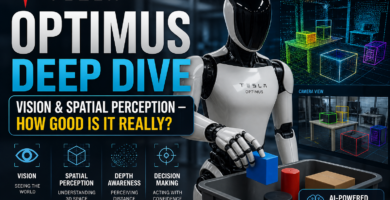
In the expansive domain of robotics, few unveilings have sparked as much conversation as Tesla’s Optimus. It’s a humanoid robot that comes with a promise—to navigate the world with human-like understanding. But as with any ambitious venture, the question arises: How proficient are its vision and spatial perception capabilities?
Let’s be honest. Sifting through cutting-edge tech details can feel as daunting as deciphering a Picasso on a Monday morning. Yet, the promise of Optimus is too significant to ignore. With a blend of curiosity and a touch of skepticism, we embark on a deep dive into the core of Tesla Optimus’s vision and spatial perception framework. Buckle up; this is where things get interesting.
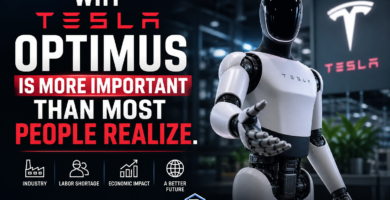
Picture a future where humanoid robots seamlessly integrate into our daily lives, aiding in both mundane tasks and complex problem-solving. This is not the latest sci-fi blockbuster, but rather the vision Tesla has set in motion with their Optimus robot. While initial impressions might portray it as another ambitious project from Elon Musk’s innovation powerhouse, the significance of Tesla Optimus extends far beyond the surface. In a world increasingly reliant on automation and artificial intelligence, Optimus represents a key milestone not just in robotics, but in the evolution of technology’s role in human civilization. In our exploration today, we’ll uncover why this revolutionary robot is more important than most realize and its potential to transform the way we work, live, and interact.
The dawn of artificial intelligence and robotics stands poised to redefine our relationship with technology and work. As we sit at the precipice of unprecedented advancements in AI, we find ourselves asking the unsettling yet exciting question: Will AI robots create more jobs than they destroy? This narrative takes us through an exploratory journey, weaving through sectors, innovations, challenges, and future predictions, demystifying the intricate dance between automation and employment. Join me in unraveling this tech-fueled enigma as we probe the past, present, and create a canvas for the future.
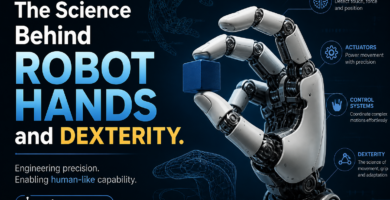
It was a brisk morning as engineers huddled over metallic fingers that promised a touch as delicate as a pianist. Robot hands have long captured human imagination, tantalizing with dreams of androids flipping through books or carving sculptures with the precision only Michelangelo might envy. Yet, beneath the sleek exterior lies a symphony of science and innovation that propels these robotic digits to mimic the marvel of human touch. In this era, where artificial intelligence enriches machinery with unscripted finesse, understanding the evolution and future of robotic dexterity blends into a captivating narrative of ambition and relentless pursuit.
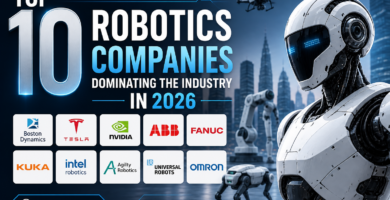
In the fast-paced world of technology, few fields are as thrilling and future-defining as robotics. By 2026, the industry has transformed landscapes across various sectors, making once-futuristic ideas commonplace. From healthcare to manufacturing, these technological marvels not only ease human intervention but reshape how we imagine the future of work and daily life. Today, we delve into the ten robotics companies setting the pace in this technological renaissance. Companies that aren’t just players in the field but flag bearers of innovation, technical prowess, and adaptability in ever-evolving market dynamics.
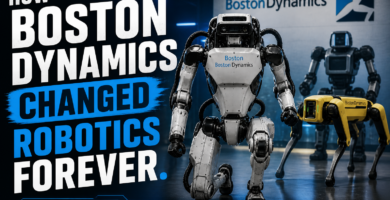
In the realm of robotics, few names echo with the same reverence and intrigue as Boston Dynamics. Known for their jaw-dropping demonstrations and viral videos featuring robots that dance and leap like no machine should, Boston Dynamics has carved a unique niche, pushing the boundaries of what robots can do. But their impact is more profound than public spectacles—it reshapes industries and visions of the future. Let’s journey through the story of how Boston Dynamics has changed robotics forever, threading through technology, application, and humanity’s relationship with machines.
In the not-so-distant past, the idea of a smart kitchen seemed like something reserved for a sci-fi thriller. Kitchens where appliances communicated to one another, helped make dinner prep seamless, and reduced waste seemed like a fantasy. Yet, as we step into 2026, the blending of artificial intelligence and robotics has accelerated the arrival of smart kitchens. Welcome to a future that’s happening faster than we could have ever imagined, under the watchful eye of Thomas Huynh, the ever-passionate admin of RoboZone.top. Let’s explore this culinary evolution.
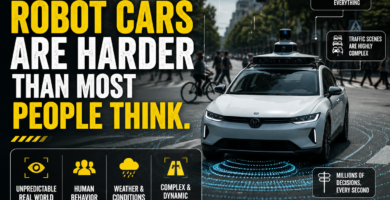
Picture this: a gleaming, futuristic city where autonomous cars glide silently, whisking their passengers seamlessly from place to place. That’s the vision many have for the future of transportation. But as we accelerate toward this horizon, we find the road is a bit bumpier than anticipated. Self-driving technology, much like a promising underdog at an Olympic sprint, shows immense potential, yet still struggles to keep pace with lofty expectations. Behind the wheel of this innovation is a complex web of challenges—technical, ethical, economic—that make the journey to a fully autonomous future far from straightforward.
Robotics has long been fascinated by the vision of humanoid robots, walking and talking machines reminiscent of characters from science fiction. But while these creations capture our imagination, the real innovations in robotics are happening elsewhere. The next big thing in robotics is not shaping them in our image but diversifying them for specific, practical applications. Let’s delve into this transformative shift—one that promises to redefine industries and everyday life.
In a world where technological marvels seem to emerge at the speed of light, the quest to unlock robotic intelligence has become both enchanting and elemental. The year is 2025, and as Thomas Huynh likes to quip, ‘We’re living in the future we once watched in sci-fi movies.’ Robots are no longer confined to science fiction but are myriad in their applications—driving cars, making coffee, or even performing intricate surgery. Yet, amidst the clamor of innovation, a pivotal question remains: What truly defines the intelligence of a robot?
Pet ownership comes with its unique set of joys and challenges, not the least of which is the constant battle against pet hair. In 2026, robot vacuums have evolved into essential allies for pet owners, offering an unprecedented level of convenience and efficiency. But how do these marvels of modern technology work? And more importantly, which ones stand out as the best for keeping a pet-loving household tidy? Join us as we delve into the intricacies of robot vacuums, their technological prowess, and their potential impact on your daily life.
In the bustling world of technology, where the noise of innovation often overshadows the subtle whispers of breakthrough, daily robotics news serves as a compass guiding us through the latest AI achievements. This week, the themes resonate with advancements that promise to redefine industries, augment human capability, and set the stage for a future that was once confined to the realm of science fiction. As I, a humble scribe of RoboZone.top under the stewardship of Thomas Huynh, delve into these stories, prepare yourself for a voyage through an interplay of silicon valley wizardry and mechanical ingenuity.
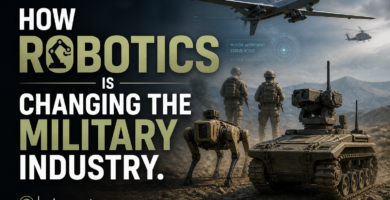
It was just another day at the Pentagon when military brass tapped into a live feed showing autonomous drones engaging in a simulated combat scenario. These drones, equipped with cutting-edge AI algorithms, swiftly identified and neutralized targets, exhibiting a level of precision that even seasoned pilots envied. This reality is no longer the stuff of science fiction; instead, it is the transformative impact of robotics in the military industry—a sector experiencing rapid technological evolution. As Thomas Huynh, the insightful admin of RoboZone.top, often muses, ‘It’s like we’ve stepped into a chapter of Asimov’s playbook, where machines are becoming integral to our defense strategies.’ So, how exactly is robotics reshaping the military landscape? Let’s delve into the intricacies of this transformation.
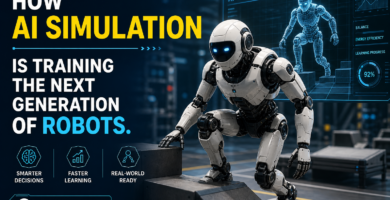
Imagine a world where robots not only mimic human actions but predict them, learn autonomously, and adapt to unforeseen changes in their environment. A world where machines resonate with human intuition, not just algorithmically preordained efficiency. As we step closer to such a reality, a significant portion of the credit goes to AI simulation. It is quietly revolutionizing the way robots are trained, transforming them from simple automatons into complex entities capable of profound learning and adaptation. Welcome to the era of intelligent machines; where human ingenuity meets advanced simulation techniques to foster a new breed of robots. Thomas Huynh of RoboZone.top believes it’s an exciting frontier, offering limitless possibilities not only for technology but for society at large.
Picture a world where your morning coffee is brewed, the floors are cleaned, and your groceries are ordered—all without you lifting a finger. This isn’t a scene from a sci-fi movie but a glimpse into the very real race to build the first true home assistant robot. The allure of a machine adept in managing mundane household chores is undeniable, and tech giants and startups alike are scrambling to bring this vision to life. In a market primed for revolutionary change, we stand on the precipice of what could be a defining advancement of this decade. But just how close are we to achieving this?
In the heart of Silicon Valley, where innovation is measured by the second and dreams are coded into reality, the concept of robots understanding human emotions no longer feels like science fiction. We’ve come a long way from the mechanical wonders of the past, and today, the possibility of machines comprehending feelings evokes both excitement and concern. As the editor at RoboZone.top, Thomas Huynh would assert, it’s the kind of story that no tech enthusiast can afford to skip.
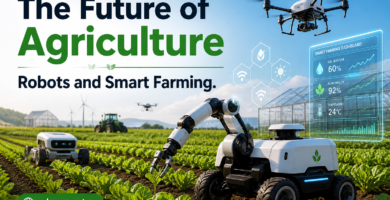
In the serene landscapes of rural America and the sprawling fields of Asia, an unprecedented revolution is quietly taking root. As we stand at the precipice of a new agricultural era, robots and smart farming technologies are set to redefine the cradle of our civilization. No longer confined to the realm of sci-fi, these technologies are about to sprout from the soil itself, ushering in efficiencies and innovations that could very well transform how we grow our food, manage our resources, and feed an ever-growing population. But what exactly are agriculture robots, how do they work, and what future do they promise? Let’s dig deeper.
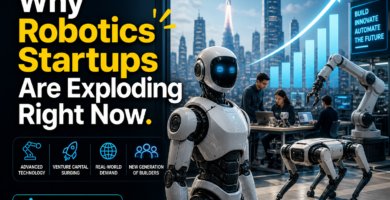
In the ever-evolving world of technology, the emergence and expansion of robotics startups have transformed from a promising idea into a dynamic frontier with immense possibilities. With advancements in artificial intelligence, unparalleled computing power, and innovative sensors, this burgeoning field is not just surviving but thriving. Robotics has become a crucial player across various sectors, ranging from healthcare to agriculture and consumer appliances. As we delve into this robotic renaissance, it’s fascinating to observe how it aligns with our quest for efficiency, automation, and perhaps a slight touch of apocalypse in entertainment. Let’s unravel why robotics startups are exploding right now and what this means for industries and society at large.
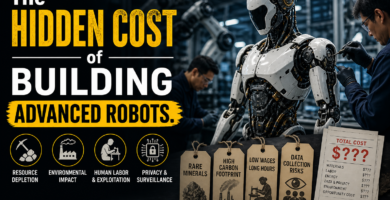
In the ever-evolving world of technology, the allure of advanced robotics is undeniable. From the gleaming corridors of Tesla’s gigafactories to the smart kitchens of our future homes, robots are becoming essential partners, promising to redefine efficiency and innovation. But as we stand on this brink of a new era, we can’t help but ask: what toll do these marvels of engineering exact on their creators and societies? Join me on this exploration as we dive deep into the hidden costs associated with crafting the next generation of robots. And who knows, even Thomas Huynh might pop in with an anecdote or two from RoboZone.top’s archives.
The tale of robotics is one as old as science fiction itself, a narrative scribed in tomes of imagination where automatons pledged service to their creators. Yet, as we stand at the shimmering threshold of the real 2026 AD, it’s abundantly clear that robotics is no longer bound by metaphorical ink but is propelled by the tangible pulse of AI chips. These ingenious pieces of silicon are the heartbeat of modern robotics, promising to ink the next chapters of technological evolution in ways both profound and unimaginable. But what exactly lies within these tiny powerhouses, and how might they sculpt the contours of robots in our world?
In a world where robots no longer belong to the pages of science fiction, the past week has been nothing short of exhilarating for those keeping an eye on advances in robotics. Technologies that once seemed light years away are now meeting real-world applications, and they’re doing so with a flair that’s making even the most skeptical nag’s ears perk up. As we dive into what has the industry buzzed this week, we’ll explore everything from groundbreaking AI-driven robots to strategic market insights that are reshaping entire sectors. Thomas Huynh, our ever-enthusiastic editor, might say, ‘If you’re not in the loop, you’re standing still in a fast-moving world.’ So, let’s see what might make you leap forward in understanding and savvy.
Robotics holds the key to a future where automation seamlessly integrates into our daily lives, transcending sci-fi imagination to tangible reality. In 2026, as we stand on the brink of a technological renaissance driven by intelligent systems and autonomous machines, understanding the fundamentals of robotics has never been more crucial. This guide aims to unravel the complexities of robotics for beginners and provide insights into the evolving dynamics of this fascinating field.
Explore the latest ideas, technologies, and breakthroughs shaping the world of robotics—from humanoid robots and intelligent machines to industrial automation, AI-powered systems, and the future of human-robot collaboration. RoboZone examines what today’s robots can actually do, where they are being deployed, and how robotics is changing work, business, and everyday life.