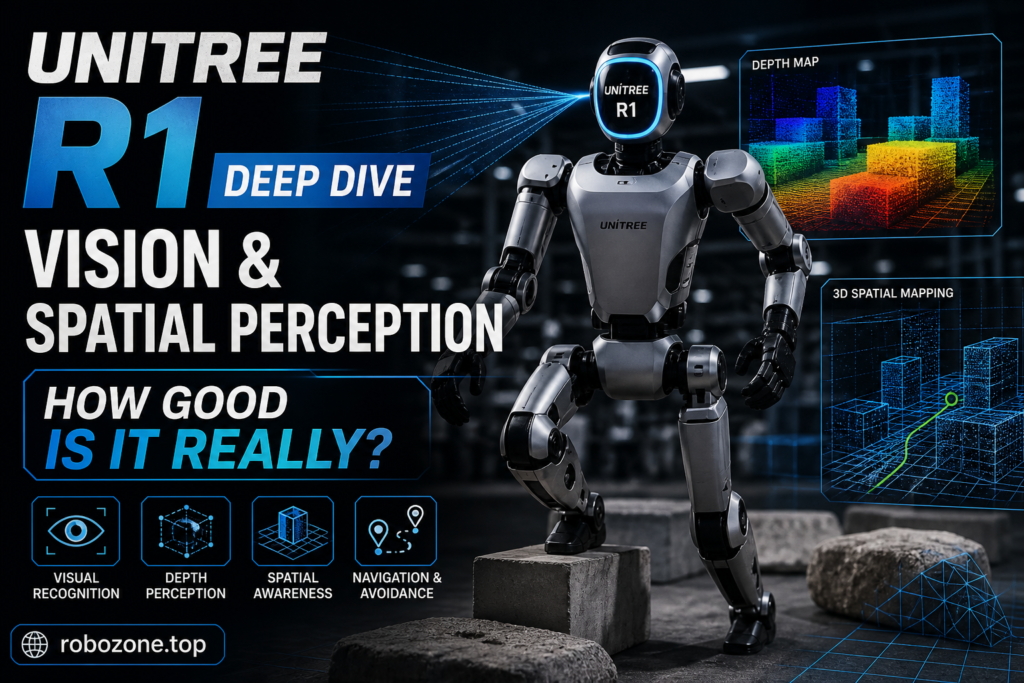
In the fast-evolving world of robotics, where innovation seems as predictable as this week’s weather, one name that frequently enters the conversation is Unitree Robotics. The company has captured imaginations, quite literally, by endowing its bots with vision and spatial perception so sophisticated, they’ll shame the competition. The question looming over everyone’s heads: How good are these capabilities really? Today, we roll up our sleeves and take a peek under the hood of the Unitree R1 to answer just that.
Understanding the Unitree R1: More Than Meets the Eye
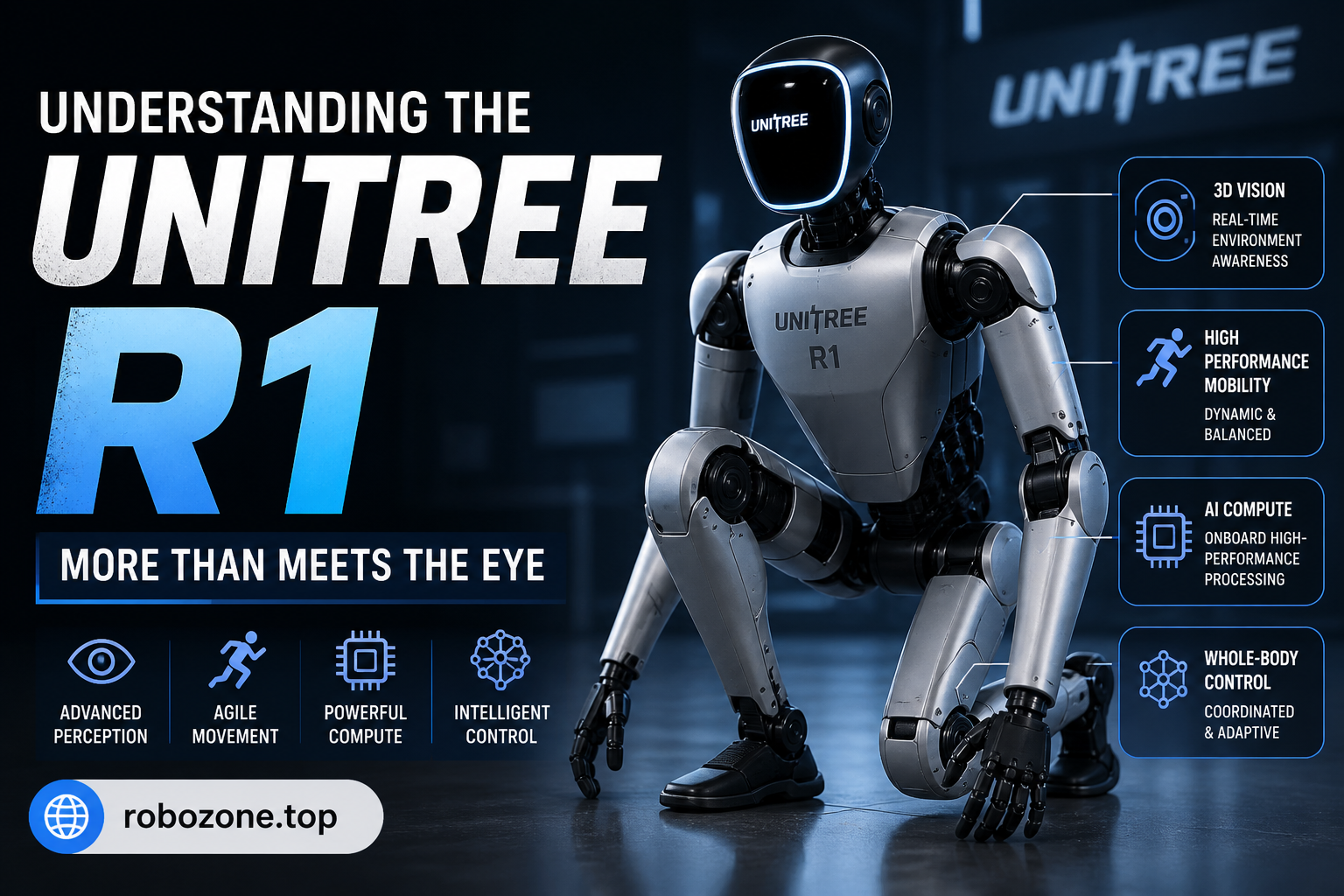
Picture this: a robotics scene straight out of a science fiction movie, with machines navigating environments just like humans do. The Unitree R1 embodies this vision, quite literally, with its advanced visual perception capabilities. At the core, the R1’s system is orchestrated by an array of sensors seamlessly integrated with neural networks, providing the bot the kind of spatial awareness that would make even a house cat envious. The blend of stereo camera systems and LiDAR sensors allows the R1 to create a comprehensive 3D map of its environment in real-time. Think of it as equipping the robot with ultra-fine spectacles that catch even the tiniest detail in its field of view—because when it comes to robots not bumping into things, seeing is believing.
Let’s not forget the brain behind these eyes. The AI models powering the R1 use machine learning algorithms to process and interpret the data collected by these advanced sensors. The neural networks enable the robot to prioritize objects, understand spatial relationships, and make decisions that help it navigate complex terrains with significant agility. It’s akin to teaching the bot what ‘clumsy’ feels like so it can avoid such faux pas. In a chat I had with Thomas Huynh, the man steering the ship at RoboZone.top, he referred to this system as “the pinnacle of awareness for robots,” and let’s just say, I didn’t disagree.
Real-World Applications: From Your Living Room to Industry
When you dive into the applications of the Unitree R1, it’s like opening Pandora’s box—but in a good way. This remarkable machine has already begun to reshape how we think about automation both at home and in the industrial sector. In home environments, imagine a scenario where your R1—a quadruped that is surprisingly more elegant than most toddlers at maneuvering furniture—takes care of mundane chores like vacuuming around those hard-to-reach nooks while you kick back and sip your latte. Not too far-fetched, is it?
In industrial domains, the R1’s robust spatial perception enables it to execute tasks in intricate environments, often performing roles of inspections or emergency response tasks. The healthcare sector too is exploring this tech, especially with robots assisting in elderly care, enhancing patient mobility, and even surgeries. Just picture it, a reliable metal nurse that never tires. In the dynamic world of logistics and supply chains, it’s not unusual to see R1s helping manage warehouses by transporting items—almost as if the floors are alive and bustling.
The Technical Take: Sensors, Neural Models, and More
Diving deeper into the technical wizardry of the Unitree R1, one can’t help but marvel at the synergy between its components. Central to its vision capabilities is the combination of stereo cameras and LiDAR sensors. The stereo cameras provide depth perception by simulating human binocular vision, which alongside laser-fueled precision of LiDAR, construct a vivid 3D representation of its operational environment. When it comes to processing power, the R1 doesn’t skimp. Utilizing processors akin to those found in NVIDIA’s advanced graphics cards, the neural networks crunch the data at unprecedented speeds.
This interplay of sensors and processors is orchestrated by highly optimized machine learning models that run on neural networks designed specifically for robotics applications. Companies like Google DeepMind have been instrumental in advancing these neural designs, adapting techniques like reinforcement learning to allow robots to learn new tasks simply by trial and error. We’ve come a long way from the days of programmed rigidity, and the elegance of R1’s movement is a testament to that.
Glimpse into the Future: What Comes Next for Unitree R1?
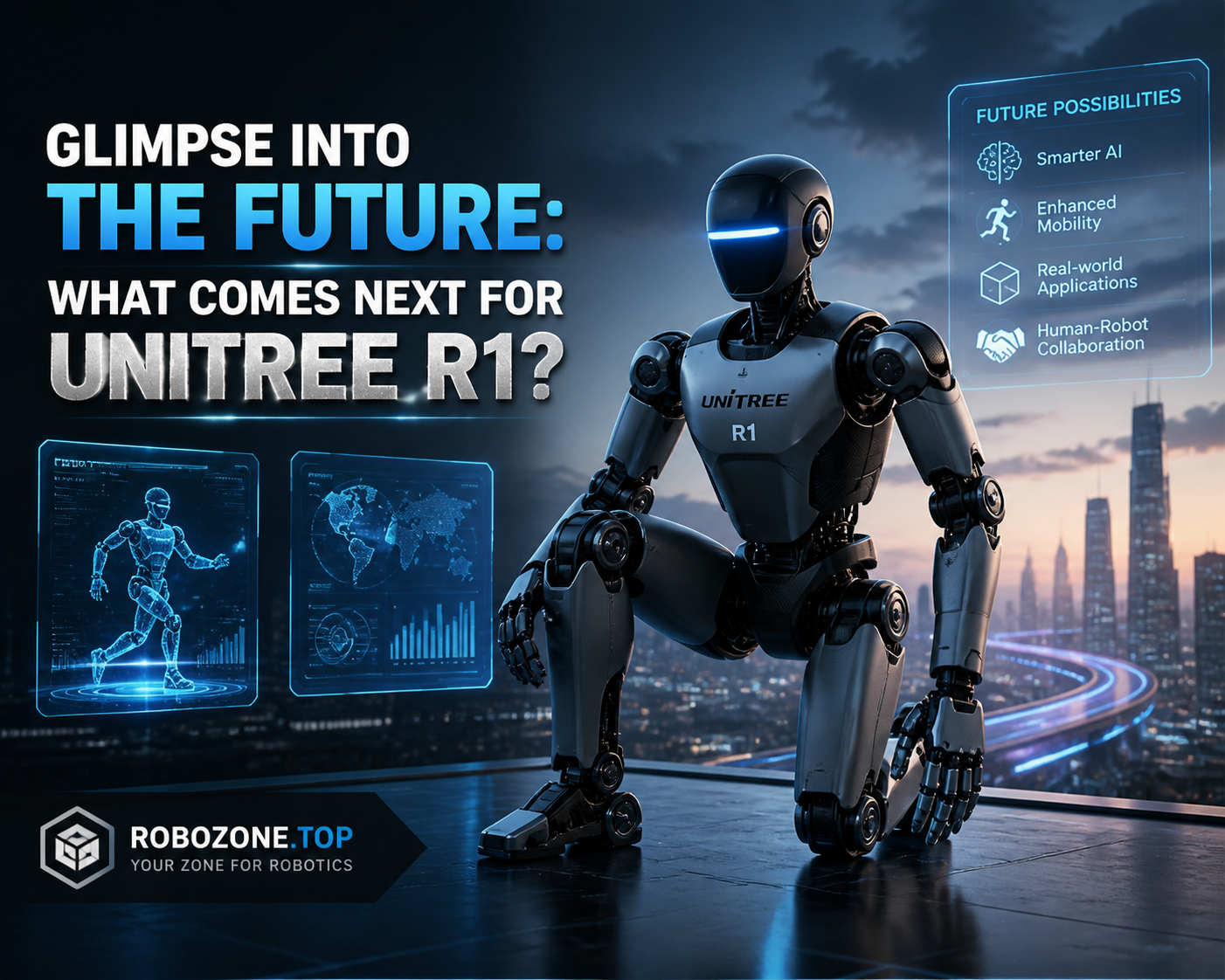
Unitree Robotics is not resting on its laurels with the R1. If industry chatter and investment trends are anything to go by, the market for robotics is primed for explosive growth, with the International Federation of Robotics forecasting a compounded annual growth rate of over 20% by 2030. The R1’s continuous learning algorithms possess the adaptability to push continuous improvements in real-time, indicating that these robots are likely to evolve their capabilities organically over time.
Given the trajectory, one might even predict that by 2026, an R1 could not only fetch a soda from the fridge but might just understand your carbonated preferences. It’s an exciting horizon, and while the pace of change may initially sound daunting, it incurs promising vistas of opportunity.
Beyond the Gloss: Challenges and Limitations
No deep dive would be complete without discussing the thorny issues. Even with its technological marvels, the Unitree R1 isn’t without its kinks. Critics will point out that in environments where lighting conditions are erratic, the stereo vision systems might not perform optimally, misjudging distances or failing to detect objects altogether. Moreover, while the autonomy is advancing swiftly, there’s the everpresent specter of edge cases where the robot’s decision-making could falter, such as recognizing unusual or transparent objects.
Furthermore, these robotic solutions, while innovative, do not come cheap, and affordability, especially for small enterprises, remains a hurdle. Thomas Huynh cheekily remarked in a recent discussion that “those future butlers might need a raise before they can buy a Unitree.” It points towards the economic equation every business must balance between efficiency gains and cost outlays.
Strategic Insights for Businesses and Consumers
For all the progress Unitree Robotics has made, prospective adopters shouldn’t dive in blindly. Businesses must weigh the inherent cost-benefits and readiness of their infrastructure to deploy such advanced robotics meaningfully. The agile approach to tech adoption suggests leveraging a pilot phase, allowing early adaptation and learning.
For consumers, the allure of integrating robotics into domestic spheres isn’t about replacing human presence but augmenting it—freeing our schedules from mundane chores, adding layers of convenience. The prevalent narrative should be about creating an environment where coexistence with robots enhances our quality of life.
So where does this leave us in the grand scheme of things? With the Unitree R1, the narrative isn’t just about technology replacing human labor but about technology enhancing human experience within both personal and professional realms. As these machines evolve in sophistication, from their capacity to perceive the world to interacting seamlessly within it, we’re on the cusp of something extraordinary. While companies like Unitree Robotics lead this charge, the fundamental ethos remains simple: Continual innovation should inspire us to rethink, redesign, and reimagine how we coexist with our mechanical progeny.
Thomas Huynh – Admin of RoboZone.top