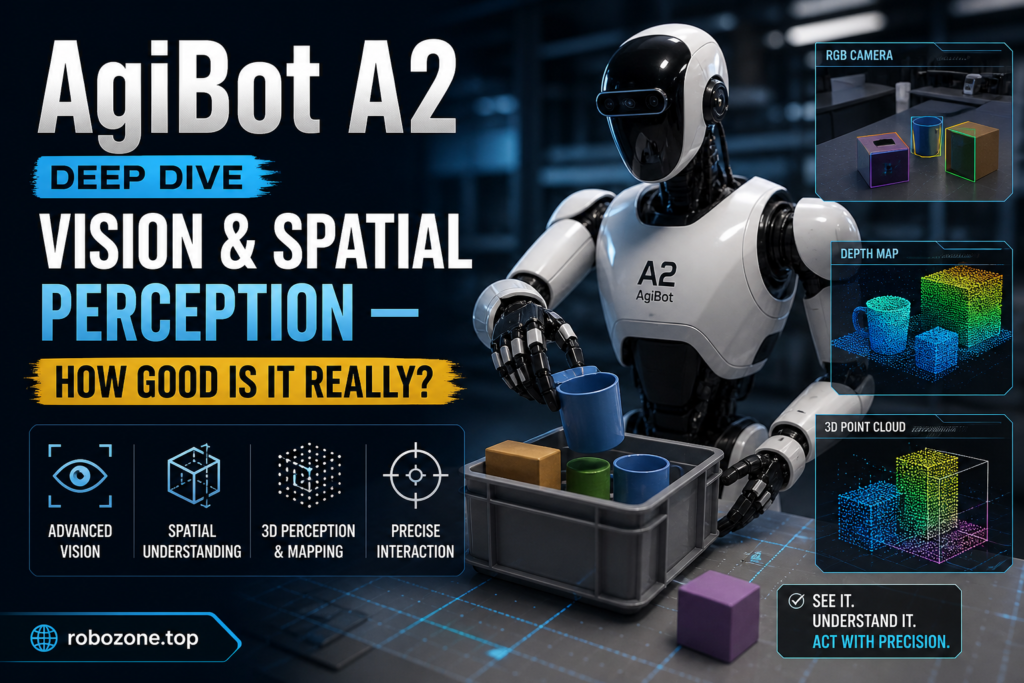
The Science Behind the Vision: How AgiBot A2 Sees
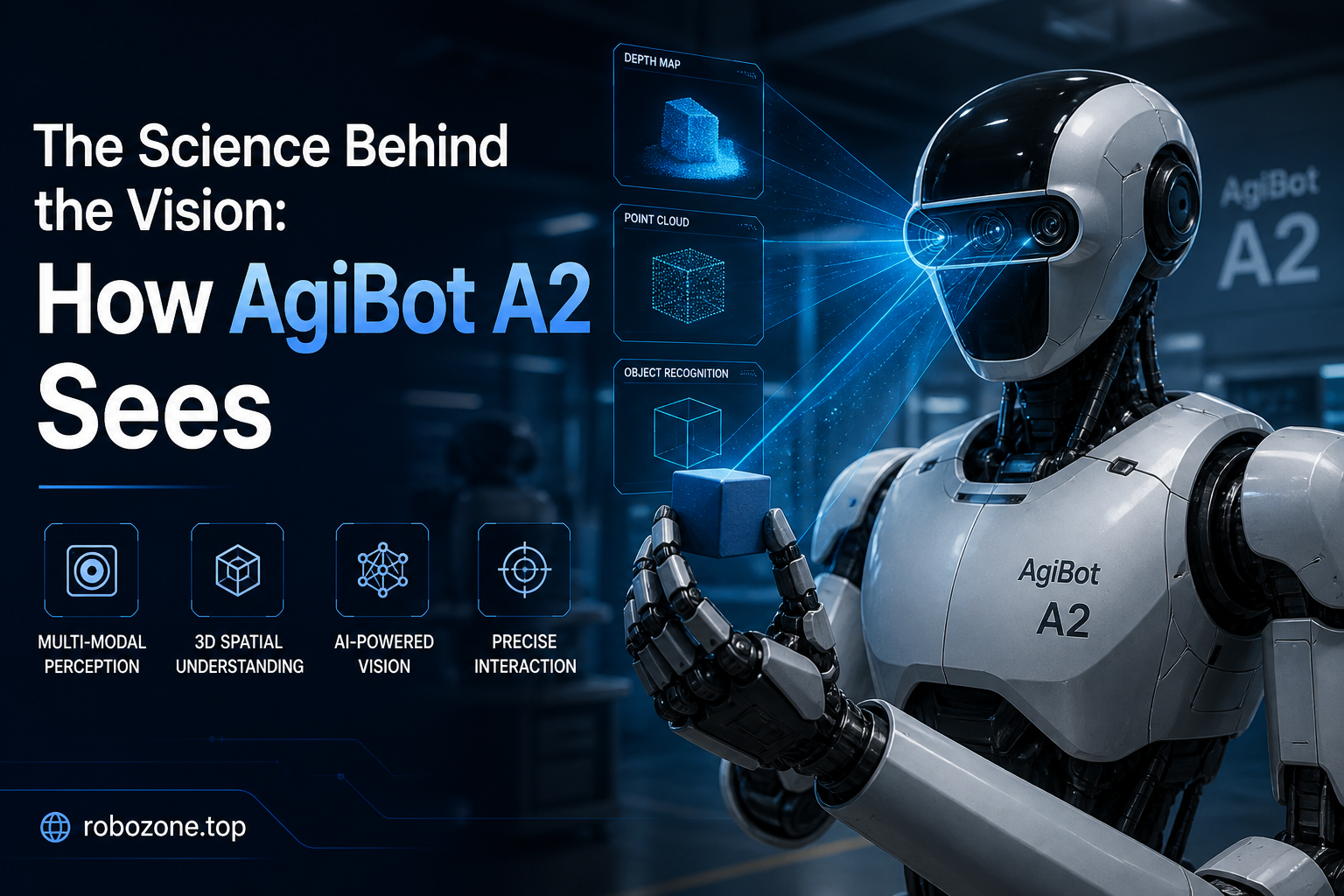
At the heart of the AgiBot A2‘s capabilities lies its advanced vision system. Unlike the simplistic early robots that stumbled about our homes merely imitating sight, the A2 uses a sophisticated suite of sensors to map its surroundings in high fidelity. Central to this system is the NVIDIA Jetson AGX Orin platform, simultaneously the brain and the brawn of its perceptual prowess. But what good is state-of-the-art hardware without software brains?
Enter the realm of neural models, where machine learning meets practical application. The A2 employs convolutional neural networks (CNNs) to process visual information. This allows it to identify and categorize objects with remarkable accuracy. Imagine, if you will, a child gradually learning to distinguish between a ball and a cube. The A2 does this but at speeds of thousands of frames per second, transforming data into actionable intelligence in real-time.
Such intricate processing requires a dance between hardware and software—a symphony, if you will, of silicon-based neurons orchestrated to mimic perception. The A2’s sensors include LiDAR scanners and depth cameras, which, akin to our human binocular vision, allow depth perception. Here’s where it diverges: while human children play with blocks, the A2 can construct a three-dimensional map of its surroundings, detecting minute variations in light and texture. It’s all very 2026, and yet, delightfully futuristic.
Real-World Applications Across Industries
With its advanced spatial perception, the AgiBot A2 has carved a niche in multiple sectors. In healthcare, it assists in eldercare, where understanding spatial surroundings becomes critical. For instance, recognizing obstacles in an elder’s path at home can prevent potentially serious falls.
In the industrial sector, factories have welcomed the AgiBot A2 for its precise navigation skills, helping to streamline the workflow on bustling factory floors by autonomously maneuvering around equipment and workers. This ability reduces the risk of workplace accidents, a boon considering the high stakes of manufacturing environments.
And let’s not forget the home; robots like AgiBot A2 are entering the market not as curiosities but as practical assistants, from vacuuming chores to security roles reminiscent of a more discerning version of a household pet. By truly understanding its environment, the AgiBot A2 can serve as a watchful guardian, a charming cleaner, or even as a personal robotic butler. ’Whose turn is it to do the dishes?’ will soon become a moot argument.
Technical Insights: The Hardware and AI Underpinning
This is where our narrative dives into the nuts and bolts of what makes the AgiBot A2 tick—or rather, compute. The synergy between its sensors and AI models merits a closer inspection. LiDAR (Light Detection and Ranging) allows the A2 to emit laser beams to gauge distances, producing a 3D map of its environment much like a bat echolocating its surroundings, albeit with light rather than sound.
Complementing this is the integration of NVIDIA’s GPU capabilities, which expedite the processing of complex visual data. The neural networks involved in decision-making operate on these NVIDIA chips, designed to efficiently conduct deep learning tasks. The AI doesn’t just recognize objects; it predicts their movements, calculates potential collisions, and even hypothesizes alternate routes—much like a seasoned driver navigating a busy highway.
Then there is the software. Deep learning frameworks like TensorFlow or PyTorch optimize the functionality of such hardware, training the AI through countless iterations to attain near-human levels of intuition in navigation and object recognition—a formidable feat often showcased in AI-driven competitions globally.
Market Landscape: Growth and Economic Impact

In the bustling markets of China, where so much of technology continues to grow at exponential rates, the AgiBot A2 has made waves. Robotics, particularly those driven by sophisticated AI like the A2, are anticipated to become a multi-billion dollar industry by 2030, with a compound annual growth rate predicted to hit the double-digits according to the International Federation of Robotics.
Investments are pouring in not just from venture capitalists eager to hitch their wagons to technological stars, but from traditional sectors as well. Manufacturing giants, logistics firms, and even government agencies are probing the use of advanced robots to supplement—and in some cases replace—human roles. The economic impact of such an industry cannot be overstated, influencing employment patterns, investment strategies, and the very fabric of industrial operations across borders.
Existing Challenges and Limitations
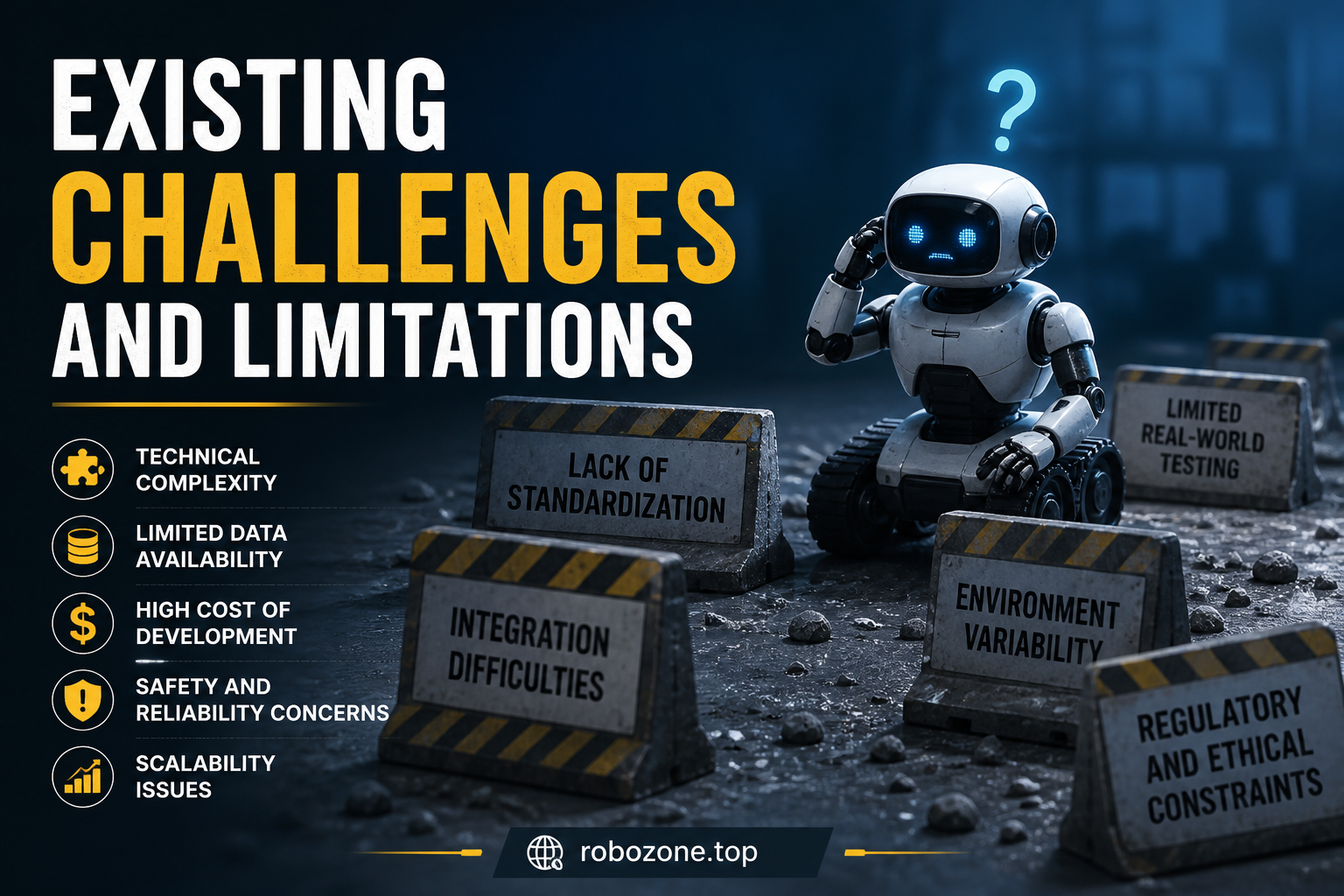
Yet, for all its prowess, the road for AgiBot A2 is not without its bumps. There are inherent challenges when a machine attempts to interpret a world designed for humans. While its vision is unequivocally advanced, the A2 sometimes struggles with contextual understanding. Complex, dynamic environments where variables change unpredictably (think a bustling human crowd) can cause the system to occasionally falter.
Furthermore, ethical dilemmas linger as automation creeps into employment domains traditionally dominated by human labor. The balance between integrating such technology and maintaining human-centric job opportunities continues to be a contentious debate, one that champions like Thomas Huynh monitor with keen interest. There’s an undeniable irony, after all, when a bot designed to ease our lives ends up taking away livelihood opportunities.
The Road Ahead: Predictive Insights

In a world accelerating towards AI ubiquity, the future holds fascinating prospects for the AgiBot A2. As neural networks become more sophisticated, robots will transition from tools to collaborators, sharing spaces seamlessly with humans. Expected developments include improved contextual awareness, enabling robots like the A2 to offer even deeper integration in fields ranging from healthcare to space exploration.
In three to five years, we might see the hybridization of AI models, drawing elements from multiple disciplines to improve robotic empathy—a human-like trait necessary for robotics intended for personal interaction. Imagine robots like the A2 not just vacuuming but discerning your favorite couch spot and leaving it untouched, a warm cup of tea ready for your next sit-down.
Developers and industries should prepare for this future by investing in training, adapting business models to leverage robotics, and monitoring the ethical implications of AI applications. Businesses that fail to embrace this may find themselves dragged into obsolescence, as those harnessing AI’s full potential gallop ahead.
So where does this leave us? The AgiBot A2, with its intricate fusion of hardware and software, is more than just a glimpse of the future of robotics—it’s a herald. As robotic vision and spatial perception continue to evolve, we find ourselves on the cusp of an era where robots not only see the world like we do but interact with it in ways we’ve yet to fully imagine. The journey will be marked by innovation and challenge alike, where pioneers like Thomas Huynh remind us, ‘It’s not about where we are, but where we’re headed.’ Let us stay alert and prepared, for the road ahead promises to be as thrilling as it is transformative.