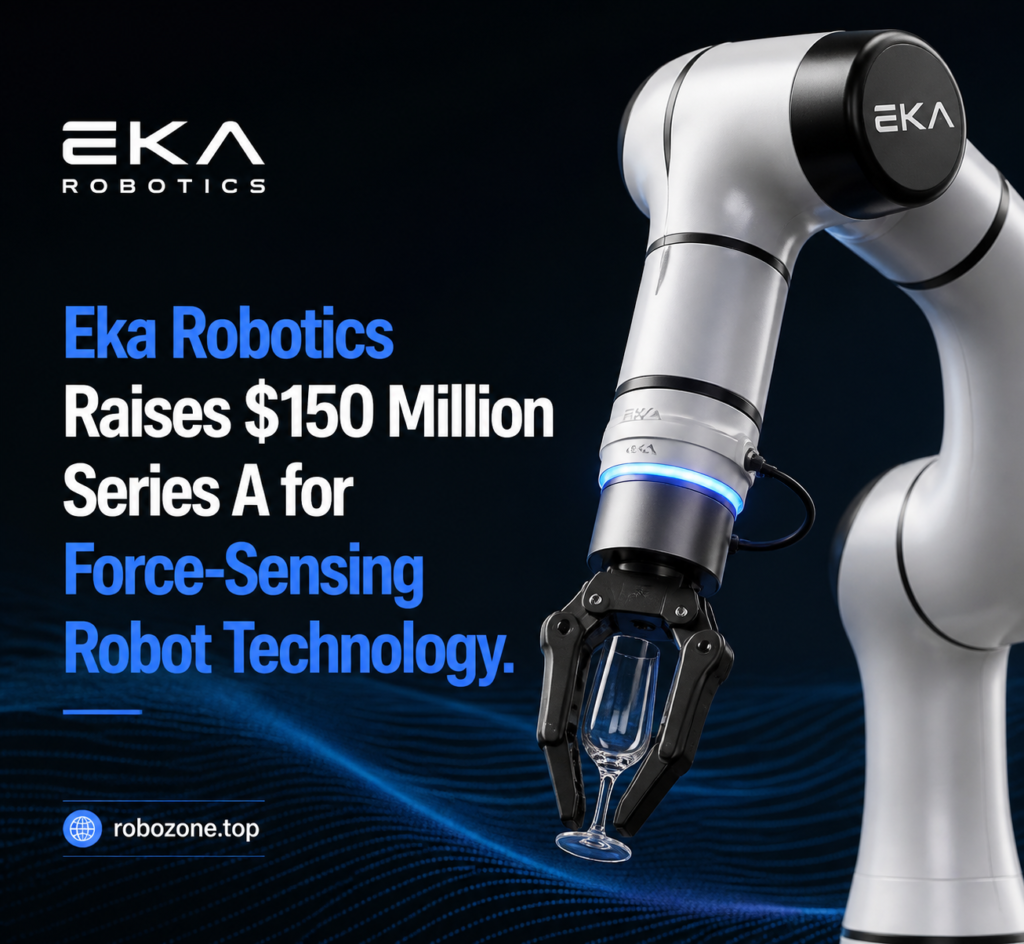
In a significant development for the robotics industry, Eka Robotics has announced the closure of a $150 million Series A funding round, pushing the company’s valuation to approximately $1.45 billion. This infusion of capital is earmarked to advance Eka Robotics’ vision-force-action model, a pioneering approach in robotic manipulation that promises enhanced adaptability and speed in response to dynamic environments. For an industry dedicated to precision and efficiency, this model could represent a substantial leap forward in automation capabilities.
Understanding Eka Robotics’ Vision-Force-Action Model

At the core of Eka Robotics’ recent funding success is their vision-force-action model, an innovative integration of sensory and computational technologies aimed at creating robots with superior manipulation capabilities. Unlike traditional industrial robots, which rely heavily on pre-programmed motions, Eka’s model incorporates real-time visual and force feedback to adaptively adjust a robot’s actions.
The vision component equips robots with high-definition cameras and advanced imaging software to capture environmental data at an accelerated rate. This data is processed through machine learning algorithms trained in simulations, refining the robot’s decision-making abilities prior to any physical deployment. This foundational training enables the machine to react with a human-like intuition, detecting and interacting with varying objects it encounters.
Force sensing complements this, providing robots with the tactile feedback necessary for delicate operations, such as handling fragile objects or executing tasks requiring variable pressure. Together, these systems enable a more fluid motion profile, where actions are adjusted dynamically in response to environmental interactions, reducing error rates traditionally observed in automated systems.
The Technical Backbone: Architecture and Capabilities
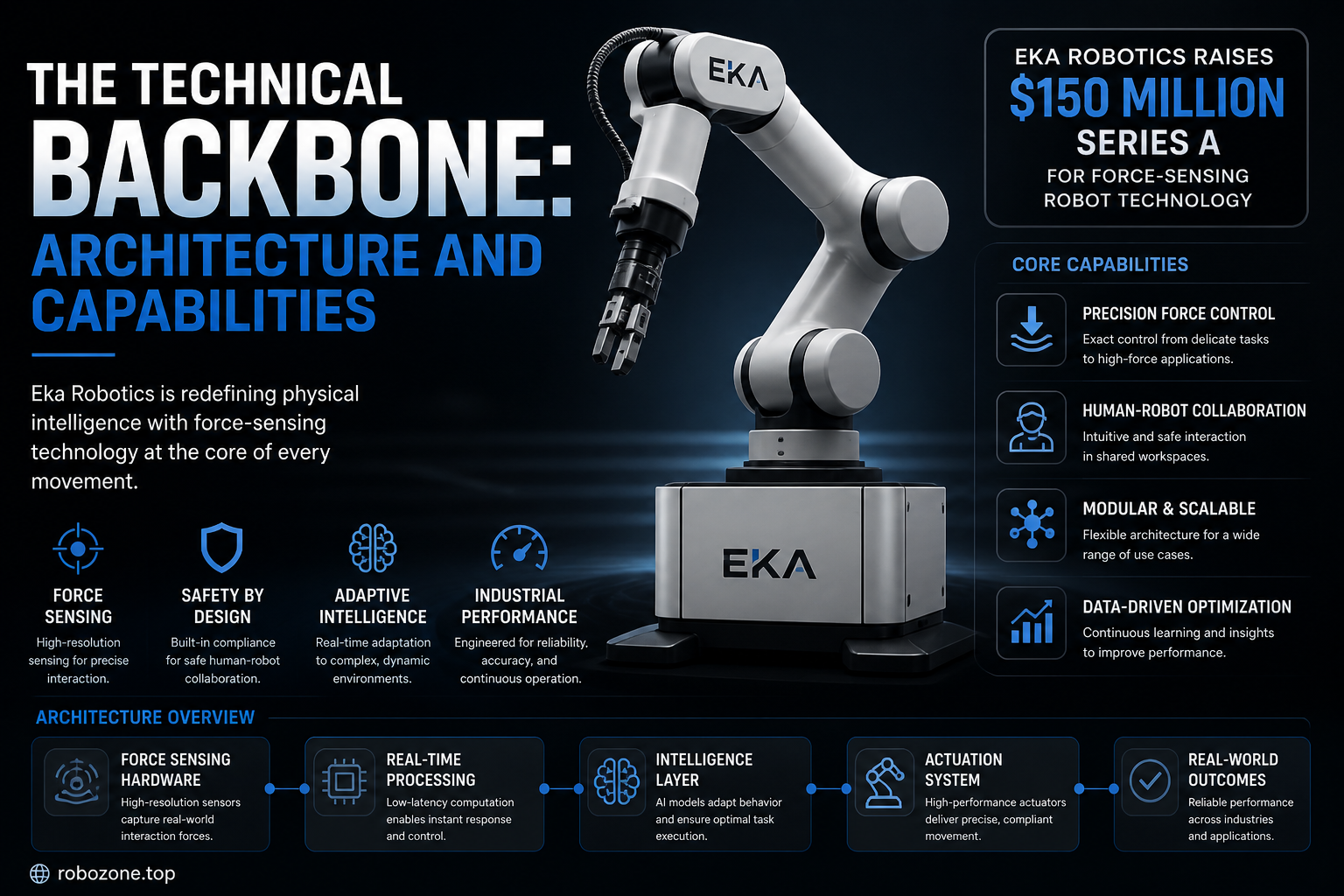
The technical structure supporting Eka Robotics’ advancements is robust, featuring cutting-edge components and systems. Central to this architecture are multi-jointed robotic arms equipped with integrated force-torque sensors along with haptic feedback systems. These allow for fine-tuned control over both gross and nuanced manipulations, which are crucial for a spectrum of applications spanning from assembly lines to hospitality services.
A partnership with leading AI developers has allowed Eka Robotics to incorporate sophisticated artificial neural networks within its control architecture. These networks are designed to facilitate supervised and reinforcement learning methods, enabling the robot to learn from both human-guided corrections and outcome-based experiences.
For the computational backbone, Eka relies on a distributed processing model which balances workload across several nodes, accelerating data processing and reducing latency. The advanced compute platform also supports future scalability, making it possible to integrate additional sensors or processing units without overhauling the existing system.
Moving Towards Commercial Deployment

Although patent technologies and optimized models characterize Eka Robotics’ research successes, transitioning from prototype to mass-scale deployment presents its unique set of challenges. Currently, Eka Robotics is piloting these systems within controlled environments to refine real-world deployment strategies. Accurately forecasting real-world performance and reaction to unforeseen variables remains a stipulated area of development during these initial phases.
Plans to scale production include forging strategic partnerships with manufacturers to ensure both high-volume production and adherence to strict quality controls. Eka aims to establish a network for component sourcing which is resilient to supply chain disruptions, a critical factor given the global semiconductor shortage impacting industries worldwide.
Moreover, potential markets have been targeted across multiple sectors, notably those with a historical reliance on human labor for tasks involving significant physical dexterity. Industries such as electronics manufacturing, logistics, and healthcare have particularly expressed interest in versatile robotic assistants capable of adapting in real-time to various manual tasks.
Comparing the Competition: Unique Value Proposition of Eka Robotics
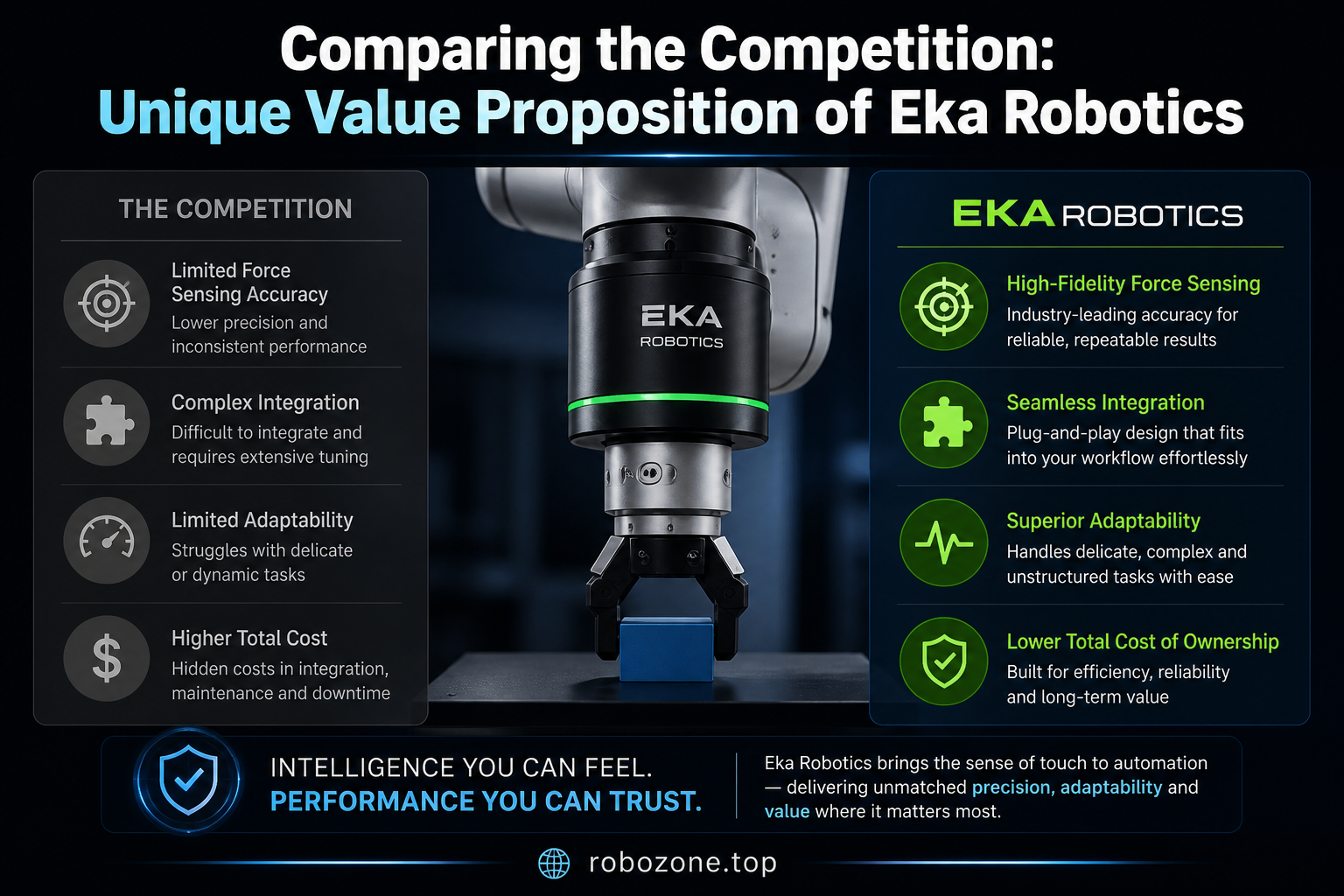
Eka Robotics’ venture into the force-sensing domain pits it against other key players like Boston Dynamics and Universal Robots. Unlike its competitors, whose offerings often focus on either spatial awareness or force control exclusively, Eka combines these elements into a cohesive model. This dual-capability approach could establish Eka as a leader in environments that are prone to rapid change—an aspect not yet thoroughly addressed by its peer organizations.
Boston Dynamics’ humanoid robots, for instance, are notable examples of robots excelling in navigation and automation but less adaptable in nuanced manipulation scenarios requiring real-time feedback adjustments. Universal Robots, while progressive in force-sensitive tech, have a more narrow operational scope as compared to Eka’s envisaged comprehensive vision-force-action deployment.
This strategic advantage translates into real value propositions for industries requiring precision and adaptability across complex operations, providing decision makers with options previously unavailable in robotic automation.
Where Ambition Meets the Real World
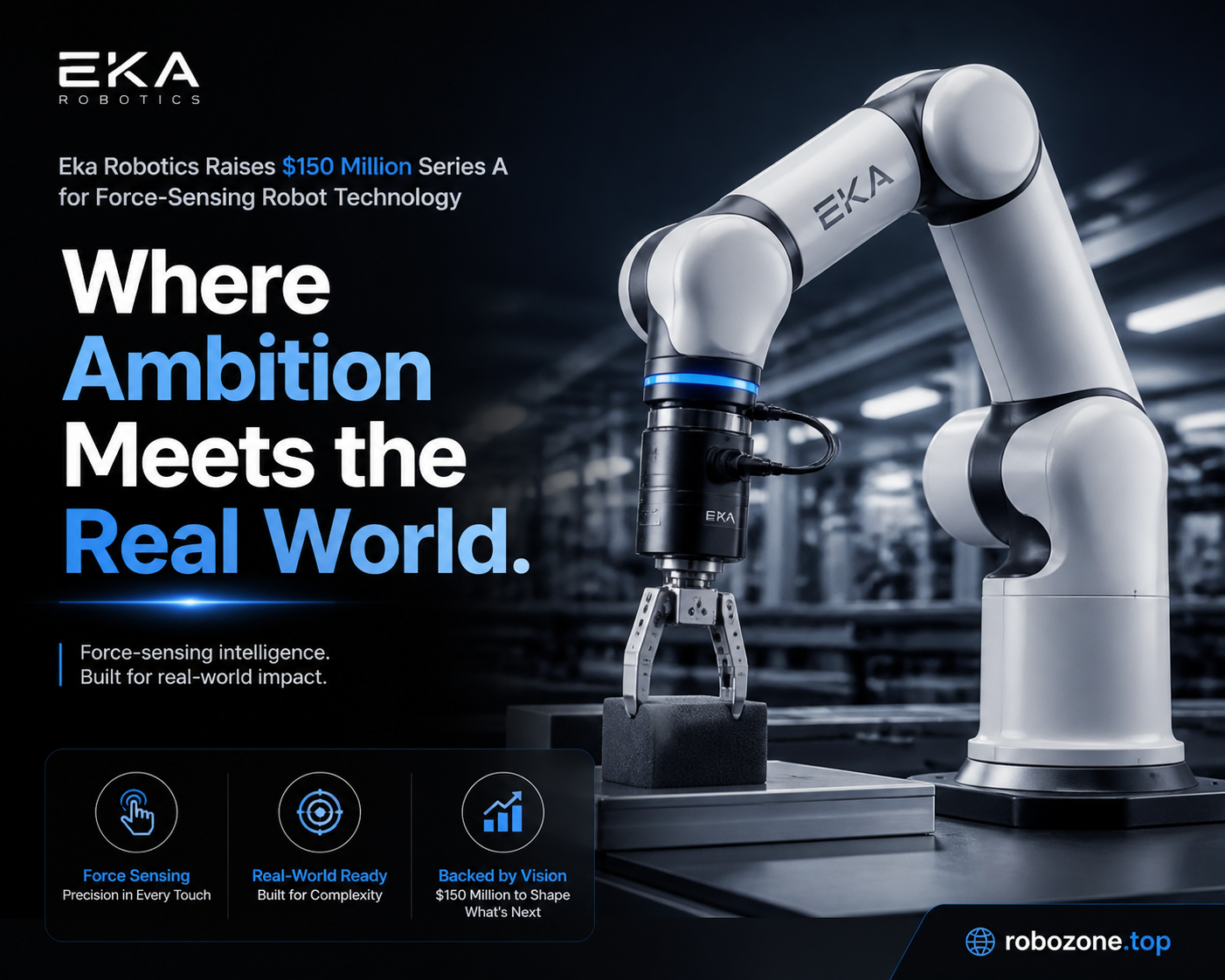
Eka Robotics’ $150 million funding injects robust financial backing that bolsters confidence in their ability to bring technologically sophisticated products from concept to commercial realization. However, the rigor of the path ahead cannot be understated, as scaling and real-world deployment will test the flexibility and integrity of Eka’s engineered models.
Success hinges not solely on technological prowess but also on Eka Robotics’ ability to effectively execute its strategic blueprint, navigating complex supply chain logistics and establishing ample demonstrations of sustained operational excellence. If the spate of technological measures can be proven robust under pragmatic conditions, the ramifications for both industrial and service sectors could be profound.
Over the next 12 to 36 months, critical developments such as successful pilot performance validation, regulatory clearances, and strategic partnerships will determine the pace and breadth of Eka Robotics’ impact. These will reflect whether Eka can fulfill its promise by delivering a new era of adaptable and intuitive robotic assistants across diverse market applications.
Admin of RoboZone.top