If you ask most people what powers a robot, the answers are usually predictable.
Motors. Batteries. Sensors. Hydraulics. Electric actuators.
And technically, those answers are correct.
But after spending years watching the robotics industry evolve, I have become convinced that the most important component inside a modern robot is something most people never see.
Specifically, the extraordinary amount of computational power required to transform a machine from a programmable tool into an intelligent system.
For decades, robotics was primarily a mechanical engineering problem. Today, it is increasingly a computing problem. And perhaps no company has benefited more from that transition than NVIDIA.
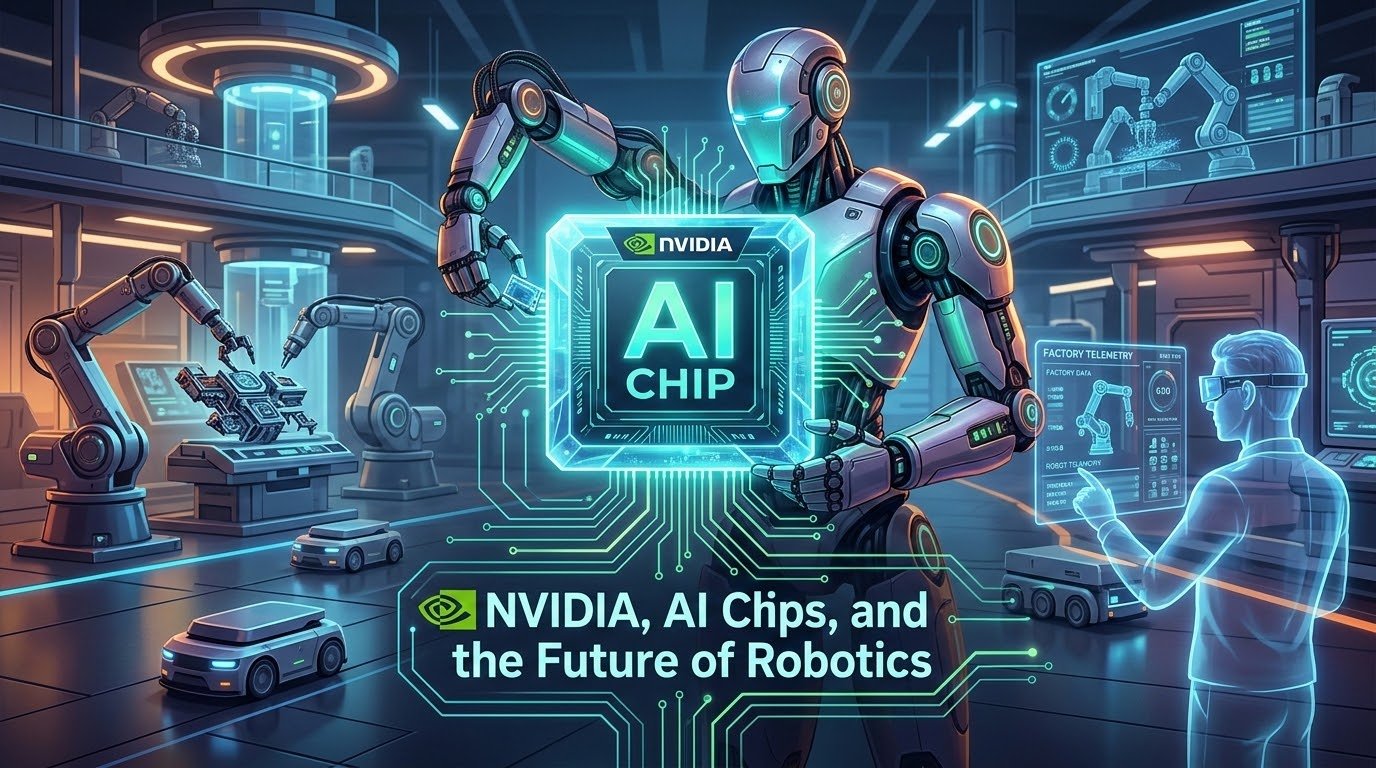
When investors discuss the future of robotics, they often focus on the robots themselves — Tesla Optimus, Figure AI, Boston Dynamics, Agility Robotics, Apptronik, Unitree. Those companies deserve attention.
Perspective Shift
Focusing only on the robots is like studying modern cities while ignoring the electrical grid. The visible machines attract headlines. The invisible infrastructure changes the world.
The Day Robotics Stopped Being About Hardware
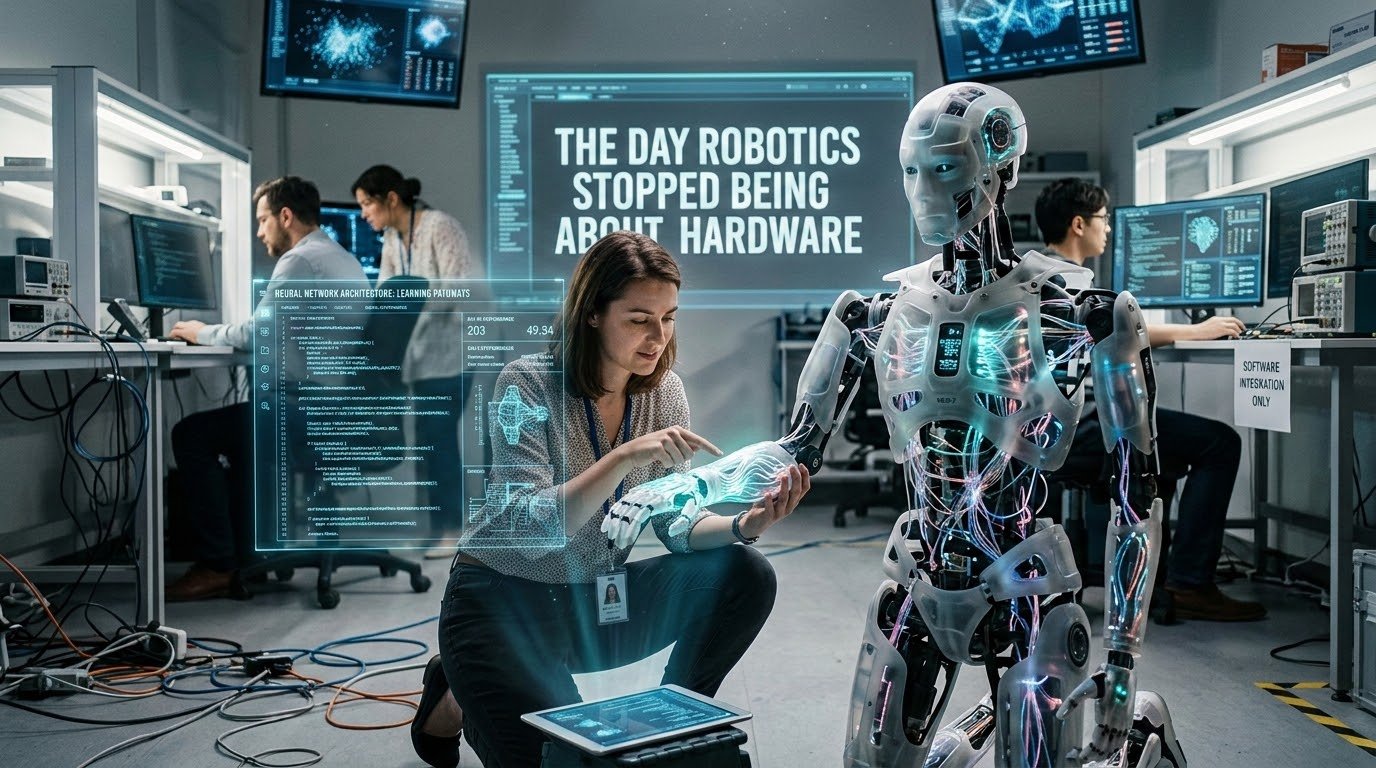
For most of robotics history, building a better robot meant building better hardware. More powerful motors. Stronger materials. Improved actuators. Faster control systems. The engineering challenge was fundamentally physical.
Then artificial intelligence arrived. Not the simplistic AI systems of the early 2000s. Not expert systems. Not rule-based software. Real machine learning. Deep neural networks. Large-scale AI models.
Suddenly, engineers faced a different reality. The limitation wasn’t movement — it was understanding. Robots could move through factories. But could they identify objects? Could they understand language? Could they adapt to changing environments?
Identify Objects
Millions of images to distinguish one item from another
Understand Language
Process commands, context, and intent in real-time
Adapt to Change
Respond to novel environments without explicit programming
Learn from Experience
Improve performance through accumulated data
These questions shifted the center of gravity inside robotics. Mechanical innovation remained important. But intelligence became the primary bottleneck. And intelligence requires computers — massive amounts of it.
Why AI Is Hungry for Computing Power
Imagine teaching a child to recognize a dog. You point at dogs repeatedly. The child gradually learns. Humans perform this task with astonishing efficiency. AI systems do not — a machine learning model might require millions of images before reliably distinguishing a dog from a wolf.
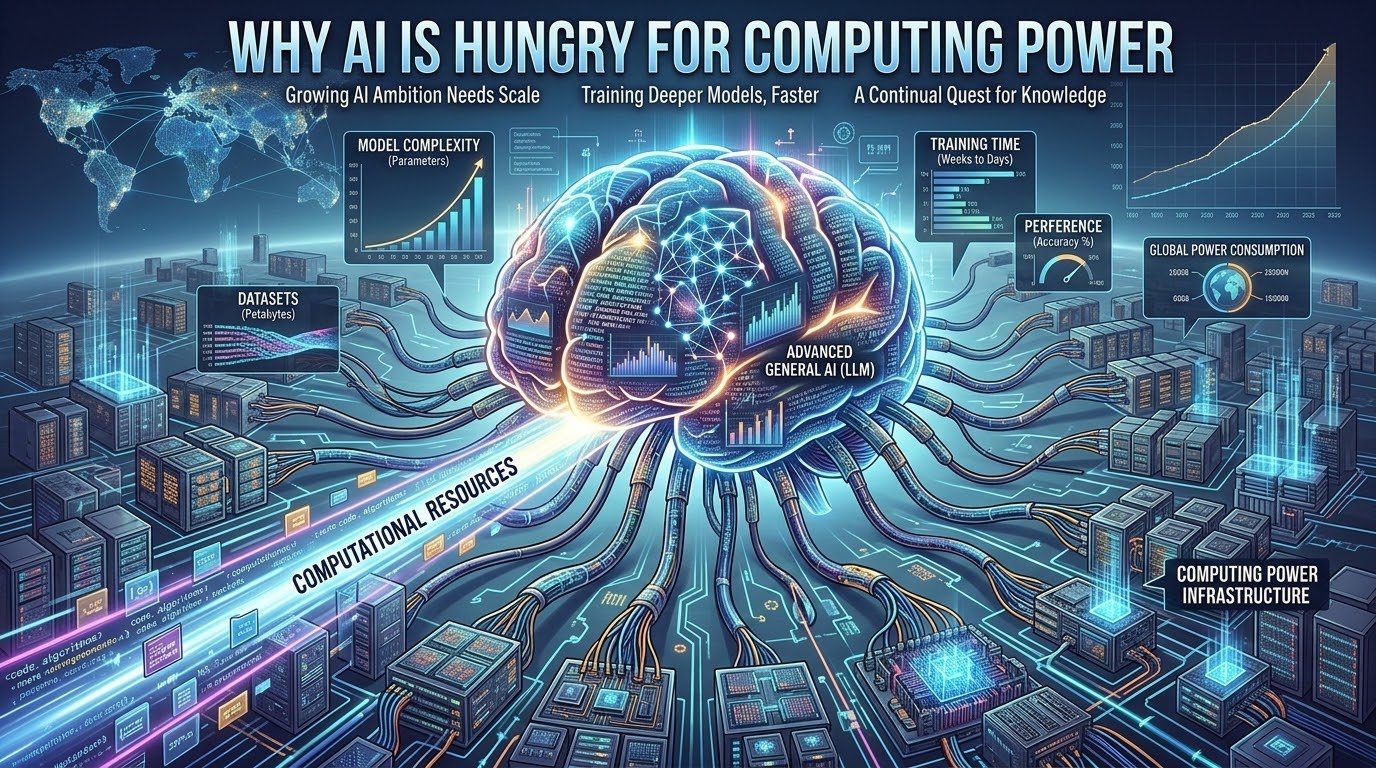
Now scale that challenge. A warehouse robot must recognize thousands of objects. A self-driving vehicle must understand roads, pedestrians, weather conditions, and countless edge cases. A humanoid robot must interpret an entire physical world — every object, every motion, every interaction, every possibility.
Research Consensus
According to researchers from MIT, Stanford University, and OpenAI, AI model complexity continues growing rapidly as systems become more capable. That growth creates an insatiable demand for processing power — and that demand largely explains NVIDIA’s rise.
How NVIDIA Accidentally Became the Backbone of AI
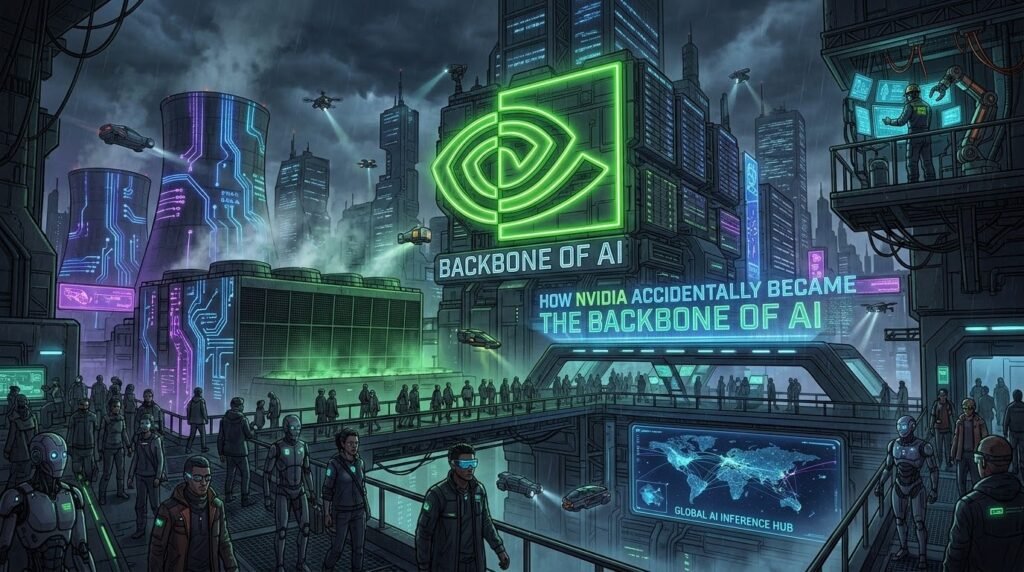
One of the most fascinating stories in modern technology is that NVIDIA never originally set out to dominate artificial intelligence. The company’s roots were in graphics. Gaming. Visual computing. Rendering images. Creating realistic environments. Building faster GPUs.
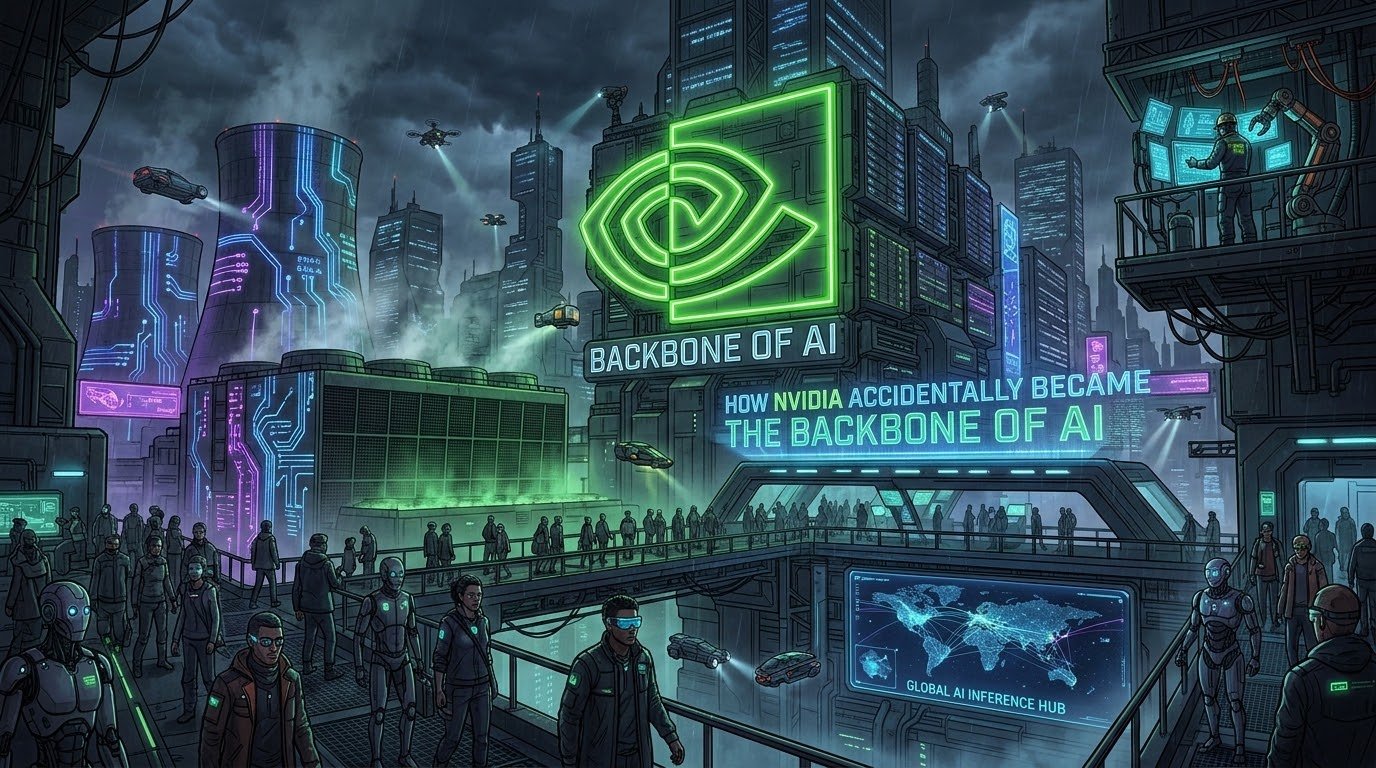
Yet the architecture that made GPUs excellent at rendering graphics turned out to be equally useful for training neural networks. Researchers discovered that GPUs could process large amounts of parallel data dramatically faster than traditional CPUs. That realization changed everything.
CPU — Sequential
Processes tasks one at a time. Excellent for complex, ordered logic. Limited parallelism.
GPU — Parallel ✓
Thousands of cores processing data simultaneously. Perfect for AI training and inference at scale.
As NVIDIA CEO Jensen Huang frequently explains, modern AI development increasingly depends on accelerated computing rather than conventional computing architectures. In simple terms: AI needs a different type of engine. And NVIDIA spent decades building it.
The Robot You See Is Not the Robot Being Trained
This is one of the most misunderstood aspects of modern robotics. When people watch a robot performing a task, they assume the learning occurred inside the machine itself. Usually, that’s not what happened.
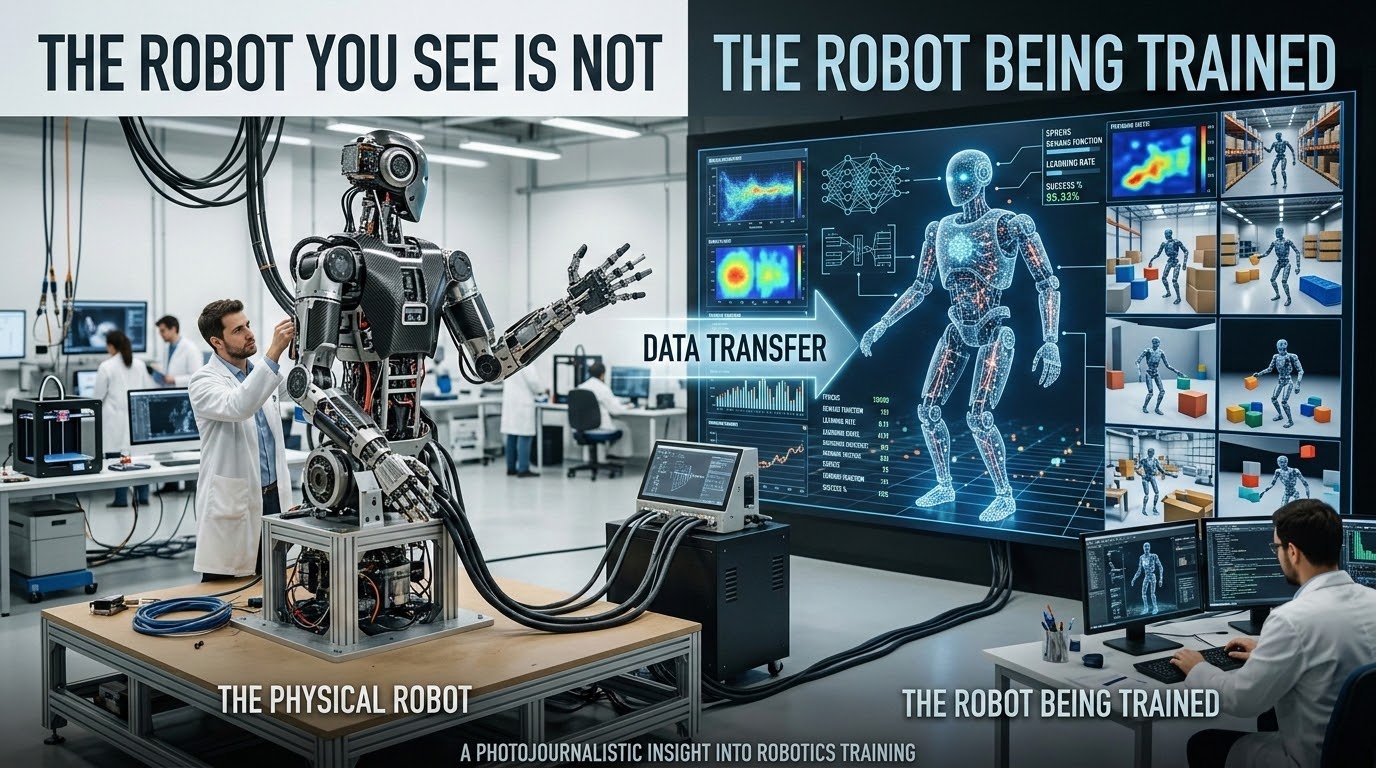
Most advanced robots — Tesla Optimus, Figure 02, Agility’s Digit — undergo enormous amounts of virtual training before entering factories. They learn how to walk, grasp objects, maintain balance, navigate environments, and respond to unexpected situations.
Training Pipeline
Companies use NVIDIA Isaac Lab and NVIDIA Omniverse to create virtual worlds where robots learn safely before entering reality. In some cases, a robot may experience years of simulated activity in a matter of weeks. That’s an astonishing advantage.
Why Digital Twins May Be More Important Than Humanoid Robots
Whenever robotics appears in mainstream media, humanoid robots dominate the conversation. They look futuristic. They resemble science fiction. But another technology may ultimately prove even more important.
Digital Twins.
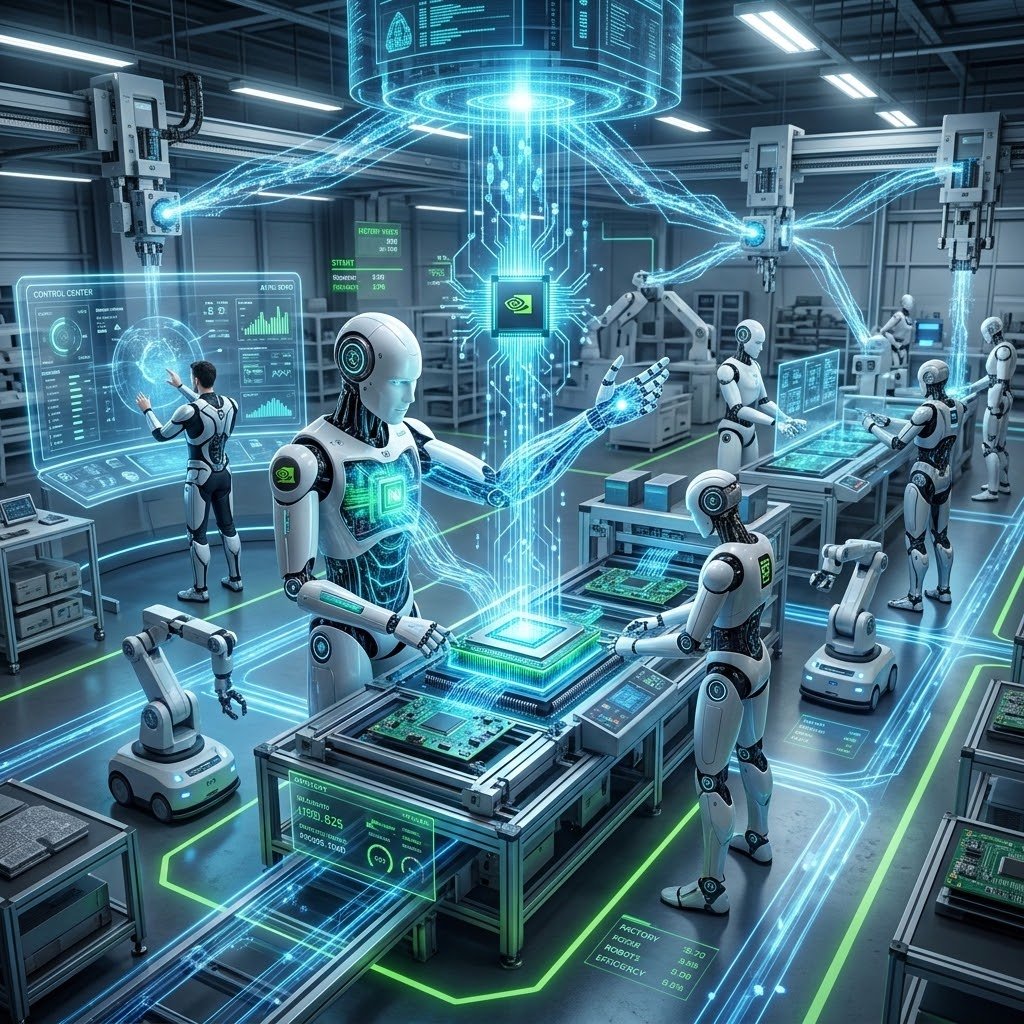
A virtual replica of a physical environment. Factories. Warehouses. Hospitals. Cities. Even entire supply chains. Built inside simulation platforms, updated in real-time, and used to test decisions before they happen in the physical world.
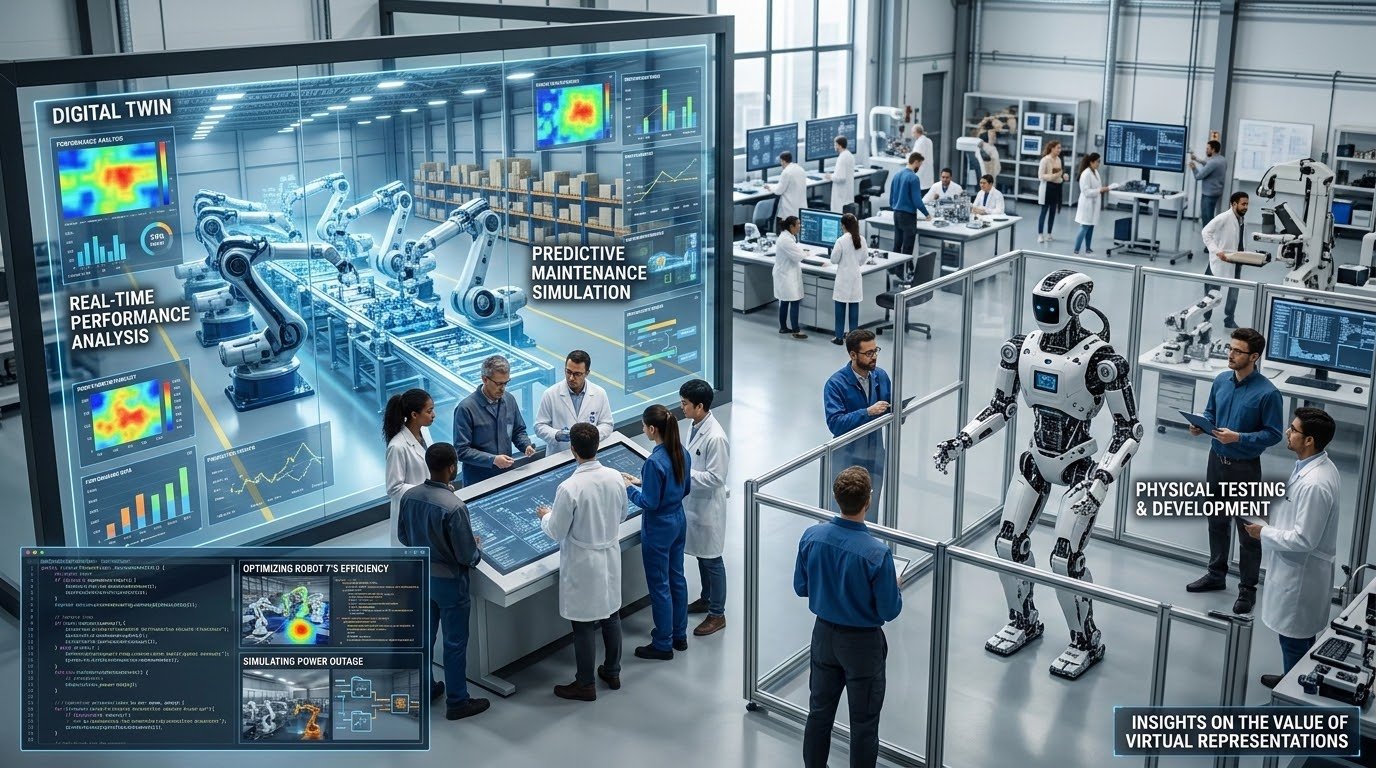
Instead of discovering problems after installation, organizations can identify them beforehand — inside a safe, costless virtual environment.
Instead of risking production downtime, they can experiment virtually — testing thousands of scenarios in hours rather than months.
Instead of making expensive mistakes, they can learn digitally — and arrive at the physical world already optimized.
The Birth of Physical AI
Over the past few years, a new phrase has begun appearing across robotics conferences: Physical AI. At first glance, the term sounds like marketing. But it describes something genuinely important.
Traditional AI
🔍 Search engines
📊 Recommendation algorithms
🎵 Digital assistants
Lives inside screens. No physical presence.
Physical AI ✓
🚶 Moves and navigates
✋ Manipulates objects
🤝 Interacts with humans
Enters the real world. Has physical consequences.
The critical difference: A chatbot can generate a slightly incorrect sentence without serious consequences. A robot cannot casually misinterpret gravity. Physical mistakes have physical consequences — making reliability far more important, and achieving reliability far more computationally demanding.
Why the Next Robotics Race May Actually Be a Semiconductor Race
The history of technology offers a recurring lesson. Transformative industries often depend on infrastructure that receives less attention than the products themselves.
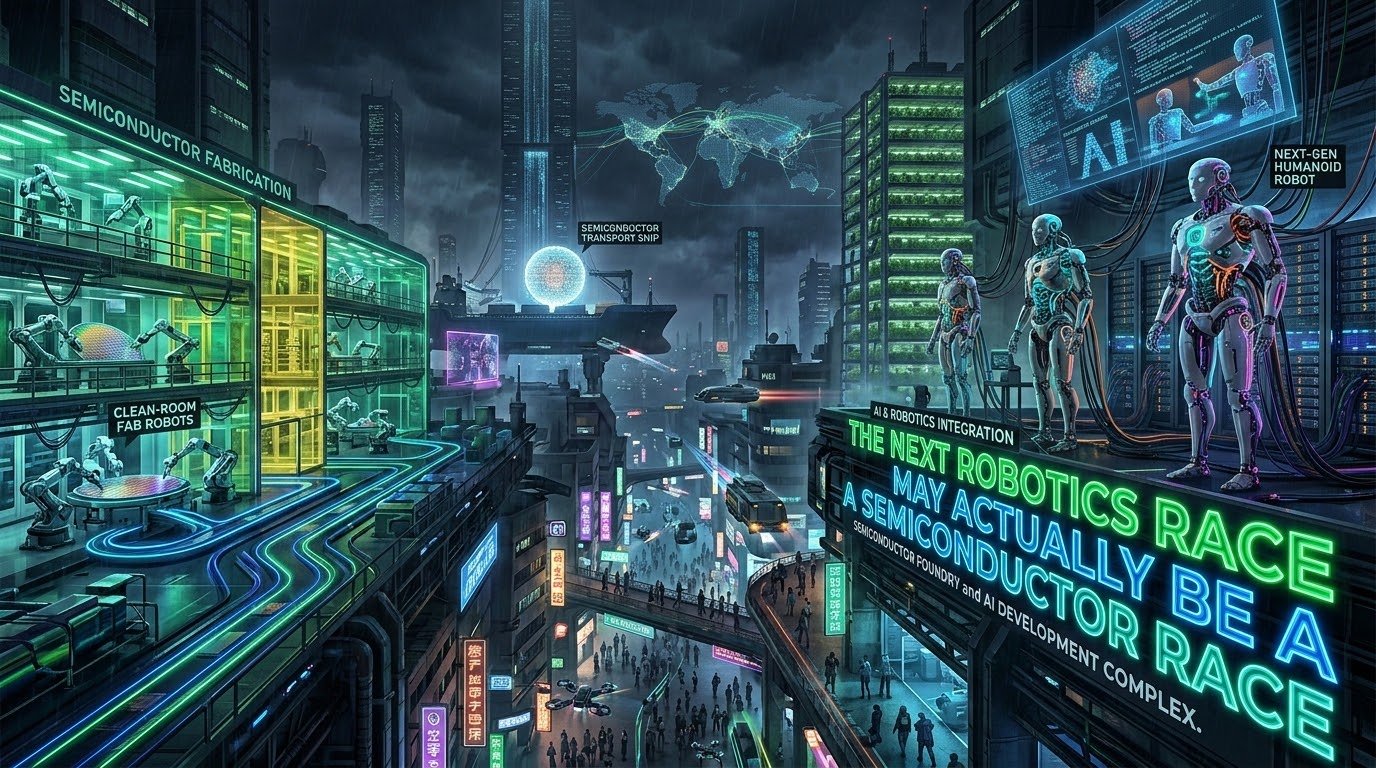
This explains why governments worldwide are paying closer attention to semiconductor supply chains. The United States, China, Europe, Japan, South Korea, Taiwan — everyone understands the strategic importance of advanced computing infrastructure.
The future of robotics may be decided as much inside chip fabrication facilities as inside robotics laboratories.
What Happens Next?
Over the next five years, we are likely to witness a dramatic increase in robotic intelligence — not because robots suddenly become mechanically superior, but because they become computationally superior.
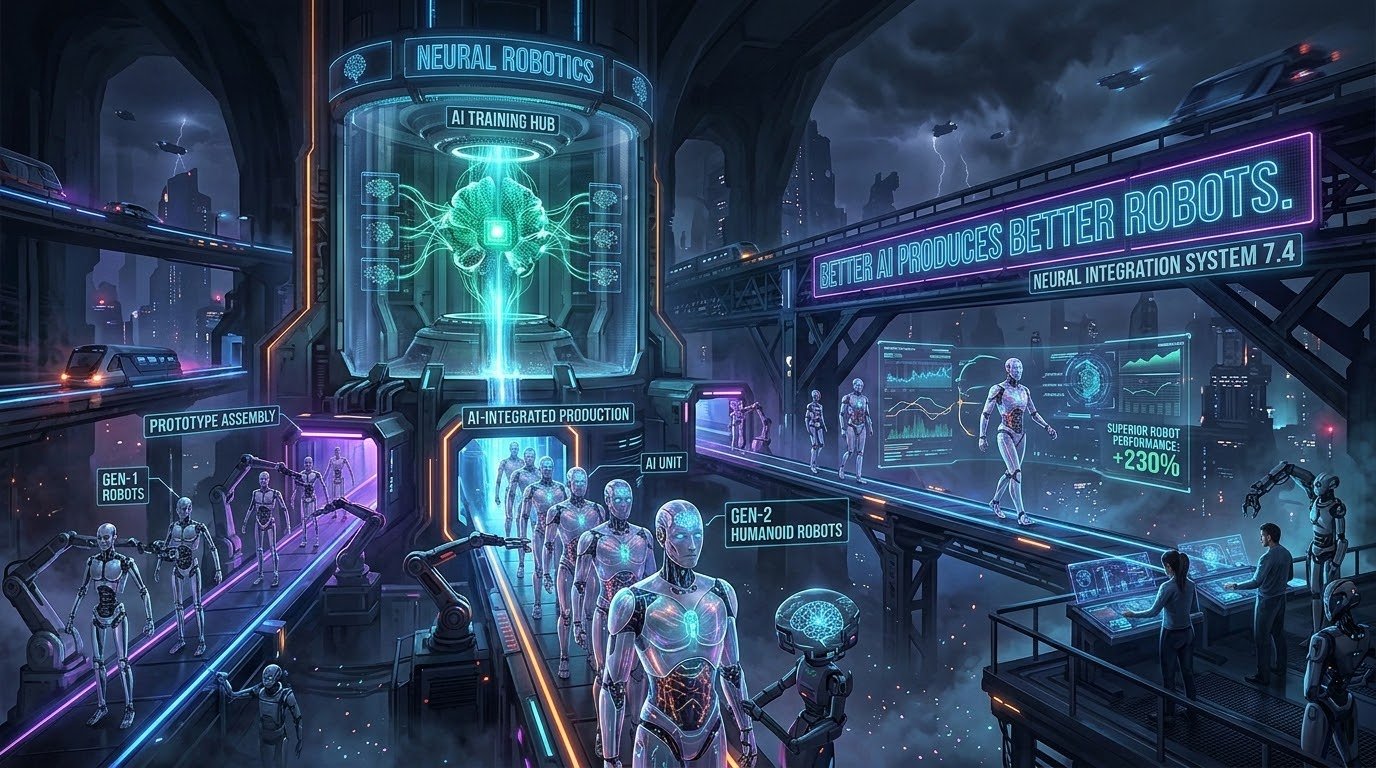
The Acceleration Loop
→
→
→
↩
The cycle repeats — and accelerates.
Many technology leaders increasingly compare compute to electricity. Electricity powered the industrial revolution. Compute may power the AI revolution.
The Bigger Question Nobody Is Asking
Most discussions focus on what robots will do. That is important. But I think a more interesting question is this:
“What happens when intelligence becomes an industrial resource?”
Historically, intelligence was tied to humans. Organizations grew by hiring more people. Future organizations may increasingly scale intelligence through machines. That possibility raises profound questions about productivity, labor, education, competition, innovation — and ultimately, human value.
We are only beginning to explore those questions. Yet one thing already appears clear:
Conclusion
The future of robotics will not be built solely from steel, motors, and sensors.
It will be built from data, algorithms, semiconductors, and compute.
The robots may capture the headlines. But the chips inside them may quietly shape the future.
References & Further Reading
Admin of RoboZone.top · Researcher in AI, robotics, and emerging technology · Author on Amazon KDP · CEO, NEWSTAR Digital Marketing