This morning, as the sun slowly crept across my desk, I opened the usual stack of robotics news tabs that have become part of my daily ritual. If you follow robotics closely, you know the feeling: every week seems to bring another breakthrough, another headline promising that machines are about to step out of laboratories and into everyday life. But today something felt slightly different.
Over the past year, the conversation around robotics has shifted. Not dramatically, not with some Hollywood-style moment where humanoid robots suddenly start walking down Main Street—but quietly, steadily, with a pattern that researchers, engineers, and industry analysts have begun to notice.
Robots are no longer just industrial tools.
They are becoming economic actors.
Factories are changing. Warehouses are changing. Hospitals are changing. And if current investment trends continue, the next place robotics will change dramatically may be the most personal environment of all: our homes.
Today on RoboZone.top, we’re going to explore a question that seems simple on the surface but is surprisingly complex once you dig into the technology, economics, and research behind it:
Are we finally approaching the age of truly useful home robots?
And if so, what will they actually look like?
The Long Road to the “Home Robot”
To understand where we are today, it helps to step back for a moment.
The idea of household robots isn’t new. In fact, engineers have been trying to build them for decades. If you read robotics journals from the late 1980s and early 1990s, you’ll see researchers confidently predicting that robotic assistants would soon help with chores like cleaning, cooking, and even elder care.
Yet for most of that time, reality lagged behind imagination.
The challenge was never just mechanical engineering. Building a robot arm that moves precisely is one thing. Building a robot that can understand messy human environments is something entirely different.
A factory floor is predictable. A living room is chaos.
Children leave toys on the floor. Furniture gets rearranged. Lighting changes throughout the day. Pets wander unpredictably. Even something as simple as picking up a sock becomes a serious challenge when a robot must first identify the object, determine its shape, and decide how to grasp it without damaging anything around it.
For many years, robotics simply didn’t have the computational power or the machine learning capabilities required to deal with that complexity.
That’s beginning to change.
The AI Revolution Behind Modern Robotics
One of the biggest reasons robots are improving so rapidly today is the explosion of artificial intelligence research over the past decade.
Machine learning—particularly deep learning—has transformed how robots perceive the world. Instead of relying on rigid programming rules, modern robotic systems can learn patterns from massive datasets.
A robot trained on millions of images can recognize objects with surprising accuracy. It can distinguish between a cup and a bottle, a chair and a table, a human and a mannequin.
This shift is already visible in the latest generation of robotic systems being developed by companies such as Boston Dynamics, Agility Robotics, and emerging startups like Figure AI.
Just a few years ago, these companies focused mainly on mobility: teaching robots to walk, balance, and navigate complex terrain.
Now the focus is shifting toward interaction.
Researchers are trying to teach robots not just to move—but to understand what they’re doing.
Warehouses: The First Real Robot Workforce
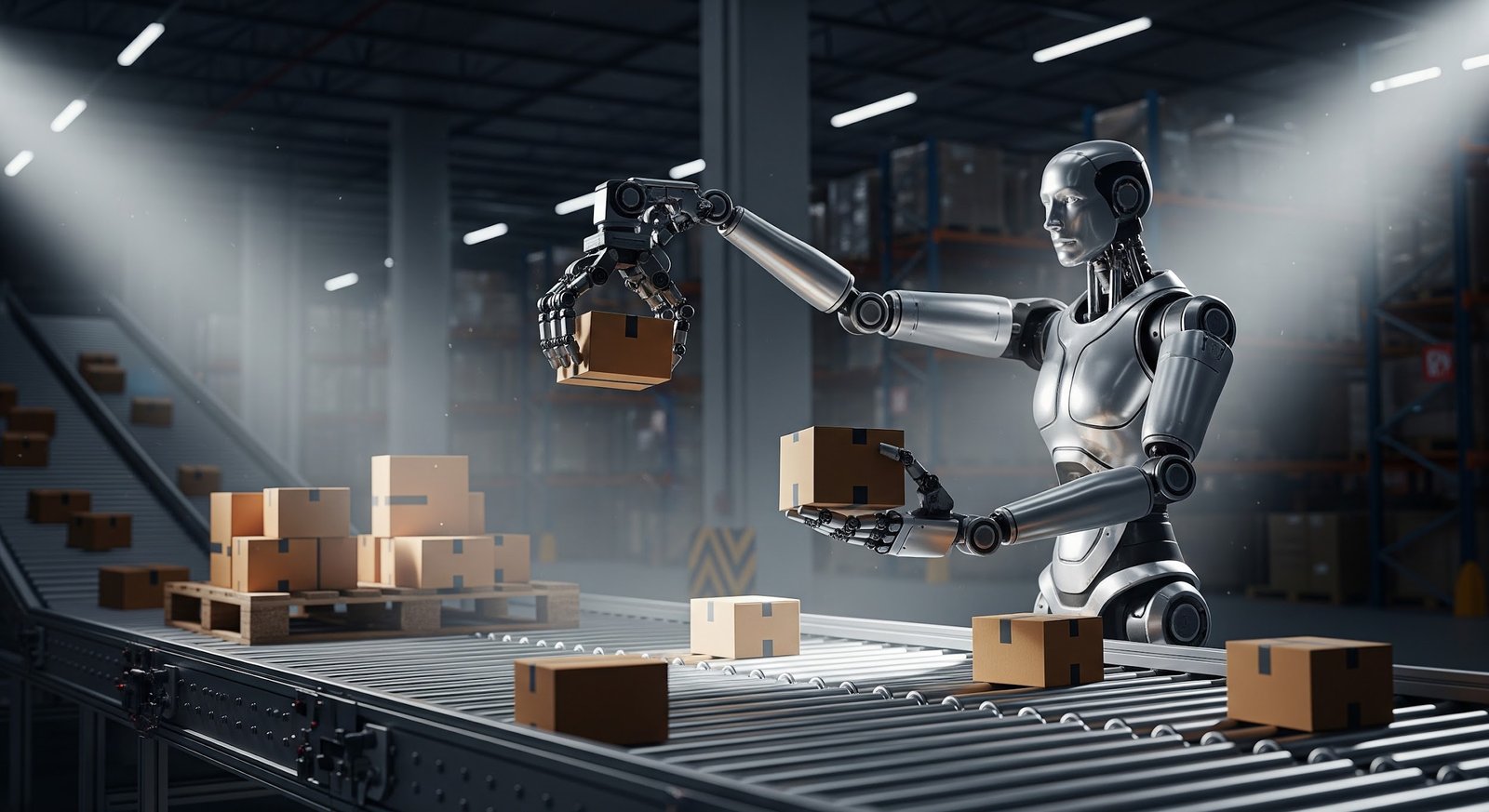
If you want to see where robotics is actually succeeding today, look at warehouses.
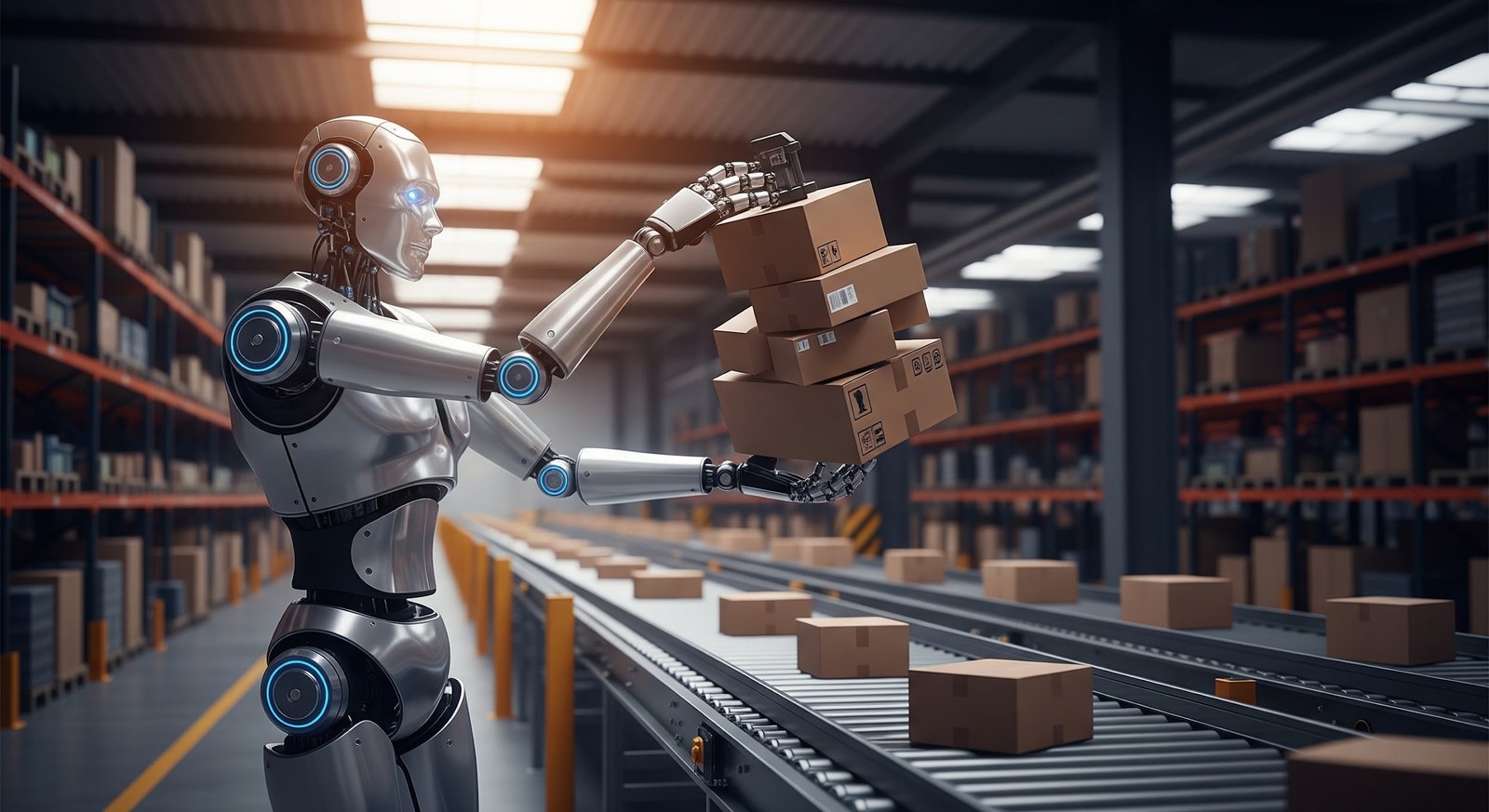
Companies like Amazon have deployed hundreds of thousands of mobile robots inside their fulfillment centers. These machines don’t look like humanoid assistants—they’re more like flat autonomous carts that slide under shelves and move them across massive facilities.
But economically speaking, they represent something profound.
They work continuously.
They rarely make mistakes.
And they dramatically increase the efficiency of logistics operations.
According to research from the International Federation of Robotics, the global stock of industrial robots has surpassed 3.9 million units in operation worldwide. Most of those robots work in manufacturing and logistics.
The automotive industry remains the largest adopter, but sectors like electronics manufacturing and e-commerce logistics are catching up quickly.
What matters here is not just the number of robots.
It’s the trend.
Automation is no longer a niche strategy. It’s becoming a competitive necessity.
The Rise of Humanoid Robotics
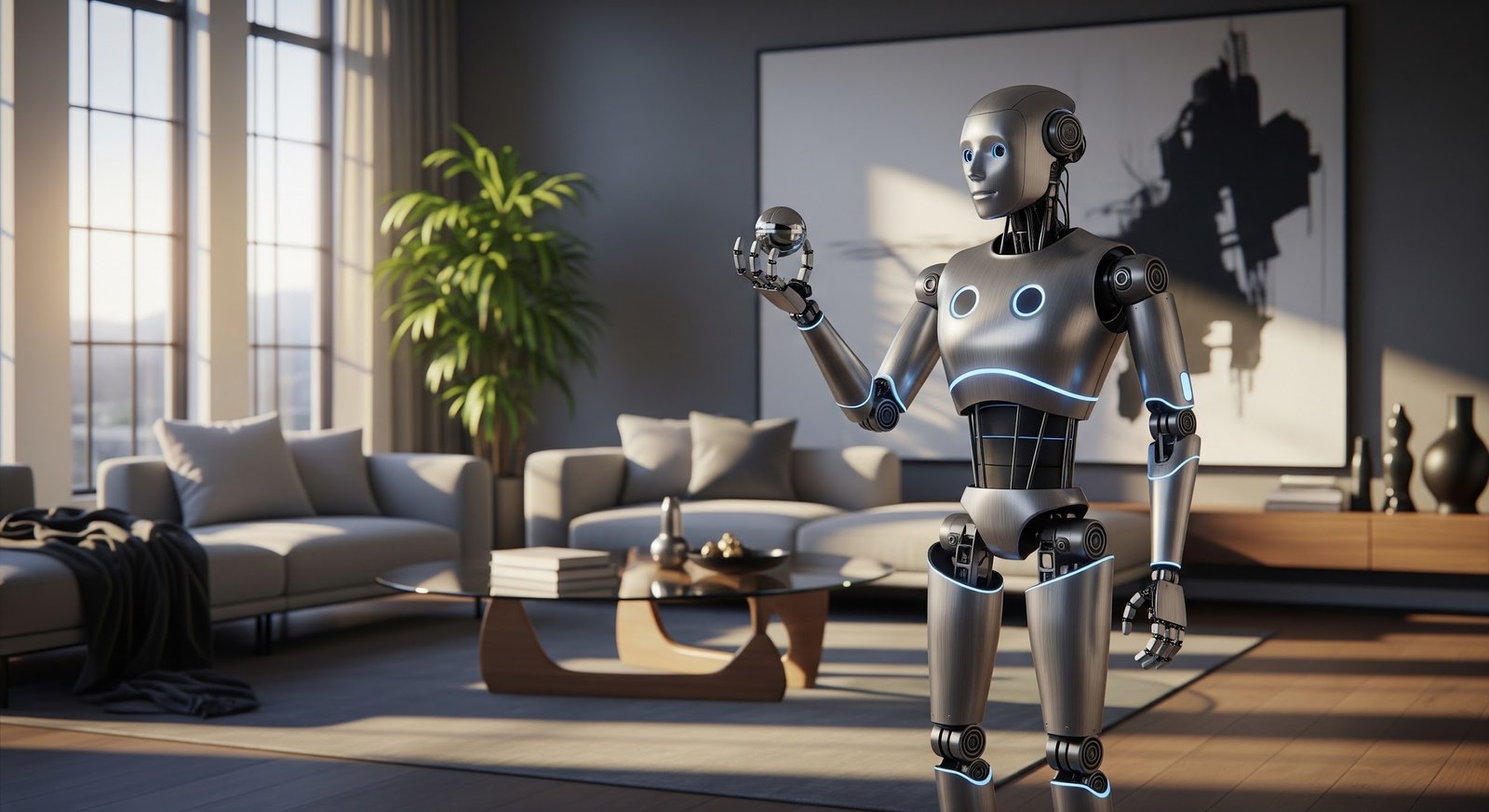
Now we arrive at one of the most fascinating developments in modern robotics: humanoid machines.
For decades, engineers debated whether humanoid robots were practical or merely aesthetic. After all, why build a robot that looks like a person when a specialized machine can do a task more efficiently?
That question is now being reconsidered.
The reason is surprisingly practical: human environments are designed for human bodies.
Door handles are placed at human height. Tools are built for human hands. Staircases are shaped for human legs.
A robot designed with a humanoid structure can theoretically navigate these environments without requiring massive infrastructure changes.
That’s why companies such as Tesla have invested heavily in humanoid robotics projects like the Optimus robot.
Similarly, Agility Robotics has developed Digit, a bipedal robot designed for logistics tasks like moving packages inside warehouses.
These machines are still in early stages. Their movements remain slower and less fluid than human motion.
But the progress is undeniable.
Why Home Robots Are So Difficult
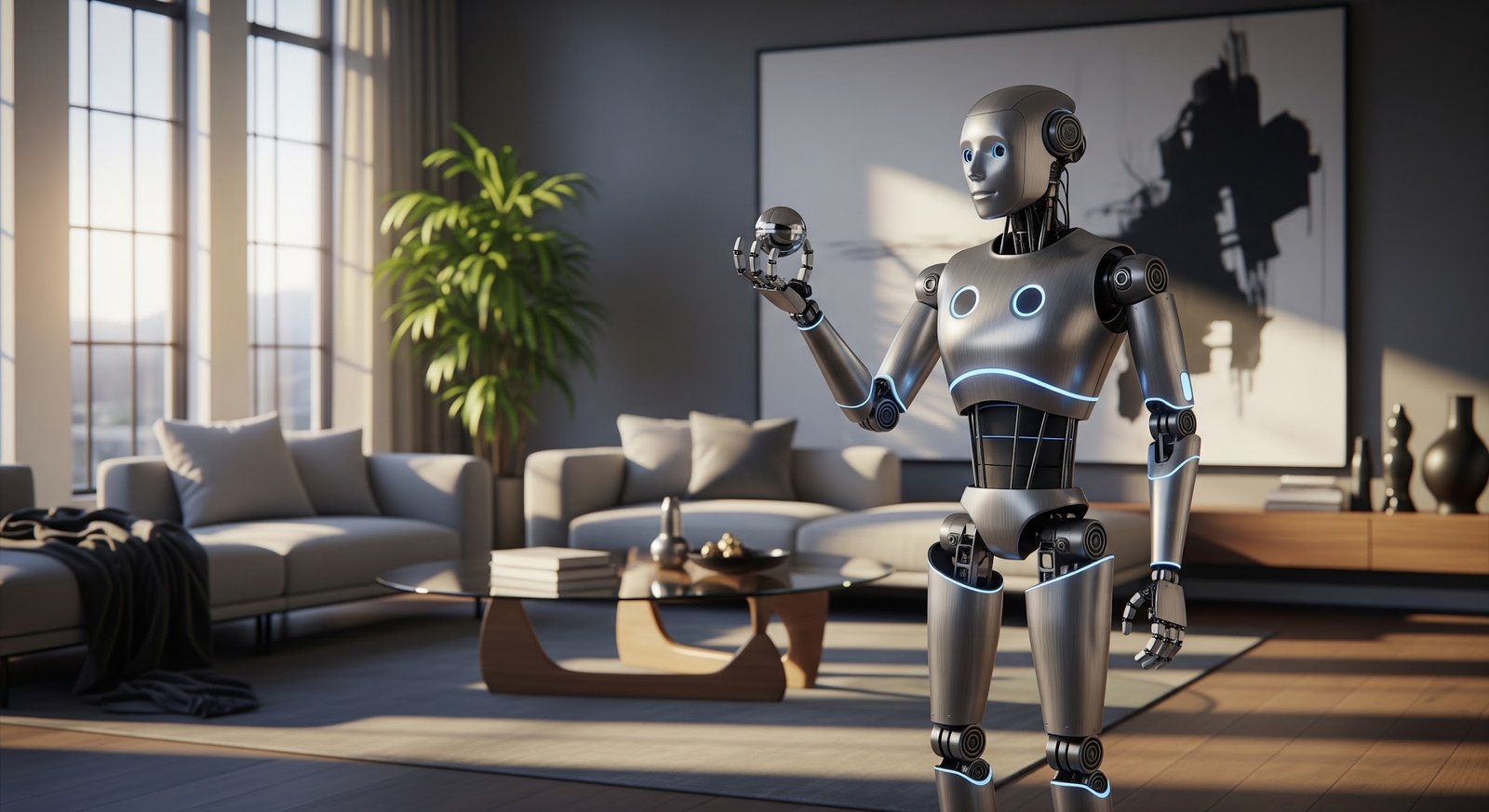
Despite all this progress, the home remains one of the most difficult environments for robotics.
Factories are structured environments. Homes are unpredictable ecosystems.
Consider something as simple as washing dishes.
For a human, the task takes only a few minutes of casual attention. For a robot, it requires multiple complex operations:
First, the robot must visually identify dishes among other objects. Then it must determine which ones are dirty. Next, it needs to grasp each item without dropping it or breaking it. After that, it must operate faucets, soap dispensers, and dish racks.
And every kitchen is different.
Handles are shaped differently. Countertops are arranged differently. Lighting conditions vary throughout the day.
Researchers at institutions like Carnegie Mellon University and Stanford University have spent years studying this exact problem: how to make robots operate in unstructured human environments.
Their work often focuses on something called embodied AI—the idea that intelligence emerges from the interaction between perception, movement, and environment.
In other words, a robot doesn’t just need to think.
It needs to experience the world physically.
The Hidden Economics of Robotics
Another factor that determines whether robots enter our homes is cost.
Industrial robots make economic sense because they operate in environments where efficiency directly translates into profit. If a warehouse robot increases productivity by 20%, companies can justify large investments.
Household robots face a different challenge.
Consumers are extremely price sensitive.
A robot that costs $40,000—even if it performs impressive tasks—simply won’t reach mass adoption.
This is where advances in computing hardware and AI acceleration chips become crucial.
Companies like NVIDIA are developing specialized processors designed specifically for robotic perception and machine learning workloads.
These chips dramatically increase the computational power available to robots while reducing energy consumption.
Lower hardware costs mean more affordable robots.
And affordable robots mean a larger market.
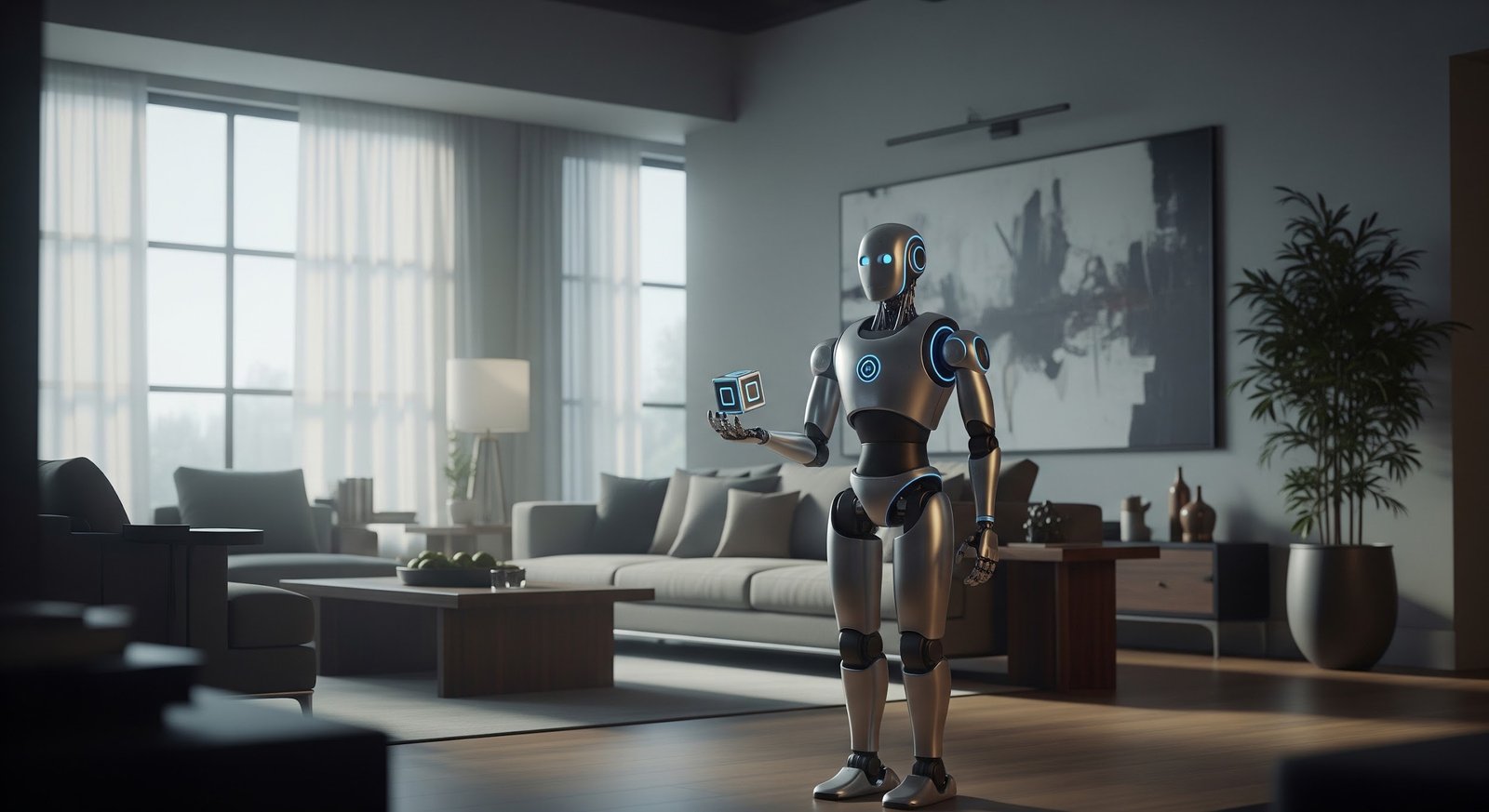
What the Research Community Is Saying
Over the past year, robotics researchers have begun discussing a concept called general-purpose robotics.
The idea is similar to the evolution of computers.
Early computers performed specific tasks: calculating numbers, processing text, or running scientific simulations.
Modern computers are flexible platforms capable of running millions of different applications.
Robots may be moving toward a similar model.
Instead of building separate machines for every possible task, engineers are designing general robotic platforms that can learn new skills through software updates.
A household robot might initially be capable of basic cleaning tasks.
Later updates could enable it to cook simple meals, carry groceries, or assist elderly residents with mobility.
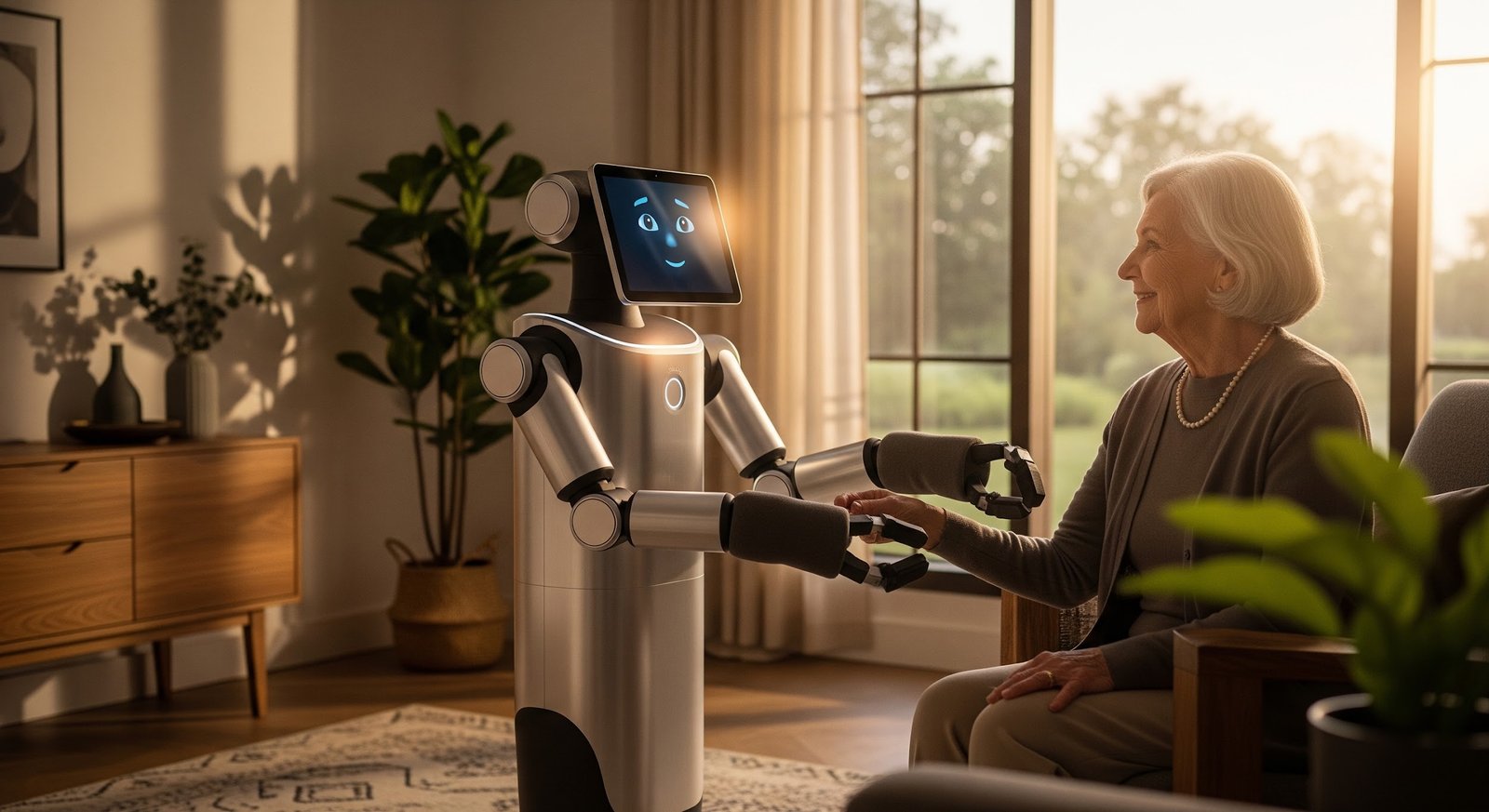
In futuristic household robot assisting an elderly person in a living room, warm lighting, compassionate technology concept
The Social Impact of Home Robotics
Of course, technology rarely changes society in purely technical ways.
Robots entering homes will raise profound social questions.
Who owns the data these machines collect?
How do we ensure they operate safely around children and pets?
What happens when millions of domestic tasks become automated?
Economists studying automation have long debated whether robotics will eliminate jobs or simply transform them.
The answer may be a mixture of both.
Some jobs will disappear. Others will emerge.
Entirely new industries could form around maintaining, programming, and upgrading domestic robots.
History offers many examples of technological transitions that initially sparked fear but ultimately created new opportunities.
The arrival of personal computers in the 1980s triggered similar debates.
Today, few people would argue that computers made society less productive.
Robotics may follow a similar path.
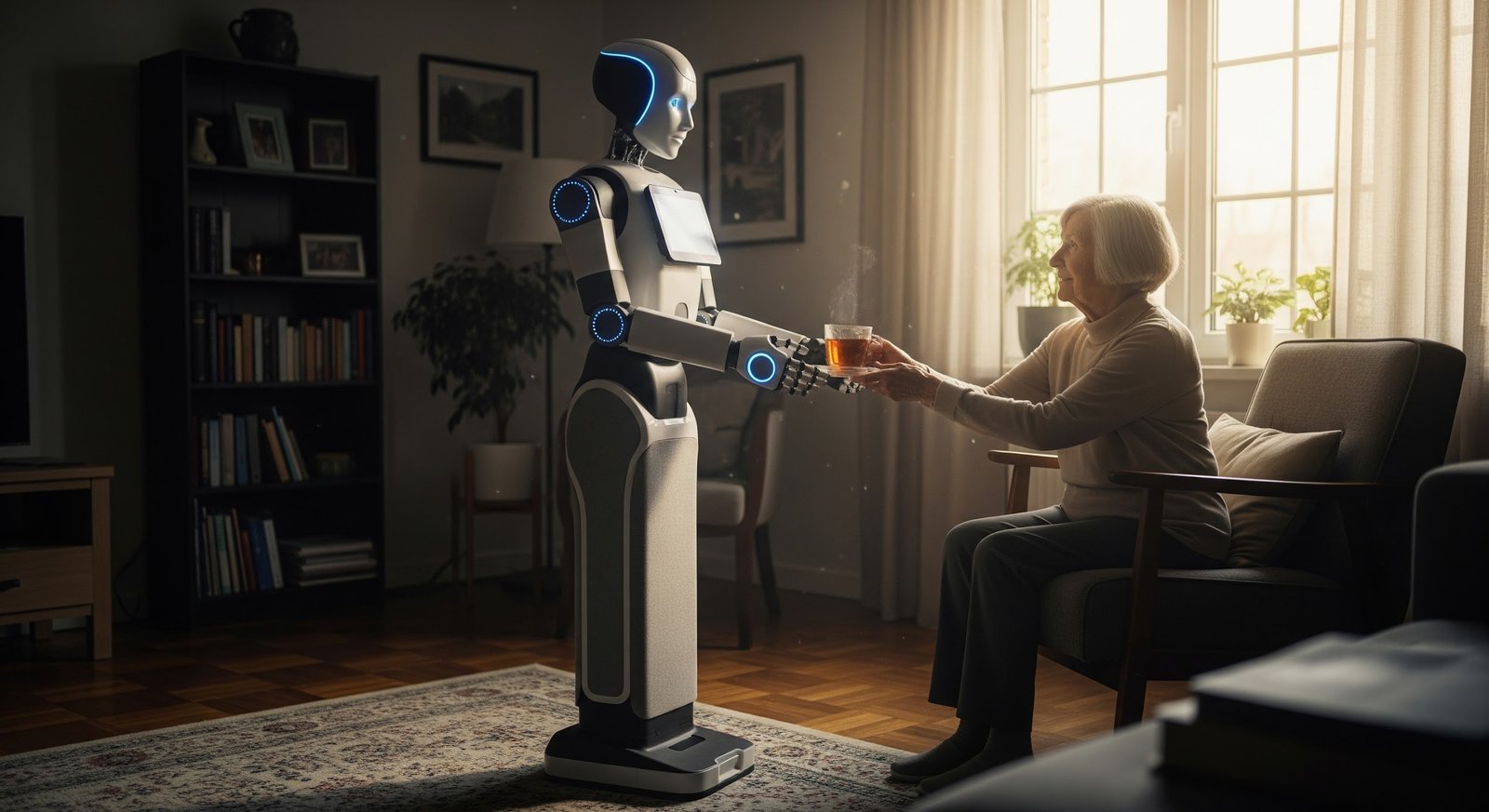
A Prediction for the Next Five Years
If we project current research trends forward, the next five years will likely bring several important developments in robotics.
First, humanoid robots will begin appearing in limited industrial roles—particularly in warehouses and logistics facilities.
Second, specialized home robots will become more capable. Vacuum robots may evolve into multi-function cleaning systems capable of handling floors, windows, and surfaces.
Third, AI-powered perception systems will improve dramatically.
Robots will become better at understanding everyday environments, which is one of the biggest barriers to practical home automation.
And finally, we may begin to see early versions of multi-purpose home robots, though they will likely remain expensive during the first wave of adoption.
But once production scales and technology matures, prices will fall.
That’s when the real transformation begins.

So Where Are We Headed?
When I step back and look at the robotics landscape today, one thing becomes clear.
We are not yet living in a world filled with robotic assistants.
But for the first time in decades, the foundational technologies required to build them are beginning to converge.
Artificial intelligence is improving perception.
Advanced actuators are improving movement.
Powerful processors are improving decision-making.
The pieces are slowly falling into place.
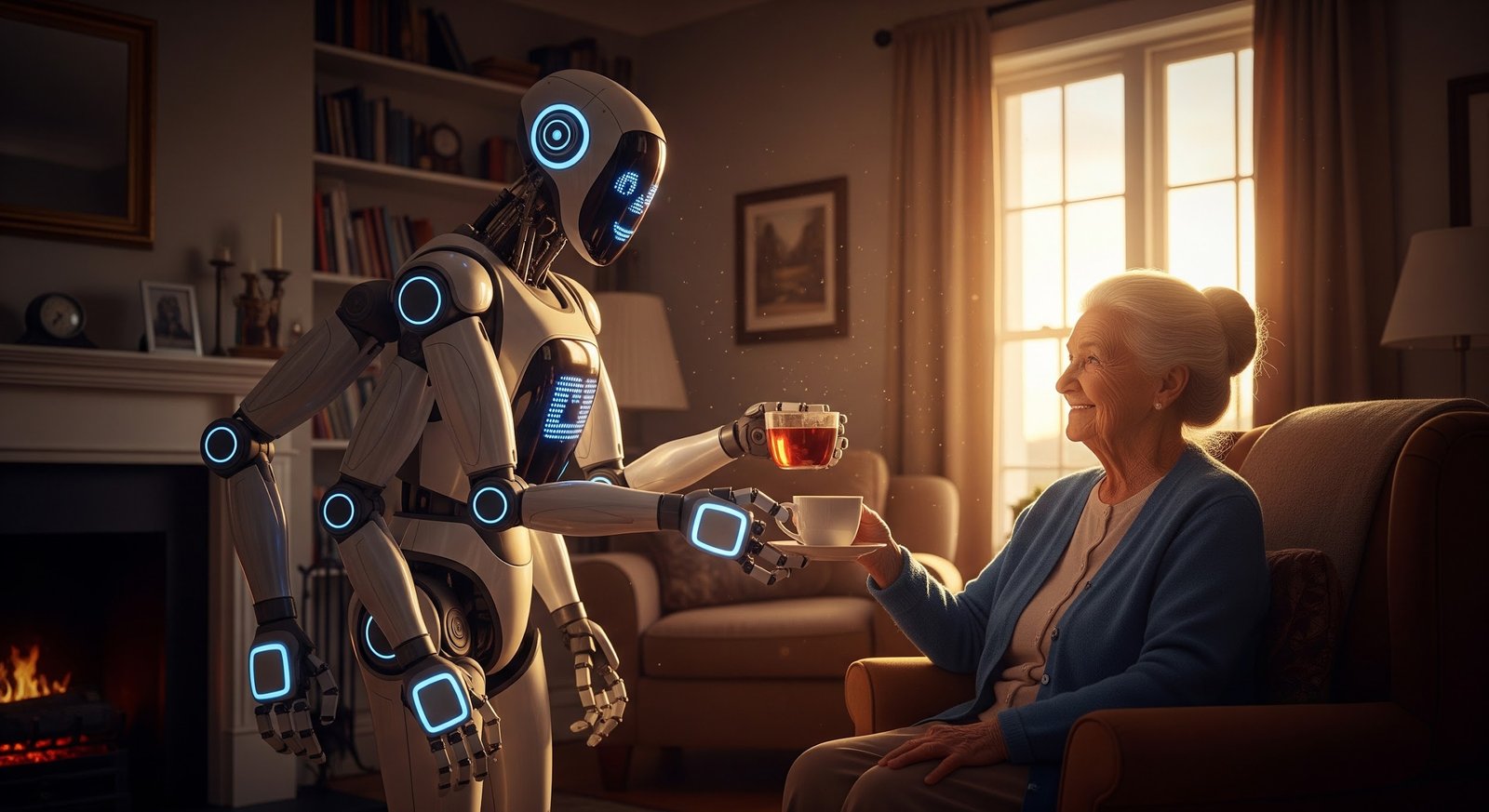
And when that happens—when these technologies finally integrate into reliable, affordable systems—we may look back at this decade as the moment robotics quietly crossed a threshold.
Not with a dramatic announcement.
Not with a sudden breakthrough.
But with a steady accumulation of progress that eventually made intelligent machines a normal part of everyday life.
And if that happens, the next generation might grow up thinking household robots were always inevitable.
Just like the internet.
Just like smartphones.
Just like every technology that once felt impossible until it suddenly became ordinary.
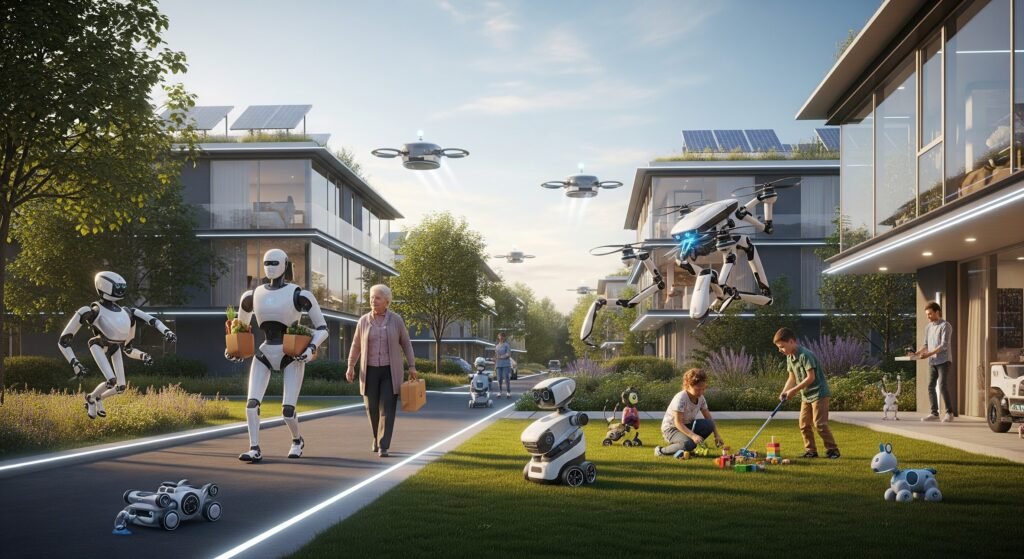
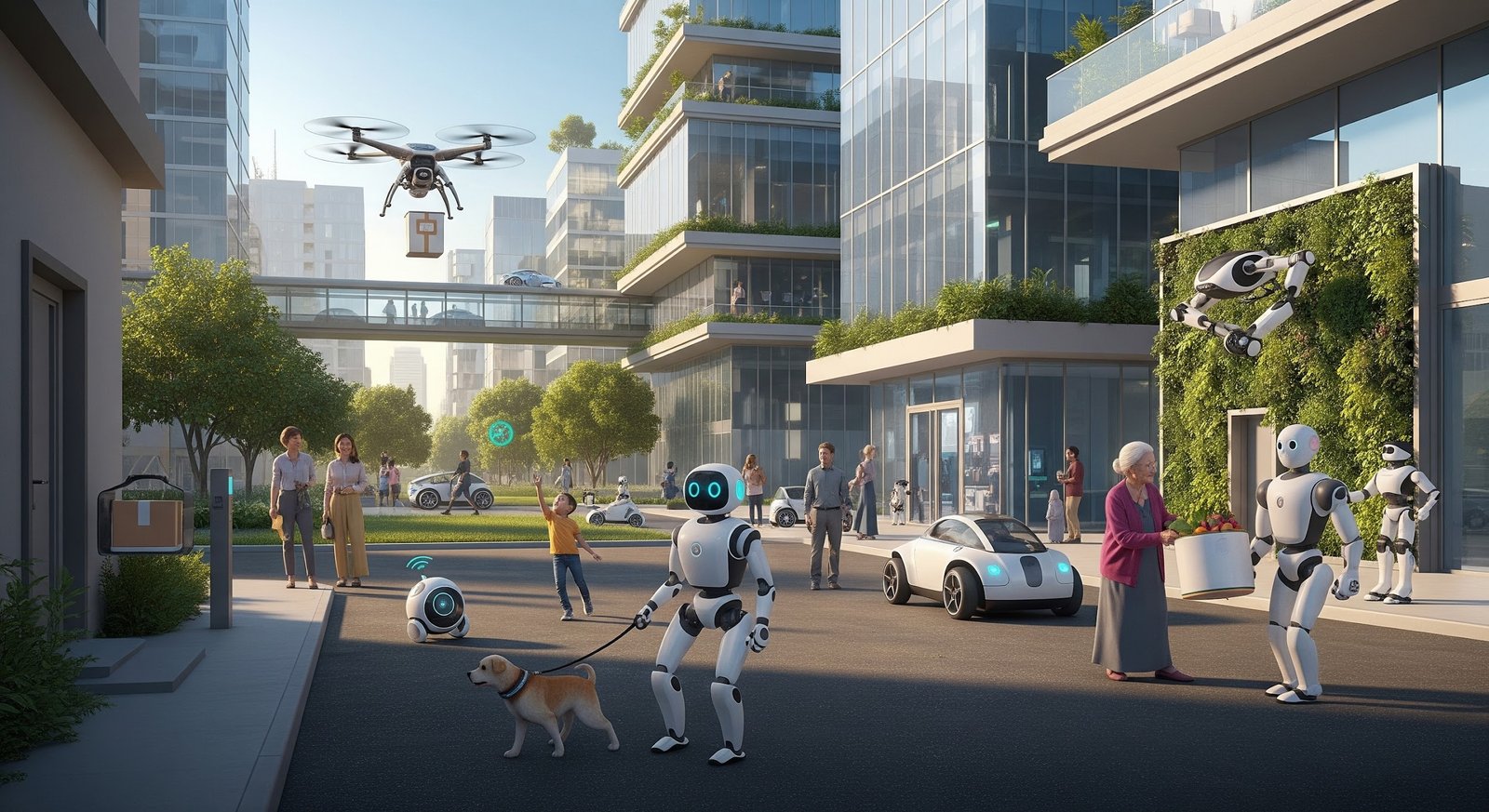
[this image – futuristic neighborhood scene where multiple household robots assist humans with daily tasks, cinematic illustration, realistic robotics future]
References
MIT Technology Review — https://www.technologyreview.com
IEEE Spectrum Robotics — https://spectrum.ieee.org/robotics
International Federation of Robotics — https://ifr.org
Carnegie Mellon Robotics Institute — https://www.ri.cmu.edu
Thomas Huynh – Admin of RoboZone.top