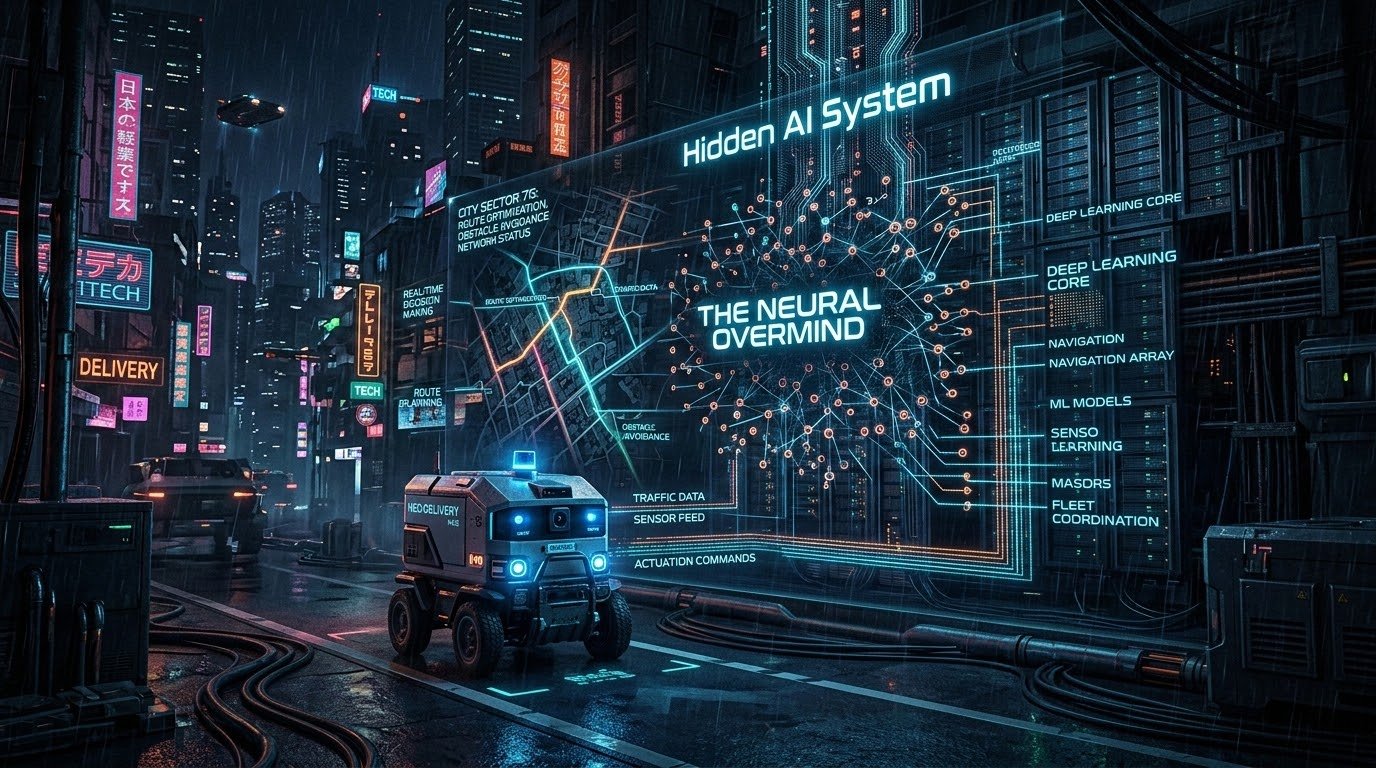
What rolled past me was a small delivery robot about the size of a cooler, quietly moving along the sidewalk carrying somebody’s lunch.
And that’s precisely why I found it fascinating. When a technology transitions from “look at that!” to “oh, that’s normal,” it usually means something important is happening beneath the surface. Self-driving delivery robots have quietly entered that phase.
Most people see a small robot carrying groceries.
Engineers see one of the most complex AI systems ever deployed in public spaces.
Because making a robot drive itself down a sidewalk is far harder than it looks.
Industry Milestones · April–June 2026
Why Delivery Robots Exist in the First Place
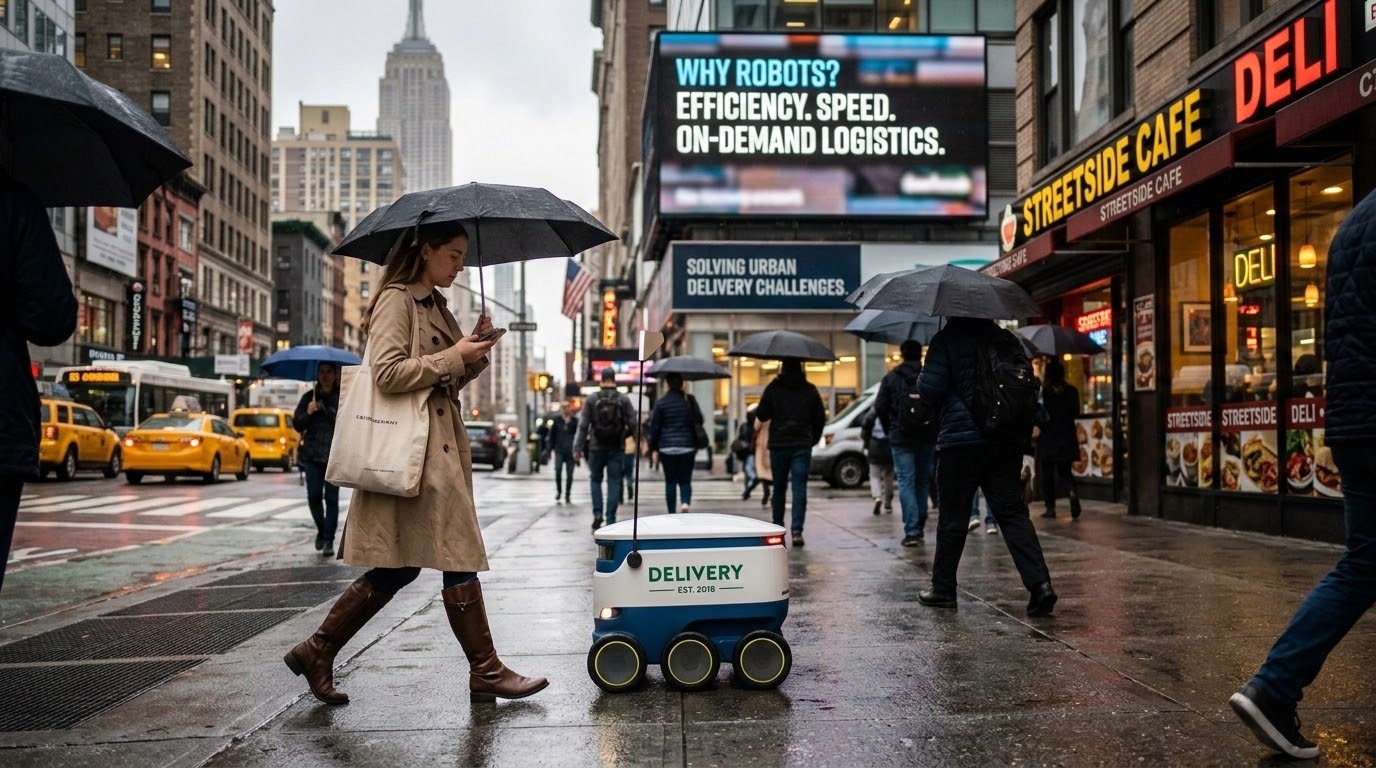
The story starts with economics. Like many robotics revolutions, this one isn’t primarily driven by engineering curiosity. It’s driven by cost.
The challenge is that sidewalks are messy. Very messy. And unlike warehouses, sidewalks don’t care about your algorithms.
The Sidewalk Is One of the Hardest Environments in Robotics
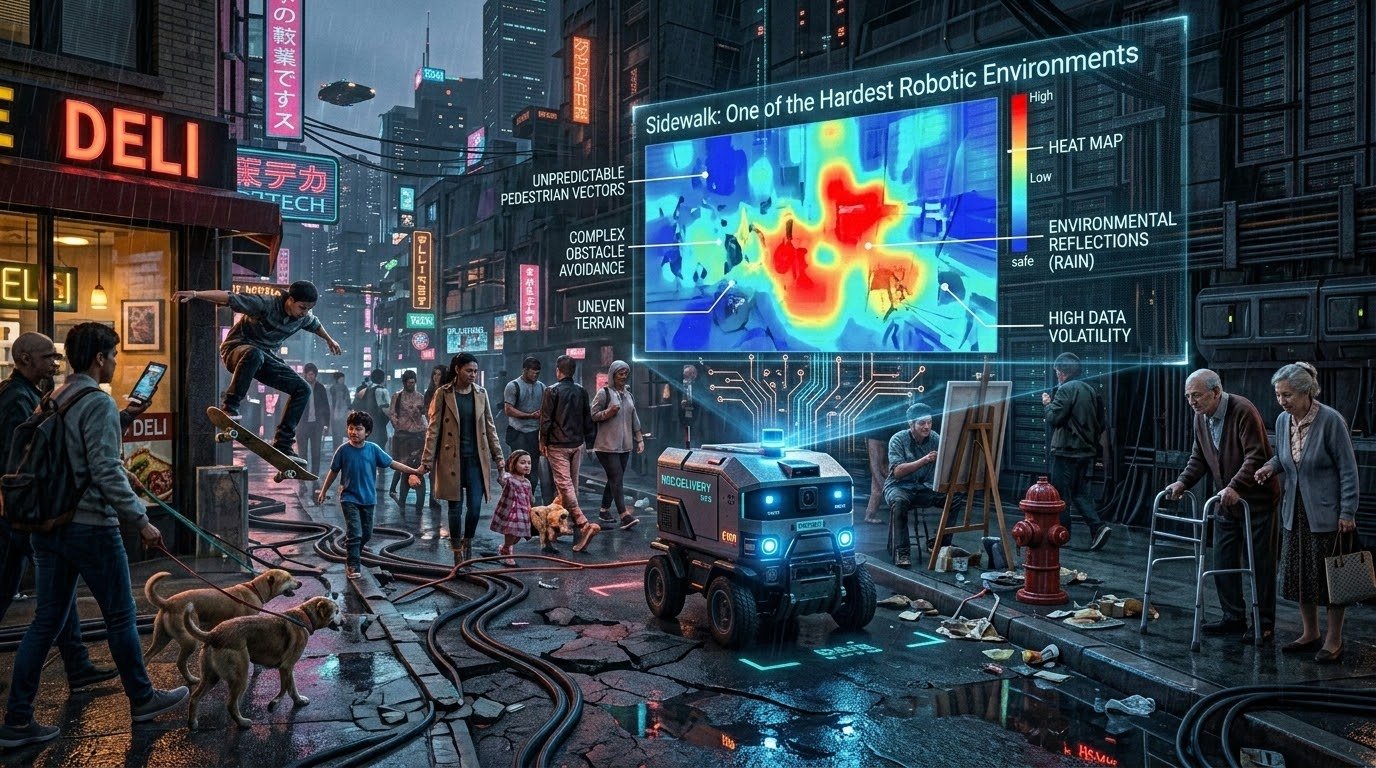
At first glance, a delivery robot appears to have an easier job than a self-driving car. It’s moving slower. It’s smaller. It stays on sidewalks. How difficult can that be?
In reality, sidewalk navigation introduces its own unique set of challenges. A delivery robot encounters: children running unpredictably, dogs on leashes, bicycles, construction zones, street vendors, parked scooters, unexpected debris, temporary barriers, crowded intersections, and human behavior that often makes no logical sense whatsoever.
Humans effortlessly adapt to these situations because we possess something engineers call common-sense reasoning. Robots don’t. At least not yet. This means AI systems must compensate using an enormous combination of sensors, software, and real-time decision-making.
Computer Vision: The Robot’s Eyes
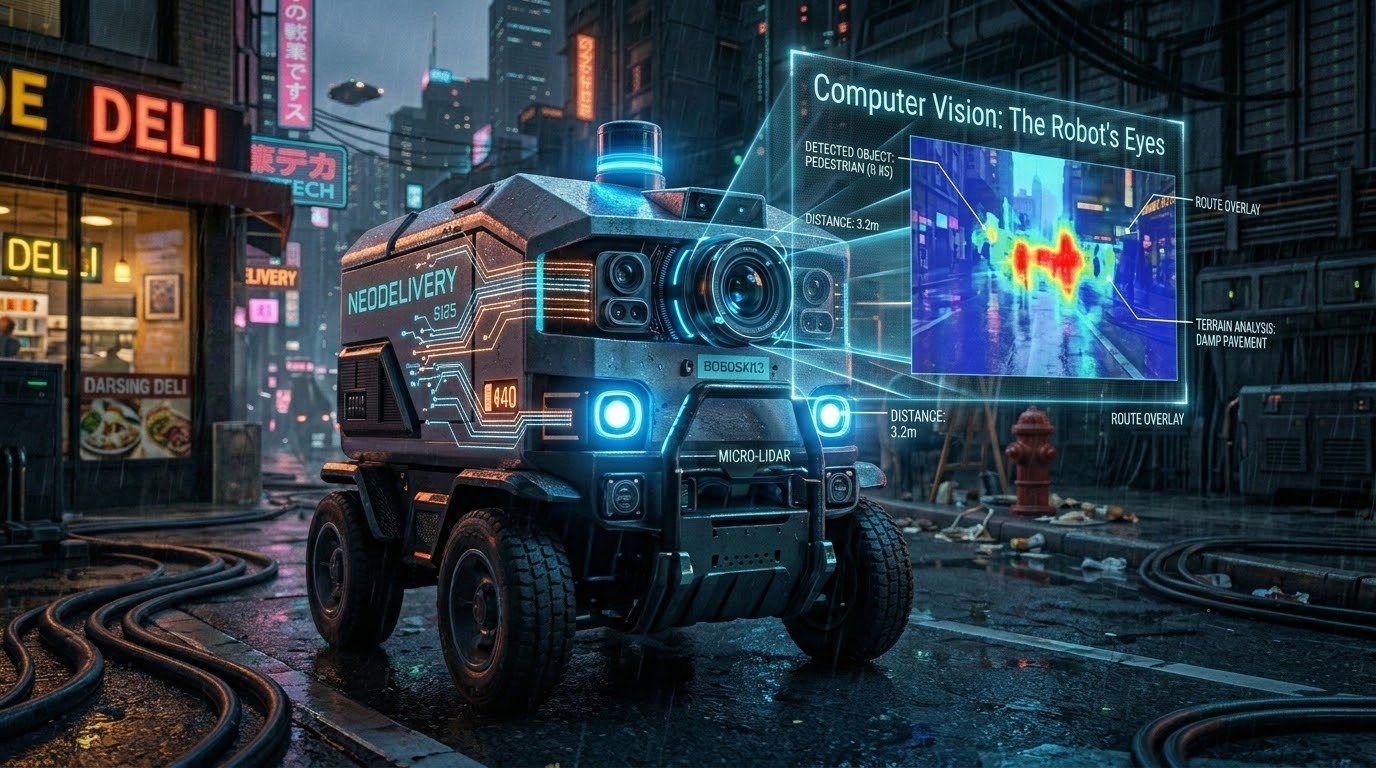
Most delivery robots begin with computer vision — think of it as the robot’s version of eyesight. Modern delivery systems rely heavily on cameras that continuously capture visual information about the surrounding environment. But seeing isn’t the same as understanding.
When humans look at a sidewalk, we instantly identify: a pedestrian, a dog, a trash can, a bicycle, a tree, a puddle, a traffic sign. We don’t consciously think about it. Our brains simply know. For robots, every object must be identified computationally — depending on neural networks trained using millions of labeled images.
Researchers from organizations such as Stanford AI Lab, MIT CSAIL, OpenAI, and DeepMind have spent years advancing machine perception systems capable of recognizing increasingly complex environments. Today’s delivery robots can identify hundreds of object categories in real time — and every year they become better at understanding context rather than simply recognizing shapes.
LiDAR: The Secret Weapon Most People Never Notice
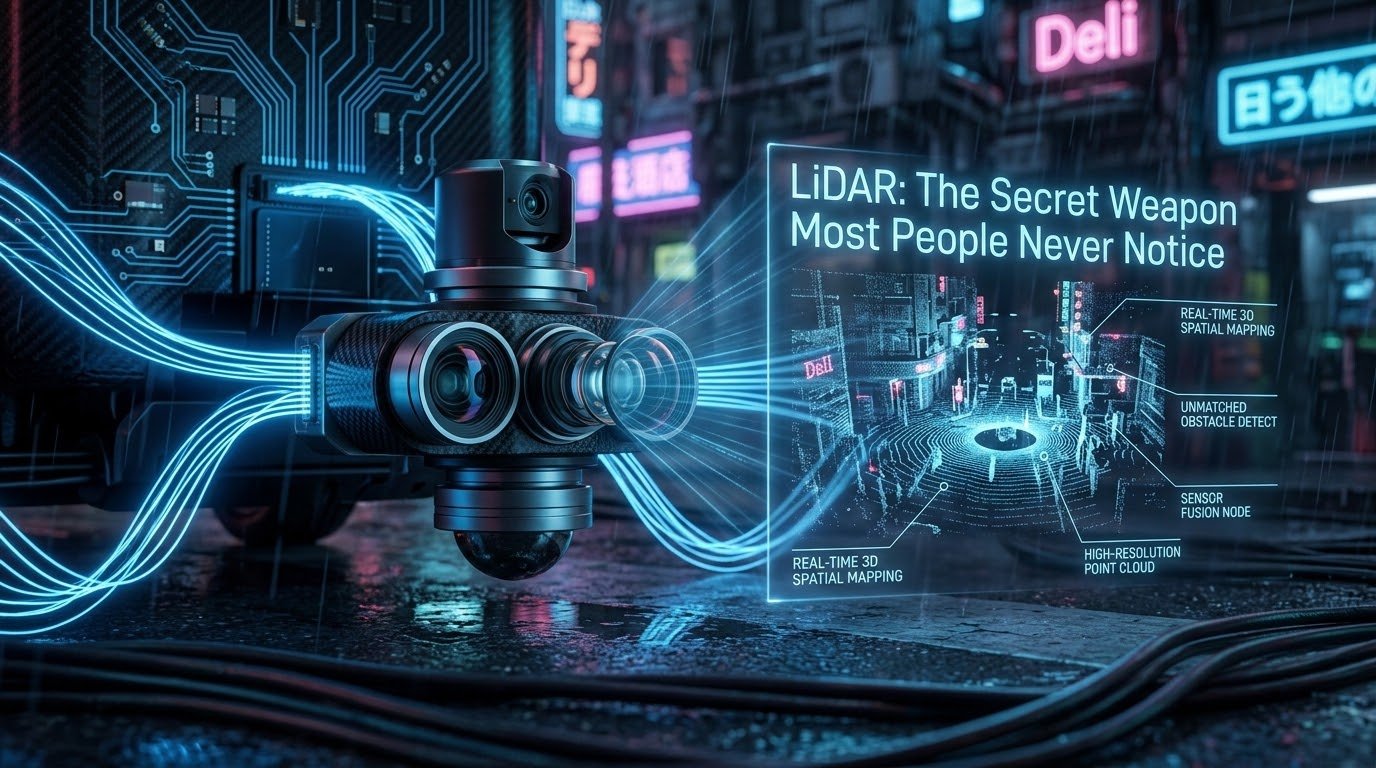
If cameras are the robot’s eyes, LiDAR is often its depth perception. LiDAR (Light Detection and Ranging) works by firing thousands — sometimes millions — of laser pulses and measuring how long they take to return. The result is a detailed three-dimensional map of the surrounding world.
This is incredibly important because cameras alone can sometimes be deceived. Shadows. Glare. Rain. Fog. Poor lighting. All of these conditions affect visual systems. LiDAR provides additional spatial awareness that operates independent of lighting — which is one reason autonomous vehicles and advanced delivery robots combine multiple sensing systems simultaneously.
No single sensor is perfect. The future belongs to sensor fusion — integrating cameras, LiDAR, radar, and ultrasonic sensors into a unified perception layer. This multi-modal approach is now standard across leading delivery robot platforms.
The Real Brain Is Not the Robot
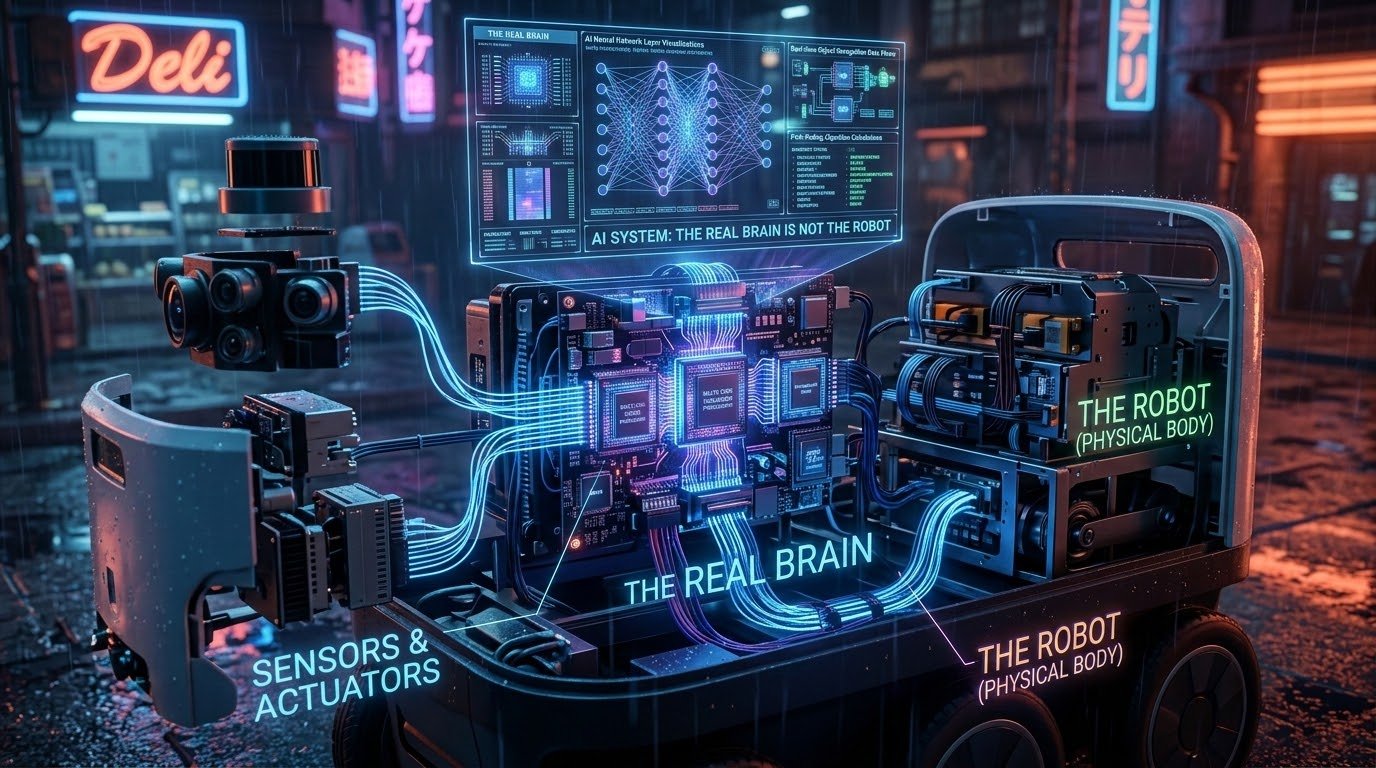
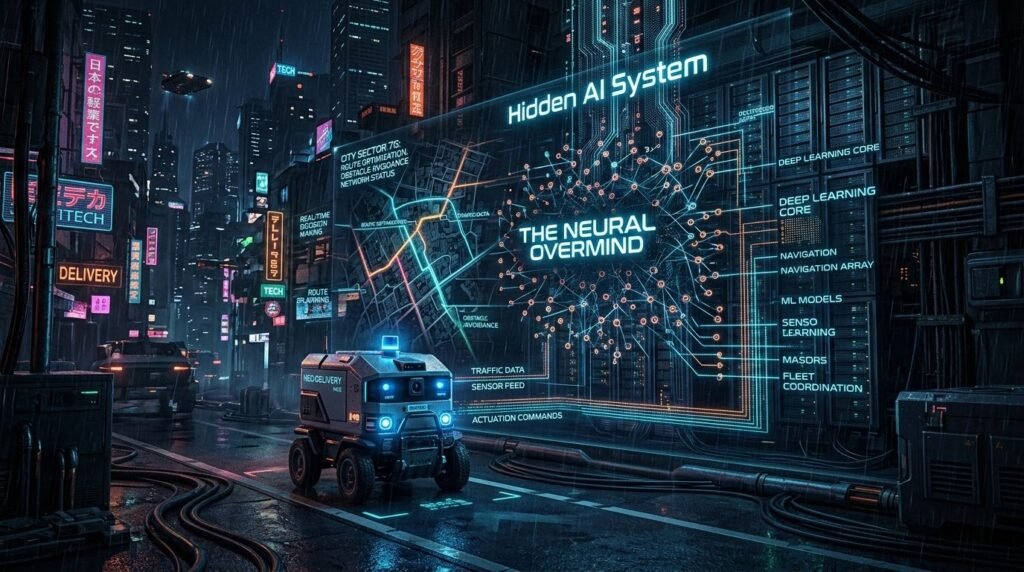
This surprises many people. When you see a delivery robot moving independently, it’s easy to imagine all intelligence resides inside the machine. In reality, modern robotics increasingly relies on hybrid intelligence architectures — part onboard, part cloud-connected, part centralized fleet management.
Companies such as Starship Technologies, Serve Robotics, Cartken, and Kiwibot operate entire fleets rather than individual robots. Each robot becomes part of a larger network. The collective system learns continuously. Every successful trip improves future performance. Every obstacle encountered becomes training data. Every mistake helps refine the underlying AI models.
In some ways, delivery robots resemble distributed learning systems more than standalone machines. Starship’s 3,000-robot fleet has now generated over 22 million kilometers of real-world operational data — a dataset scale that would be impossible for any single robot operating in isolation.
NVIDIA Quietly Powers Much of the Revolution
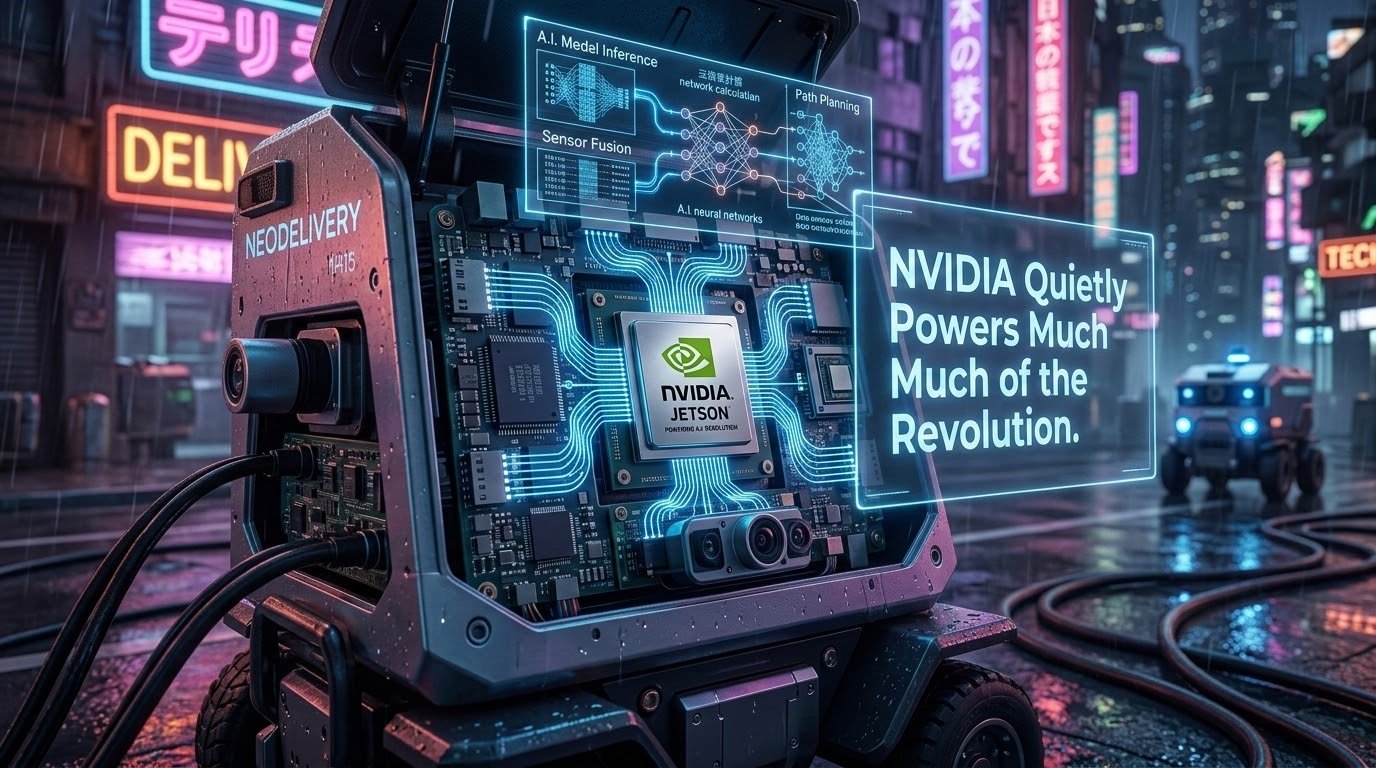
Training machine learning models requires immense computational power. Before a robot can safely navigate a city, it must learn from massive datasets — millions of images, millions of environmental scenarios, millions of simulated interactions.
Platforms like NVIDIA Isaac Sim, NVIDIA Omniverse, and Jetson Edge AI allow developers to train robots inside virtual worlds before deployment. And simulation may ultimately become one of the biggest accelerators of robotics progress.
Training robots physically is slow. Training them virtually is scalable. That difference could define the next decade of robotics development.
Why Simulation Is Becoming More Important Than Reality
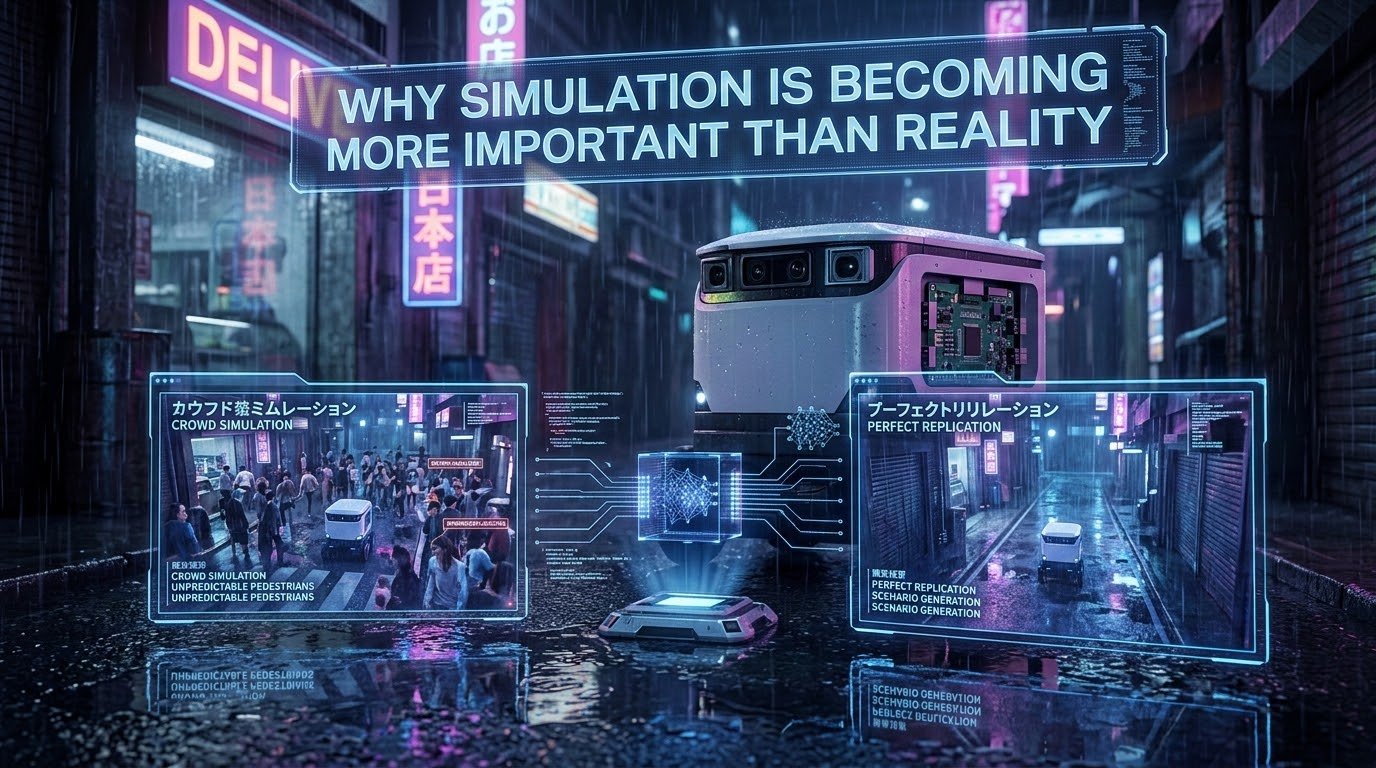
Imagine attempting to teach a delivery robot how to handle every possible scenario it might encounter. You would need years of real-world testing. Or… you could generate millions of synthetic environments digitally — entire virtual cities, virtual pedestrians, virtual traffic, virtual weather, virtual accidents, virtual obstacles.
The robot can experience thousands of years worth of training in simulation before entering the real world. This dramatically reduces costs while improving safety — it’s one reason robotics development appears to be accelerating faster than ever before.
The Economics Are Starting to Make Sense
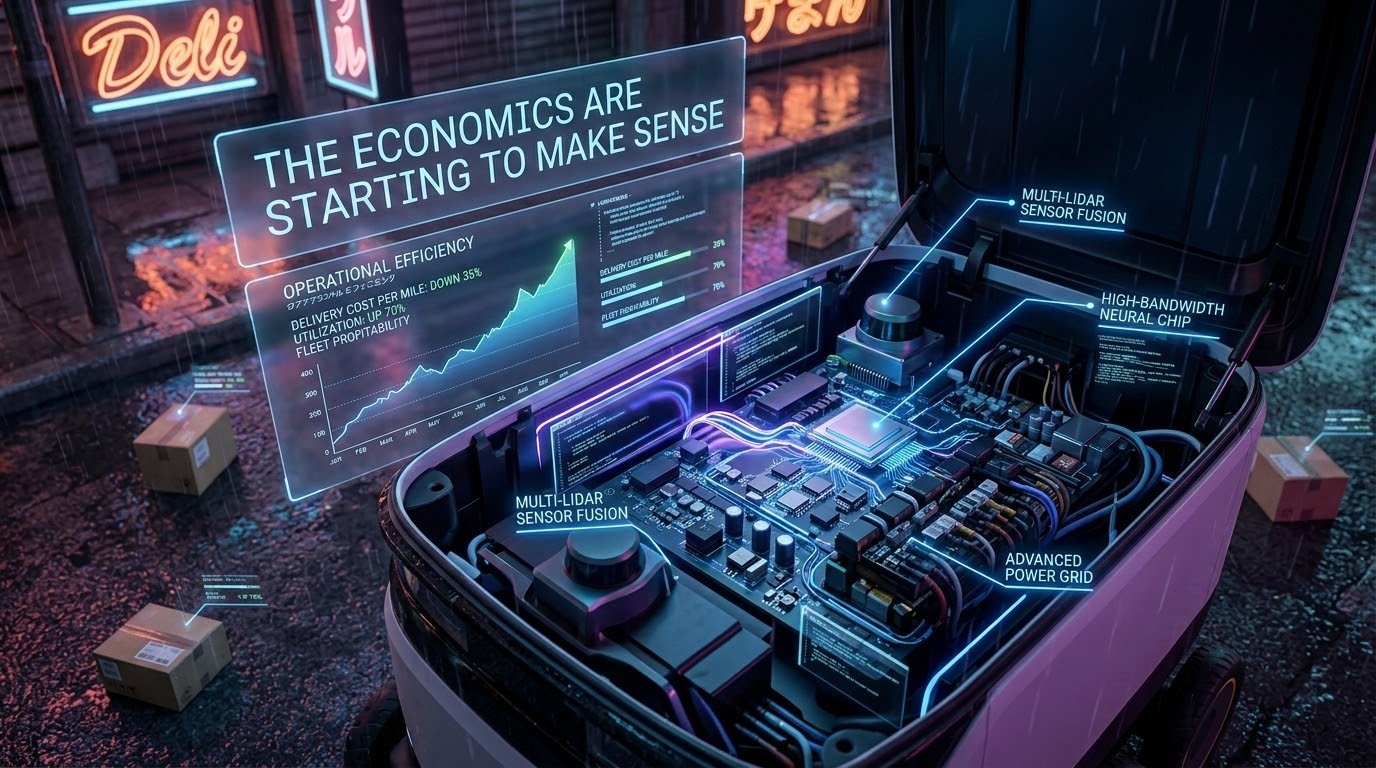
For years, delivery robots were viewed as interesting experiments. Today, investors increasingly see commercial potential — and the numbers support it. Several structural forces drive this growth:
The economics don’t need robots to be perfect. They simply need them to become cost-effective. And several leading players believe that threshold has already been crossed.
What Happens When Delivery Robots Meet Generative AI?
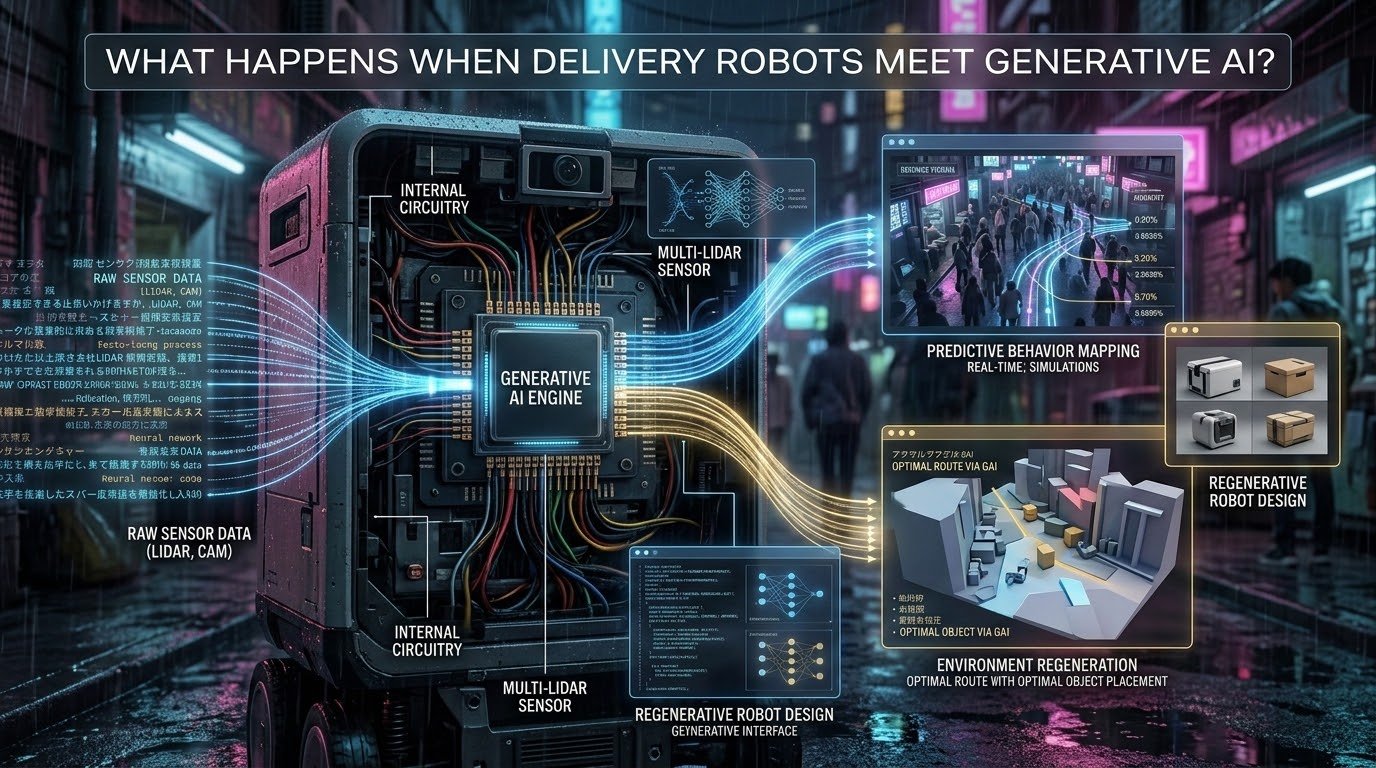
Until recently, delivery robots primarily focused on navigation. Future systems may become conversational. Imagine receiving a delivery notification. The robot arrives. You ask: “Which package is mine?” The robot responds. “Can you leave it by the garage instead?” The robot understands. “Is there another delivery scheduled today?” The robot checks.
This type of interaction becomes increasingly realistic as language models merge with physical robotics. Serve Robotics’ 2025 acquisition of Vayu — an AI foundation model-based autonomy startup — is an early signal of this convergence. The boundary separating digital AI and physical AI continues shrinking.
The Other Side of the Story: Real Risks That Demand Honest Answers
⚠️ Honest note: the industry’s enthusiasm deserves scrutiny.
Most coverage of delivery robots — including much of this article — leans heavily toward the optimistic narrative. But several documented incidents and structural concerns suggest the technology, while promising, is not without genuine problems that require regulatory attention and design rethinking.
Accessibility Crisis — Disabled People Bear a Disproportionate Cost
In 2025, a delivery robot in Los Angeles repeatedly blocked a mobility scooter user, moving to cut him off wherever he moved. The user — a disability advocate — described the encounter as the robot appearing “intentional.” A 2021 study on the Northern Arizona University campus documented 40 dangerous near-misses between pedestrians and sidewalk robots in just five days. Visually impaired individuals describe robots as “dangerous, unfamiliar moving obstacles” due to unpredictable behavior.
Sources: Futurism, Sept 27, 2025; Bennett et al., co-design accessibility study; Northern Arizona University field study, 2021
Chicago Residents Fight Back — 800+ Sign Petition to Pause Robot Pilots
By November 2025, over 800 Chicago residents signed a petition demanding the city pause its Personal Delivery Device pilot. Key complaints: robots blocking crosswalks, obstruction for wheelchair users, collision incidents (one resident suffered an eye injury), and privacy concerns from constant camera surveillance. The petition headline: “Chicago sidewalks are for people, not delivery robots.” Toronto and Ottawa had already banned sidewalk robots citing similar concerns.
Sources: CBS News Chicago, Nov 27, 2025; Block Club Chicago, Dec 8, 2025; Policy Options, Jan 2025
Regulation Is Dangerously Behind Technology Deployment
Researchers Gavin MacGregor and Mischa Young writing in Policy Options (2025) argue that cities are “being blindsided by robot companies the same way they were blindsided by ride-sharing and scooters” — with companies deploying hundreds of machines into public spaces before municipalities have frameworks to assess safety, ADA compliance, or job displacement impacts. Chicago’s pilot has no confirmed path to continuation after May 2027 without City Council approval.
Sources: Policy Options / IRPP, Jan 2025; Planetizen, Feb 2025; CBS Chicago, Nov 2025
Fair assessment: These concerns don’t invalidate the technology — they identify where it needs to improve. The companies that address accessibility, develop genuine regulatory partnerships, and build transparent incident reporting mechanisms will define the long-term success or failure of the entire category. Serving 95% of pedestrians well while creating barriers for the 26% of Americans with disabilities is not good enough for mainstream adoption.
The Bigger Picture Most People Miss
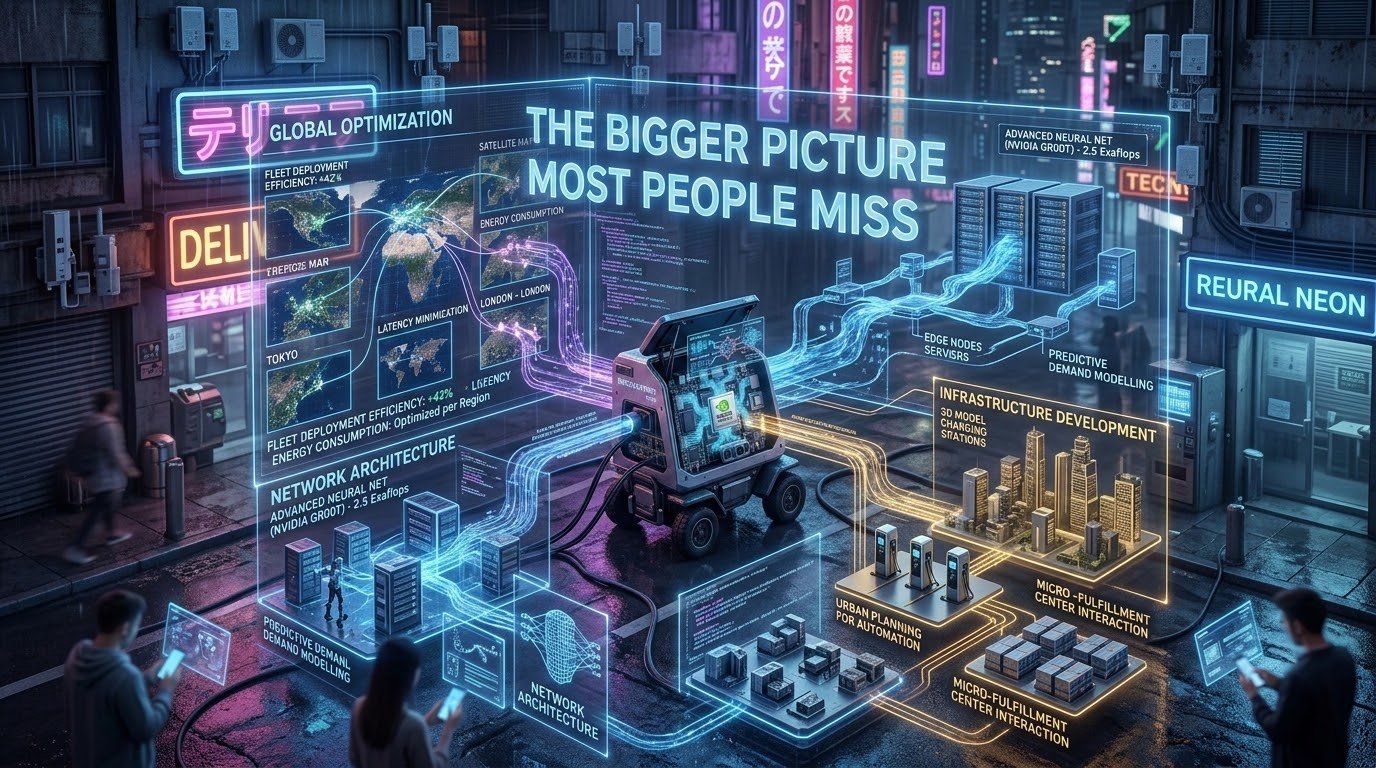
The delivery robot itself isn’t the story. It’s the symptom.
The real story is that artificial intelligence is learning how to operate in physical environments: warehouses, factories, hospitals, construction sites, roads, sidewalks, homes. For decades, software lived inside screens. Now it is entering the real world.
Serve Robotics’ 2026 acquisition of Diligent Robotics — expanding beyond sidewalk delivery into indoor service robots used in hospitals — is an early signal of exactly this convergence. Delivery robots happen to be one of the first visible examples. They won’t be the last.
So What Should We Expect Over the Next Five Years?
I believe the next phase will not involve millions of robots suddenly appearing everywhere. Technology rarely evolves that way. Instead, adoption will likely happen city by city. Campus by campus. Neighborhood by neighborhood.
The robots will become more capable, more reliable, more conversational, more affordable. Most importantly, they will become boring. And that might be the strongest signal of success.
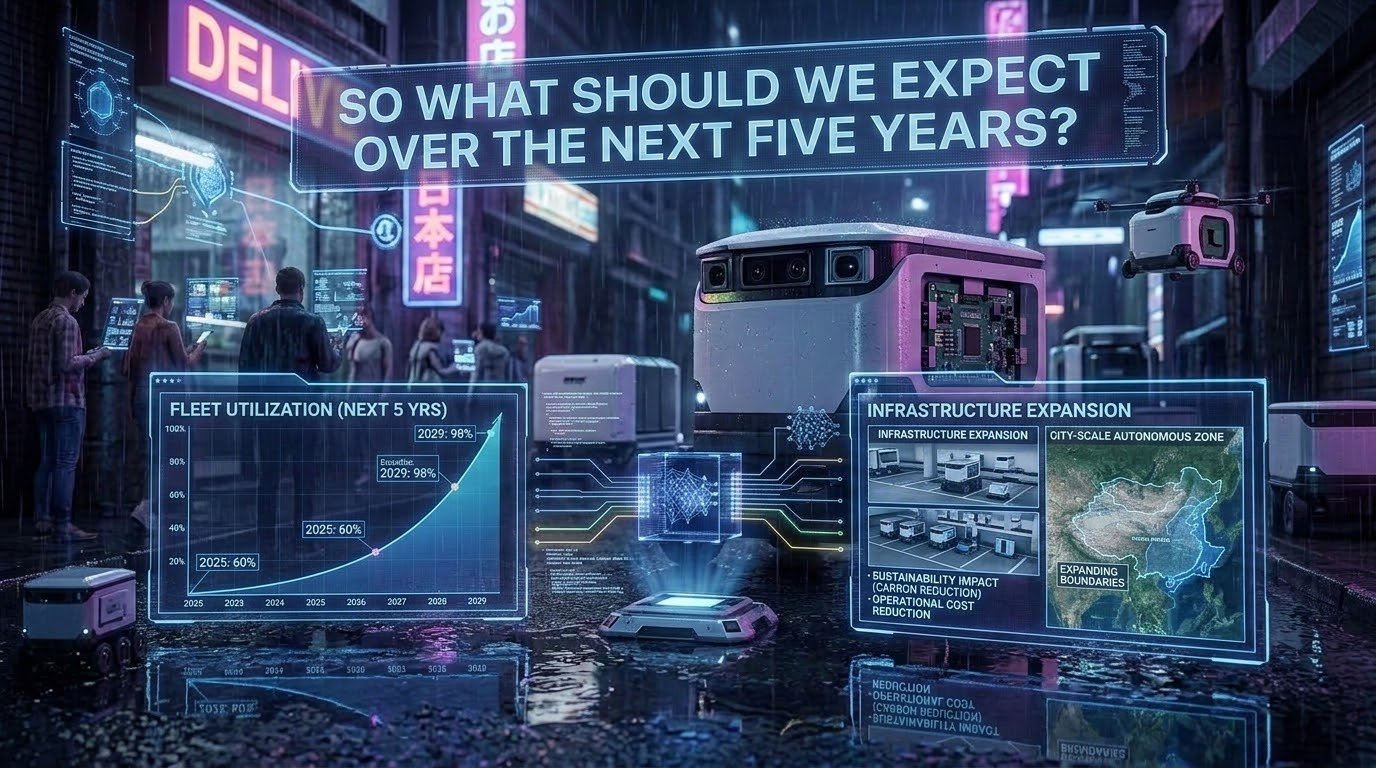
When nobody talks about the technology anymore because it simply works, adoption usually accelerates dramatically. Just as smartphones became ordinary. Just as GPS became ordinary. Just as online shopping became ordinary.
The future may not arrive with a dramatic announcement. It may simply roll past you on a sidewalk one afternoon while carrying somebody’s lunch. And most people won’t even look twice.