

The reality inside most American homes in 2026 is much less dramatic.
At least not yet. But something equally important is happening.
For the first time in history, millions of households are quietly living with robots every single day.
Most people simply don’t think of them as robots anymore.
You can buy them today — not in a laboratory, not in a research facility.
The question isn’t whether home robots are real anymore. The question is which ones are actually worth your money.
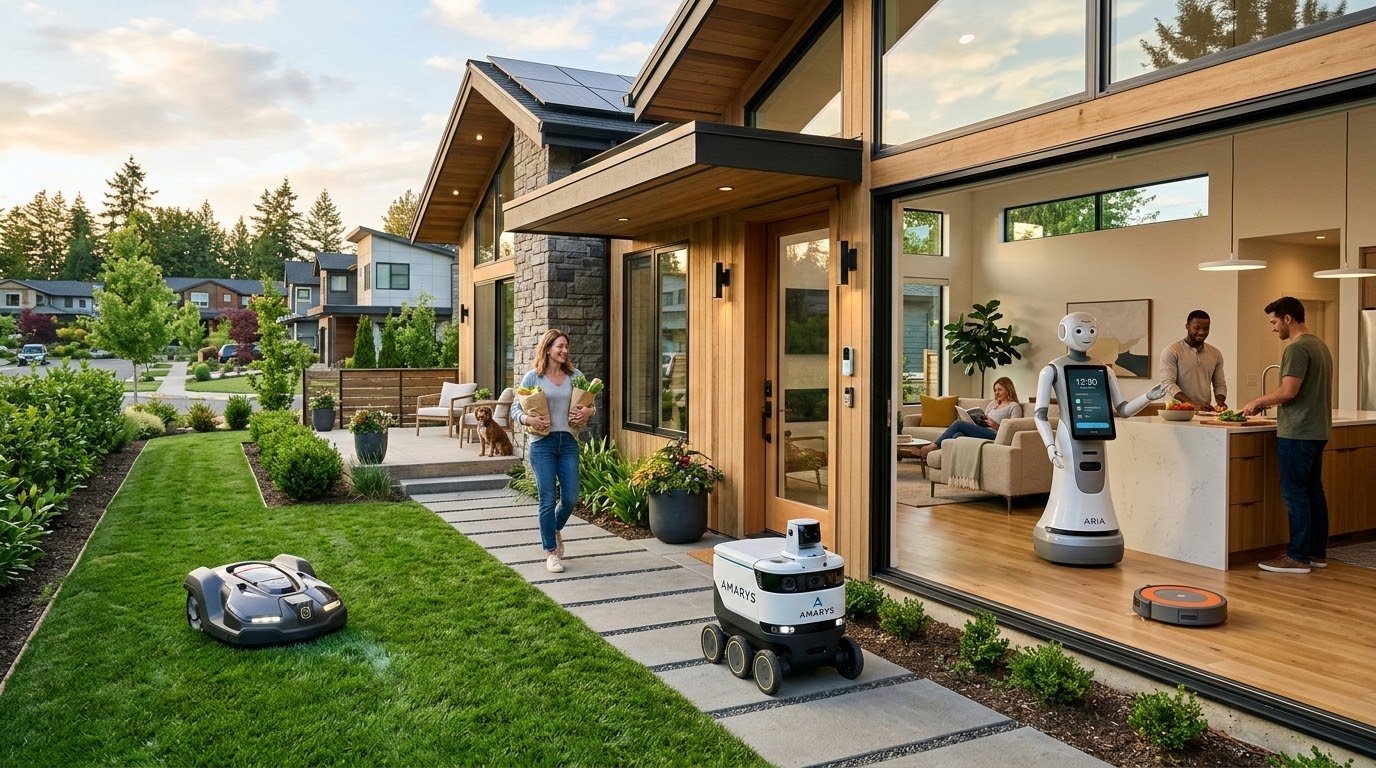
The Home Robotics Market Has Quietly Reached a Turning Point
For years, consumer robotics was largely synonymous with robot vacuums. That was the category. That was the market. That was the entire conversation. If someone said “home robot” in 2015, they almost certainly meant a Roomba.
Today the landscape looks very different. According to research from the International Federation of Robotics, service robots for personal and domestic use continue expanding globally as hardware costs decline and AI capabilities improve.
What changed? Artificial intelligence. More specifically, the convergence of:
A robot that follows instructions is useful.
A robot that understands context becomes valuable.
And that’s exactly where the industry is heading.
Why Robot Vacuums Remain the Kings of Home Robotics
Some technology commentators have spent years dismissing robot vacuums as gimmicks. Honestly, that criticism misses the point entirely.

The most successful robots aren’t necessarily the most impressive. They’re the ones people continue using after the novelty wears off. And robot vacuums pass that test remarkably well.
Why robot vacuums create the perfect automation opportunity:
The Roborock S8 MaxV Ultra — Closest Thing to a Home Robot Butler Today
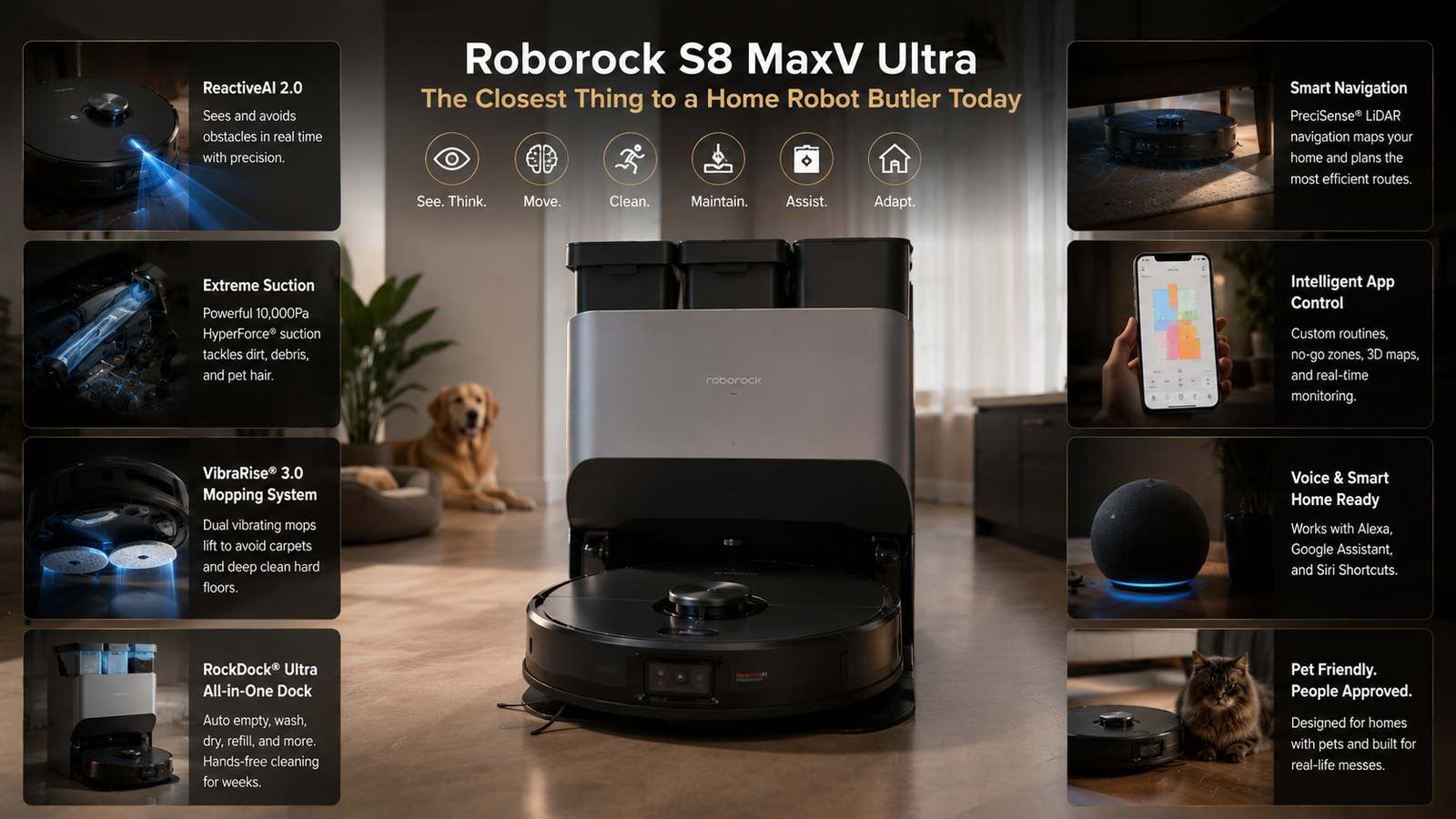
At first glance, it looks like another premium robot vacuum. But the intelligence inside the system tells a different story. The robot combines:
⚡ The key breakthrough:
The latest AI-driven systems increasingly recognize household obstacles — cables, toys, shoes — before collision occurs. Consumer robotics ultimately succeeds or fails based on convenience. This prevents frustration.
iRobot Is Fighting to Stay Relevant
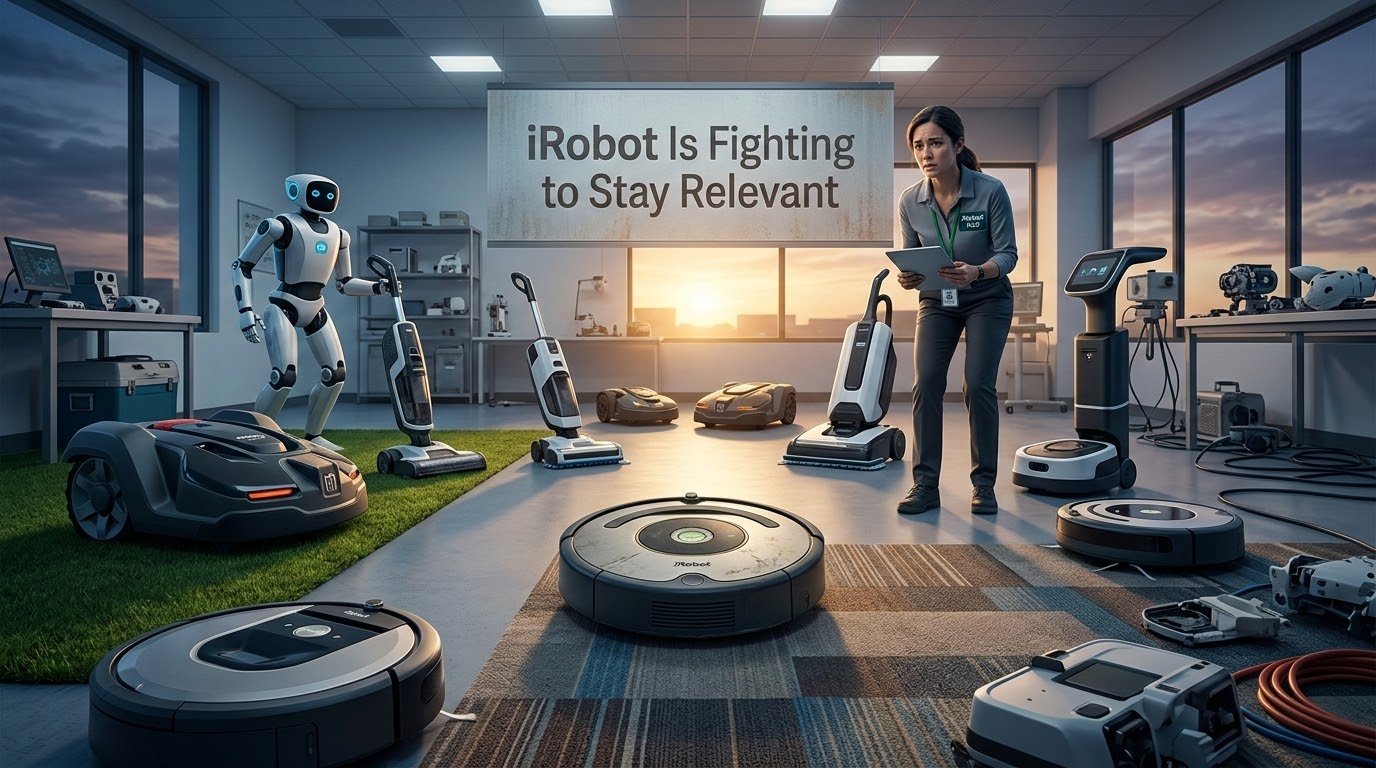
For years, iRobot practically defined the consumer robotics industry. The Roomba became one of the rare technology products whose brand name evolved into a category. People didn’t say “robot vacuum.” They said “Roomba.” Yet 2026 presents new challenges.
Competitors from China, South Korea, and Europe have dramatically accelerated innovation:
Dreame
Ecovacs
Narwal
📈 Competition is benefiting buyers — and forcing manufacturers to innovate faster. Consumers now have far more options than five years ago.
Robot Lawn Mowers Are Having Their Roomba Moment
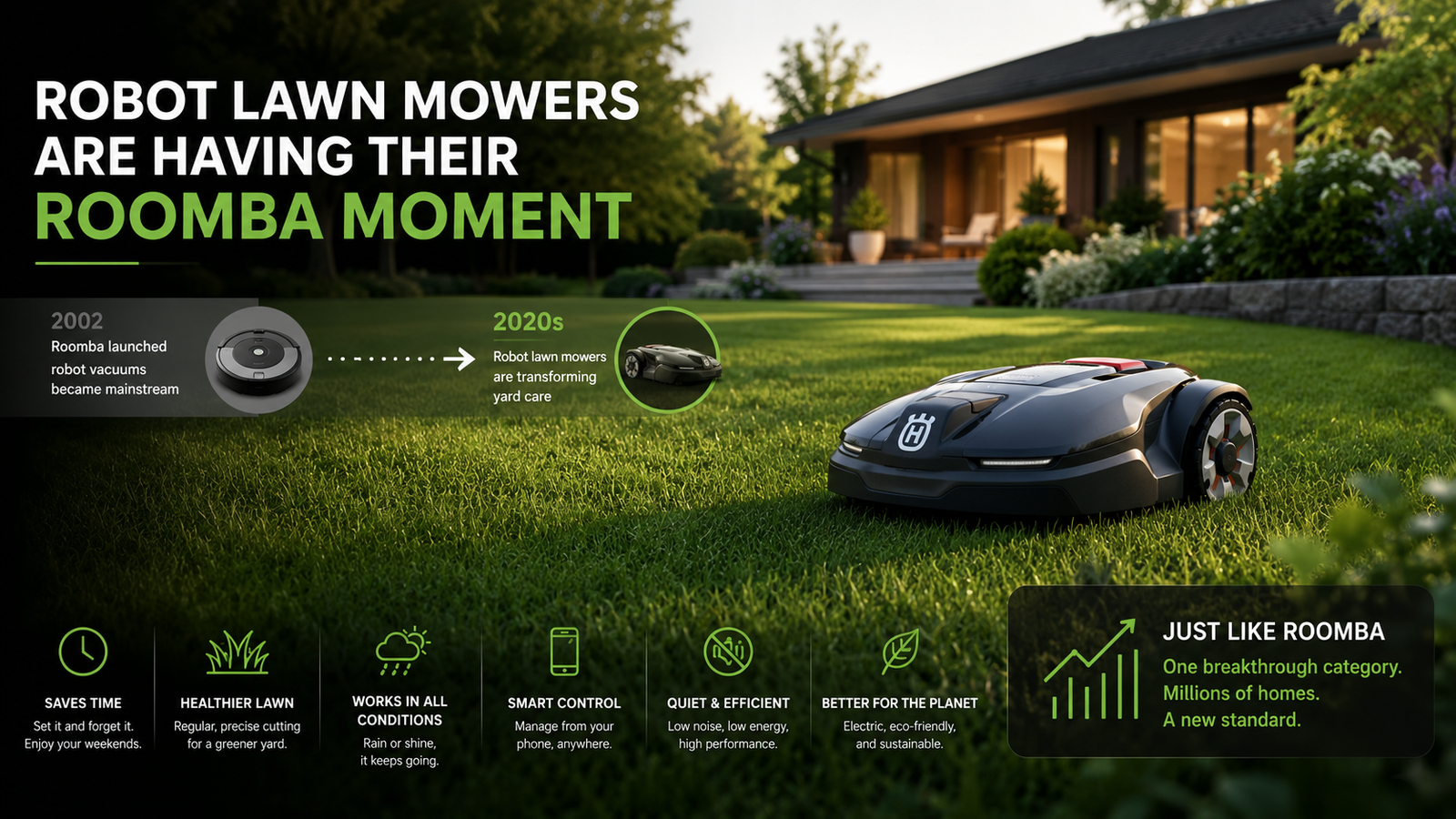
If robot vacuums dominated the previous decade, robot lawn mowers may dominate the next one. Companies such as Husqvarna, Mammotion, and Segway Navimow are introducing AI-powered systems capable of managing large residential properties with minimal human involvement.
🌐 These systems rely on technologies similar to autonomous vehicles:
Unlike self-driving cars, the regulatory barriers are dramatically lower — meaning innovation can move much faster.
Security Robots Are Quietly Becoming Smarter

Companies like Ring, Amazon, and various robotics startups continue exploring autonomous home monitoring systems. The most famous example remains Amazon Astro — and after several years of market experimentation, a clearer picture is emerging.
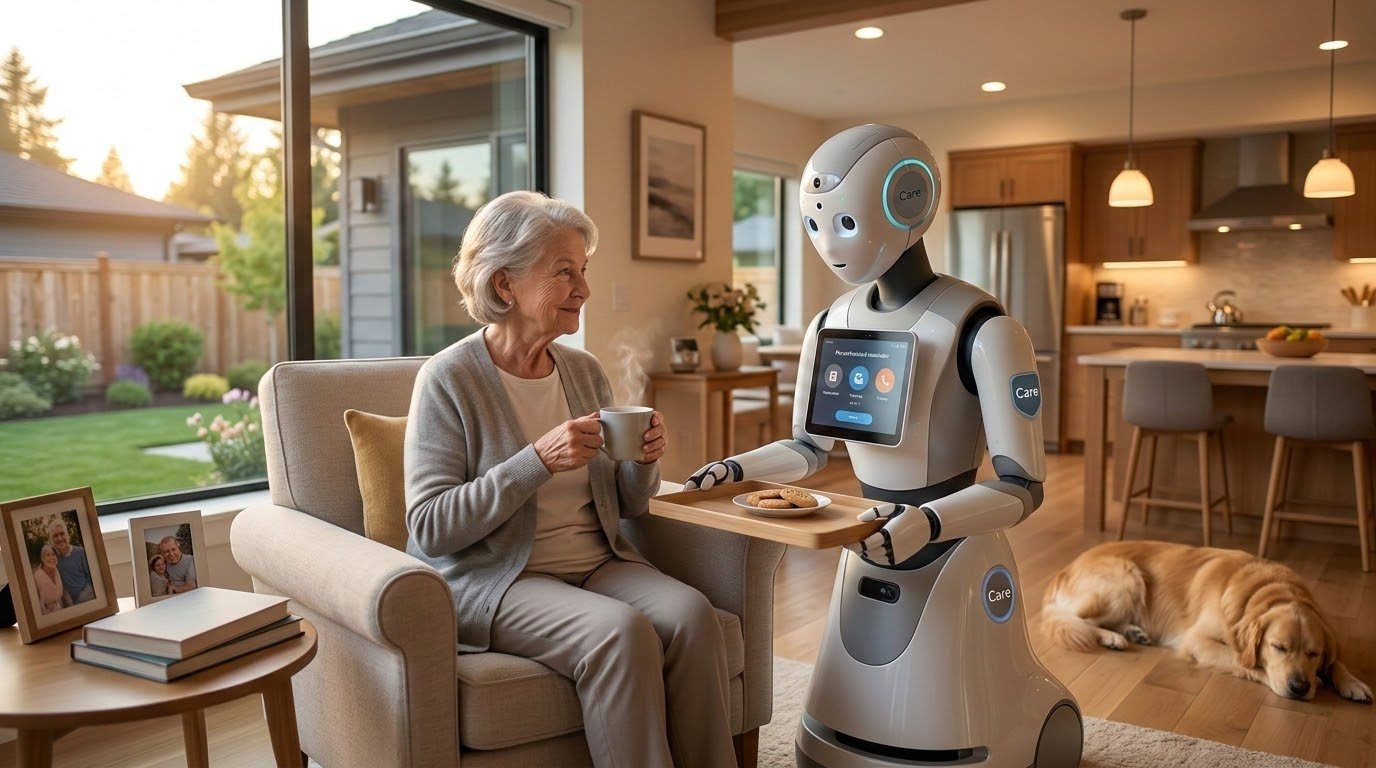
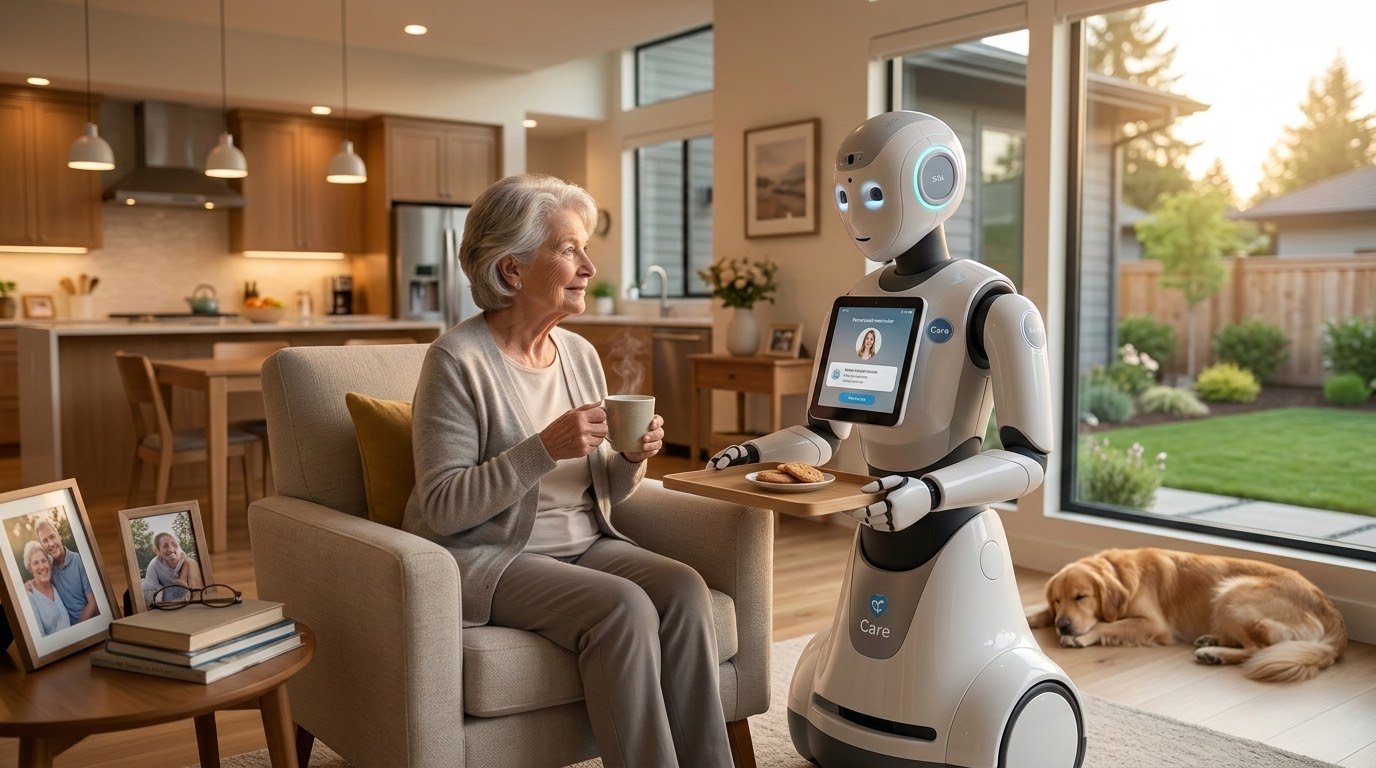
Elder Care May Become the Largest Home Robotics Market of All
This is the category investors still underestimate.
The demographic trends are impossible to ignore — according to the WHO and UN, populations across many developed countries continue aging rapidly.

In this context, robotics becomes less about convenience and more about quality of life.
The AI Revolution Is Finally Reaching Consumer Hardware
A few years ago, most AI discussions focused on software — ChatGPT, Gemini, Claude, large language models. Now the technology is beginning to migrate into physical devices. And that’s where things become truly interesting.
Imagine a home robot that not only recognizes objects but understands requests:
These tasks require a blend of capabilities that are now beginning to merge:
Why Humanoid Home Robots Are Still Further Away Than Headlines Suggest

✅ Easy environments for robots:
📦 Warehouses — predictable
⚠️ Hard environments:
🧸 Toys, pets, furniture changes
Humanoid robots will eventually enter homes. But companies like Tesla AI and Figure AI remain focused initially on industrial deployments — the economics make more sense, environments are easier to manage, and ROI is clearer. It will happen later than many headlines suggest.
The Real Question Every Buyer Should Ask
Technologies win by eliminating problems, not by adding features:
Looking Ahead to 2030
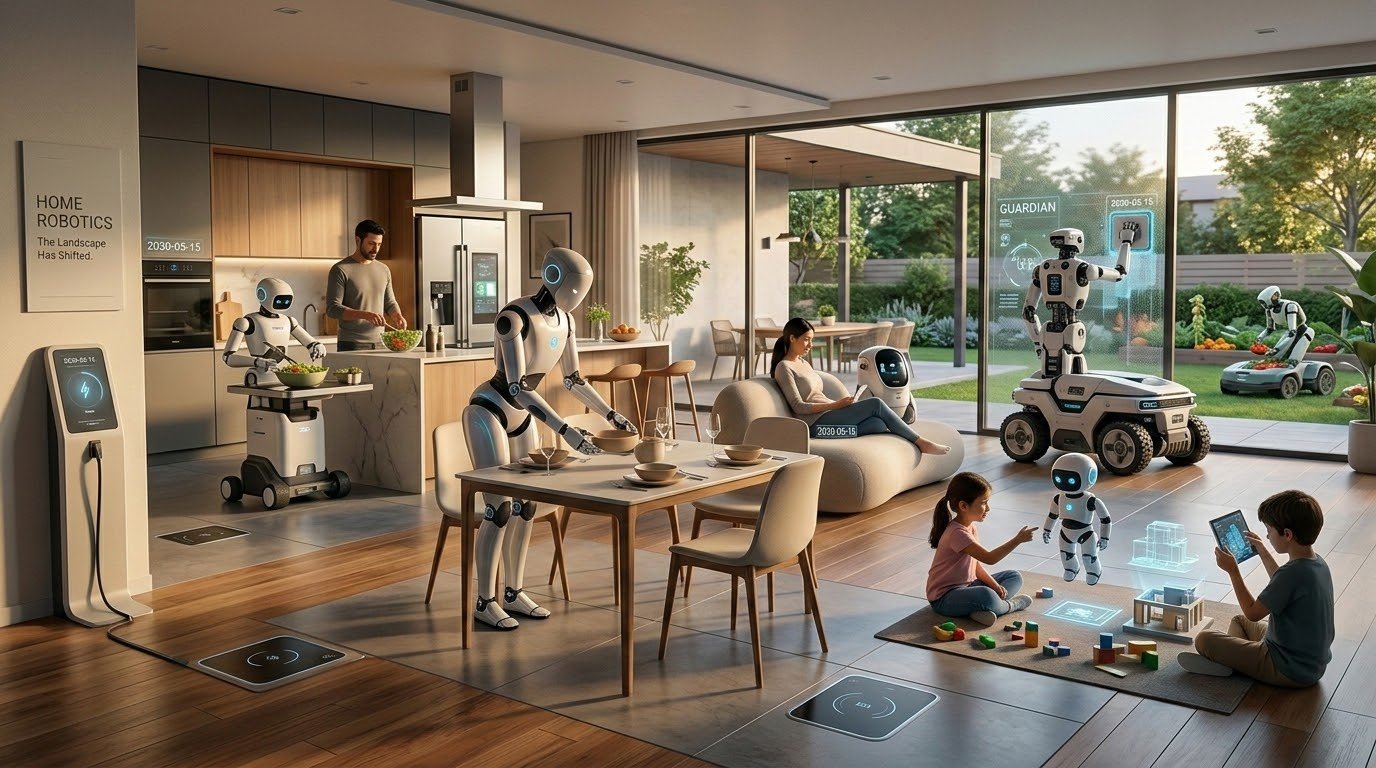
If current trends continue, the home robotics market of 2030 will look dramatically different from today’s landscape. Robots will become:
Future systems will likely combine:
🔒 Security
🤖 AI assistant
👴 Elder care
🏡 Home management
Not science fiction. Not sentient machines. Just highly useful tools — and history shows that useful tools tend to spread very quickly.