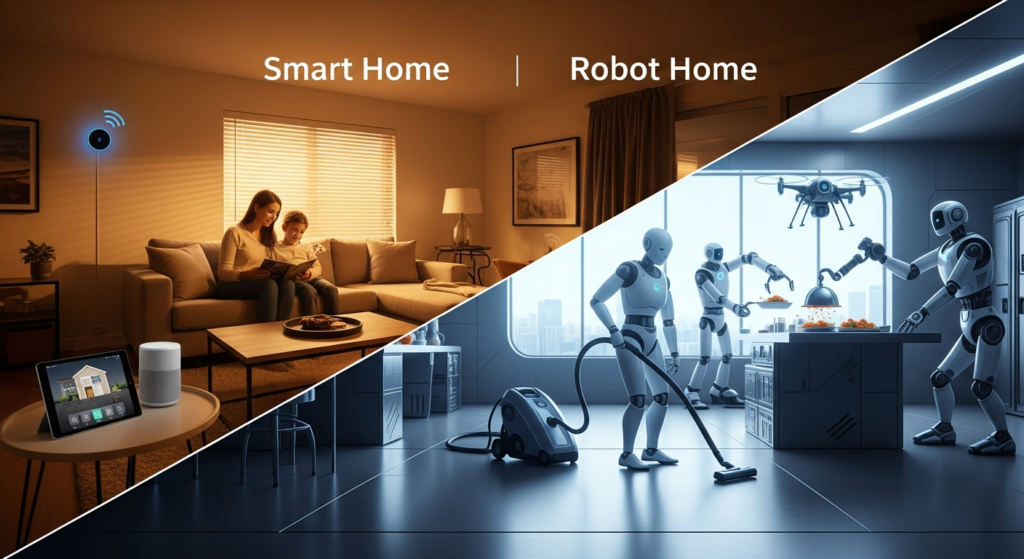
Imagine waking up to the gentle hum of a robot preparing your breakfast, cleaning floors, and managing everything from your grocery list to energy consumption. A vivid image of a future home? Perhaps. The smart home of today, with its interconnected devices and voice-activated assistants like Amazon’s Alexa and Google’s Google Home, paints one part of the picture. But the concept of a ‘robot home’ adds layers of autonomy and intelligence that could redefine our living spaces altogether. So, what’s the future of these evolving home technologies? Is the robot home poised to outshine the smart home, or are they just two sides of the same coin? Let’s delve into this fascinating technological duel.
Understanding Smart Homes

The term ‘smart home’ is not new. It’s an umbrella term that encompasses technology-enabled homes managed by a network of connected devices. The magic lies behind the seamless communication among devices – from smart thermostats to intelligent lighting systems. The advantage? Users gain convenience and efficiency, not to mention bragging rights about living in the future.
Over the past decade, smart homes have seen a boom courtesy of IoT (Internet of Things), AI-driven assistants, and cloud computing capabilities. Companies like Samsung, Google, and Apple have invested heavily in developing holistic ecosystems that allow users to control their homes with a tap on their smartphones or a voice command.
However, as dynamic as they are, these homes remain largely reactive. They respond to user input rather than anticipate needs. This is where the allure of the robot home takes center stage, raising the stakes.
Introducing the Concept of Robot Homes
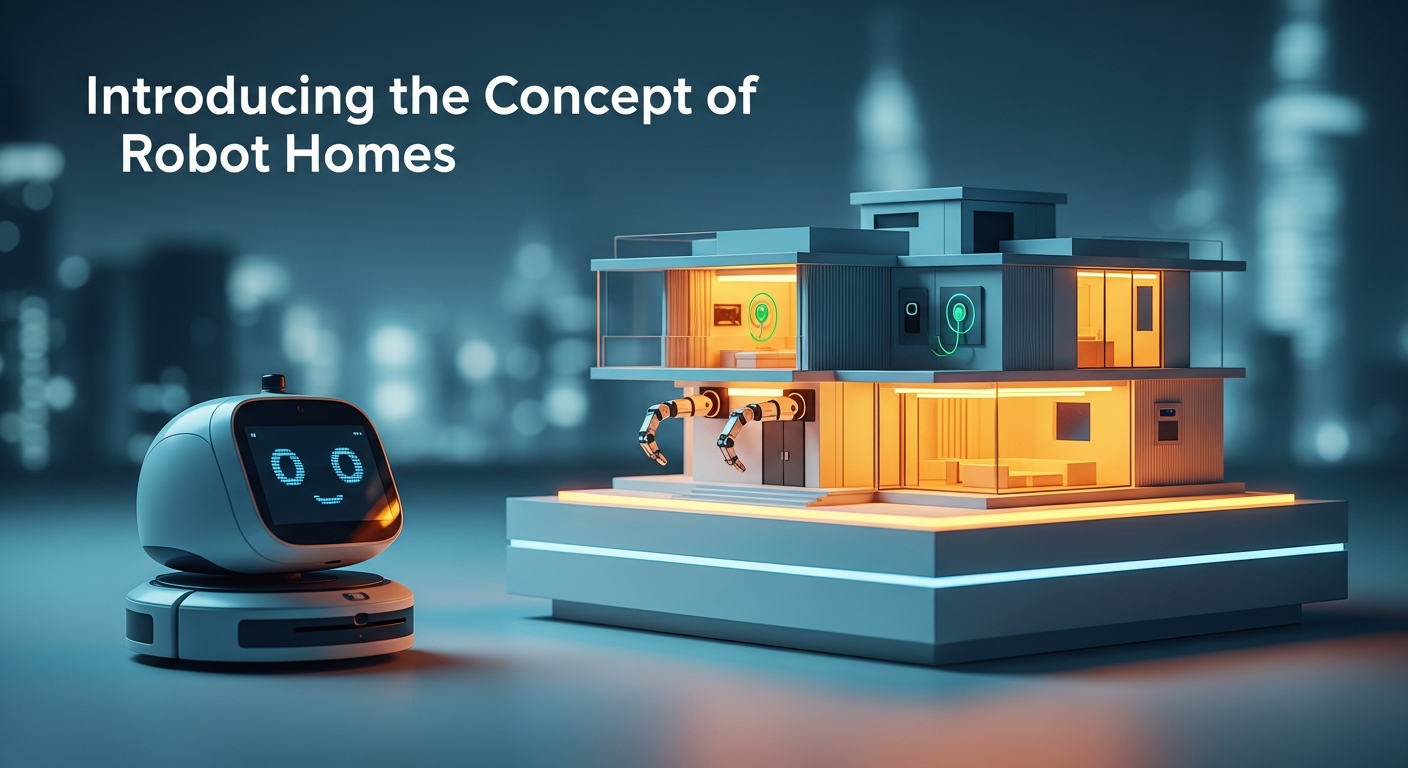
In contrast to smart homes, robot homes are envisioned as autonomous entities that can operate with minimal human intervention. Think of Rosie the Robot from “The Jetsons” handling chores, managing energy use, and even offering security services.
While the distinction between a smart and robot home may seem subtle, it amounts to a leap from connectivity to autonomy. This is achieved through advanced AI, such as sophisticated machine learning algorithms, alongside cutting-edge robotics systems.
Companies such as Tesla and Boston Dynamics are leading the charge, with Elon Musk hinting at the potential of integrating Tesla’s AI-driven robots into urban settings, including residential environments.
The ultimate vision? A home that not only knows what you want but learns and adapts to improve your quality of life over time.
[this image – a humanoid robot assisting a human in a modern kitchen, realistic lighting, showing human-robot collaboration]
Applications Across Different Sectors

The potential reach of robot homes goes beyond mere convenience in domestic settings. In the industrial sector, automation and intelligent robotics are already revolutionizing manufacturing processes. By bringing similar technologies into homes, the resultant efficiency and productivity improvements could mimic this industrial success.
In healthcare, for instance, robot homes equipped with sensors and AI could support elderly individuals, monitor health vitals, and alert medical professionals in the case of emergencies.
Interestingly, in places like Japan, where aging populations present unique challenges, AI-driven homes offer both solutions and solace, ensuring wellbeing without relying heavily on human caretakers.
Technical Insights into Robot Homes

What technologies underpin robot homes? A delicate interplay of various advanced systems is at work. From NVIDIA’s powerful GPUs that enable real-time machine learning processes, to lidar sensors facilitating precise navigation, each component elevates home automation to unprecedented levels.
Moreover, AI models like those from Google DeepMind are being trained to understand human behavior and preferences, allowing the robot home to anticipate and act proactively – a critical distinction from traditional smart technologies.
These homes do not merely react; they learn, adapt, and potentially make decisions that could optimize everyday living. It’s like having a butler, one that keeps getting smarter with every passing moment.
Economic and Market Implications

The market for smart and robot homes is poised for significant growth. According to McKinsey & Company, the global market for smart home technologies will surpass hundreds of billions of dollars within the next decade.
Investment interest is robust, with venture capitalists pouring funds into startups and established firms alike. Consumer electronics giants are continually expanding their offerings with more sophisticated devices.
This robust economic activity signals strong consumer adoption and drives down component costs, making these futuristic homes more accessible to the average household.
However, the transition from smart homes to robot homes won’t be without hiccups. Businesses and developers must prepare for regulatory landscapes that could govern privacy matters, as these autonomous systems gather and process vast amounts of data.
Challenges and Limitations

As promising as robot homes are, they are not devoid of challenges. Privacy concerns top the list, especially when autonomous entities have access to intimate household conditions. From data breaches to unauthorized surveillance, potential risks are not merely speculative.
Integration also poses hurdles. Merging various technologies and ensuring seamless operation without glitches require robust architecture and troubleshooting mechanisms, which are not yet fully mature.
Additionally, societal acceptance remains a hurdle. The idea of having an automated entity so intimate and omnipresent in our homes raises ethical questions and requires a shift in public perception.
What the Future Holds for Homes
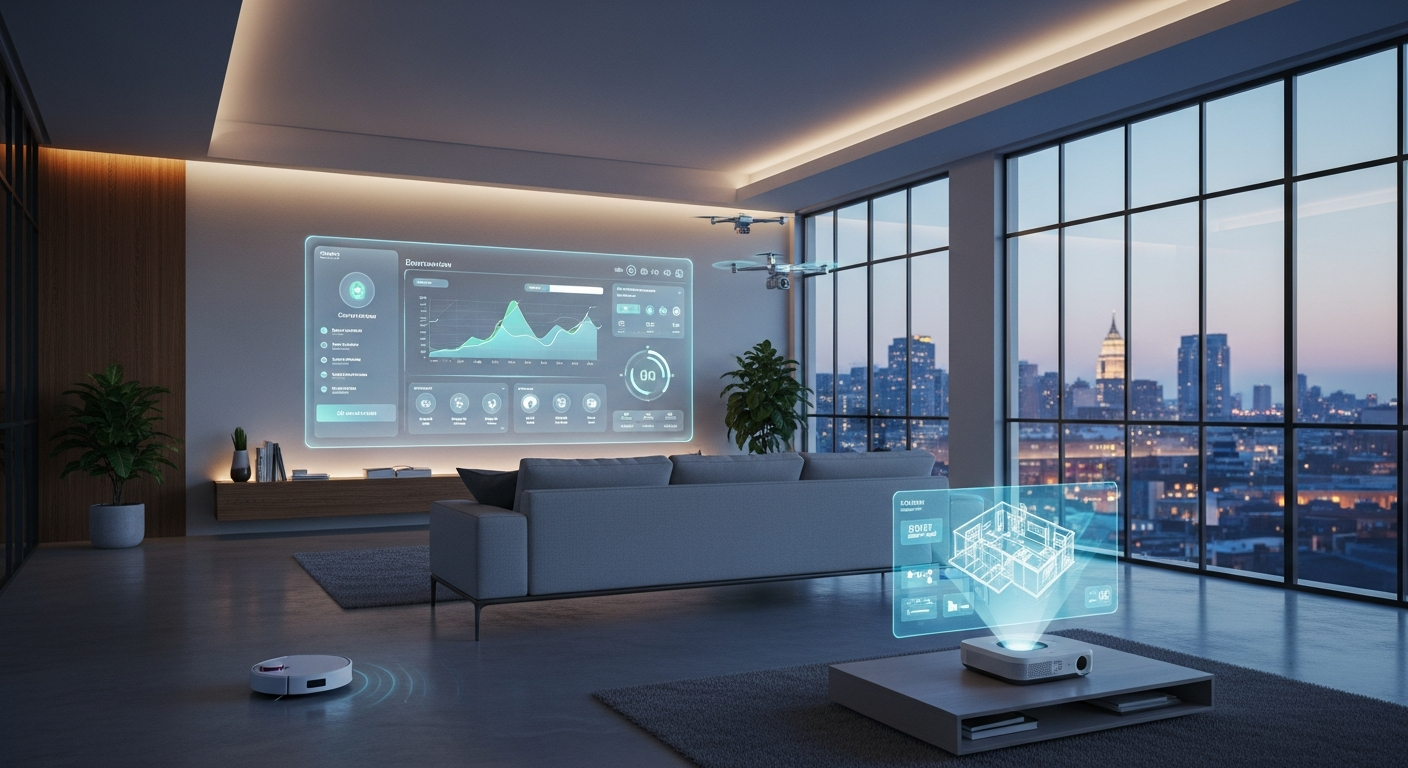
Looking ahead, the next few years promise a blend, rather than a battle, between smart and robot homes. Hybrid models are likely to emerge, garnering elements of both automation and control, offering a bespoke experience for users.
The long-term vision, however, boldly leans towards full autonomy. As technology advances, homes could seamlessly manage complex tasks, lead energy conservation efforts, and redefine personalized experiences.
Developers and technology firms need to invest in robust security frameworks and transparent AI models to address and preempt consumer concerns.
In the landscape of smart home technologies, it’s not about one surpassing the other but rather building a cohesive ecosystem where different technologies complement an enhanced living experience.
So where does this leave us? The evolution of home technology keeps pushing the boundaries of possibility. While the smart home offers a comfortable and convenient setting today, the prospect of scarce human involvement in personal spaces is both tantalizing and daunting – the quintessential coalescence of convenience and complexity.
Thomas Huynh would likely remind us, here at RoboZone.top, of the need to keep our eyes not just on the glitzy AI and robotics features but on the holistic societal impact of these advancements.
As we stand on the brink of this new frontier, the future home remains an untold chapter in the book of human innovation, a testament to both our creative prowess and our ability to redefine what ‘home’ means.
Thomas Huynh – Admin of RoboZone.top
References & Further Reading:
- MIT Technology Review — https://www.technologyreview.com/
- IEEE Spectrum — https://spectrum.ieee.org/
- McKinsey & Company — https://www.mckinsey.com/
- Stanford AI Lab — https://ai.stanford.edu/
- Harvard Business Review — https://hbr.org/
- NVIDIA research / blogs — https://research.nvidia.com/
- World Economic Forum — https://www.weforum.org/
- Boston Dynamics — https://www.bostondynamics.com/