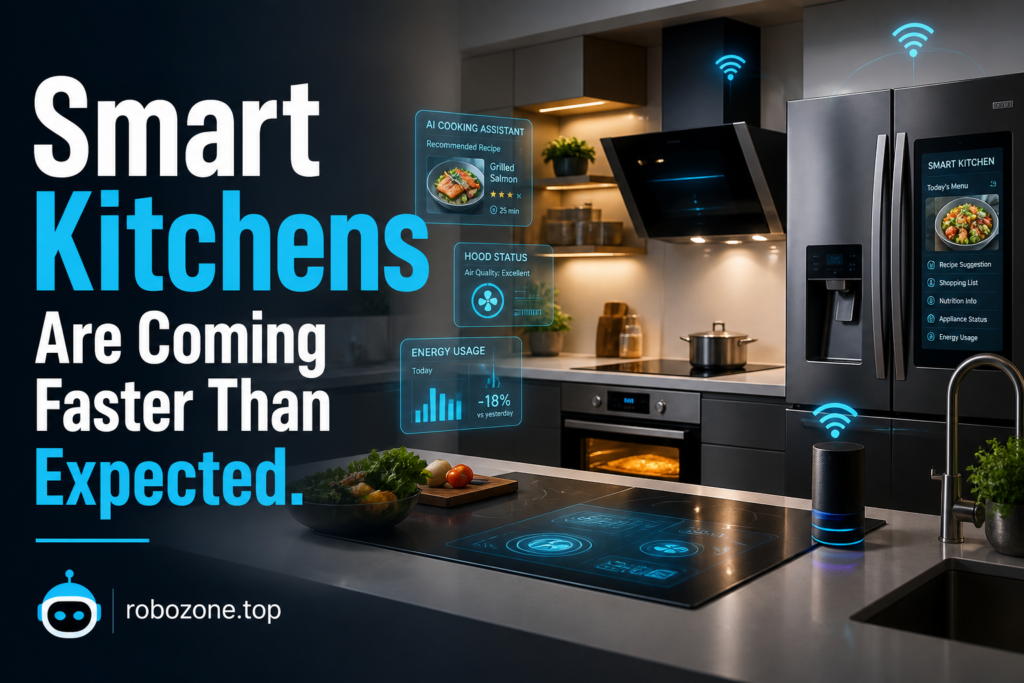
Watch the video on the YouTube channel RoboZone @robozonetop:
Welcome to a future that’s happening faster than we could have ever imagined, under the watchful eye of Thomas Huynh, the ever-passionate admin of RoboZone.top. Let’s explore this culinary evolution.
Unpacking the Concept of Smart Kitchens
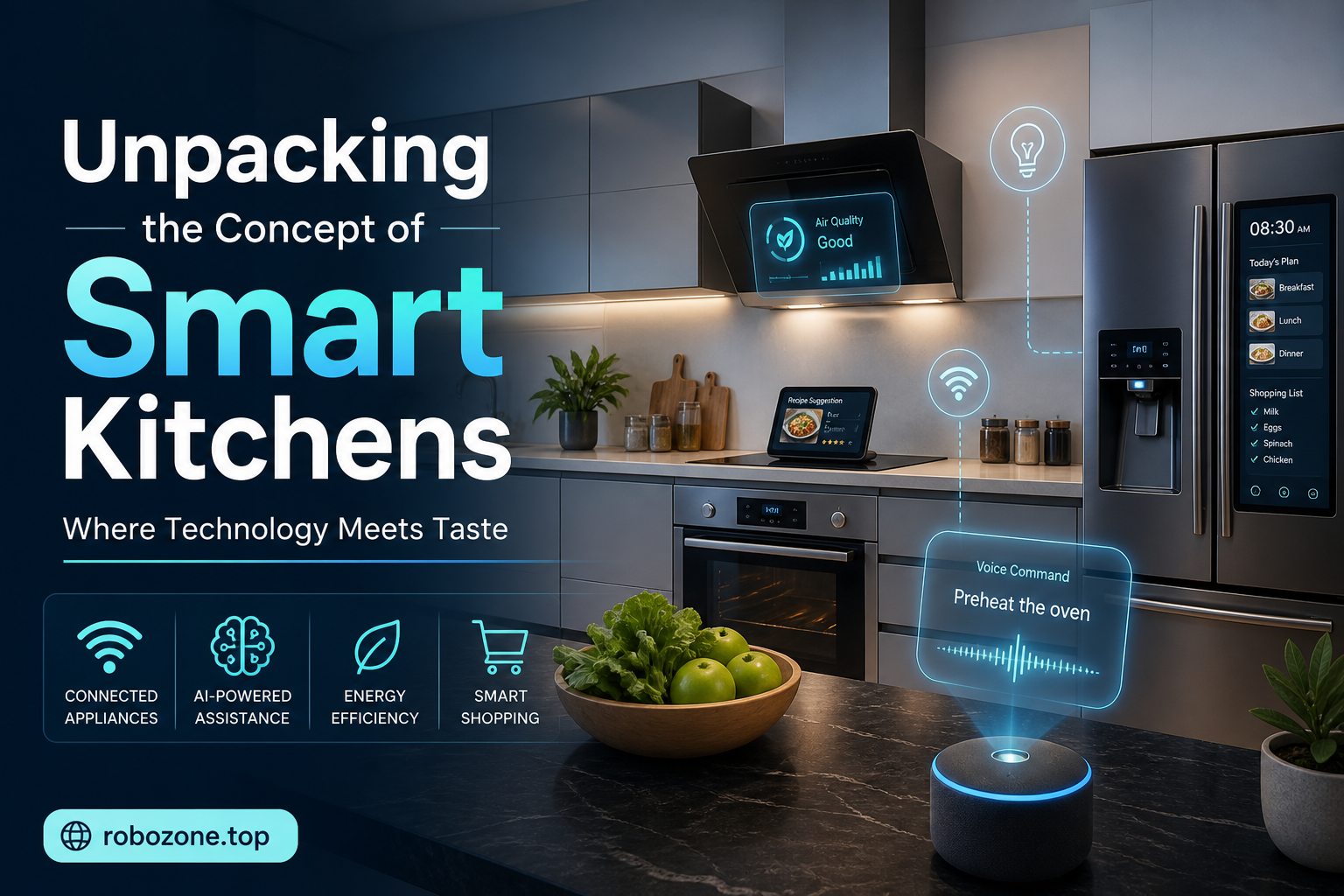
The very idea of a smart kitchen revolves around connectivity. At its core, a smart kitchen is an ecosystem where appliances and devices function in harmony, orchestrated by advanced AI and machine learning algorithms. Imagine this: your refrigerator isn’t just preserving your milk; it’s alerting you before it expires, and when you’re running low on supplies, it gently nudges you to restock. Or your oven doesn’t just cook; it chooses the perfect settings for your culinary experiments.
How does this work? Imagine a symphony, where each note is a connected device, playing its part in the culinary performance. Using the latest AI models, kitchens gather data from sensors embedded in appliances to predict behavior, enhance functionality, and even respond to voice commands. This connectivity allows for a kitchen that learns your habits and becomes part of the family rather than simply a room with cooking utilities.
Applications Beyond Home Kitchens
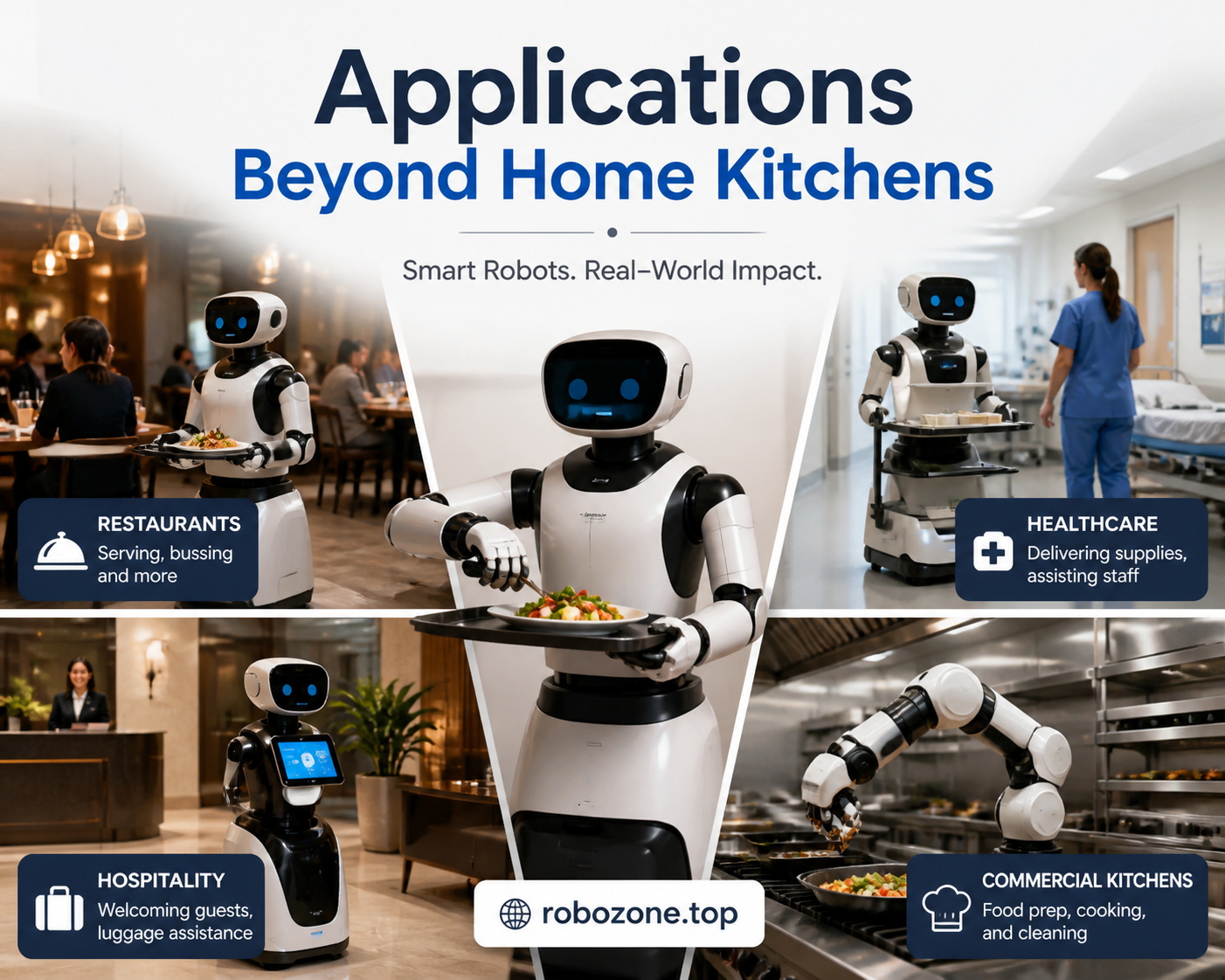
While the home kitchen remains the heart of this revolution, the ripple effects of smart kitchen technology reach far beyond. In the realm of industrial food production, these kitchens promise to slash inefficiencies and boost sustainability. Imagine a manufacturing facility where every aspect, from ingredient delivery to cooking, is fine-tuned for maximum efficiency and minimal waste.
According to reports from IEEE Spectrum, AI algorithms monitor cooking temperatures, ingredient shelf-life, and more, ensuring that food production meets both quality and safety standards. The healthcare sector too isn’t immune. Hospital kitchens equipped with smart systems are improving patient care, with personalised meal plans derived from a patient’s unique health data. Here, the promise of smart kitchens isn’t just convenience—it’s a pathway to healthier lifestyles.
Potential applications in these sectors are staggering. The precision with which AI can prepare individualized meals isn’t limited to taste alone. Picture a meal that’s tailor-made to meet the nutritional needs of an athlete on game day or a recovering patient, delivering just what the doctor ordered.
Technical Insights: The Backbone of Smart Kitchens
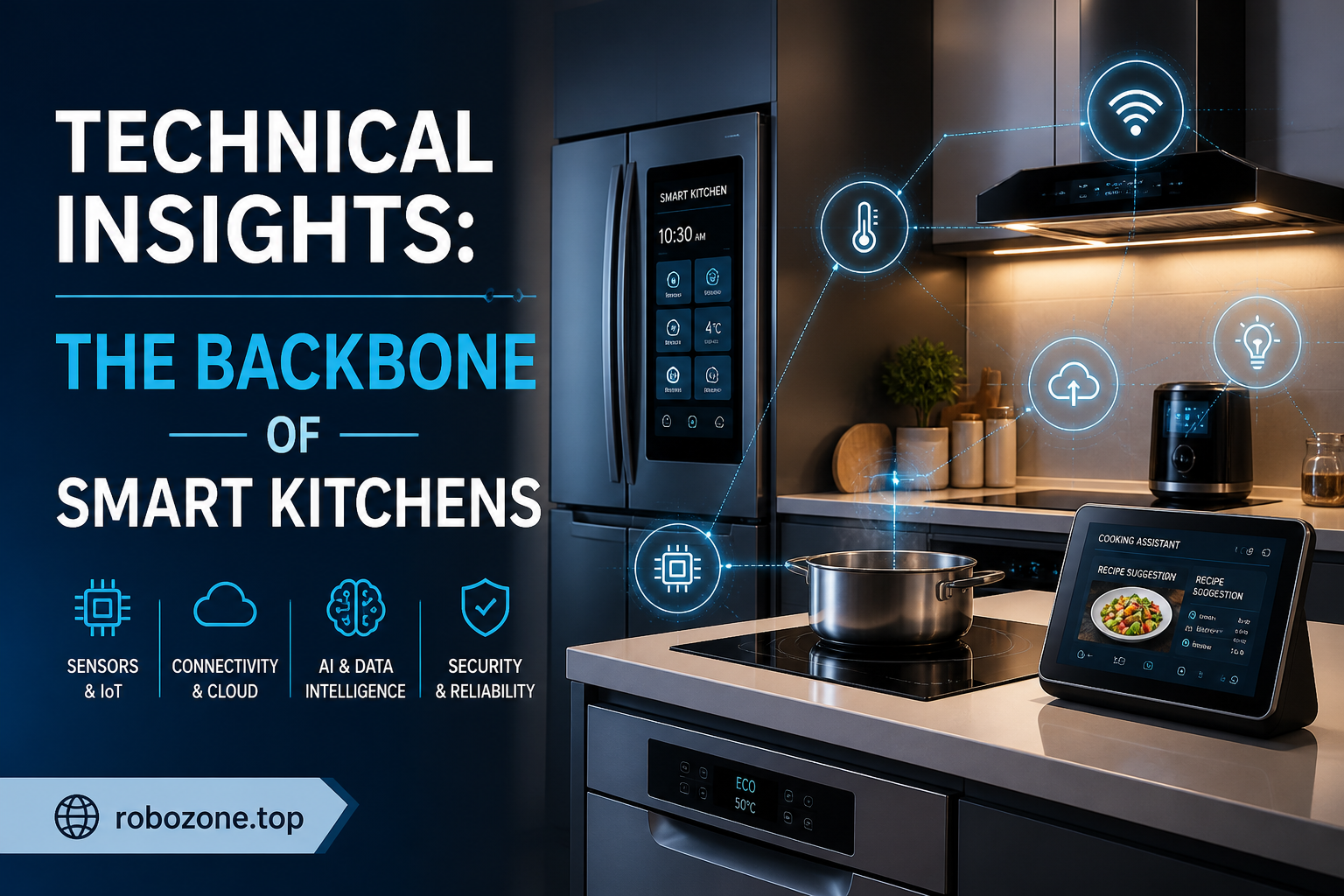
Diving into the nuts and bolts, smart kitchens are a fascinating convergence of AI technologies and advanced robotics. At the forefront are chips like NVIDIA’s latest developments, offering powerful processing capabilities necessary for real-time data analytics and machine learning applications.
As reported by NVIDIA’s own research blog, these units provide the computational heft to handle complex algorithms empowering appliances to not only collect data but also interpret and act on it. Sensors, often sourced from leaders like Boston Dynamics, constantly feed data into AI models that learn preferences and optimize settings based on user behavior, what might feel like magic is actually layers of intricate systems communicating silently with each other.
Consider robotics too. Modern robotic systems, such as those integrated by Google DeepMind, are developing technologies so that robotic assistants in the kitchen will not just fetch ingredients but also interact with consumers intimately by recommending recipes or modifying cooking processes real-time to suit taste palettes.
Market Dynamics: Growth and Economic Impacts

By 2025, the global market for smart kitchens is anticipated to grow exponentially, driven by urbanization and a demand for energy-efficient appliances. In an analysis by McKinsey & Company, investments in smart kitchen technologies have surged, catalyzing industrial giants to launch innovative products that redefine modern living spaces. Home automation giants, from Tesla to Amazon, are betting big, infusing robotic intelligence and cloud solutions into everyday kitchen hardware.
Economic impacts include an expansive job market. While there are fears of automation displacing jobs, the need for skilled personnel in programming, maintaining, and innovating these technologies continues to spur new opportunities. Moreover, these smart systems promise substantial economic benefits through not only creating savings for consumers but also promoting businesses that operate in this space towards sustainable growth trajectories.
Challenges: Barriers on the Road to Innovation
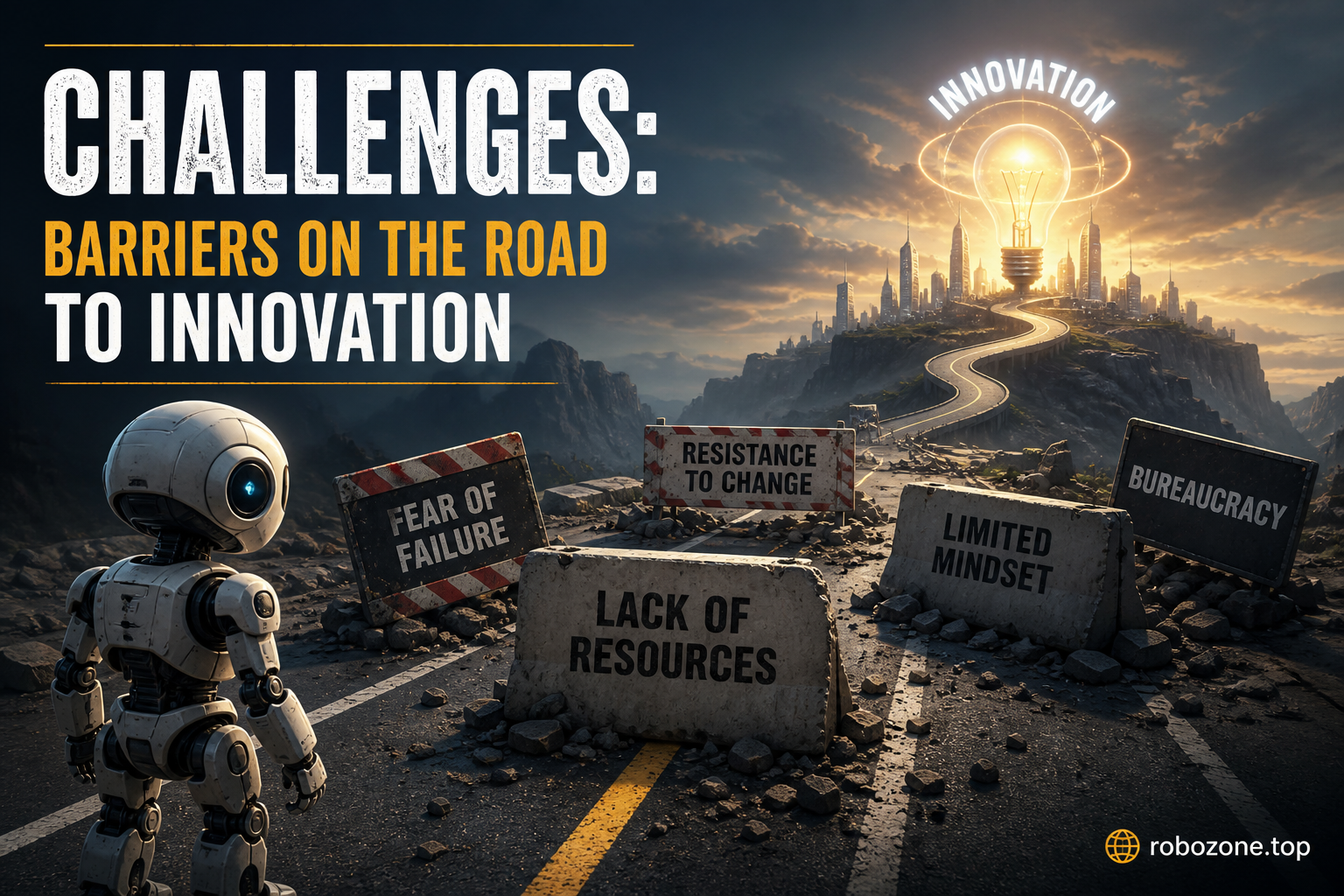
The road to entirely integrating smart kitchens isn’t without its bumps. Some challenges are technological; others are cultural. One barrier is cost. Advanced tech doesn’t come cheap, making smart kitchens a luxury that remains out of reach for the average household.
Furthermore, there’s the technical challenge of ensuring devices from different manufacturers play nice in the same ecosystem. Remember the days before universal remote controls, when you needed five different remotes just to watch TV? Yeah, it’s a bit like that.
On a more technical note, concerns over data privacy and security pose significant hurdles. With kitchens processing volumes of data, maintaining user privacy is critical. A breach could mean more than just a loss of recipes; it involves deeply personal information about consumption habits.
The Road Ahead: What the Future Holds

So where are we heading in this smart kitchen odyssey? If the recent trends hold true, in less than five years, kitchens could move from being responsive to being proactive. The promise lies in devices equipped with futuristic AI models capable of not only understanding nuanced user preferences but also anticipating needs before they arise. Imagine walk-in refrigerators that reorder restocks autonomously or ovens that predict and prepare meals based on gathered health data. Companies like Harvard Business Review project global smart kitchen adoption will triple by 2030, fueled by wider accessibility and consumer adaptations.
As Thomas Huynh would likely quip, this is no longer about the future creeping in but about us being in the grip of a technological revolution once thought a lifetime away. As adoption accelerates, the boundaries of what we consider the traditional kitchen will continue to shift dramatically.
Strategic Insights: Preparing for a Smart Kitchen World
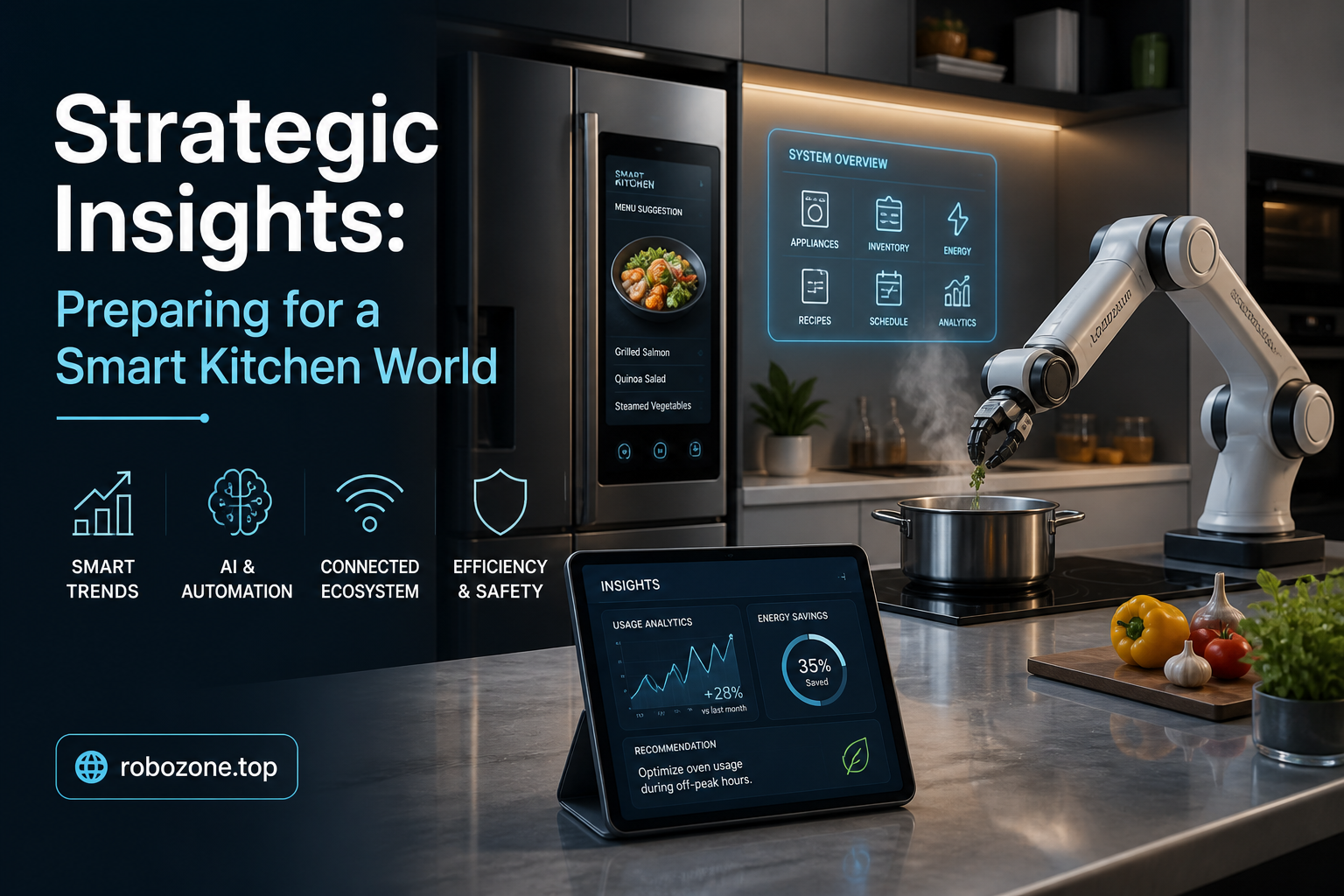
What should those on the precipice of this evolution be paying attention to? For businesses, investing in smart kitchen tech today could mean becoming market leaders within a decade. Developers must prioritize compatibility, and open-source platforms might be the key to ensuring seamless integration. Education in AI and data privacy will become critical skills for technicians and developers entering the workforce. Meanwhile, consumers should start understanding these technologies, even if they can’t afford them yet. Being aware of the possibilities will help make smarter purchasing decisions and prepare for the transition.
As Robozone’s Thomas Huynh wisely notes, the key to thriving in the coming years is less about keeping up with inventions and more about adapting to the rapid pace of change. A future where a robot is an invaluable kitchen companion rather than a mere helper isn’t far off—it’s the new normal.
So what comes next? The trajectory of smart kitchens is a thrilling narrative full of potential and promise. With each innovation, we’re peeling back a layer onto a future where the idea of a living, responsive, and intelligent kitchen isn’t novel—it’s integral. The amalgamation of cutting-edge AI, robotics, and connectivity will make kitchens not only the heart of the home but smart hubs that anticipate, respond, and adapt, just like a human heart does. Thomas Huynh, whose dedication to advancing the robotics dialogue propels platforms like RoboZone.top, continues to remind us: embracing this intelligent culinary evolution is just the beginning of a larger robotic revolution unfolding in our everyday lives.
Thomas Huynh – Admin of RoboZone.top
– – – – – – – – – – – – – – – – – – – – – – – – – – – – – –
Love this content? Support the blog by checking out these items:
If you buy through these links, I may earn a small commission at no extra cost to you. Thank you for supporting the blog!