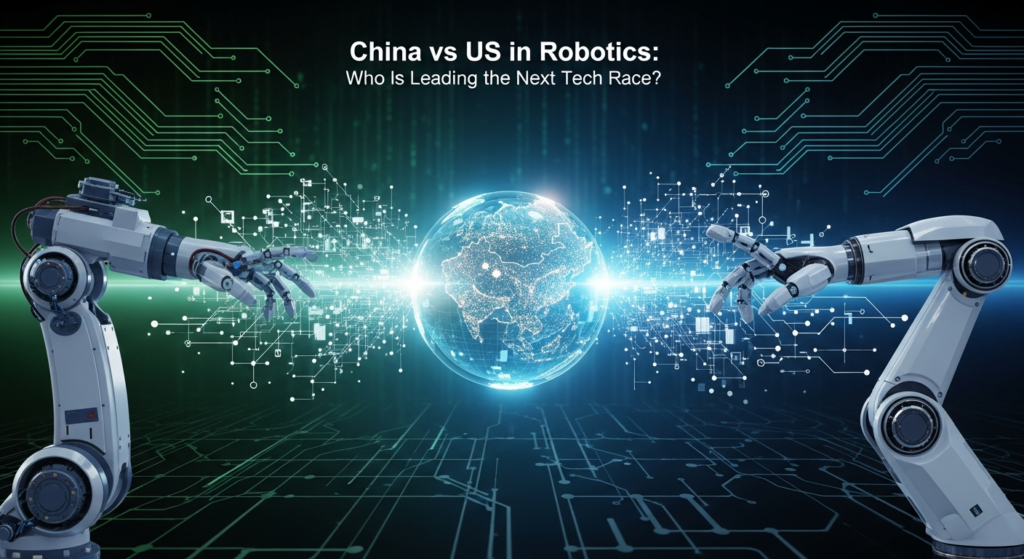
As the digital age continues to redefine global dynamics, it poses an intriguing question: In the great 21st-century race for technological supremacy, who is poised to dominate the field of robotics, China or the United States? Much akin to the space race of the 1960s, this modern competition carries implications that extend well beyond borders, industries, and even economies. It’s a clash where innovation is as valuable as intuition, and where breakthroughs could mean global leadership in the next era of technology.
The Core Concept of Modern Robotics
At its essence, robotics revolves around designing machines that can mimic human actions, process complex data, and make autonomous decisions. While the term ‘robot’ can conjure images of humanoid machines doing chores or assembly-line labor, today’s robots are often much more specialized. They span a broad spectrum from automated drones mapping and delivering in uninhabited terrains to microscopic bots solving challenges within our very bodies.
How do they work? Surprisingly, much like ourselves. Consider how we, as humans, navigate our environment using senses and brains to interpret data and respond accordingly. In robots, sensors serve as eyes and ears, advanced AI models like those developed at the Stanford AI Lab function as brains, absorbing data swiftly to make decisions. Processing power, often provided by companies like NVIDIA, acts as a central nervous system, allowing these machines to perform impeccably complex tasks in real-time.
Real-World Applications: Robotics In Action
Robots are already proving their mettle across a variety of sectors. In healthcare, they assist surgeons with precision trials no human hand could accomplish, executing complex transplants with exactitude. In Asia and the U.S., robots roll through hospital floors offering assistance in medical emergencies—capable of taking vital readings and reporting anomalies much quicker than overworked staff.
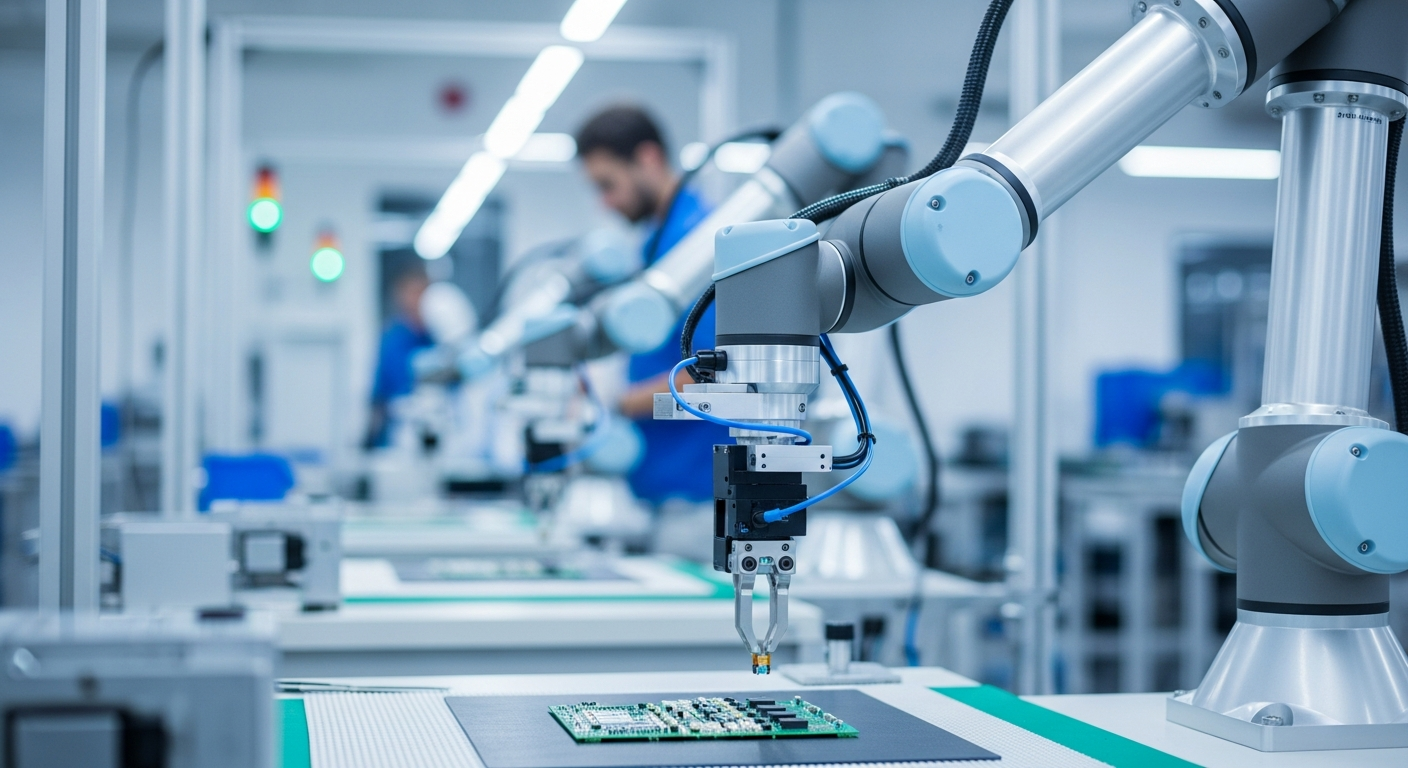
The industrial sector, on the other hand, showcases robots as the keystones of new production landscapes. These machines have transformed manufacturing into a spectacle of efficiency, employing advanced robotics systems like those from Boston Dynamics to automate tasks that are not only dangerous but costly when attempted manually. Meanwhile, autonomous vehicles such as those developed by Tesla represent another frontier altogether, spearheading smarter, safer roads.
Yet it is not just factories and healthcare facilities that welcome automation—robots have ventured into our living rooms. Smart home devices now learn patterns and adapt lifestyles around them, creating environments as responsive as they are reassuring. Here too, Thomas Huynh often comments on his blog about the seamless human-robot collaboration in modern automation, especially in domestic settings.
Technical Insights: Building Smarter Systems

The rapid evolution of robotics is powered by breakthroughs in various technological facets. Artificial intelligence models have expanded both in scope and sophistication, resembling the human capacity for learning and adaptation. These models enable robots to perform tasks with minimal human oversight—a game-changer in industries demanding finesse and accuracy.
Considering NVIDIA’s role, their latest chips have been instrumental in shifting paradigms. These chips have supercharged robots to process data at unimaginable speeds, pushing boundaries in both capability and reliability. It’s this kind of innovation that underscores why both China and the U.S. have eagerly invested in R&D to integrate top-tier processors into their robotic frameworks.
Market Analysis: Investments and Economic Impact

With two superpowers edging for technological dominance, investments in robotics research have skyrocketed. According to a McKinsey & Company report, China has earmarked billions for developing AI and robotics hubs, recognizing their industrial applications and potential in reinforcing economic prowess. Conversely, the U.S., home to Silicon Valley, has poured resources into fostering high-tech ecosystems that cultivate startup talent and pioneering robotics enterprises.
The economic impact, too, has been substantial. In the automotive sector alone, innovations in robotics and AI promise to create trillions in value. The World Economic Forum predicts that, by 2026, the effectiveness of robotics could lead to annual GDP boosts in developed countries, as labor costs diminish and efficiencies rise.
Challenges and Limitations: What’s Holding Robotics Back?

Despite the promise, challenges loom. From a political perspective, regulatory hurdles abound, often delaying deployments. Moreover, the ethical considerations of widespread automation keep debates charged—what happens when human work becomes redundant?
Technically, areas like machine learning algorithms still grapple with biases, emphasizing the need for transparent coding and databases reflective of broader diversity. Safety remains another critical factor as developers strive to seal off vulnerabilities in autonomous systems.
Throughout the industry, there exists an underlying wariness towards overdependence on technology. As Thomas Huynh points out, too much reliance on automation might lead to ‘a future where humans ask machines for permission’—a line only comedy would dare tread during serious discussions in tech circles.
Future Predictions: Glimpsing 3–5 Years Ahead

When peering through the futuristic lens towards 2026 and beyond, the trajectory of robotics seems to intensify its upward ascent. The next few years could feature both China and the U.S. refining collaborative robots or ‘cobots’ increasingly used in industries ranging from logistics to agriculture. Enhanced predictive capacities driven by AI could lead to autonomous systems capable of anticipating needs even before they arise.
Optimistically, the integration of IoT with robotics is anticipated to create smart environments capable of staggering intelligence levels. Picture neighborhoods where self-repairing infrastructure is normed, or retail spaces that dynamically alter stock according to predictive analytics gathered by consistently learning robotic systems.
Strategic Insights: Preparing for the Robotic Future

With such promising advancements on the horizon, stakeholders across the spectrum have significant roles to play. For businesses, it means investing in adaptable technologies and aligning with strategies that leverage these emerging tools. Developers would do well to familiarize themselves with emerging AI modules, ensuring they are equipped to enhance, not hinder, our collective future.
Users, on the other hand, gradually absorbing more robots in their everyday lives, will need to balance between conveniences offered and privacy concerns arising from close integrations. It’s an intricate dance we are all learning in real-time, no less fascinating than a sci-fi movie screenplay.
In the words of Thomas Huynh, ‘Whether you reside in Silicon Valley, Shenzhen, or Saskatchewan, robots are no longer the stuff of fiction—embrace or be left behind.’
So where does this leave us with China and the U.S. vying for leadership in the field of robotics? With both nations investing, innovating, and occasionally imitating, the path forward is paved with aggressive competition but mutual enrichment too. While the U.S. might own the narrative in innovation, China continues to impress with production scaling and cost leadership.
As we look towards a horizon where smart machines ought to be our partners and not our competitors, the narratives from both sides of the Pacific showcase a world united by technology yet, for now, divided by its pursuit. What should we really pay attention to? Perhaps it’s not who wins the race, but how the technologies they cultivate will reshape our world.
Thomas Huynh – Admin of RoboZone.top
References & Further Reading:
- MIT Technology Review — technologyreview.com
- IEEE Spectrum — spectrum.ieee.org
- McKinsey & Company — mckinsey.com
- Stanford AI Lab — ai.stanford.edu
- NVIDIA research — research.nvidia.com
- World Economic Forum — weforum.org
- Harvard Business Review — hbr.org