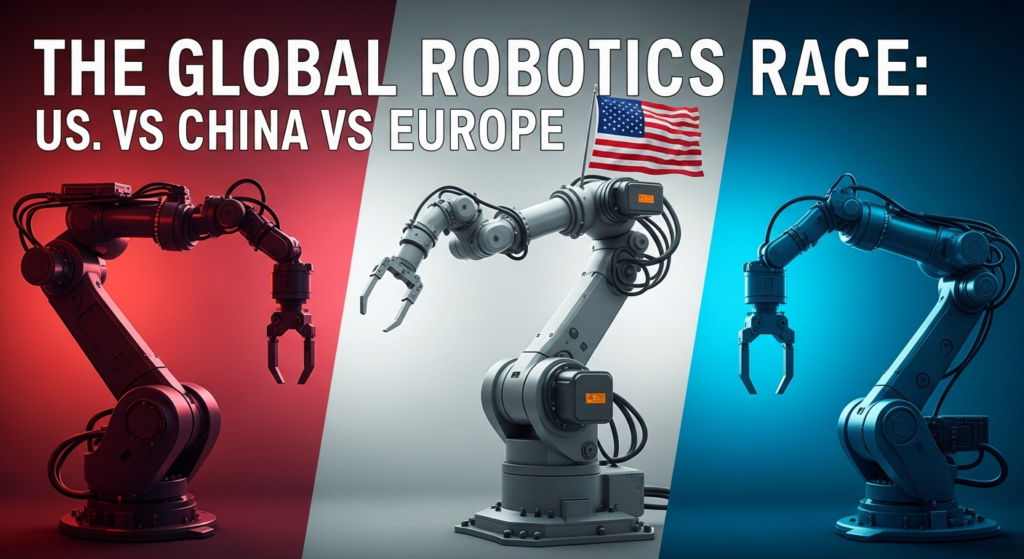
As the 21st century progresses, the global race in robotics innovation has come to resemble a technological marathon where the United States, China, and Europe stride shoulder to shoulder, each vying for pole position. Much like spectators at an Olympic event, the rest of the world watches eagerly, anticipating who will come out on top. This competition isn’t just about national pride; it’s a high-stakes contest with profound implications for global manufacturing, healthcare, and military supremacy. So, what exactly is driving this relentless pursuit of robotic advancement, and how might this race evolve in the coming years?
The Core Concept: Understanding Robotics in the 21st Century
At its heart, robotics is the field of technology dedicated to the design, construction, operation, and application of robots—machines capable of performing tasks that would typically require human intelligence and physical capability. These tasks can range from mundane factory floor repetitions to complex surgical procedures. To understand the stakes of today’s robotics race, one must first appreciate the modern robot’s key components: sensors, artificial intelligence (AI), and actuators. Imagine a robot as a human body: sensors act as sensory organs, AI functions like the brain, and actuators serve as muscles and limbs.
The surge in robotics can largely be credited to advancements in AI models such as deep learning algorithms. Stanford AI Lab and NVIDIA research have been at the forefront of this development, crafting neural networks that enable robots to learn tasks through data exposure, much like a child learning via trial and error. Imagine teaching a robot to identify fruits: show it hundreds of images of apples and oranges until it knows the difference.
Real-World Applications: From the Factory to the Operating Room
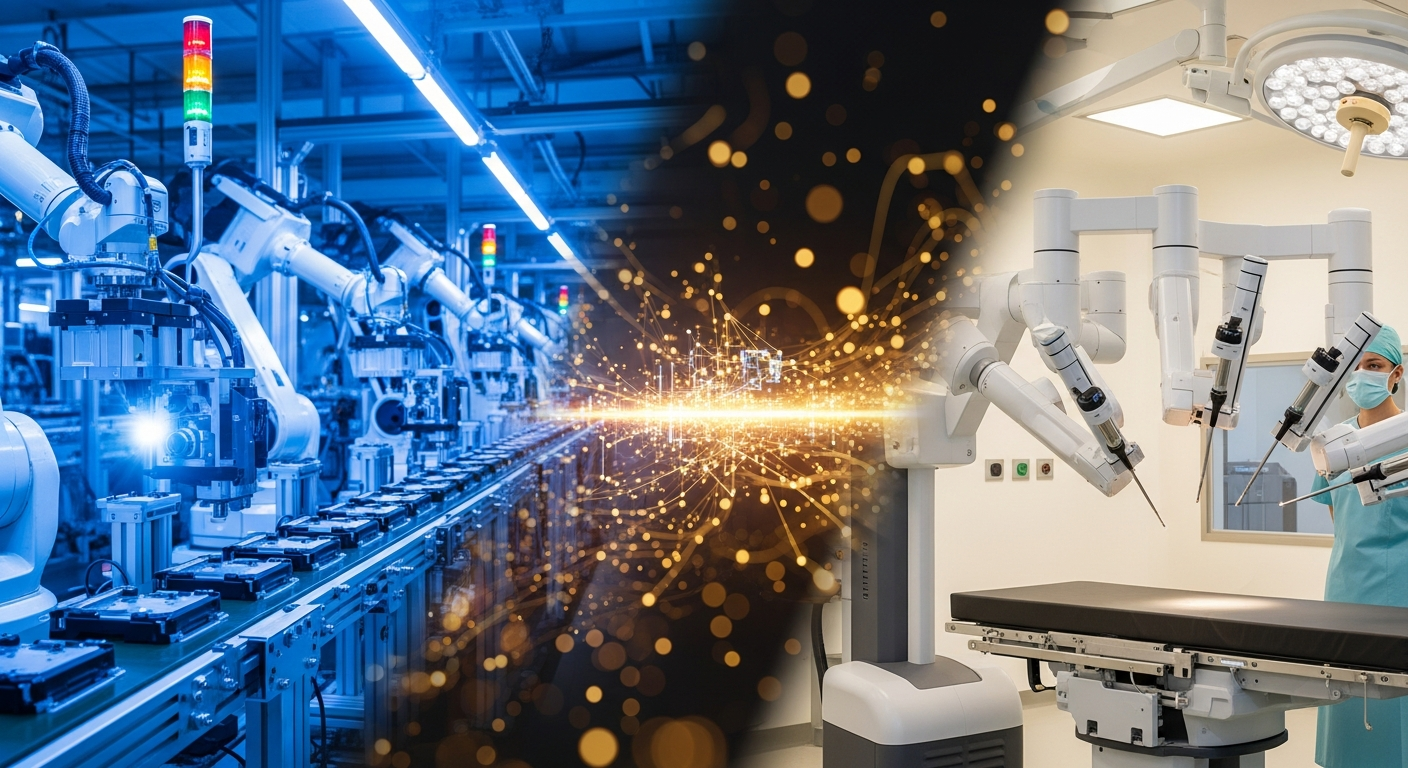
Robots have long been a staple on industrial floors, welding cars and assembling electronics with precision not replicable by human hands. But today’s robots are venturing far beyond the factory gates. Take healthcare as an example, where robots like the da Vinci Surgical System allow surgeons to perform with enhanced precision through minimally invasive techniques. As a medical professional might say, “It’s like having an extra set of skilled hands, albeit mechanical.”
In the domestic sphere, smart home devices, ranging from robotic vacuum cleaners to AI-driven personal assistants, are transforming lifestyles. These gadgets, some would argue, take inspiration from the Jetsons’ Rosie the Robot—finally fulfilling futuristic promises of automated convenience.
Technical Insights: The Brains Behind the Bots
Robotic systems are powered by a symphony of technical advancements. At the forefront are AI models, sensors, and high-efficiency chips from companies like NVIDIA. These elements lay the groundwork for intelligent behavior, allowing robots to react to their environment. Consider Tesla’s advancements in autopilot drone technology, seamlessly integrating NVIDIA’s GPUs to process real-time data for autonomous navigation.
The constant miniaturization and enhancement of electronic components have led to lighter, faster, and more power-efficient devices. This progress significantly supports mobile robots and autonomous vehicles, which need to operate for extended periods without constant recharging.
Market Analysis: Investments and Economic Impact

The economic implications of the robotics race are staggering. According to the International Federation of Robotics, global spending on robotics and related services is expected to reach $200 billion by 2026. The surge is most pronounced in China, where government-backed initiatives pour billions into making the country a robotic superpower. One could liken this to the space race of the 20th century—but with a broader set of applications and implications.
In Europe, countries like Germany are doubling down on engineering precision and automation, cementing their status as leaders in industrial robotics. The US, however, might still hold the ace with its innovation ecosystem, breeding unicorn startups and tech-driven ideations. As Thomas Huynh would likely quip, “Here’s where we separate the wheat from the chaff.”
Challenges and Limitations: Navigating the Present Pitfalls

Despite the promise of robots, several challenges persist. Technical hurdles include creating robots that can efficiently navigate unstructured environments. While a factory floor is predictable, real-world settings like disaster areas or bustling city streets are anything but. AI remains imperfect in these contexts, often stumped by unpredictable scenarios.
Furthermore, there’s the ethical dilemma surrounding job displacement and privacy. Imagine a world where machines outnumber skilled human craftsmen—a dystopian premise that concerns policymakers and technologists alike. As a recent Harvard Business Review article deliberated, finding the perfect balance between automation benefits and societal impacts is crucial.
Future Predictions: The Next Milestones in Robotics
Peering into the coming years, experts predict a paradigm shift in autonomous robotics. In three to five years, expect to see more robots crossing the threshold into everyday life. Think autonomous delivery bots in urban centers or household robots capable of learning daily routines, akin to a family pet learning its owner’s habits.
In the long term, the symbiosis of AI with other emerging technologies like quantum computing could herald unprecedented capabilities in robotics. Imagine a future where robots not only assist but anticipate needs, blurring the line between machine and ally in crafting a seamless living experience.
Strategic Insights: Preparing for a Robotics-Driven Future
As the global race intensifies, businesses, developers, and users must prepare for a future increasingly intertwined with robotics. Companies should invest in training and development, ensuring the workforce adapts to new roles and technologies. The shift may be daunting, but with the right approach, it can open up new avenues for economic growth.
Developers need to focus on creating adaptable, ethically compliant robotics solutions that balance efficiency with human-centric values. Users, on their part, should embrace change, readying themselves for an era where robots may partner with humans in ways only previously imagined in science fiction.
As Thomas Huynh wisely advises, “The race in robotics isn’t about winning but collaboratively running towards a future that benefits us all.”
So, what comes next? The global robotics race is not just a contest of engineering excellence but a gateway to untapped potential. By closely monitoring developments in this field, we remain poised to harness the transformative power of robotics for humanity’s benefit. The future remains unwritten, and perhaps, that’s where the real excitement lies.
Thomas Huynh – Admin of RoboZone.top
References & Further Reading:
- MIT Technology Review — [Link here]
- IEEE Spectrum — [Link here]
- McKinsey & Company — [Link here]
- Stanford AI Lab — [Link here]
- Harvard Business Review — [Link here]
- NVIDIA research / blogs — [Link here]
- International Federation of Robotics — [Link here]
- World Economic Forum — [Link here]