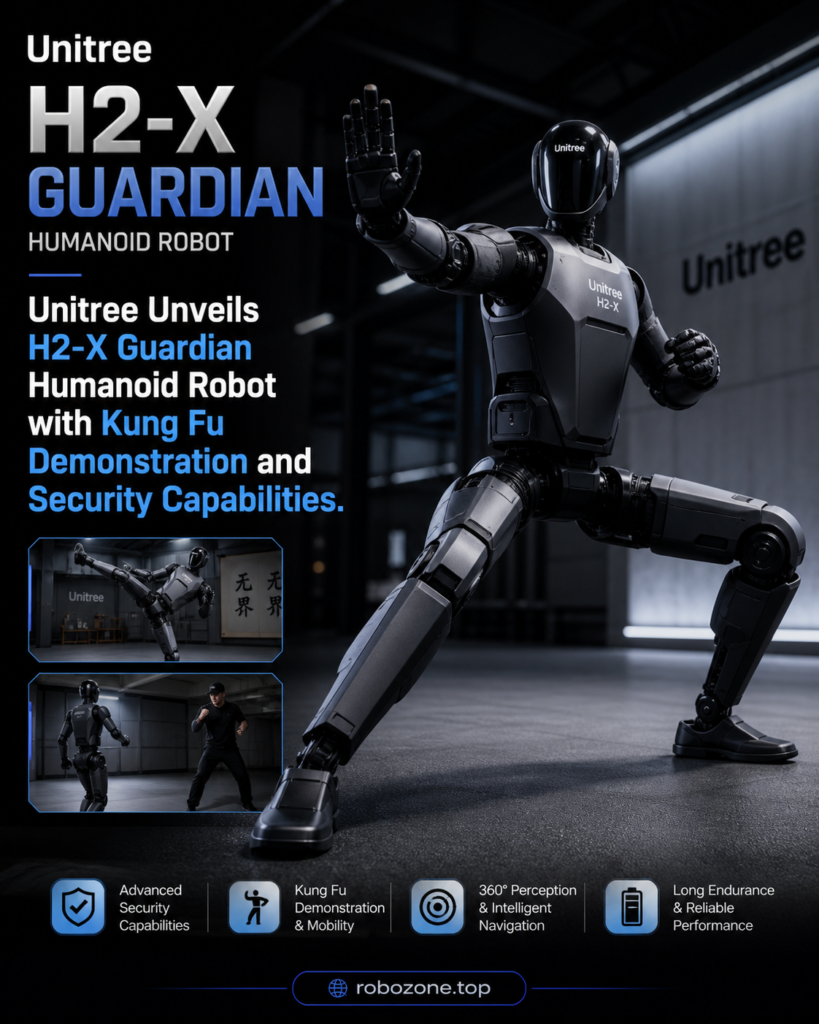
The rise of humanoid robots designed for security applications marks a significant evolution in robotics. In October 2026, Unitree Robotics unveiled the H2-X humanoid robot, dubbed the ‘Kung Fu Legend Guardian,’ a vivid testament to this transformative moment. Marketed as an advanced solution for security and emergency response, the H2-X promises an intriguing combination of mobility, physicality, and endurance. The unveiling, documented in a promotional video, depicts a robot engaging in martial arts, navigating challenging jumps, and demonstrating impressive feats like lifting vehicles. Yet, beyond the spectacle, questions remain about its integration into real-world applications and the practical implications of this robotic marvel in security operations.
The Announcement and What It Entails

Unitree Robotics’ announcement of the H2-X, built on the company’s H2 platform, promises to redefine security with robotic capabilities reminiscent of human physical prowess. This humanoid, showcased through a promotional video, performs complex martial arts moves, jumps from four-meter heights, and even interacts with vehicles in a controlled environment. While these demonstrations are captivating, they serve more as a marketing tool than a confirmation of readiness for immediate deployment in real-world scenarios.
According to Unitree, the H2-X is engineered with a keen focus on security and emergency response. The robot is designed to operate continuously for up to eight hours, offering a significant potential for endurance in time-sensitive situations. However, these claims are company statements and await independent verification to substantiate real-world performance.
The targeted use case for the H2-X spans several domains: from private security operations to potential uses in public safety and emergency response. Unitree emphasizes the robot’s ability to perform tasks that are increasingly necessary in societies focused on enhancing security and reducing human risk. Through these capabilities, the H2-X aims to address gaps in existing security protocols, providing both a physical presence and a tool for intervention.
Technological Foundation and Architecture
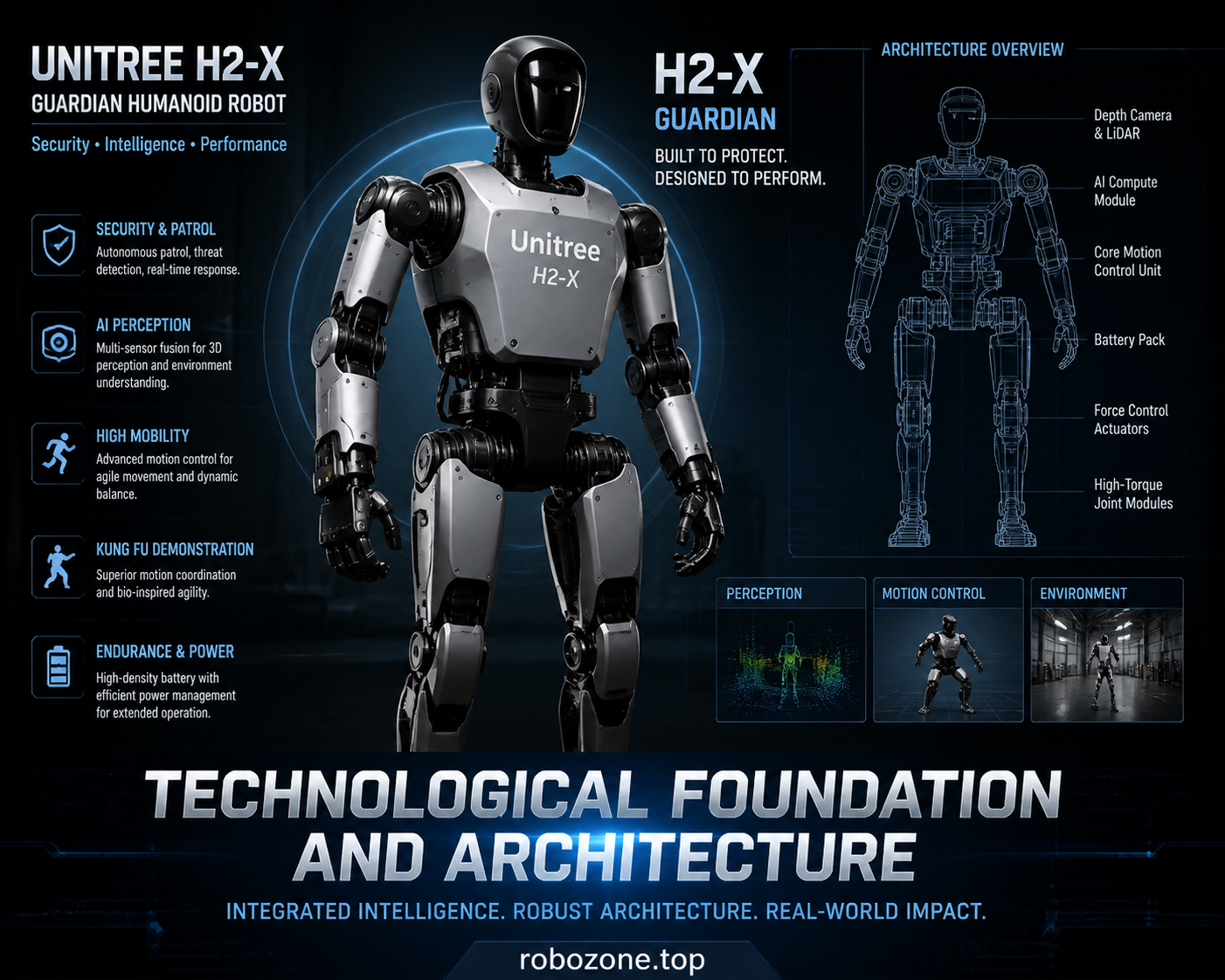
The core technological platform of the H2-X, the H2 platform, is a testament to Unitree Robotics’ commitment to advancing humanoid robotics. This platform integrates complex systems that include advanced sensors, robust actuators, and cutting-edge artificial intelligence (AI) mechanisms. Each component plays a crucial role in offering the desired degrees of mobility and interaction necessary for security-focused tasks.
The H2-X is equipped with a sophisticated perception stack, potentially involving cameras and LiDAR systems to navigate and respond to dynamic environments. Additionally, the agility demonstrated in the promotional video is made possible by advanced actuation systems, likely utilizing electric motors optimized for smooth and fast movements. However, the specific details about its AI frameworks or the particular algorithms used in decision-making processes remain undisclosed, representing a significant unresolved question.
From a technical analysis perspective, the eight-hour endurance of the H2-X, while impressive, will largely depend on the efficiency of its energy management system and battery technology. Robust power systems are not only essential for extended operational time but also critical for maintaining high performance in high-energy tasks such as martial arts routines or lifting vehicles. Nonetheless, the actual deployment of such power systems and their real-world efficacy need further exploration and validation.
Addressing the Real-World Potential
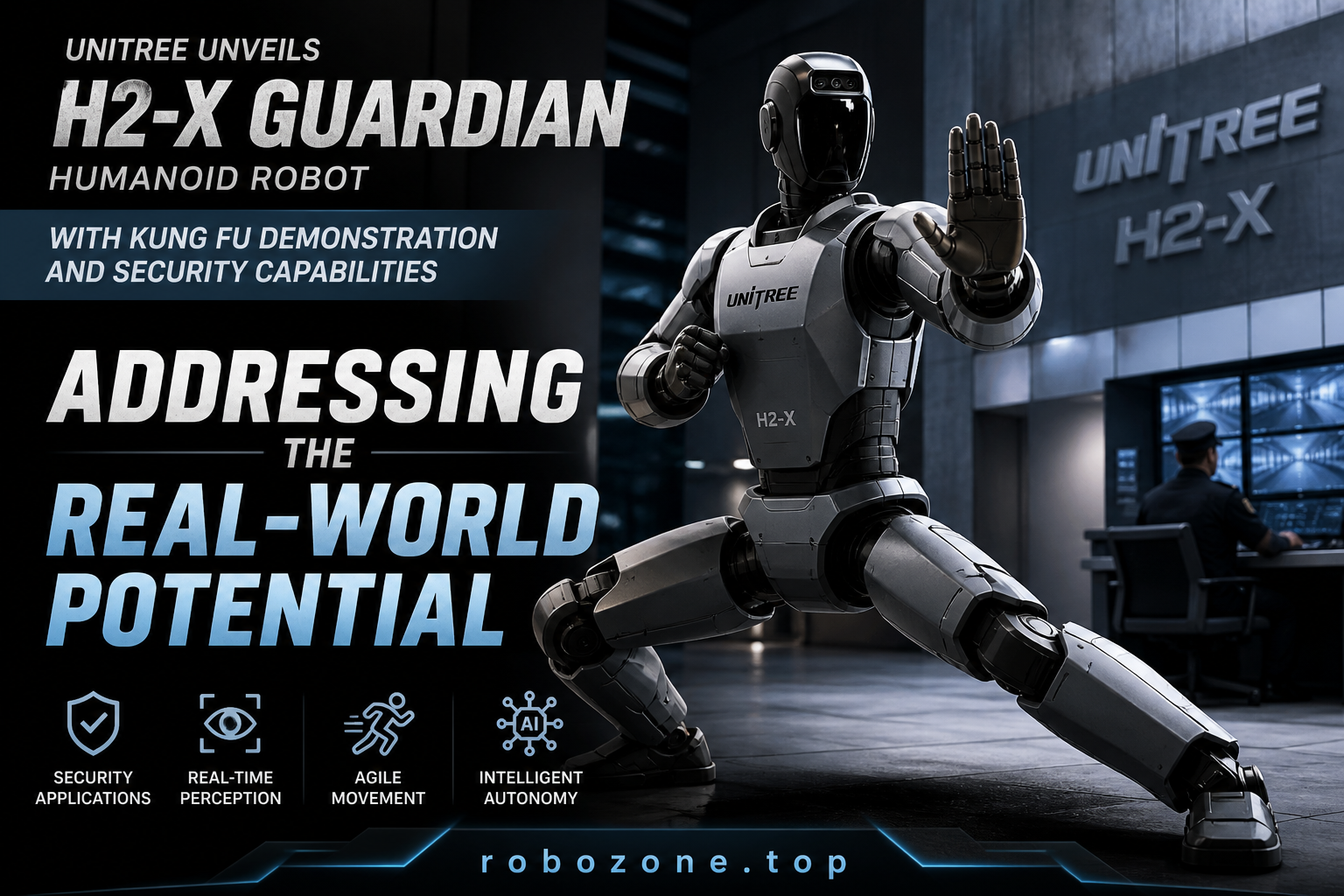
The video demonstrations and technical promise of the H2-X suggest a futuristic application in sectors needing enhanced security and emergency interventions. The capability to perform physical tasks like height navigation and obstacle manipulation offers a unique edge in potentially dangerous settings. Such robots could transform sectors ranging from high-security facilities to disaster management zones, where immediate, intuitive, and robust intervention is required.
However, real-world deployment presents several challenges. The integration of humanoid robots into existing security frameworks involves not only technical readiness but also societal and regulatory acceptance. Standards for safety, interaction protocols, and ethical considerations about robotic intervention in human domains are yet to be fully structured at international levels. These elements are critical, as the implications of deploying humanoid robots in sensitive or public-facing environments bring significant ethical and safety challenges.
Furthermore, testing these capabilities outside controlled demonstrations remains an unresolved question. While the promotional content showcases potential, the scenarios presented do not account for variables present in real-world emergencies or security breaches.
Commercialization and Market Penetration
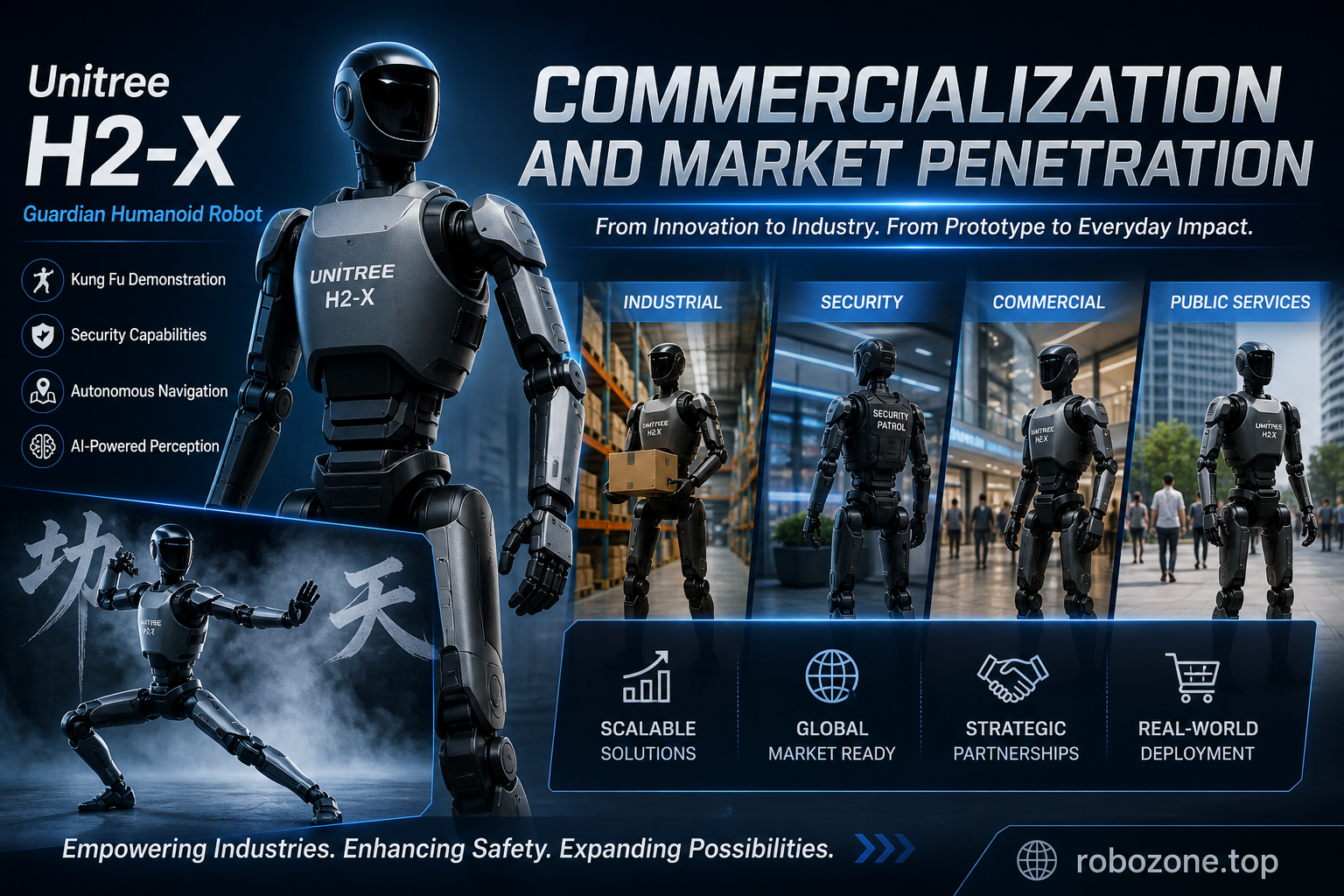
Unitree’s strategic positioning of the H2-X in the market is an ambitious endeavor. In targeting the security sector, there are substantial opportunities, given the growing demand for automated systems that enhance safety and operational efficiency. However, the journey from a demonstrated prototype to a commercial product widely adopted in the industry involves navigating several hurdles.
Currently, comprehensive data on production timelines, volume capabilities, and scalability remains sparse. Commercial readiness hinges on the alignment of production capabilities with market demand while ensuring affordability and practicality for potential clients. While Unitree Robotics has not disclosed specific pricing models, such innovative technology typically comes with a significant investment in terms of both purchase and operational overheads.
Moreover, competitive dynamics in the robotics market include various players exploring similar niches, often from different technological approaches or business models. Establishing a unique value proposition and demonstrating tangible differentiators is essential for Unitree Robotics to capture meaningful market share.
Competition, Challenges, and Future Outlook
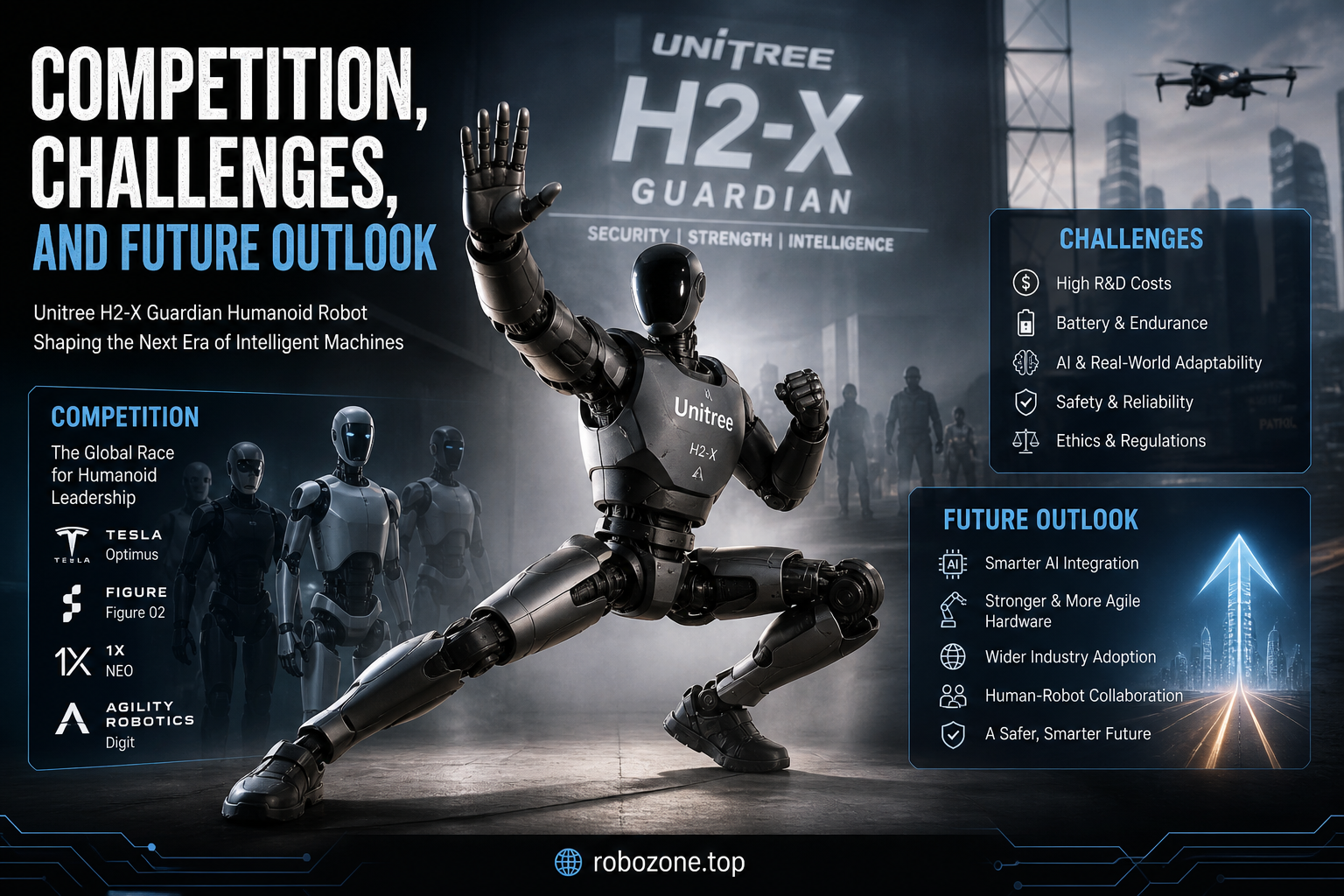
The field of humanoid robots designated for security applications is rapidly evolving, with multiple firms striving to blend sophisticated technology with practical utility. Unitree’s venture with the H2-X enters a competitive landscape where companies like Boston Dynamics have also showcased innovative robots with industrial, security, and military applications. Each entity is racing to deliver robots that combine efficacy, safety, and adaptability.
Nonetheless, significant challenges lie ahead. Technical barriers persist in terms of real-world adaptability, interaction with complex human-driven environments, and ensuring fail-safe operations in unpredictable scenarios. Economic factors, including cost of ownership and competition with conventional security measures, also significantly influence adoption rates.
From a future outlook perspective, the successful scale-up of the H2-X will demand not only technological refinement but also an ecosystem that supports comprehensive deployment strategies, training for human interaction, and robust safety systems. Continuous iterations, responsiveness to user feedback, and adapting to regulatory landscapes will define its journey towards broader market penetration.
Where Ambition Meets the Real World
The H2-X by Unitree Robotics embodies a pivotal step forward in the realm of humanoid robots designed for security applications. While the engineering prowess behind such capabilities is evident, the translation from prototype ambitions to real-world utility poses complex challenges. As Unitree moves towards potential commercialization, stakeholders will be watching how these systems evolve, adapt, and perform within the contexts they aim to transform.
Investors, robotics enthusiasts, and industry professionals alike will need to track the robot’s deployment, its interaction within dynamic environments, and evolving safety regulations. Ultimately, the success of the H2-X will lie in its ability to not just coexist with but enhance the human-led processes it aims to assist, carving out a viable role in the global security landscape.