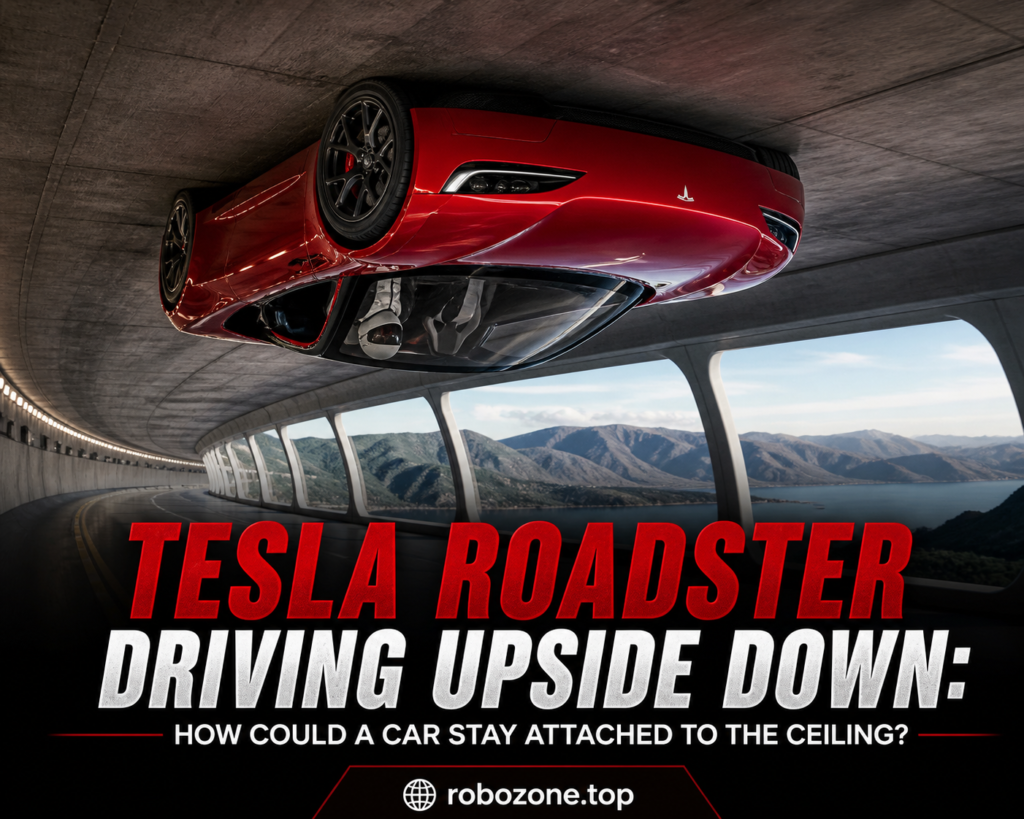
The Physics of Driving Upside Down
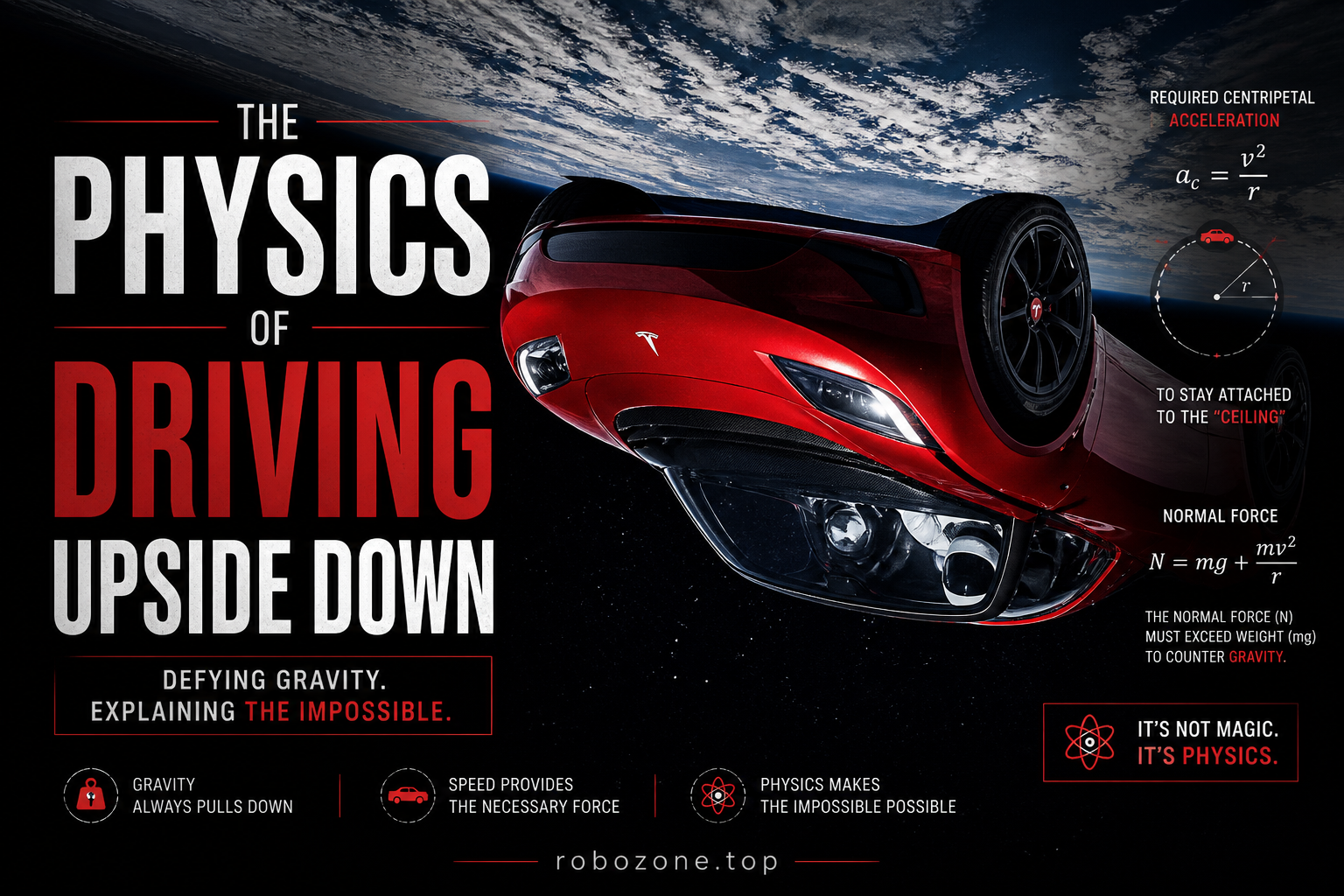
When it comes to driving a Tesla Roadster upside down, it’s imperative to understand the basic principles of physics at play. Concepts such as gravitational pull, pressure, adhesion, and centripetal force need to be dissected to appreciate how a vehicle might achieve this feat.
Gravitational Pull is the natural force that attracts a body toward the center of the earth, or towards any other physical body having mass. For a car to drive upside down, it would need to counteract this force, typically measuring 9.8 m/s² or approximately 32.2 ft/s² downward. In essence, the vehicle must generate sufficient lift or a similar upward force to negate the pull towards the ground.
Pressure and Adhesion play a vital role in this scenario. Tire adhesion helps maintain contact with the driving surface, even when that surface becomes the ceiling. High-performance tires, advanced tread design, and compounds that maximize grip under extreme conditions are essential. The tires’ material composition can add to the pressure required to stick a vehicle to the ceiling.
Centripetal Force involves an inward force needed to keep a body moving in a curved path, counteracting the parts of acceleration directed toward the center. While it’s more commonly discussed in circular turn dynamics, it’s another component besides downforce generation which can potentially keep a vehicle ‘stuck’ while inverted.
Exploring Tesla’s Technological Edge
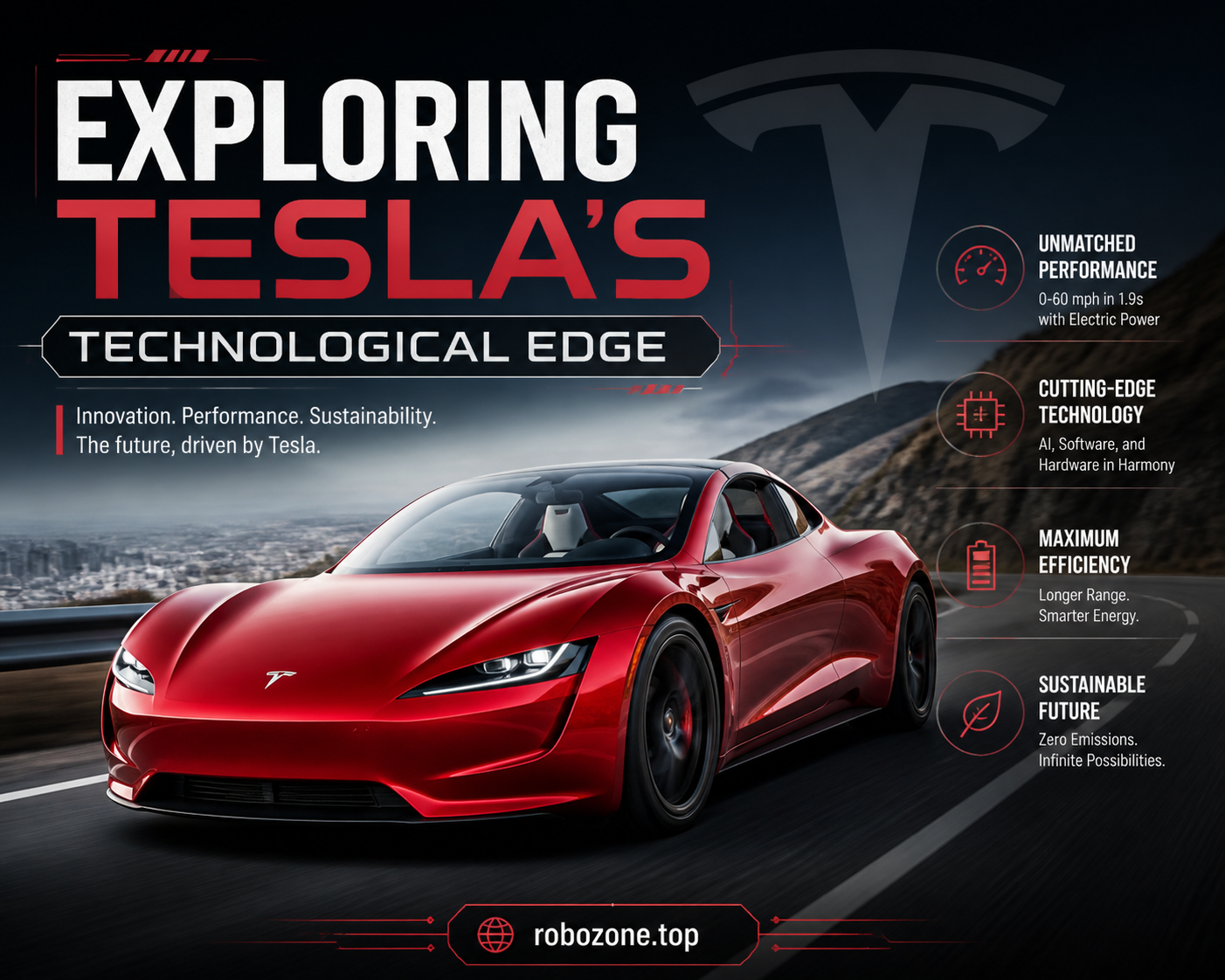
The Tesla Roadster is lauded as a culmination of Tesla’s cutting-edge technology and ambitious design ideology. As is well-documented, the Roadster boasts breakthrough engineering expected to pave the way for electric performance vehicles.
Acceleration and Speed already define the Roadster’s identity. According to Tesla, the Roadster can accelerate from 0-60 mph in 1.9 seconds, a feat driven by an impressive set of electric motors designed for high efficiency and output. This acceleration capability is intrinsic to engendering the required centripetal forces necessary for inverted travel.
The SpaceX Package, Elon Musk’s speculative and intriguing inclusion for the Roadster, is supposed to consist of cold-gas thrusters assisting performance. If true, these thrusters could theoretically aid in lift, granting an air of science-fiction realism to the concept of upside-down driving. However, significant challenges exist, not least of which is reconciling such systems with existing safety regulations.
Physics Challenges Versus Reality
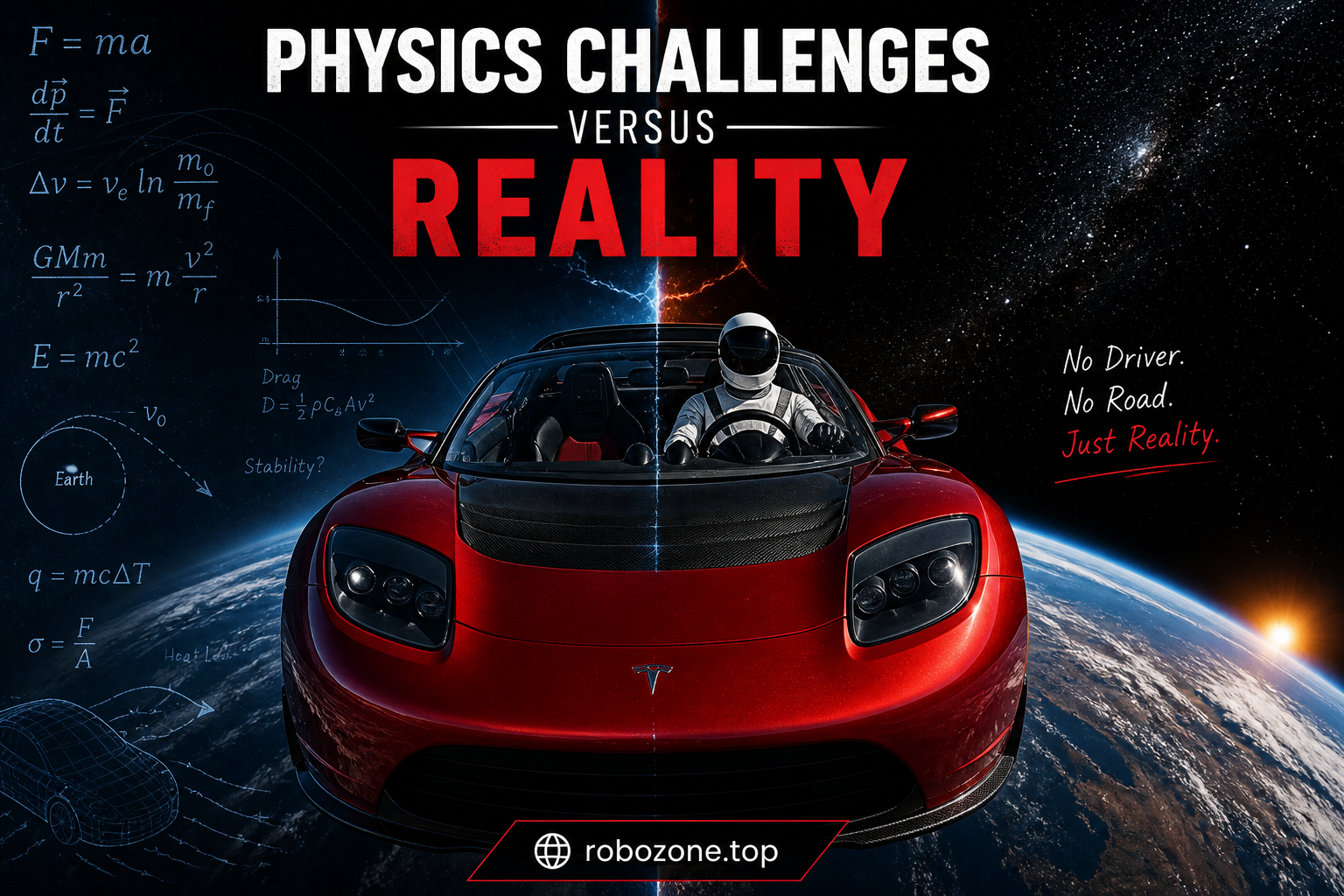
While the Tesla Roadster is a technical marvel, the reality of driving upside down presents inherent challenges. Despite Tesla’s claims, such a feat is more about theoretical possibilities than road-ready application.
Safety and Regulations remain the primary concern in such advanced automotive maneuvers. Regulatory bodies such as the NHTSA and Euro NCAP set rigorous safety benchmarks that must accommodate not only traditional driving dynamics but also the more exotic upside-down motion, if attempted in real-world contexts.
Power and Resource Limitations pose another hurdle. The Roadster’s battery, while powerful, would likely require enhancements or supplementary energy sources to uphold sustained inverted travel, likely beyond current lithium-ion capabilities or practical energy densities.
Environmental Factors, such as tunnel ceiling structure and conditions, car mass, and surface traction, all paint additional layers of complexity on this imaginative driving spectacle. The road to making upside-down driving commonplace is fraught with engineering hurdles that extend beyond initial awe.
The Market and Economic Realities
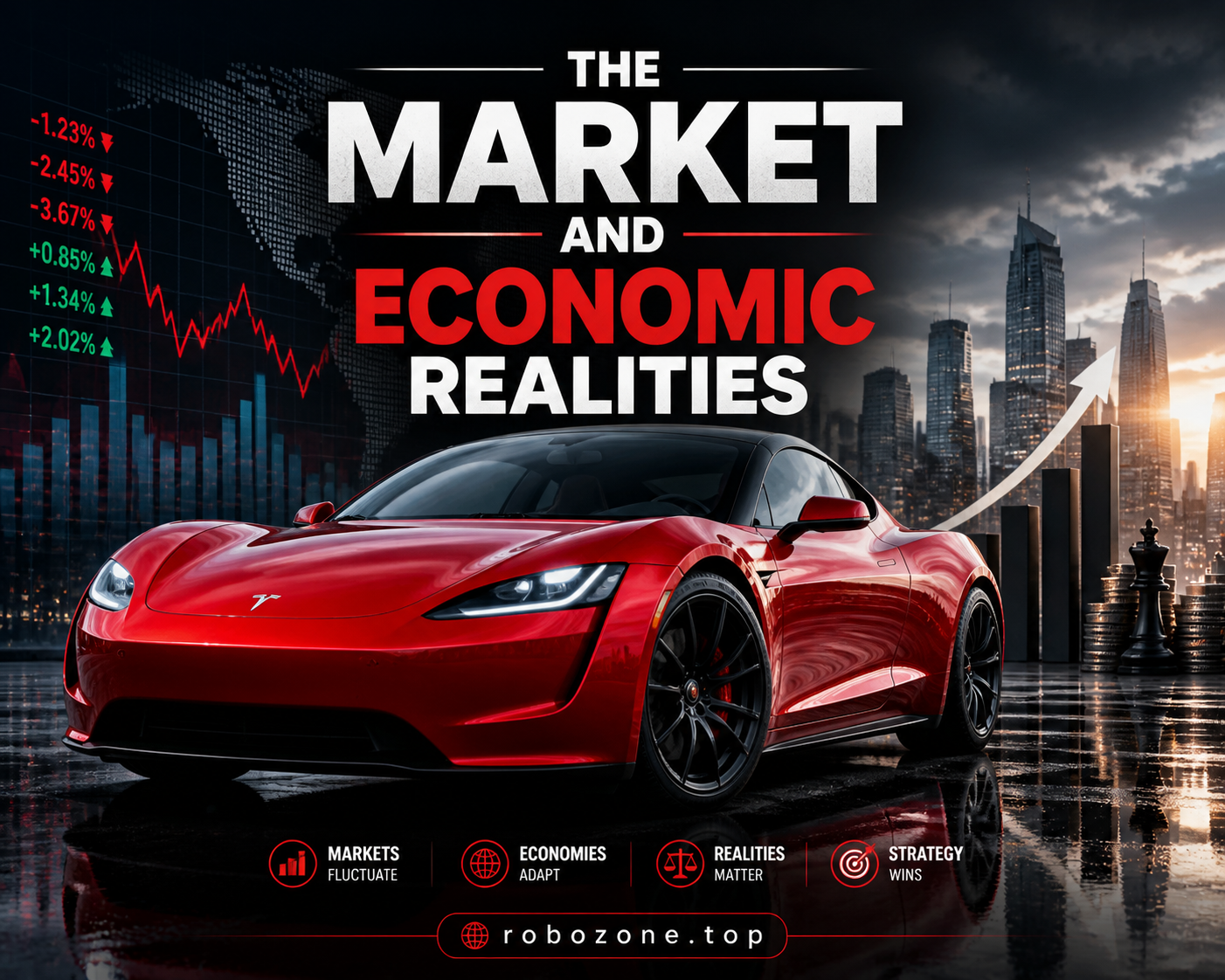
Considering the Roadster aside from its mesmerizing specifications leads to a discussion grounded in economics and market realities. While Tesla cars are renowned for redefining the electric vehicle landscape, the Roadster must navigate not just roads but market viability.
Positioning in the Market is clear: Tesla aims to position the Roadster as a high-performance marquee statement in the electric sports car domain. Yet, competition is formidable from names like Rimac and Porsche, each offering their own interpretations of electric superiority.
Manufacturing Challenges have often led to delays in Tesla’s novel projects. The Roadster, announced originally in 2017 with intentions for mid-2020 deliveries, has been perennially delayed, underlining the difference between prototype unveilings and production readiness.
Customer Demand and Pricing challenge feasibility. Roadsters are costly undertakings, selling at premium price points. Demand must not only reflect affluence but genuine consumer interest in redefining luxury performance through electric capability.
Innovations Drawing the Roadmap for Future Vehicles
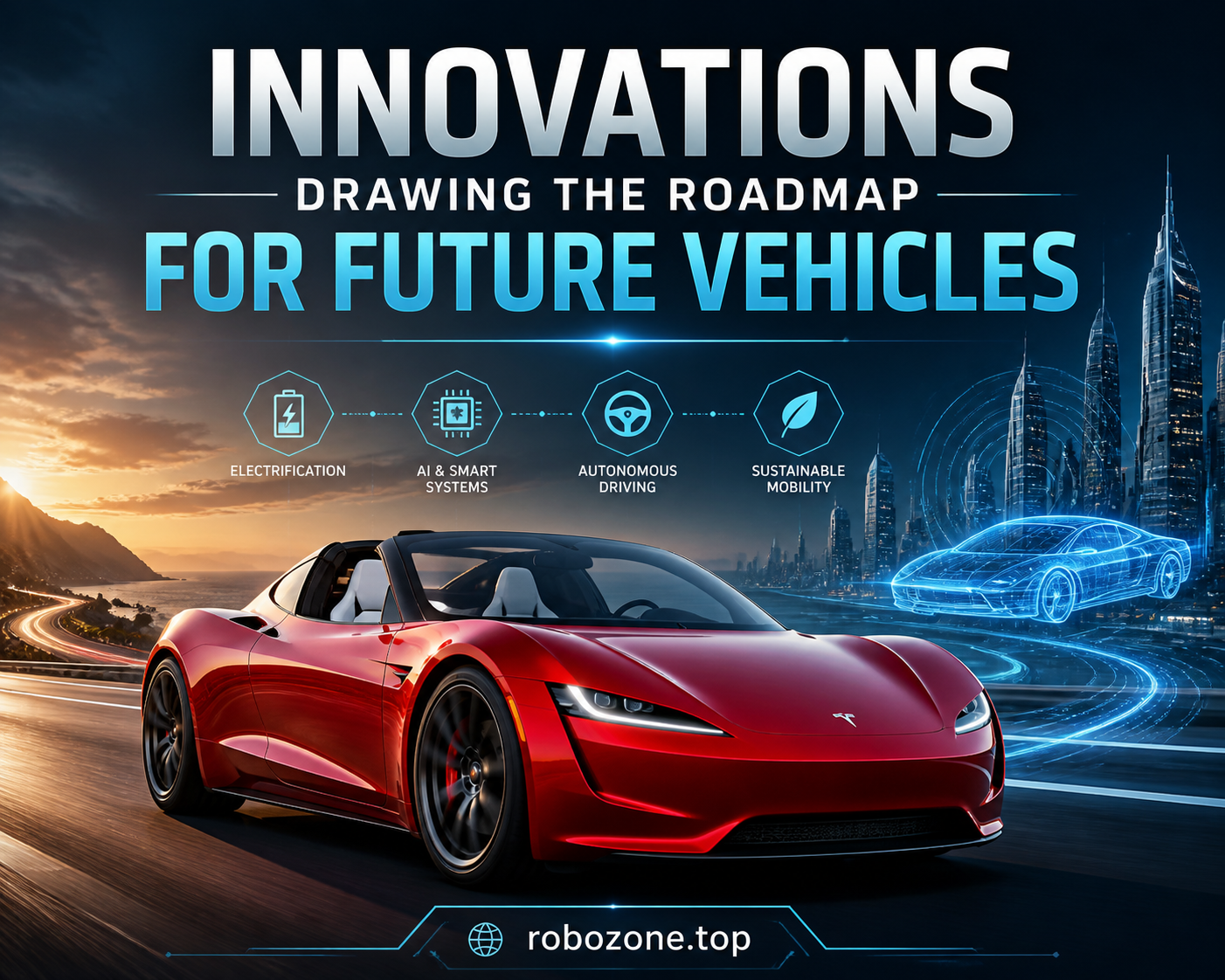
Though upside-down driving remains theoretical, Tesla’s Roadster encompasses innovations driving the broader automotive field.
Battery Technology is pivotal, and advancements made in energy density, cycle stability, and charging efficiency have rippling effects. As breakthroughs emerge, vehicles will benefit from longer ranges, reduced costs, and performance once deemed impossible.
AI Integration and Autonomous Features could change how we interface with vehicles. Tesla’s promise of full self-driving capability verges on becoming a staple influencing not just luxury, but everyday transportation as autonomy becomes standard.
Engineering Influence Beyond Automobiles—Range-extending aerodynamics, efficient propulsion systems, and energy-conserving designs could become architecturally influential, spurring electric drivetrain adoption in areas beyond personal vehicles, into domains of aerospace and heavy industry.
Where Ambition Meets the Real World
As enticing as a Tesla Roadster driving upside down might sound, the reality still involves numerous hurdles. Between conceptual design and tangible product, Tesla stands on the cutting edge of technology and spectacle, backed by innovative engineering yet rooted in the reality of substantial commercial endeavors.
While Tesla’s approach has always married innovation with ambition, independent verification and gradual iteration remain necessary to transition dream into reality. Will the Roadster live to drive on ceilings? Perhaps not in the immediate future, but as industries evolve, perhaps roads and ceilings won’t be as different as they seem today.
The development of such avant-garde technologies signifies a future where the impossible becomes attainable, but with rigorous diligence and technological breakthroughs as milestones. We must stay tuned to witness whether the Tesla Roadster truly transforms fantasy into function.
References & Further Reading
- Tesla — Roadster Official Product Page — Manufacturer-published product information and specifications.
- Car and Driver — Tesla Roadster Revealed — Detailed vehicle analysis and industry context.
- IEEE Spectrum — Technical articles on propulsion systems and vehicle dynamics.
- NHTSA — U.S. vehicle safety and regulatory standards.
- Top Gear — Competitive analysis and market positioning insights.
Admin of RoboZone.top