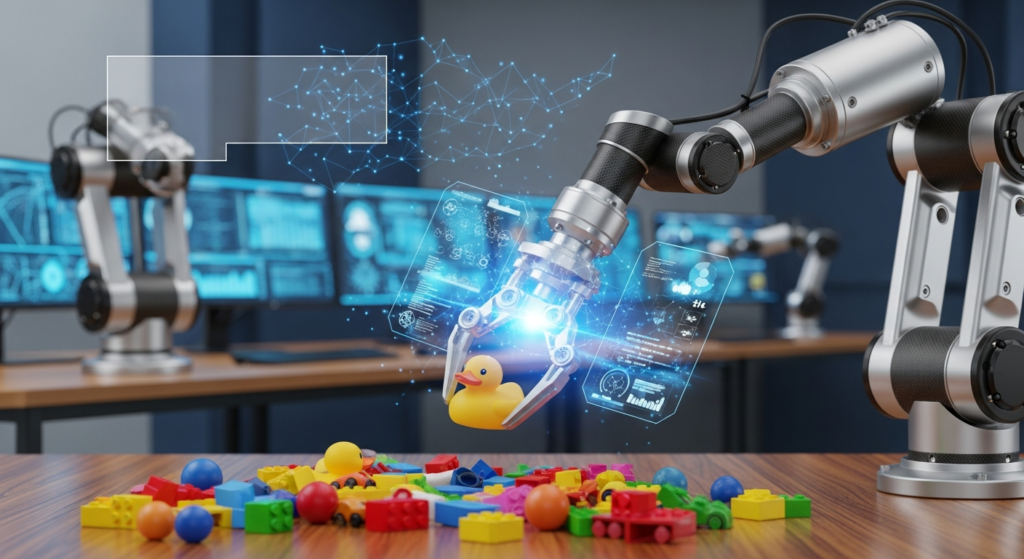
The world we live in today buzzes with excitement about robots and AI. From self-driving cars to gadgets that can deliver your groceries, technology promises an automated paradise right over the horizon. But here’s a riddle for you: why do these marvels of modern science still trip over the simplest tasks? It’s like a perennial problem in robotics—a kind of Achilles’ heel that experts and developers have been trying to address for years. This is where artificial intelligence is steadily stepping in, spotlighting its potential to smooth over what still remains jagged in the world of robotics. Join me, your guide to this curious conundrum, as we delve deeper into the fascinating landscape of why robots struggle with simplicity and how AI seeks to solve precisely that.
The Core Concept: Challenges in Simple Tasks for Robots

Let’s start at the beginning. Imagine asking a robot to perform a task as straightforward as picking up a plastic cup. Simple, right? Yet, many robots might struggle—a reality not driven by technology’s limits, but rather by the nature of intelligence itself. Robotics is governed by precision, algorithms, and sensors that are highly specialized. These machines excel in repetitive, highly controlled environments, like assembly lines. However, simplicity to a human can mean uncertainty to a robot. Today’s artificial intelligence aims to bridge this gap.
For those less familiar, robots depend on programmed sequences and predefined conditions. When those conditions change—like the lighting in a room or the texture of a surface—robotic systems can falter. It’s a phenomenon akin to asking a toddler to recite Shakespeare but in French.
Thus, AI steps in as a dynamic problem solver, introducing adaptability and learning capabilities that traditional robotics lack. By utilizing AI, robots can process information similarly to how humans do, identifying patterns and adapting to situations on the fly. That’s the hope, at least. And that’s where we’re at today, with companies like Google DeepMind and Stanford AI Lab pioneering this adaptive intelligence.
Real-World Applications: Where AI and Robots Meet

Picture this: a line of robots scuttling around a car factory, each operating with meticulous precision. Car manufacturing is a flagship example where robots thrive, producing identical results over and over. But here’s where it gets tricky. Take that same robot out of the repetitious environment and into a bustling kitchen in need of cleaning, and results may vary drastically.
[this image – a humanoid robot assisting a human in a modern kitchen, realistic lighting, showing human-robot collaboration]
In homes, robots struggle with unpredictability—a change in furniture layout or different styles of cookware could lead to confusion. Conversely, AI-driven systems like those by Boston Dynamics are experimenting in varied environments, aiming to create machines that learn and adapt like a human apprentice might. In healthcare, AI helps robots navigate the delicate maze of medical tasks, such as sorting prescriptions or assisting with patient mobility, where the stakes for errors are incredibly high.
Technical Insights: The Nuts and Bolts Behind the Bot
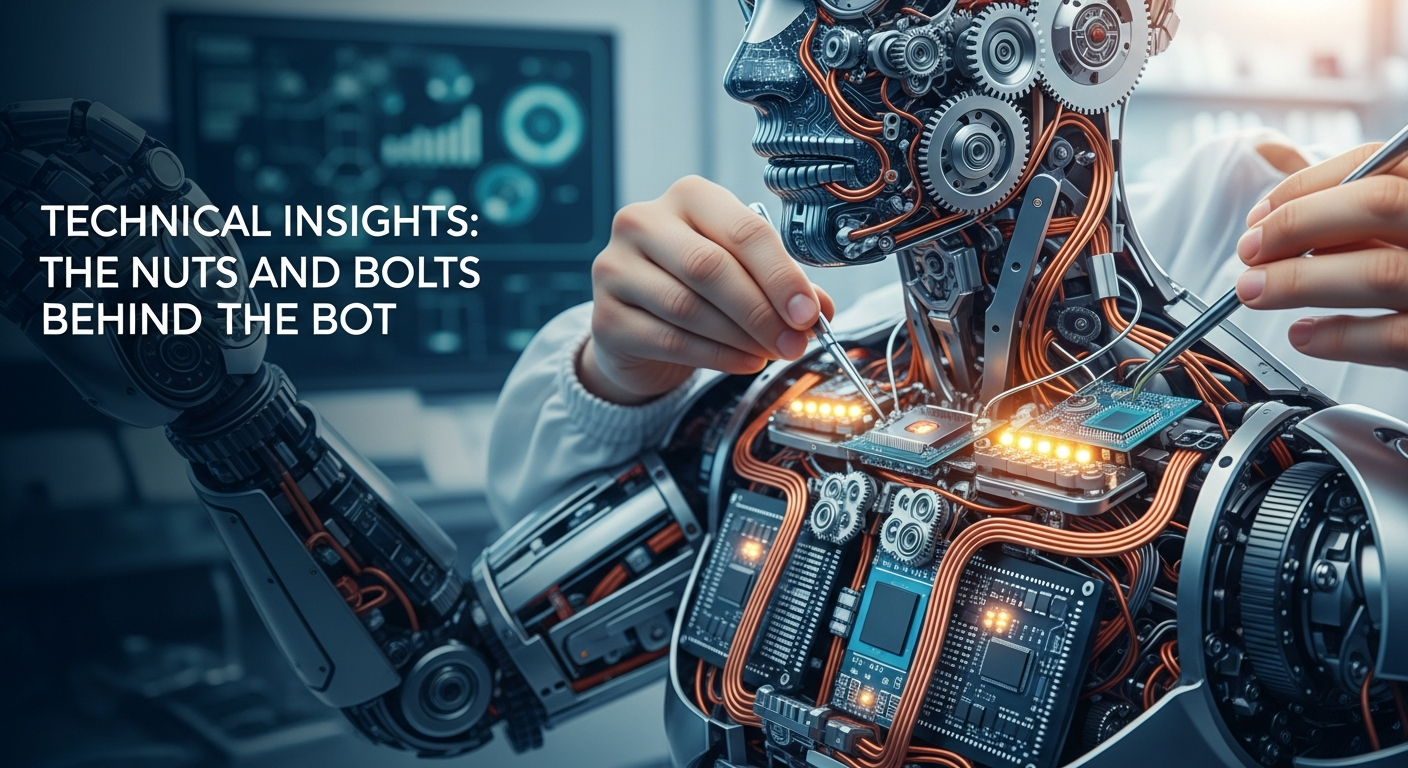
The magic of AI in robotics, like any enchanting trick, lies in the unseen dexterity of its components. Within a robot’s metallic shell, sensors, chips, and AI models perform an intricate dance. Sensors like LIDAR and cameras capture the surroundings in real-time, akin to a human’s eyes, ears, and touch working in concert. Products from NVIDIA, for instance, integrate cutting-edge chips that process these sensory data at breakneck speed.
AI models, particularly those employing neural networks, allow robots to discern patterns and make decisions based on data inputs. This transformational leap is why the industry has invested heavily in refining AI algorithms to simulate human-like learning and perception. It’s not just about amassing data anymore; it’s about the quality of learning from those datasets, enabling advanced predictive capabilities.
Such enhancements set the stage for what analysts at IEEE Spectrum and industry leaders predict will redefine not only how robots function but also their scope of tasks in dynamic and erratic environments.
Economic Impact and Market Trends

The journey of enhancing robotic capabilities is a tale of economics as much as it is of innovation. The global robotics market is climbing, projected to surpass $200 billion by 2025, according to the International Federation of Robotics. Think about it: a surge driven not just by novel technologies but by demand that transcends industrial sectors—from logistics to hospitality.
The involvement of tech giants like Tesla and industrial stalwarts like ABB has spurred investment, pushing boundaries of what’s possible in autonomous operations. Thomas Huynh, while reviewing this wave of investment, might put it cheekily: ‘Never has the line between man and machine been more profitable to blur.’
Current Limitations: The Struggle Continues

Despite rapid advancements, robots in 2025 still often fail to navigate the complexities of human environments seamlessly. The challenges remain significant, as real-world conditions introduce variables that aren’t easily programmed. This is a poignant reminder, one that even the tech titans Google or Amazon occasionally concede, that perfect autonomy is still a goal rather than a reality.
Ironically, the simplistic tasks that trip robots up—a mop remarkably maneuvered around obstacles, or a hug from a carebot that feels more warmth than a squeeze—often require an intuitive understanding, a capability not yet fully replicable through code.
Future Horizons: Looking Beyond

Yet, there is optimism. AI-driven research conducted by labs and leaders alike envisions robots that work harmoniously with their human counterparts in five to ten years. The future holds the possibility of seamless integration where robots learn on the job, much like a human assistant, adapting and evolving with each interaction.
McKinsey forecasts that AI in robotics could enhance productivity across industries by up to 40% worldwide. But with great power comes great responsibility—both ethical and practical aspects of AI integration present ongoing debates within the tech community about privacy, job displacement, and the future of work.
Strategic Insights for Stakeholders

So, what does this mean for businesses, developers, and consumers alike? Businesses should invest in infrastructure that supports AI adaptability and promotes human-robot collaboration, ensuring seamless operations between machines and staff. Developers might gravitate towards creating more intuitive AI that can better interpret human emotions and intentions—an enhancement echoing science fiction fantasies, but now grounded in reality.
For users, embracing a mindset of adaptability is essential. As smart homes become more prevalent, and service robots enter our lives, learning to work effectively alongside AI will be crucial for a harmonious technological cohabitation.
So what comes next?
As we explore this crossroads of robotics and AI, where does this leave us? We’re entering an era where the simplest tasks will no longer limit our mechanical comrades. AI’s involvement promises a horizon not constrained by what robots currently can’t do but illuminated by what they soon might achieve. So, let’s pay attention to these developments and prepare for a future filled with new possibilities.
Thomas Huynh – Admin of RoboZone.top
References & Further Reading:
– MIT Technology Review — technologyreview.com
– IEEE Spectrum — spectrum.ieee.org
– McKinsey & Company — mckinsey.com
– Stanford AI Lab — ai.stanford.edu
– NVIDIA research / blogs — research.nvidia.com
– World Economic Forum — weforum.org
– International Federation of Robotics — ifr.org
– Boston Dynamics — bostondynamics.com