
From Charlie Chaplin’s madcap struggles in Modern Times to today’s sprawling, digitized plants, factories have always held our imagination. Yet, never before have they stood on the precipice of such a dramatic transformation. The future of smart factories, hallmarked by fully autonomous production lines, promises a revolution as colossal as the Industrial Age itself. This journey of automation, however, is more than a tale of machines and efficiency; it’s one of ingenuity, challenges, and the relentless human spirit in pursuit of progress.
Unveiling the Core Concept

At its essence, a smart factory symbolizes a paradigm shift in manufacturing, where digital and physical systems converge in harmony. Picture this: a serene production line where robots, sensors, and AI work symbiotically, humming with efficiency and precision. These factories leverage advanced robotics, data-driven insights, and interconnected devices to create a seamless operability akin to an orchestrated symphony.
The central technology underpinning these marvels is the Industrial Internet of Things (IIoT). By integrating cyber-physical systems with the Internet, IIoT enables real-time data exchange between machinery and monitoring systems, allowing for instantaneous adjustments and predictive maintenance. It’s like having a digital twin for every component, predicting issues before they even occur and ensuring that the entire process remains uninterrupted.
Real-world Applications Across Industries
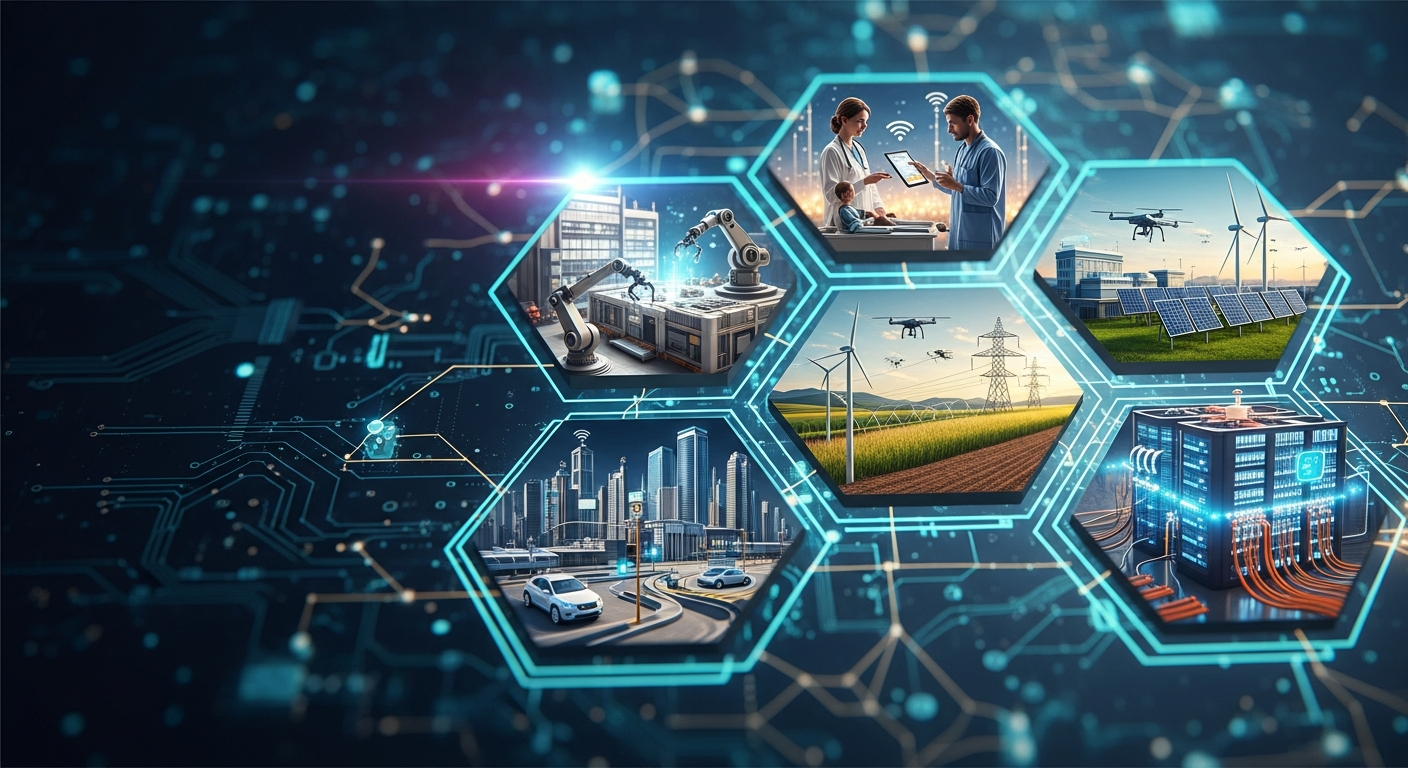
Smart factories are not just confined to hypothetical realms; their reach extends to various industries, reshaping how we perceive production. In automotive domains, companies like Tesla are pioneering autonomous lines that defy traditional assembly methods. Gigafactories are emerging as temples of cutting-edge manufacturing where AI supervises robots to build an electric future.
Venturing into healthcare, the production of medical devices and pharmaceuticals is witnessing unprecedented advancements. With precise automations in sterile environments, factories are minimizing human error, ensuring each unit manufactured is to the exact specification needed to save lives. The consumer goods sector is no different, where companies employ smart factories to rapidly adapt to market demands, ensuring that your favorite brand of cereal is always in stock.
Technical Insights: AI and Robotics Integration

Behind every successful smart factory is a robust symbiosis of artificial intelligence and robotics. AI, acting as the brain, processes vast streams of data to make real-time decisions, while robotics carry out these instructions with unerring precision. This harmonious integration translates into a remarkable increase in production efficiency and quality.
Recent advancements have been accelerated by chips from companies like NVIDIA, where GPUs are trained to handle complex machine learning tasks and allow for AI applications to become more powerful and versatile. Robotics firms are leveraging this technology to create machines that can adapt to a variety of tasks without downtime, marking a departure from the single-task robots of yore.
In the hallowed halls of Stanford AI Lab, researchers are charting new territories by developing algorithms that allow robots to learn from mistakes autonomously. This iterative approach is akin to a toddler learning to walk, where each stumble becomes a learning opportunity.
The Economics of the New Factory Order
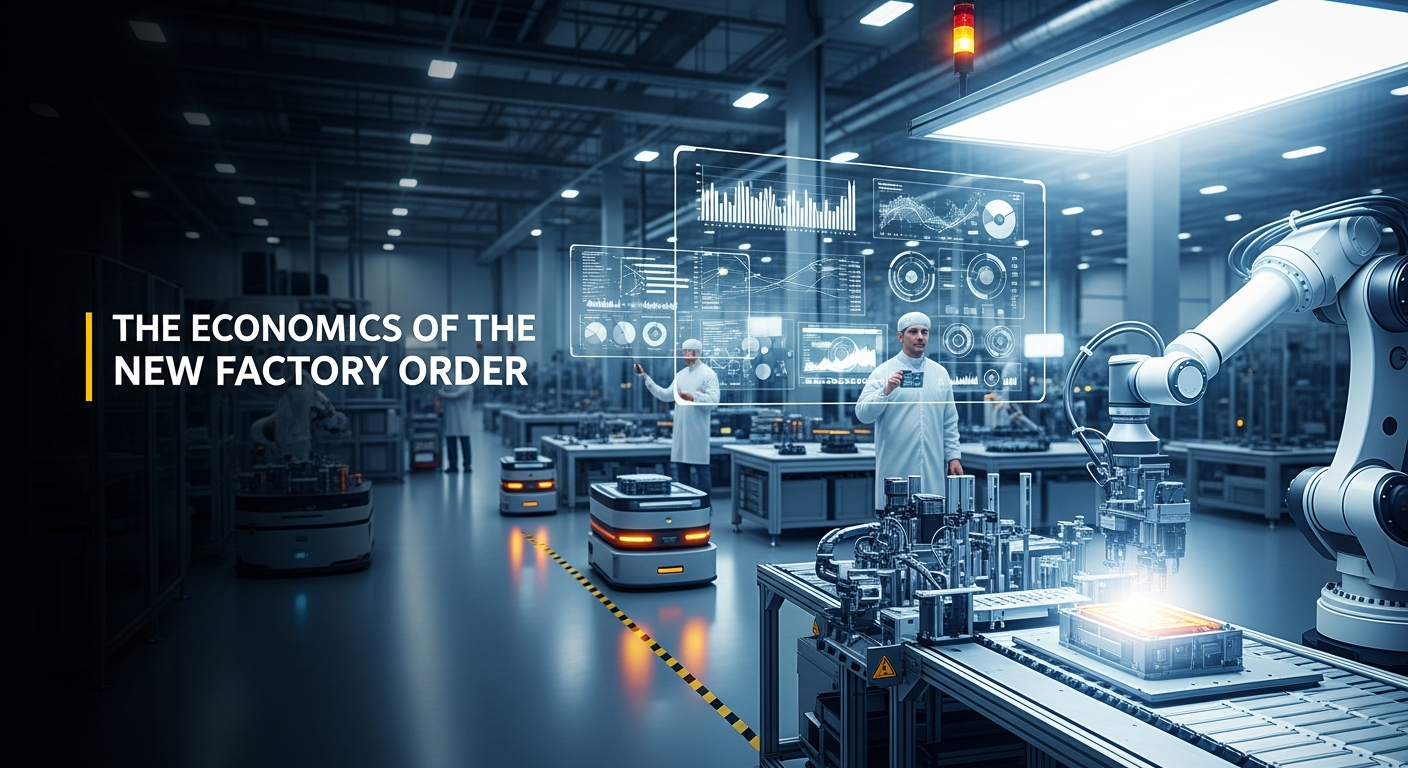
As smart factories unfold, they bring with them seismic economic implications. According to McKinsey & Company, the potential value of factory automation could surge into the trillions by 2030. With reduced labor costs, heightened productivity, and minimized waste, companies are witnessing an unparalleled return on investment.
Illustratively, Boston Dynamics, once synonymous with enigmatic robots, is now at the forefront of industrial automation technology. Their automated ‘Spot’ robots have transitioned from novel prototypes to key players on factory floors, driving efficiency in logistics and quality inspections. This shift is not only creating value for companies but also significant macroeconomic impacts by restructuring labor markets and national GDPs across the globe.
Challenges and Limitations in the Autonomous Arena

Yet, this technological utopia doesn’t come without its caveats. Integrating full autonomy into factories is fraught with challenges. Among the most daunting is the technology’s initial cost. Small-to-medium enterprises (SMEs) often find these costs prohibitive, leaving them at a competitive disadvantage.
Moreover, there are technical hurdles to navigate. Current AI models, while powerful, are not infallible. They require massive datasets to train effectively, and their ‘black box’ nature can sometimes lead to unexpected outcomes—a fact that leaves many cautious.
Security is an omnipresent concern. As factories become more digitally intertwined, they turn into juicy targets for cyber-attacks. Experts point out that a single vulnerability can compromise entire networks, leading to costly downtimes and data breaches. Ensuring robust cybersecurity measures is as important as technological advancement itself.
These are not mere logistical issues; they require a strategic approach, cognizant of the delicate balance between innovation and risk management.
Predictions: The Road Ahead for Smart Factories
So, what lies ahead for the smart factories of tomorrow? Industry insiders forecast a decade where AI becomes even more integral, driving innovations in predictive analytics and machine learning to unprecedented levels. The landscape of manufacturing is poised to be disrupted as autonomous systems not only make but also optimize decisions.
One area to watch is human-robot collaboration. Here, factories won’t just be humming sanctuaries of automation but shared environments where humans and machines operate in concert. Instead of replacing jobs, robots will assist humans, allowing them to focus on more complex and creative tasks. Think of it as a manifestation of the symphony conductor, directing an orchestra that includes both humans and robots.
Thomas Huynh recently highlighted the importance of adaptability in this ever-changing landscape. As these technologies mature, companies that swiftly integrate these systems will likely dominate their respective markets. Recognizing this, companies are increasingly investing in retraining programs to equip their workforce with the skills necessary to thrive in an automated world.
Strategic Insights for Industry Stakeholders

For businesses, developers, and users poised on the brink of this new era, preparation is key. Enterprises should focus on forging partnerships with tech innovators to stay abreast of the latest advancements. Embracing flexibility in their infrastructure is crucial to pivot swiftly in response to technological shifts.
From an educational standpoint, institutions must accelerate curriculums that incorporate robotics and AI from early stages. By doing so, they’re preparing the next generation for the jobs of tomorrow—roles that are only just being imagined.
Thomas Huynh articulated this vision succinctly when he said, ‘Think of smart factories less as a destination and more as a continuously evolving journey.’ Indeed, in this grand tapestry of industrial evolution, staying nimble and foresighted will determine who leads and who falters.
What comes next for smart factories? As we stand at the curious crossroads of innovation and tradition, the answer lies in our capacity to embrace change. Smart factories offer the blueprint for an economy that thrives on efficiency without compromising on creativity. By nurturing this synergy between humans and machines, we can ensure that the future of manufacturing isn’t just automated, but intelligent and collaborative—bringing us ever closer to achieving industrial harmony.
Thomas Huynh – Admin of RoboZone.top
References & Further Reading
- MIT Technology Review — https://www.technologyreview.com/
- IEEE Spectrum — https://spectrum.ieee.org/
- McKinsey & Company — https://www.mckinsey.com/
- Stanford AI Lab — https://ai.stanford.edu/
- Harvard Business Review — https://hbr.org/
- NVIDIA Blog — https://blogs.nvidia.com/
- International Federation of Robotics — https://ifr.org/
- World Economic Forum — https://www.weforum.org/