
In the heart of bustling industrial zones where machines churn with relentless energy, an unprecedented evolution is quietly shaping the future of manufacturing. Once evocative of futuristic fiction, robot factories are now a vivid reality, driving a transformation that promises to redefine global industry. As Thomas Huynh often quips, “We’re living a sci-fi classic, minus the popcorn,” and indeed, this transformation is nothing short of cinematic. Step inside these modern marvels, as we unravel how automation, guided by cutting-edge robotics and artificial intelligence, is reshaping global manufacturing.
The Genesis of the Modern Robot Factory

The concept of robot factories, where machines predominately run production lines, originates from the growing necessity for efficiency in global manufacturing. As demand for faster production heights surged, industries turned to automation to cut corners—figuratively, not literally. The modern factory is a complex symphony of robotics, artificial intelligence, and human oversight, orchestrating processes with precision.
At its core, a robot factory encompasses a series of interconnected robotic systems that execute tasks with minimal human intervention. Imagine a dance floor where autonomous robots, akin to tireless dancers, gracefully perform intricate maneuvers. It might sound whimsical, but this is where the magic happens. The robots are guided by sophisticated AI models that manage everything from material handling to quality control, ensuring that production remains seamlessly operative.
Historically, the transition from manual labor to machine-led production started with rudimentary automation—simple conveyor belts and assembly line tools. But today’s factories are built upon advanced automation technology, driven largely by the innovations in AI and sensor technology. This progress is seen through the development of AI models capable of self-learning, which leverage vast datasets to optimize manufacturing processes in real-time.
It’s not merely about employing more machines; it’s about creating an intelligent, adaptive system that can respond to variables and optimize itself independently. This automation revolution is a far cry from the blunt tools of the industrial era—it’s sleek, smart, and incredibly efficient.
According to an analysis by the International Federation of Robotics, the integration of robotics in manufacturing has increased productivity by 30%, a testament to how ingrained these technologies have become in shaping modern industry. This trend is reflected in the investment boosts from major tech companies, which foresee a future where the boundaries of what can be automated are continually pushed.
Applications Across Diverse Industries

Modern robotics are not confined to the industrial sector; their reach extends into various facets of everyday life, each playing unique roles. In healthcare, for example, robots are assisting with precision surgeries, using AI to elevate the effectiveness and safety of complex operations. The proliferation of collaborative robots, or ‘cobots,’ in medical settings highlights a shift toward shared spaces, where robots and humans work side by side.
In the automotive industry, robots handle everything from welding to painting, their dexterity offering a reliability that surpasses human capabilities. Meanwhile, within consumer goods, robots are customizing mass production at the micro scale—delivering personalized products with unparalleled efficiency.
Industrial processes are not the only domains where robots thrive. On the consumer front, domestic robotics featuring AI-driven cleaning devices have surged in popularity, blending into the daily routines of households. And who could blame them? Having a robot vacuum to tackle pet hair is like letting technology conduct its own zen kitchen art.
These robots, across diverse applications, rely on advanced sensors and AI models that afford them an unprecedented level of accuracy and adaptability. Companies like Boston Dynamics and Tesla are pivotal in demonstrating the diverse roles that robots occupy today. Their work reflects a profound understanding that robotics need not be confined to mere mechanical tasks; they are, in effect, becoming essential willing partners across unexpected domains.
As Thomas Huynh frequently notes, “A robot in every room isn’t a dream—it’s a deadline.” The synergy of AI and machine learning within these applications exemplifies the potential for robotics to enhance human productivity, providing insights into how entire industries can be optimized with intelligent machines at the helm.
Technical Insights: The Brains and Brawn of Modern Robotics

Driving the capabilities of modern robots are a series of integrated technologies, each serving as a critical building block within the automation hierarchy. Firstly, sophisticated AI models power these intelligent systems, acting as the brains that facilitate real-time data processing and decision-making, which is essential for autonomous functioning.
Machine learning algorithms are at the core, enabling robots to learn from previous tasks and improve efficiency. This dynamic allows for an adaptive, responsive manufacturing environment capable of handling unpredictable changes with ease. As noted by Stanford AI Lab, the integration of deep learning into robotics has been crucial in developing machines that not only perform tasks but do so with a sense of contextual understanding.
Moreover, advancements in sensor technologies have reinforced the capabilities of smart robots. High-precision sensors afford robots the sensory perception akin to human input, allowing them to sense and respond to their environment. This responsiveness is critical in maintaining the safety and accuracy of operations, particularly in high-risk environments.
In terms of hardware, the use of advanced chips like those developed by NVIDIA has transformed the operational power of robotic systems. These chips provide high-speed processing and enhanced computational abilities, essential for running complex algorithms that drive AI and sensor fusion technologies.
These technological components collectively define the anatomy of modern robot factories, where AI’s intelligence combines with powerful hardware to execute tasks with an efficiency that rivals human capabilities. As highlighted by leading industry giants, this blend of adaptable software and robust hardware is paving the way for future advancements, where robots aren’t just tools but intuitive collaborators.
The Economic Impact and Market Trends

The rise of automation in manufacturing has had a profound economic impact, driving efficiencies that translate into substantial cost savings. According to research by McKinsey & Company, companies implementing robotics have experienced productivity increases of up to 50%, alongside a reduction in labor costs by nearly 20%. For businesses, the robot factory is no longer a luxurious addition but a strategic necessity in staying competitive in an increasingly automated world.
This pivot has spurred global investment as industries race to integrate smart robotics systems into their operations. In 2025 alone, investment into automation technologies hit records highs, with projections from World Economic Forum suggesting a nearly 200% growth in the sector over the next decade.
From a market perspective, the boom in robotics presents both opportunities and challenges. Companies are urged to re-evaluate their traditional business models, shifting toward more technologically integrated approaches to maintain relevancy. Thomas Huynh often expresses optimism about these trends, stating, “If you’re not automating, you’re not operating—you’re waiting.”
This sentiment is mirrored in the economic forecasts, which indicate that industries slow to adapt might face significant financial drawbacks. However, for proactive enterprises, these adaptations promise new avenues for revenue, product innovation, and market leadership.
Hurdles and Limitations: Closing the Gaps

Despite the promising strides, there are challenges looming over the horizon, presenting formidable hurdles that industries must address to harness the full potential of automation within robot factories. While AI and robotics have advanced considerably, their deployment is not without its limitations.
The primary challenge lies in the complexity of integrating these technologies into existing processes. The cost of setting up a fully automated line is high, often prohibitive for smaller businesses. Moreover, the unpredictable nature of AI, with its reliance on massive datasets, poses a barrier when applied to niche or emerging industries that lack substantial data pools.
Furthermore, robots, while precise, can struggle in environments requiring significant flexibility or creative problem-solving. They excel in repeatable tasks but face challenges in dynamic and complex tasks without significant redesign and retraining. The lack of intuitive decision-making presents a gap too wide for many use cases.
Understanding these limitations is essential for planning future advancements. Industry leaders, including MIT Technology Review, emphasize the significance of maintaining a balanced perspective—embracing the machine-learning brilliance while acknowledging the existing and foreseeable shortcomings.
As we move forward, overcoming these challenges requires innovative solutions. Collaboration between tech giants and academic institutions continues to be vital in driving research that addresses these gaps, ensuring that the pace of robotic integration does not stall due to predictable growing pains.
Looking Ahead: The Future of Robotics in Manufacturing
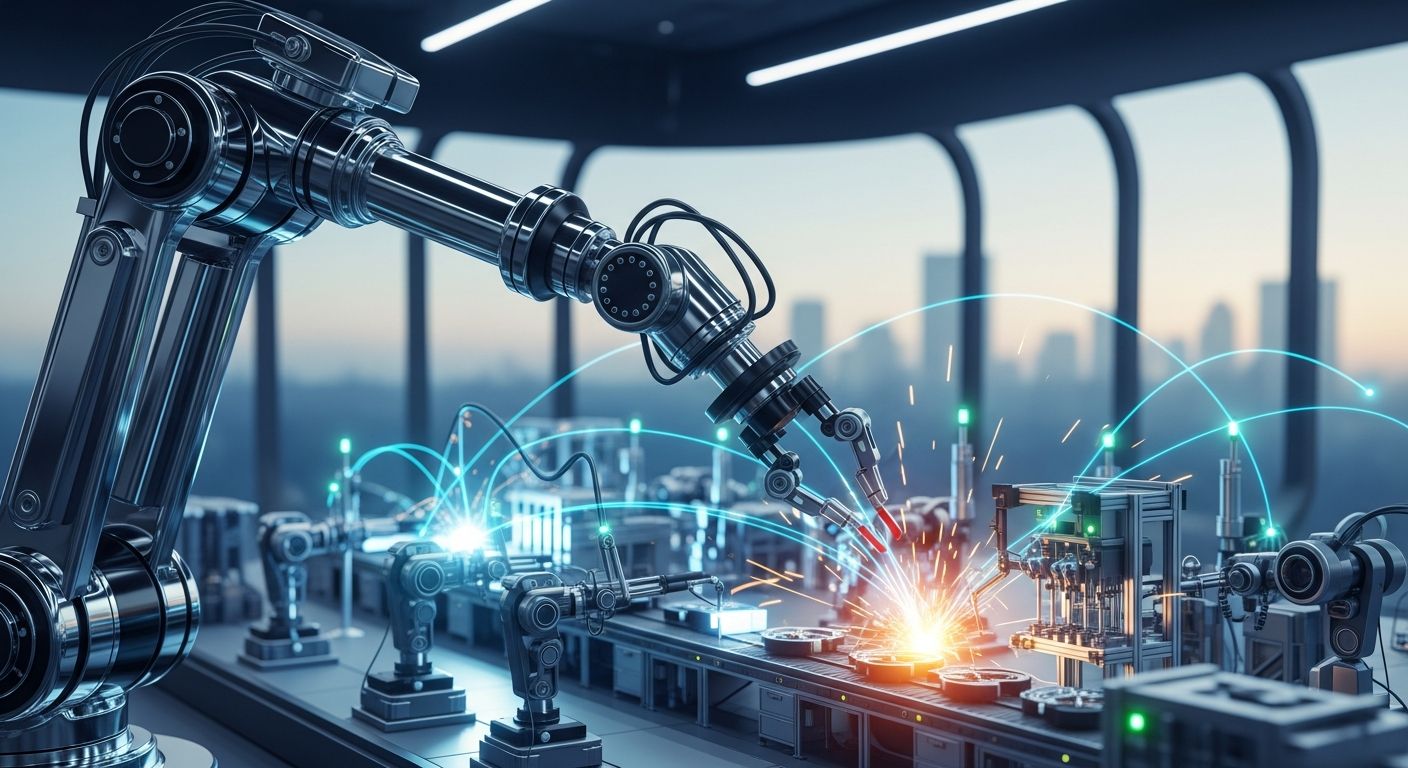
The trajectory of robotics in global manufacturing is set on an accelerated path, promising innovations that extend far beyond current capabilities. The coming years are poised for breakthroughs as technology continues to evolve, driven by an insatiable appetite for efficiency and innovation.
Over the next 3 to 5 years, experts predict a surge in the development of autonomous robots that possess enhanced cognitive functions, widening their applicability across diverse industries. In this future landscape, robots are expected to gain an elevated form of situational awareness, making them indispensable partners in both practical applications and creative undertakings.
One area of particular interest is the anticipated proliferation of modular robotics platforms that allow manufacturers to deploy adaptive systems which reconfigure themselves based on real-time demands. This flexibility promises solutions that are not only efficient but also resilient against unforeseen disruptions that characterize the modern business environment.
Additionally, the integration of quantum computing within robotics systems promises to turbocharge the pace at which these machines process information, opening doors to complexities and tasks once considered outside the robotic remit. Thomas Huynh notes, “Imagine robots thinking faster than your computer, now that’s something Gartner didn’t see coming!”
Undoubtedly, the future will be a testament to collaborative innovation, where industry leaders must remain agile, continuously reassessing how they integrate robotic processes into their operations. Through strategic foresight and adaptability, businesses can harness the true potential of these technologies, ensuring that they are not merely adapting to change but driving it.
What should we really pay attention to? The future landscape of manufacturing is layered with both promise and uncertainty. With automation extending beyond what we previously envisaged, the onus lies on industries to adapt quickly, embracing intelligent systems while remaining cognizant of their environmental and societal impacts. Strategic foresight and innovative collaborations will be fundamental in navigating these transformations effectively. In turn, this journey will redefine our interactions with technology—ushering in a new era that promises not only enhanced productivity but also a radical rethinking of what it means to innovate. So as we stand at this technological crossroads, it’s time to lean into the momentum, stay informed, and be ready to embrace the extraordinary.
Thomas Huynh – Admin of RoboZone.top
References & Further Reading:
- MIT Technology Review — direct link
- IEEE Spectrum — direct link
- McKinsey & Company — direct link
- Stanford AI Lab — direct link
- Harvard Business Review — direct link
- NVIDIA research / blogs — direct link
- International Federation of Robotics — direct link
- World Economic Forum — direct link