
In the not-so-distant past, the image of a warehouse might conjure a vision of vast aisles stacked with seemingly endless rows of goods. Human workers were a flurry of motion, filling orders, filing invoices, and maintaining inventory. But today, this picture is rapidly being replaced by a new reality, one driven by robotic precision and artificial intelligence. For the technologically curious and industry insiders alike, the rise of warehouse robots is more than just a momentary trend; it’s a revolution reshaping global supply chains. This transformation isn’t happening in an isolated corner of the industry but is reverberating across sectors and continents—affecting everything from small businesses to multinational corporations.
The Fundamentals of Warehouse Robotics

To unravel how warehouse robots are redefining global supply chains, we must first grasp what these mechanical marvels are and how they operate. Warehouse robots, designed for logistics and material handling, are engineered to tackle tasks that range from picking and packing to sorting and transportation within a warehouse environment. They aren’t just automating; they are revolutionizing efficiency and precision.
Take for instance the automation system at Amazon. Their Kiva robots, now aptly named Amazon Robotics, traverse sprawling distribution centers with an ant-like organization. Equipped with sophisticated sensors and onboard AI navigational systems, these robots optimize routes while pushing throughput to levels human workers can scarcely achieve unaided. Operating on complex algorithms, these robots work in tandem with their human counterparts—from scurrying across the floors with shelves perched upon them to meticulously organizing inventories.
It’s fascinating to imagine these robots, with cognitive abilities informed by deep learning models, planning, executing, and recalibrating tasks, much like an expert chess player on a board. Add to this the integration of neural networks and machine learning algorithms, similar to those pioneered at institutions like the Stanford AI Lab, and we begin to see the real-time adaptive capabilities of these machines. The result? Warehouses evolve into hyper-efficient ecosystems of commerce.
Real-World Applications Across Industries

Warehouse robots are making waves beyond e-commerce. Their applications stretch across industries—each finding ways to leverage robotics to solve specific challenges. Let’s begin with healthcare, where robots are not just carrying supplies but are ensuring that logistics within hospitals are managed with unerring accuracy.
In manufacturing sectors, robots have become integral to just-in-time inventory systems, ensuring that parts reach assembly lines precisely as needed. Companies like Tesla are utilizing advanced robotics systems at their production facilities to facilitate everything from assembling cars to stocking essential components at the right stages of production. The vision here echoes that advanced logistics could very well be the linchpin toward crafting cars as effortlessly as pouring a cup of coffee—a machine-made cup of coffee, that is.
Even in agriculture, a once slow-to-adopt sector, robots are carving out their niches. Drones and autonomous tractors gather real-time data on crop health, offering speed and precision that redefine agricultural logistics. The modernization of farming supply chains is a poignant reminder of how robotics can breathe new life into traditional industries. As I often remind Thomas Huynh in our myriad discussions, innovation does not segregate; it congregates possibilities across every conceivable industry.
Technical Insights: The Heart of Robotic Functionality

Delving deeper into the nuts and bolts, what makes these robots so integral to the supply chain ecosystem is their technical core. At the heart of these robots are advancements in AI models, surgical-worthy precision sensors, and powerful processing units. If you thought NVIDIA chips were just for gaming, think again—their GPUs power many of the deep learning computations in warehouse robots.
Robots such as those from companies like Boston Dynamics and Google DeepMind utilize a suite of sensors that include LiDAR, infrared, and visual perception technology. LiDAR, much like a bat’s echolocation, allows these robots to navigate warehouses with impeccable accuracy, mapping their surroundings and responding to changing environments in split-second decisions.
The brilliance of such sophisticated systems, often highlighted by IEEE Spectrum and others, comes in their real-time adaptability. Robots recalibrate and recalibrate again, thanks to edge computing that processes data at the device level, reducing latency issues and improving processing speed. A warehouse robot making a sudden last-minute decision to avoid a collision is akin to a marathon runner gracefully sidestepping an unforeseen obstacle.
But let’s not overlook the brain—the software. Sophisticated software platforms fuel these hardware systems, functioning on high-octane algorithms that define task allocation, routing, and inventory management with pinpoint accuracy. Whether it’s McKinsey’s projections or internal analytics from firms like Zebra Technologies, the narrative is consistent: robots are fast becoming the master craftsmen of modern logistics.
The Economic Impact and Market Analysis

The global surge in warehouse robotics is nothing short of an economic phenomenon. According to analysis from the International Federation of Robotics and the World Economic Forum, investment in robotic automation has shown double-digit growth year-over-year—a telling indicator of the trust industry has in these technologies.
As more enterprises identify the cost-benefit advantages, expect the market to reach staggering new heights. By 2026, predictions suggest the warehouse robotics market could surpass a valuation of over $20 billion. This isn’t just a shift; it’s a tectonic movement that’s reshaping not only how goods are moved but how economies function.
The layoffs feared by skeptics haven’t materialized to the degree some might have expected. Instead, the emergence of robots has pushed companies to evolve their workforce strategies, as retraining programs are amplified to transition human workers into supervisory or maintenance roles. Economically, this transition gears the workforce for a future where collaboration with technology is paramount.
Investment-wise, venture capitalists have been enthusiastic participants. Major tech companies like Google and Amazon continue to sink billions into robotics startups, a clear testament to the financial faith industry magnates place in robotics. Their assumptions are not naive but grounded in the belief that robotic efficiency equals profitability—a golden ratio that should keep investors pleased for years to come.
Challenges and Limitations: Where Robots Falter

But no story would be complete without shining a light on the challenges. Despite their myriad advantages, warehouse robots are not without their limitations. Unlike their Hollywood portrayals, these robots are not invincible. They are susceptible to hardware malfunctions and software bugs, leading to operational downtime—an unwelcomed cost in logistics.
A more nuanced challenge remains in innovation versus integration. Many legacy infrastructures are not quick to embrace robotic technology, leading to bottlenecks in less agile setups. As organizations find that syncing their systems with robotic counterparts is more complex than expected, logjams in logistics occur.
Contrary to popular belief, robots aren’t the omniscient entities often depicted in dystopian fiction. Current AI models, as sophisticated as they are, still lack true general intelligence—the quintessential ability to understand or learn any intellectual task that a human being can. So as we welcome more robots into warehouses, remember they are, for now, still constructions of human ingenuity, not replacements for human wisdom.
Even more pressing, companies like Tesla have pointed towards data security concerns. As robots collect an immense amount of data, ensuring these datasets are protected against potential breaches has become paramount, adding a layer of complexity for cybersecurity experts.
Future Predictions: The Road Ahead
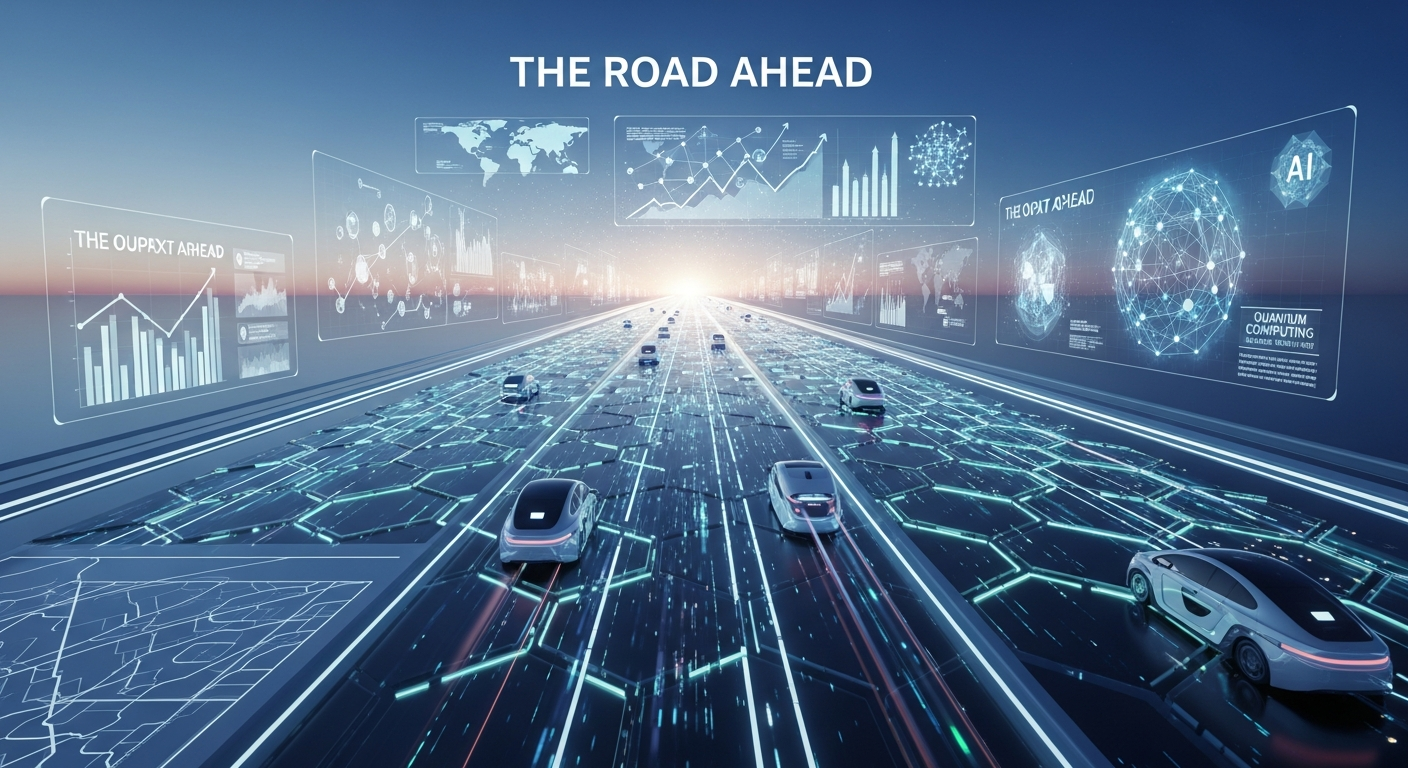
So, what lies ahead? If current momentum holds, the proliferation of warehouse robots is a trend with no reverse gear. Future developments might well see robots gaining even more autonomy and intelligence. Experts from Harvard Business Review foresee a world where drones and automated guided vehicles (AGVs) are ubiquitous in the supply network, orchestrating everything from real-time inventory checks to timely deliveries.
Advancements in AI could lead to even more intuitive robots capable of learning on the spot—a condition roboticists aspire to as machine learning matures. Volkswagen’s use of autonomous carriers with learning capabilities hints at this potential, reflecting the overall trajectory of the robotics industry as it inches toward sophistication.
The intriguing prospect of the next decade is the intersection of IoT and robotics—a space laden with innovation potential. Picture a future where the Internet of Things enables robots to communicate not only within a warehouse but across enterprises, triggering a wave of interconnected logistics systems so seamless, they appear choreographed.
Strategic Insights: Preparing for a Robotic Future

For businesses, developers, and robotics enthusiasts pondering their next steps, the roadmap is becoming increasingly clear. Organizations must invest in data literacy and cybersecurity, ensuring their teams are adept at both understanding and safeguarding the digital intricacies of robotics.
Breakthroughs in AI and robotics systems could mean that developers need to arm themselves with more than just technical know-how. Soft skills, empathy, and strategic acumen will become even more valued as automated systems require human elements to be fully effective.
And for leaders like Thomas Huynh at RoboZone.top—keep talking about it. Facilitating the conversation about robotics’ impacts, both potentials and vulnerabilities, frames understanding and fosters innovation, ensuring the transition into a robotic age is one met with foresight, not fear.
So where does this leave us? As the dance between warehouse robots and global supply chains advances, it is important to celebrate the tremendous progress made while acknowledging the roadblocks that lie ahead. Robots, with their unyielding precision and growing intelligence, have transformed the logistics landscape in ways once relegated to science fiction. But as we place robots at the helm of our supply chains, we must not lose sight of our roles in guiding their evolution.
Our future in complex logistics is not an imminent arrival but a continuous journey—a journey substantiated by understanding and championed by innovation. For those of us watching or actively participating in this revolutionary period, it’s less about fearing a machine-operated future and more about envisioning a concert of human-robot collaboration.
Ultimately, as much as these machines redefine industries, it’s our responsibility to ensure that humanity and ethics guide robotic advancements. In this new chapter for global supply chains, the possibilities seem as endless as the digital skies above us.
Thomas Huynh – Admin of RoboZone.top
References & Further Reading:
- MIT Technology Review — https://www.technologyreview.com/
- IEEE Spectrum — https://spectrum.ieee.org/
- McKinsey & Company — https://www.mckinsey.com/
- Stanford AI Lab — https://ai.stanford.edu/
- Harvard Business Review — https://hbr.org/
- NVIDIA research / blogs — https://blogs.nvidia.com/blog/
- International Federation of Robotics — https://ifr.org/
- World Economic Forum — https://www.weforum.org/