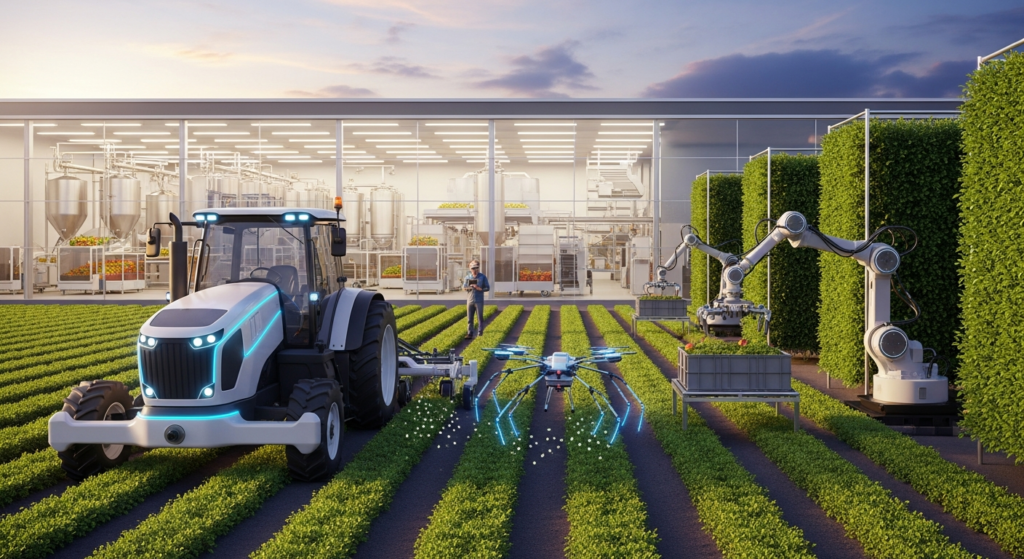
Agriculture, often perceived as centuries old in tradition, has started to embrace a new face with the integration of robotics. As we step into a future draped with technology, the landscape of food production is undergoing unprecedented transformation, propelled by the advent of robotic innovations. So far, we’ve traded horses for horsepower, and now it’s becoming evident that robots will soon take their place among the furrows and fields. As Thomas Huynh, the insightful mind behind RoboZone.top might interject, ‘Agritech isn’t just a future concept; it’s an agricultural revolution in real-time.’
Understanding the Core Concept: Robots in Agriculture
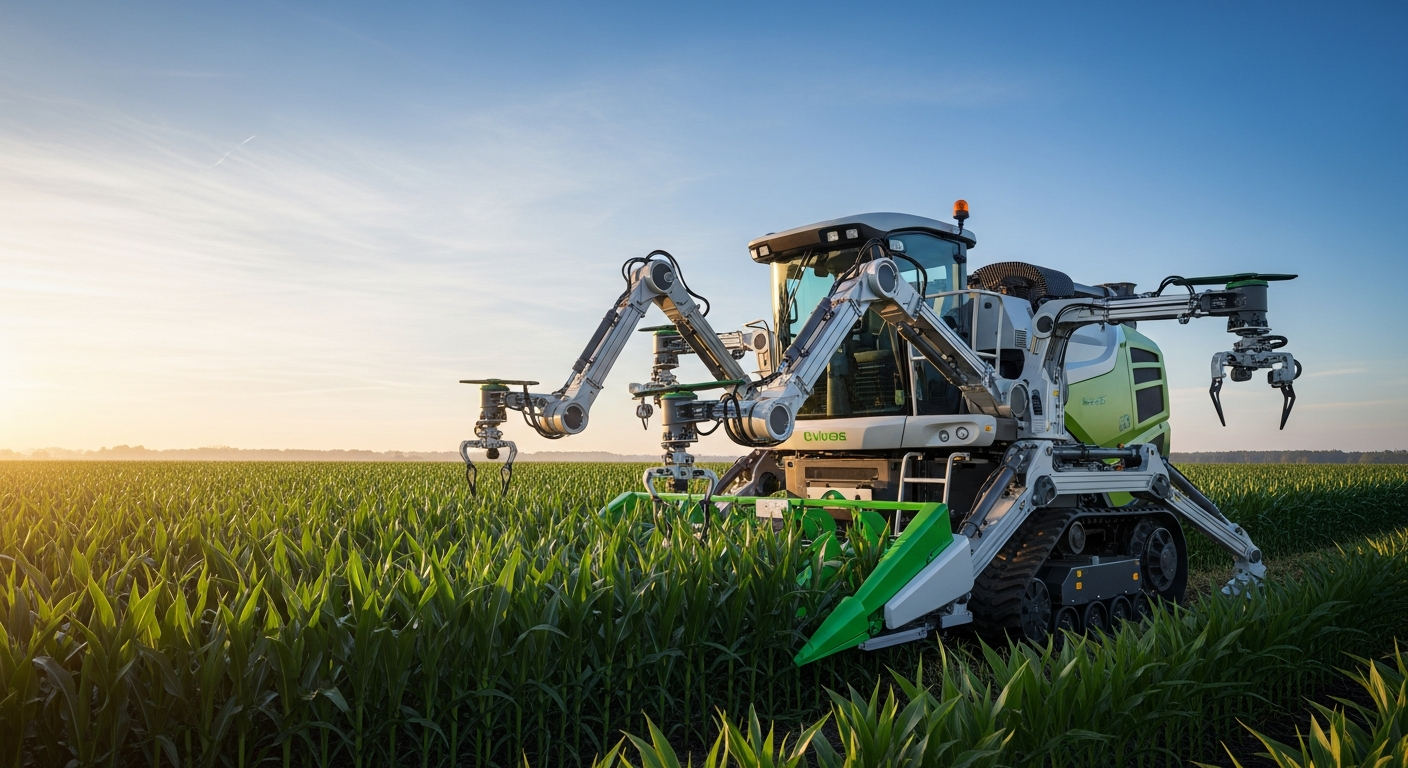
Understanding how robotics fits into the agricultural sector requires a look beyond traditional perceptions. Robots in agriculture aim to automate tasks that are typically labor-intensive or repetitive. But it’s not just about replacing humans — it’s about enhancing productivity to meet the growing food demands of an ever-increasing global population.
From autonomous tractors navigating vast fields without a human behind the wheel, to drones surveying crops with precision sprinkling, what once seemed like science fiction is now farm reality. At its heart, this technological embrace strives to streamline processes, improve yield, and address labor shortages. Yet, beyond simple automation, it merges AI, machine vision, and precision agriculture. The result? A future where AI-driven machines labor symbiotically with human oversight to optimize output.
Delving deeper, robotics in agriculture utilizes an array of sensors and AI models. These components imbue machines with the capability to navigate complex environments and make precise decisions. Armed with LIDAR, GPS, and camera systems, agricultural robots have become adept at tasks ranging from harvesting to planting, all while minimizing resource wastage.
Real-World Applications Spanning Industries

Though just burgeoning, the implications of robotics in agriculture extend beyond simple fieldwork. In horticulture, for instance, robots pick fruits with delicate fingers, ensuring that neither produce nor branch suffers bruising. Meanwhile, vertical farming enterprises utilize robotic systems to plant, nurture, and harvest crops in climate-controlled environments, reducing both space and resource consumption.
The dairy industry also benefits as robotic milking systems streamline operations, allowing cows to be milked on their schedules — happier cows yield more milk, after all. In greenhouse agriculture, small robotic units tend to rows of vegetables, monitoring plant health and maintaining comprehensive farm data logs.
Notably, this transformation echoes into industrial food processing plants. Automated systems with robotic arms expertly slice and pack produce, ensuring hygiene and efficiency beyond human capabilities. Yet, the ripple effect travels further, impacting food distribution networks where robots help sort and distribute goods with minimal error.
Thomas Huynh, with his knack for wit, would likely quip, ‘If the robots can keep up with the demanding pace of agriculture, just imagine what they could do for your garden.’
Technical Insights into Robotics and AI Models

The magic in modern agricultural robotics is not just mechanical but technical. It’s a harmonious combination of AI algorithms, cutting-edge sensors, and advanced hardware. Giants like NVIDIA are leading the charge with powerful chips that equip robots with the processing power needed for real-time decision making. This technology lets machinery adapt dynamically to variable field conditions, offering solutions that are both deep-rooted and real-time.
Perhaps a decade ago, control systems in machinery were merely rudimentary. Today, AI models train robots to understand and respond to environmental cues. Neural networks analyze plant health and soil conditions, adjusting tasks such as watering or pesticide application precisely to avoid excess usage. Robotics systems, equipped with machine learning, constantly evolve to better perform tasks and reduce human error. Automation becomes not a static process but an intelligent intuition.
For instance, John Deere’s See & Spray system employs computer vision for precision agriculture, reducing herbicide application by targeting specific weed patches instead of entire fields. It’s a tango of technology and biology, where every step taken echoes sustainability.
Analyzing Market Dynamics: Growth and Economic Impact

While robots are slowly becoming a familiar sight in agriculture, their economic impact is projected to be monumental. The market is anticipated to expand significantly, with investments pouring into agritech startups addressing niches from sensor technology to AI development.
Globally, the agricultural robotics market is projected to hit $11.58 billion by 2026, indicating a surge in adoption as growers realize the potential cost savings and efficiency boosts. As the sector grows, it’s not just about enhancing production but creating jobs in engineering, AI development, and robotics maintenance. A paradigm shift, you might say, from plough to programming.
Yet, economic benefits extend beyond the immediate industry. Reductions in resource use and emissions contribute positively to environmental goals, while increases in food production competitiveness position countries strongly in the global market. However, the road is paved with mixed reviews, often a divide between traditionalists and technocrats.
So, if you find Thomas Huynh pondering, ‘Are we heading towards farms or factories?’ the answer might be both, as robotics redefines the very concept of ‘fieldwork.’
Navigating the Challenges and Limitations

Despite the optimistic trajectory, robotic integration into agriculture is far from flawless. The initial investment costs and logistical challenges present substantial barriers for small-scale farmers. Additionally, the sector grapples with technological adoption among a workforce unacquainted with digital agriculture’s intricacies.
Trust remains a critical issue. Many farmers hesitate, concerned about reliability and data security, an echo from industries hesitant towards past technological shifts. Ensuring robust cybersecurity measures and overall systems resilience are necessary steps in addressing these fears.
Furthermore, technical accuracy is crucial. Agricultural environments are unpredictable and heterogeneous, and while AI has made leaps, it’s far from infallible. Systems are continually challenged by diverse plant species, unpredictable weather, and soil variability. Therefore, continuous iterations and developments are vital in ensuring the technology supports rather than complicates farm management.
Playing the Long Game: Predictions and Long-Term Vision

What does the future hold for robotics in agriculture? Over the next five years, we can anticipate increased autonomy and integration of AI systems capable of performing multifaceted roles seamlessly. We’re talking about a future where a single machine can transition effortlessly between planting, nurturing, and harvesting, with minimal human intervention.
On the long-term horizon, as robotics systems improve, the concept of smart farms might evolve into autonomous farmsteads, where AI optimizes every inch of cultivation. Machine learning algorithms could become sophisticated enough to anticipate challenges, managing issues even before they appear. The integration of drone technology and satellite imagery could further refine precision farming, making global food shortages a concern of the past.
Yet, as Thomas Huynh often muses, while ‘robots might plant the seeds of revolution,’ the human touch in agriculture remains irreplaceable. Thus, fostering a future where technology and tradition hand in hand lead us towards sustainable abundance.
Strategic Insights for the Future

As agritech ripens and expands, strategic insights become vital for stakeholders across the spectrum. Businesses need to anticipate shifts in labor requirements, preparing for a more tech-oriented workforce. Emphasizing education and training will help bridge the gap, equipping workers with new-age skills to thrive alongside machinery.
For developers, the challenge lies in creating user-friendly systems with robust security. Ensuring easy operability and maintenance would encourage broader adoption, particularly among smaller farms wary of complex tech.
For consumers, understanding the changes in agricultural landscapes might alter expectations around produce — the quality, the efficiency, and the ethics of food production. As eco-friendly practices become paramount, consumers will likely gravitate towards producers who uphold sustainable practices bolstered by technology.
So where does this leave us as robotics in agriculture takes deeper root? With unprecedented potential, the sector offers both a challenge and a promise of sustainable progress. As technology refines and adoption broadens, the transformative impact on the agriculture sector surges forward, not merely in productivity but also in changing socioeconomic paradigms. Prepare for a future where innovation and tradition weave new agricultural tapestries, propelled by AI, robotics, and the ever-present human spirit, ever curious and unyielding.
Thomas Huynh – Admin of RoboZone.top