
The idea of robots whipping up a four-course meal in your kitchen might have sounded like an episode of ‘The Jetsons’ back in the day, but as we fast-forward to 2026, the question isn’t so much ‘when’ but ‘how soon’ and ‘at what cost?’. With leaps in technology that have seen robots go from the factory floor to the living room, the culinary world is bracing itself for a wave of innovation that promises to transform how we think about food preparation. But as with all technological advancements, there are considerations beyond just the shiny and new.
The Core Concept: Cooking Robots Explained
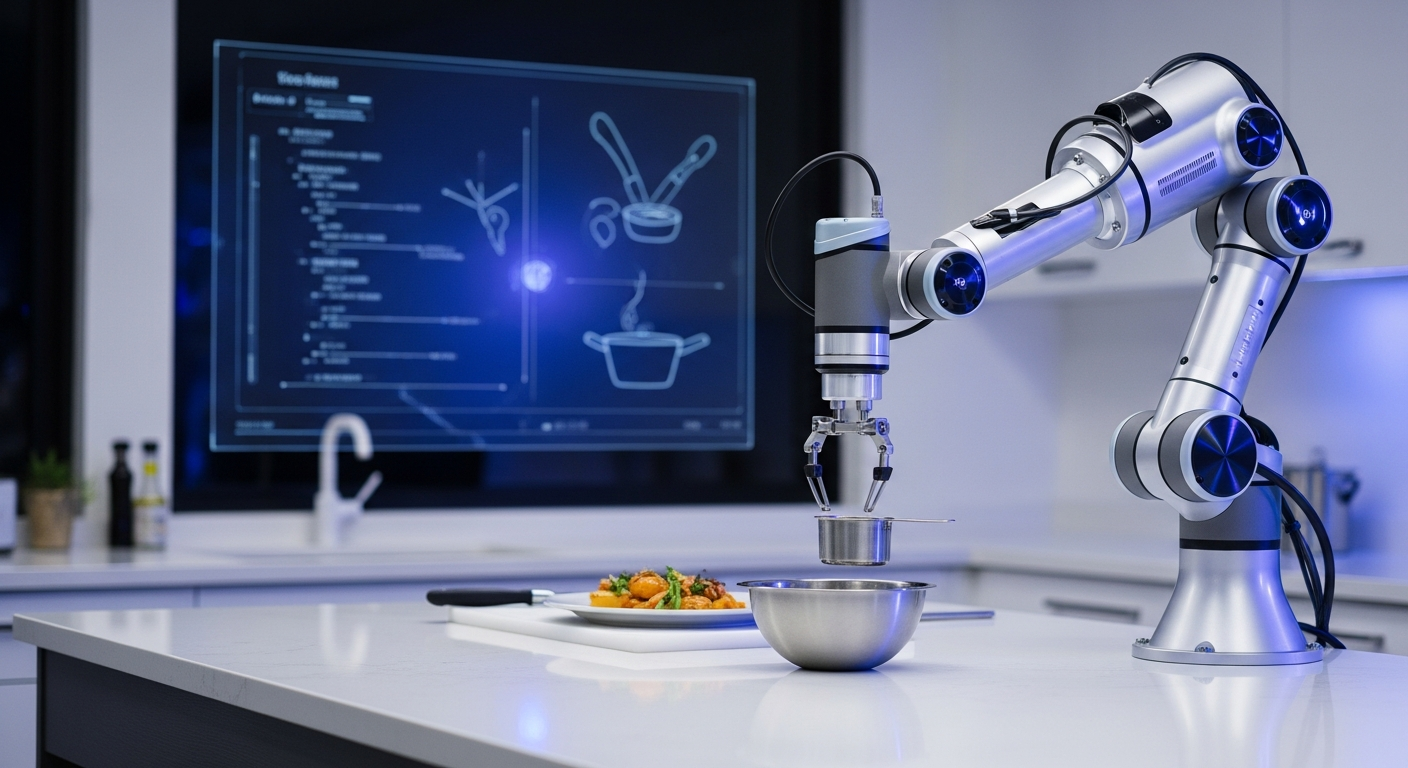
Cooking robots are not merely anthropomorphic machines wearing chef hats, but in essence, they embody a synergy of advanced robotics, artificial intelligence, and culinary arts. Imagine a mechanical arm that can precisely dice onions while simultaneously controlling a sous vide bath—in less time than it takes you to find your apron. At the heart of these culinary marvels are intricate AI models capable of learning from culinary data sets, evolving with each dish they prepare.
Companies like Moley Robotics and Samsung have pioneered the development of these cooking robots, with Moley’s flagship robotic chef able to replicate recipes from a database of gourmet dishes [MIT Technology Review]. This isn’t just about automation; it’s about creating a machine capable of replicating human dexterity and decision-making in the kitchen.
Applications Beyond the Home: Industry Wide Transformation
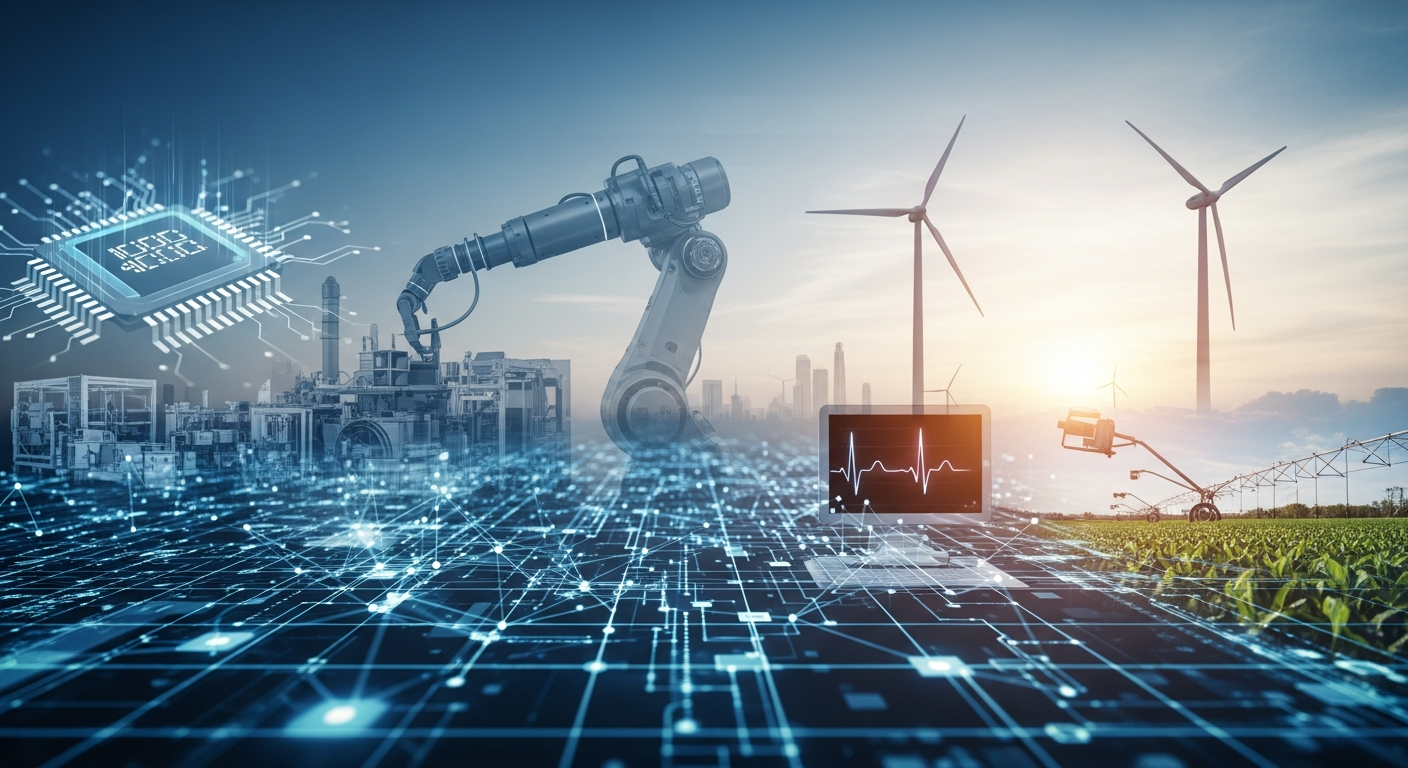
While most of us may dream of a personal kitchen assistant, the impact of cooking robots extends far beyond the domestic sphere. In industrial settings, companies like Spyce have introduced fully robotic kitchens capable of preparing meals with precision unmatched by human hands. This technology alleviates the pressure points of industrial kitchens, offering consistent quality and efficiency [IEEE Spectrum].
In the healthcare sector, where dietary precision can equate to life-saving details, cooking robots bring forth the potential for exactly tailored nutrition plans. Imagine a hospital cafeteria where meals are freshly prepared on demand, customized to each patient’s dietary needs, reducing the risk of errors and improving patient outcomes.
Under the Hood: The Tech Driving Cooking Robots

The engineering marvels behind cooking robots involve a kaleidoscope of technologies working in harmony. From NVIDIA’s sophisticated AI chips to state-of-the-art robotic arms equipped with tactile sensors, these machines are epitomes of technological convergence. Utilizing AI models akin to Google’s DeepMind for culinary task optimization, these robots can adjust their cooking strategy based on sensor feedback, much like an experienced chef intuitively senses when a dish needs a pinch more salt [NVIDIA Research].
But it’s not all computational glory. Integrating machine vision and natural language processing allows for the intuitive interaction with users, where a simple spoken instruction can initiate a complex series of culinary operations. Robotics companies are investing heavily in simulating human gestural dexterity, aiming to achieve a more ‘human-like’ touch, whether flipping a crepe or garnishing a dish with finesse.
The Market Turbine: Economic Impacts & Growth

From a market perspective, the rise of cooking robots is causing quite a stir. The culinary robotics industry is predicted to reach new heights, with market forecasts suggesting a compound annual growth rate (CAGR) of over 20% by the end of the decade [McKinsey & Company]. This growth trajectory is driven by rising demands for efficiency and cost reductions in culinary operations, coupled with the increasing acceptance of robotics in everyday life.
Venture capitalists and tech giants are pouring resources into this burgeoning market. The influx of investment is not just a testament to the potential profitability but also to the broader societal shift towards automation in areas previously deemed the sole domain of humans. However, alongside these numbers and enthusiasm lies a broader discussion about the economic displacement as human roles evolve in the wake of automation.
A Side Dish of Challenges: What Still Needs Stirring

Despite their potential, cooking robots are not without their challenges. The price point of these advanced devices, often comparable to purchasing a compact car, poses significant barriers to widespread adoption in home kitchens. And while technology continues to advance, perfecting the art of ‘taste’ in a machine is still a riddle yet to be solved.
Another hurdle is the intricacy involved in programming robots to replicate the adaptability of human intuition. Unlike a human chef, who can improvise with an array of ingredients, a robot’s capabilities are bounded by its programming and the data it has been exposed to [Harvard Business Review].
Moreover, there is the ongoing discourse regarding data privacy and security, particularly as these devices become increasingly interconnected within the internet of things ecosystem. Privacy breaches could pose risks not just to personal data but potentially to operational safety.
Robots in the Kitchen: What the Future Holds

As we gaze into the futuristic kitchens of 2026 and beyond, the horizon is filled with promising possibilities and cautious contemplation. Cooking robots are expected to become more affordable and more integrated into smart homes, working seamlessly with other IoT devices to optimize cooking efficiency and minimize waste.
Over the next 3 to 5 years, advancements in AI and robotics are anticipated to eliminate the more pronounced limitations we see today. We might see a world where cooking robots develop capabilities akin to machine learning models used in autonomous vehicles, predicting user preferences and dietary habits with remarkable accuracy [World Economic Forum].
In a more long-term vision, as Thomas Huynh might quip during one of our editorial meetings at RoboZone.top, the future kitchen might look less like a sci-fi setting and more like a collaborative space where humans and robots co-create culinary experiences. The emergence, he often says, will come when robots are not just seen as tools but as companions in our culinary journeys.
Strategic Insights for Stakeholders

For businesses, developers, and consumers, navigating the world of cooking robots requires strategic foresight. Businesses should focus on creating adaptable and scalable systems that cater to diverse culinary needs, while continuously investing in research and development to refine robotic capabilities and reduce costs.
For developers, creating intuitive user interfaces and enhancing robot learning capabilities should be of paramount concern. Meanwhile, consumers need to prepare for a future where kitchens are increasingly tech-infused environments, advocating for user-friendly design and affordability to democratize access to this transformative technology [Stanford AI Lab].
It’s an exciting culinary frontier where the exploration is as much about innovation as it is about preserving the artistry and emotion tied with cooking—a space where robots don’t replace chefs but complement them, enriching our culinary tapestry.
So where does this leave us? As we ponder the worth of cooking robots in 2026, it becomes apparent that their value stretches beyond convenience and efficiency. They embody the shifts in our technological capabilities and reflect our evolving dependence on machines to enhance our daily lives. The challenge lies in integrating them in ways that respect and enhance the art of cooking rather than simply automate it.
What should we really pay attention to? The underlying transitions are as much about technology as they are about societal change, about fostering a new relationship between humans and their machines, blending innovation with tradition.
The culinary revolution is simmering on the stove of time, and while robots may never completely capture the soul of a master chef, they are bound to reshape the culinary landscapes of tomorrow in ways that were previously left to the imagination of science fiction writers.
Thomas Huynh – Admin of RoboZone.top