
As the sun rises over the sprawling skyline of a city where skyscrapers seem to touch the very heavens, a new kind of worker rustles amidst the steel and concrete jungle. These aren’t the laborers of yesteryears but sophisticated automatons, orchestrating a symphony of construction with unparalleled precision and speed. Thomas Huynh recently remarked over coffee at the RoboZone headquarters, “If you think automation has changed factories, wait until you see what it does to construction.” Little did we know how prescient his words would be. Welcome to the future of construction robots, where machines can potentially revolutionize an industry as old as civilization itself.
The Concept of Construction Robots
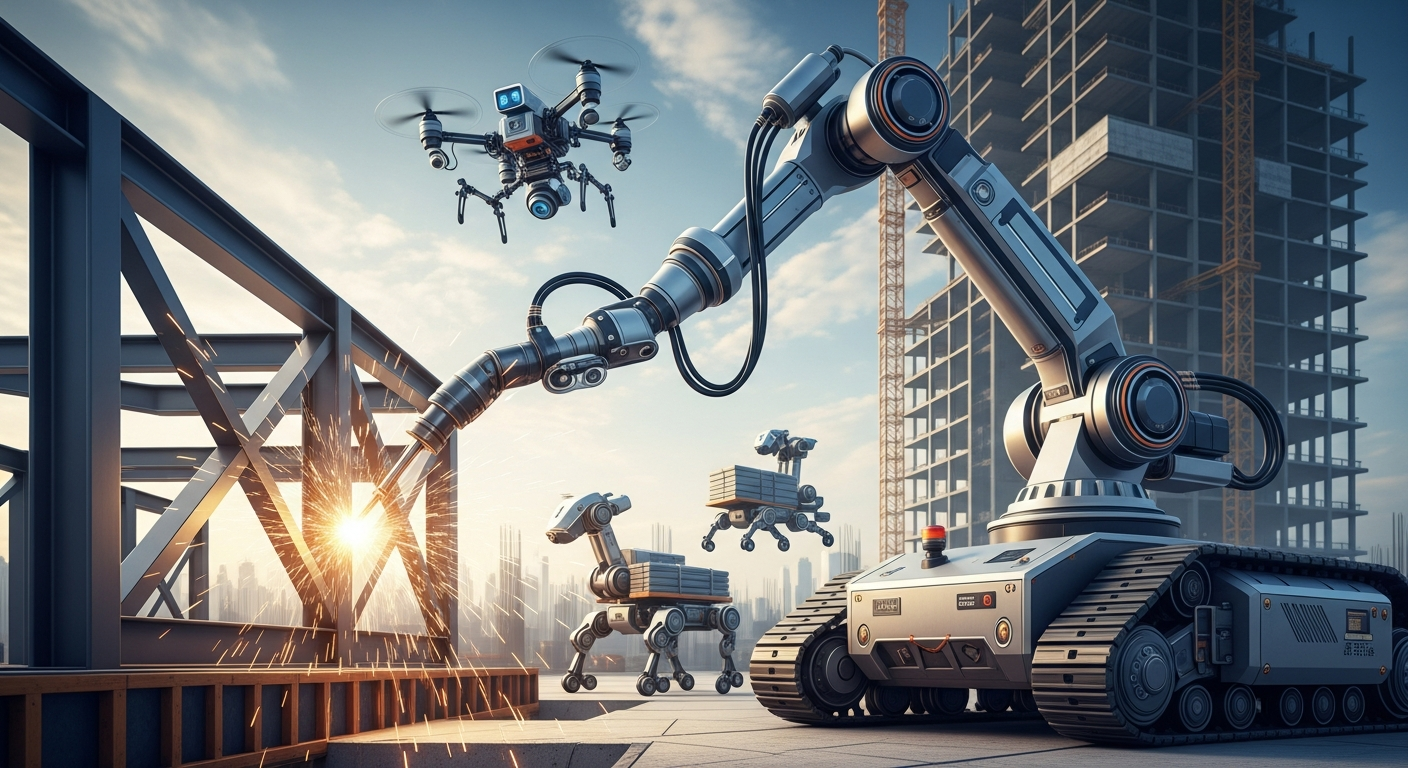
At its core, a construction robot is an advanced machine designed to automate various tasks associated with building infrastructure. From laying bricks to assembling prefabricated structures, these robots utilize a blend of artificial intelligence, machine learning, and robotics to mimic or even surpass human capabilities. The fascinating element? Unlike the tin-canned robots of 1950s sci-fi fiction, these machines are uniquely optimized for specific functions, making them indispensable in diverse construction scenarios.
The inner working of these robots can be compared to a well-choreographed ballet. Take, for example, SAM (Semi-Automated Mason) by Construction Robotics, which can lay bricks six times faster than a human. SAM incorporates sensors and computer vision to map the terrain and ensure each brick is perfectly positioned. It’s not just about speed but precision, which involves integrating multiple technologies into a synchronized whole.
Real-world Applications Across Industries

The realm of construction robots extends far beyond the traditional construction site. In factories and workshops, robots are pre-fabricating housing units, a solution increasingly popular in densely populated urban areas. In homes, they assist in renovations, making daunting projects manageable and precise. But the impact doesn’t end at civil projects; imagine healthcare facilities being constructed rapidly in response to crises, thanks to the rapid deployment capabilities of robotic constructors. The technologies by firms like Boston Dynamics allow robots to navigate and adapt to complex environments, a requisite in disaster relief zones.
One intriguing application is in the area of creating smart cities. These cities aren’t just connected by technology but are literally “built” by intelligent machines from the ground up. Consider a scenario where AI-powered robots analyze data to optimize urban planning in real-time, adjusting construction processes to meet efficiency and sustainability goals. It is a game-changer, reshaping how societies grow and evolve.
Technical Insights into Robotics Systems

Understanding construction robots requires an appreciation of the sophisticated technology powering them. Key among these are AI models that provide decision-making capabilities, robotics systems that ensure physical manipulation, and sensors that furnish environmental understanding. These facets converge to create a machine that can perform tasks autonomously and adaptatively.
Significantly, chips like NVIDIA’s Jetson platform provide the requisite computational horsepower, processing vast data volumes to aid deep learning and complex operations. The effective coordination between hardware components and AI models distinguishes rudimentary automata from cutting-edge construction robots. As explained by a researcher at the Stanford AI Lab, “The heart of these systems lies in their ability to learn on the job, decreasing error rates and optimizing processes with every cycle.” This iterative learning is essential for operating in environments with less predictability, as often seen in construction sites.
Market Analysis and Economic Impact

As we progress further into 2026, the construction robot industry is poised for explosive growth, marked by substantial investments from venture capitalists and industry giants alike. A recent report from McKinsey & Company projected an annual market expansion of over 10%, catalyzed by the demand for efficiency and the growing complexity of modern building projects. This economic shift is underpinned by the increasing integration of technology and human efforts in building ecosystems.
Companies like Tesla and their gigafactories epitomize the drive toward automation, with robots assembling sleek, massive structures in a fraction of the traditional timeframe. Moreover, as we veer towards more sustainable and environmentally friendly construction practices, robots provide the ability to minimize waste and enhance resource utilization. The ripple effect on local economies is equally compelling, with new job markets emerging alongside the phasing out of traditional roles, emphasizing retraining and technological literacy.
Challenges and Limitations

Despite the promising trajectory, the construction robots sector isn’t devoid of challenges. One major obstacle is the industry’s inherent resistance to change, which can stymie the adoption of robotic technologies. Many stakeholders, particularly in regions where labor is cheap, remain skeptical, preferring traditional methodologies over robotic alternatives.
Moreover, the technical limitations are significant. While AI empowers these machines with learning capabilities, complex construction tasks often require nuanced decision-making that current models struggle to replicate. Additionally, regulatory frameworks lag behind technological advancements, constraining innovation. The lack of standardized protocols for robot integration on work sites further compounds the issue, posing both safety concerns and operational hurdles.
Future Predictions for Construction Robots

Looking forward, the prospect of fully autonomous construction sites isn’t a science fiction dream but a tangible reality within the next five years. Futurists predict that construction robots will become as ubiquitous in urban infrastructure as drones are in aerial surveying. Enhanced collaboration between humans and robots will redefine team dynamics, with humans focusing on design and oversight while their robotic counterparts handle execution.
Long-term visions suggest a shift towards increasingly modular and prefabricated designs, assembled primarily by machines. Industry data suggests that the cost benefits and time savings of such an approach will induce wider adoption, setting precedents in construction methodologies worldwide.
A noteworthy paradigm shift we can anticipate is the emphasis on sustainable practices. Construction robots can optimize materials and minimize carbon footprints, crucial for future environmental targets. Thomas Huynh aptly pointed out at a recent RoboZone summit, “It’s not just about building faster; it’s about building smarter and greener.” This encapsulates the essence of the robot-driven construction future.
Strategic Insights for Businesses and Developers

For enterprises and developers venturing into the domain of construction robotics, several strategic steps can bolster success. Emphasizing investment in training programs will equip human workers to collaborate efficiently with robots, leveraging their strengths. Building alliances with tech firms can provide access to cutting-edge innovations, ensuring competitive advantages in deployment.
Furthermore, addressing the regulatory landscape proactively by advocating for clear guidelines and safety standards can ease transitions and build industry trust. Prioritizing sustainability and cost-efficiency in planning phases can enable firms to capitalize on the green technology wave, aligning with global environmental objectives.
As businesses pivot towards integrating robots, appreciating the nuanced synergy between human ingenuity and robotic proficiency will be crucial. In a world where change is the only constant, readiness to adapt might just be the golden key to thriving in the evolving construction landscape.
So, where does this leave us? At the dawn of a new era in construction, we find ourselves contemplating the evolving relationship between technology and humanity. As robots increasingly shoulder the burden of physical tasks, we face the opportunity and challenge of harnessing their potential to forge a forward-thinking, environmentally conscious world. It’s an exciting, albeit complex, road ahead, one that promises to redefine how we inhabit this planet.
Are we prepared to embrace this future? While uncertainty looms, the advancements and discourse fostered by individuals like Thomas Huynh ensure that RoboZone.top and its readers are not just prepared but are actively shaping it.
Thomas Huynh – Admin of RoboZone.top