
Imagine a world where your kitchen transforms into a sleek, high-tech hub that spontaneously whips up gourmet meals while you lounge on the couch binge-watching the latest sci-fi series. This isn’t a scene from a futuristic film; it’s the evolving narrative of smart kitchen robots. With companies like Moley Robotics introducing automated kitchen systems that promise culinary prowess, the real question to unravel is: are these smart kitchen robots worth the investment yet?
Understanding Smart Kitchen Robots: The Core Concept
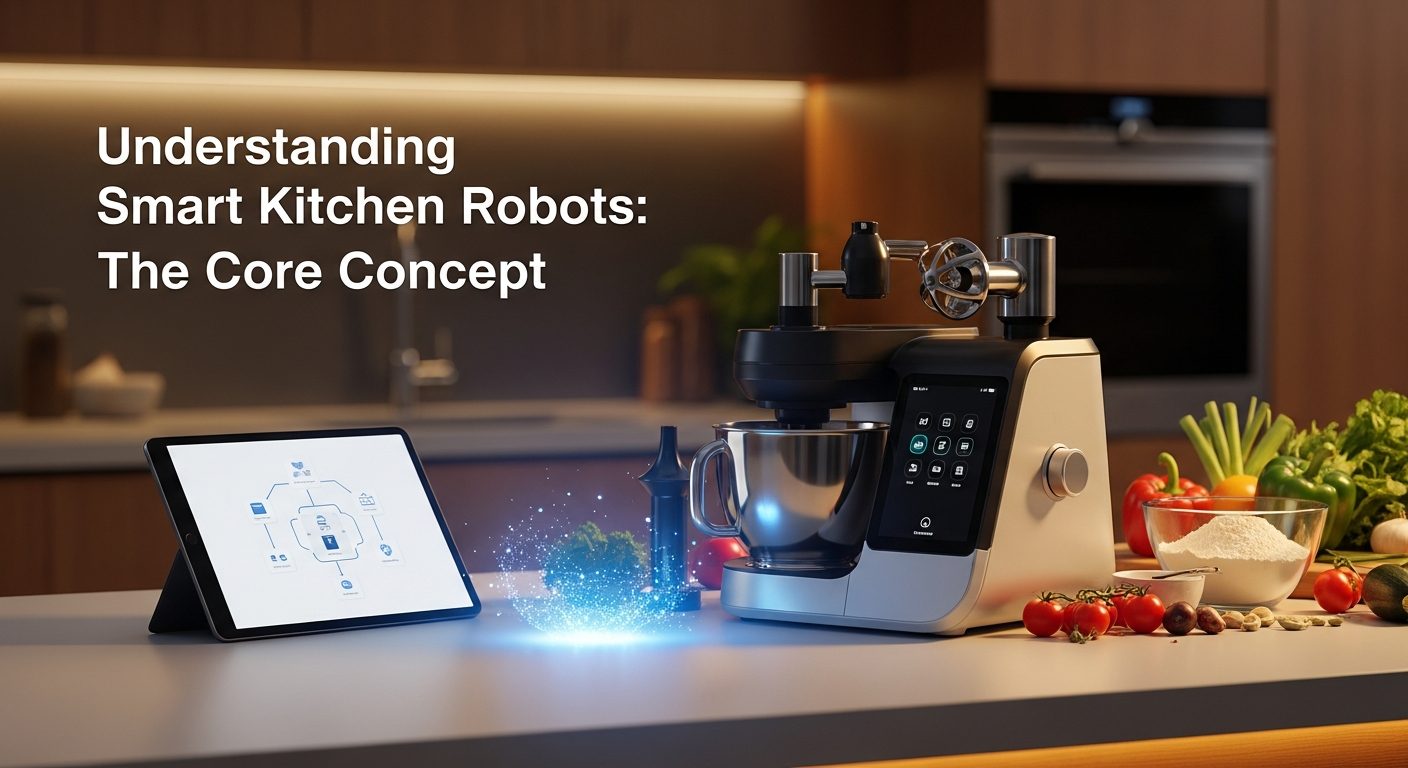
At their essence, smart kitchen robots are advanced systems designed to assist or completely perform cooking-related tasks, mimicking the prowess of a seasoned chef. These marvelous machines are equipped with state-of-the-art technologies, such as AI algorithms, a suite of sensors, and articulated robotic arms. The ideal vision is one where these robots can manage everything in the culinary process—from ingredient preparation to cooking and even cleaning afterward.
Take, for instance, the flagship invention by Moley Robotics—a robotic kitchen featuring two dexterous arms reminiscent of a Michelin star chef, coupled with an intuitive touch screen interface. While some view it as magic, behind the scenes, it’s years of robotics and AI development that choreograph these graceful culinary dances. The performance of these robots hinges on their ability to accurately perceive their environment, which they achieve through sophisticated sensors and computer vision technology. This is where engineers sprinkle their secret sauce, making kitchen robots capable of identifying ingredients and translating cooking methods into precise movements.
Real-World Applications Beyond the Home

While the domestic kitchen seems the natural habitat for these robots, savvy industry players envision broader horizons. Their potential stretches into commercial kitchens and healthcare industries, promising transformations beyond just automated home cooking. Industrial kitchens in bustling restaurants could see these robots streamline operations, ensuring consistency in taste and presentation while humans focus on creativity and customer service.
Healthcare, particularly, craves the precision of kitchen robots to provide tailored meals that satisfy dietary restrictions with accuracy no human chef could consistently maintain. Imagine robotic kitchen stations in hospitals delivering meals customized to each patient’s nutritional needs and preferences without human error. With major tech giants investing heavily in these domains, the intersection of gastronomy and robotics appears to be more than just flavorsome—it is transformative.
Behind the Technology: AI, Sensors, and Beyond

Diving deeper into the technology that powers kitchen robots, it’s evident that their sophistication lies in the intricate web of artificial intelligence, sensor arrays, and cutting-edge hardware like NVIDIA chips that process complex computations at lightning speeds. These components come together to endow the robots with a unique ability to learn and adapt to their surroundings.
Artificial intelligence is the brain that guides these kitchen robots, utilizing machine learning models that enable them to interpret thousands of recipes, recognize ingredients, and predict optimal cooking methods. Meanwhile, sensor technology, including cameras and touch sensors, allows robots to perceive their environment in three dimensions, effectively interacting with kitchen implements and ingredients without fumbling a single tomato.
The Economics of Investing in Kitchen Robots

No discussion about smart kitchen robots can ignore the vigorous marketplace they operate within. With analysts from McKinsey projecting a steady growth in the robotics sector aided by a collective embrace of automation across industries, investors and manufacturers alike are setting their sights on the culinary sector. The global robotics kitchen market alone is anticipated to witness exponential growth, with forecasts spiraling upwards beyond 2026.
Astonishingly, the investment into smart kitchen robots isn’t driven merely by curiosity. It’s fueled by a desire to improve efficiency, reduce food wastage, and tackle labor shortages that plague the foodservice industry. Many venture capitalists and businesses, nudged by pioneering entities like Boston Dynamics and Google DeepMind, are prioritizing their portfolios towards this culinary innovation.
Current Challenges: What Still Needs Work?

Despite the alluring allure of a robot-run kitchen, challenges abound that cloud the sector’s future with uncertainty. First and foremost is the cost barrier—these technologies aren’t just another kitchen appliance; they often require substantial financial outlay, which remains inaccessible to the average household.
Additionally, while AI and robotics have advanced leaps and bounds, they still occasionally falter in complex culinary tasks, such as seasoning to taste or catering to spontaneous human creativity in the kitchen. With several systems still grappling with these nuanced tasks, one could say, ‘Humanity still holds a finger in the pie.’ Not to mention the societal apprehensions about technology overtaking human jobs create additional hurdles for large-scale acceptance and deployment.
Predicting the Kitchen of the Future

Peering into our robotic crystal ball, what might the landscape resemble in five years or more? It’s plausible that smart kitchen robots will evolve beyond today’s centralized systems into seamless, fully integrated kitchen suites that work harmoniously with smart home ecosystems. Imagine an ecosystem where your smart fridge communicates with your robotic chef, evaluating ingredient availability and suggesting a meal plan simultaneously syncing with your health app to track nutritional intake.
Moreover, technological enhancements could advance these robots’ learning capabilities, leveraging networked AI to share data and learn collectively, much like human chefs exchange techniques and recipes. Thomas Huynh, part of the RoboZone.top team, often notes the similarity, jokingly quipping, ‘It’s like MasterChef meets Skynet, with less apocalyptic implications.’
Strategic Insights for Businesses and Users

For businesses, developers, and end-users gearing up for this gastronomic revolution, the key lies in staying agile and informed. Industries poised at the edge of robotic transformation should prioritize research and development, fostering innovation that bridges current technological gaps. Close collaborations with AI researchers, such as those at Stanford AI Lab, could propel the field forward, driving user-friendly solutions that address today’s limitations.
Users and consumers must prepare to embrace change, cultivating a nuanced understanding of how smart kitchen robots can enhance lifestyle while addressing any socio-economic implications that ride alongside technological adoption. Policymakers and manufacturers, on their part, need to work collaboratively to ensure fair pricing and accessibility, making the kitchen of tomorrow a shared reality rather than an elite privilege.
So where does this leave us? The culinary landscape is evolving, and smart kitchen robots seem poised to take a starring role. However, the journey is far from a quick sprint to mass consumer adoption; instead, it’s a nuanced marathon requiring collaboration, innovation, and societal adaptation. For now, investing in smart kitchen robots may remain the preserve of tech-savvy homes and forward-thinking businesses, but as technology advances, we could soon find ourselves entertaining a future where intricate gourmet meals and robotic sous chefs aren’t a luxury—they’re the norm.
Thomas Huynh – Admin of RoboZone.top
References & Further Reading
- MIT Technology Review — https://www.technologyreview.com/
- IEEE Spectrum — https://spectrum.ieee.org/
- McKinsey & Company — https://www.mckinsey.com/
- NVIDIA Research — https://research.nvidia.com/
- International Federation of Robotics — https://ifr.org/