
Imagine waking up in the comfort of your home in 2026, where robotic assistants brew your morning coffee, tidy your living room, and even remind you of meetings you nearly forgot. It’s a vision that once belonged exclusively to the realm of science fiction, but now hovers tantalizingly close to reality. Yet, amidst the hype, it’s crucial to separate realistic expectations from wishful thinking. So, let’s dive into what home robots can genuinely achieve at this crossroads of technology and what limitations they must still overcome.
Understanding the Core Concepts of Home Robotics

Home robots are no longer a whimsical futuristic dream. Rather, they are tangible technologies carefully crafted from years of meticulous research and exponential advancements. At their heart lies complex mechanisms shaped by robotics engineering, AI, and sensor technology. These robots use sophisticated algorithms to process data, making decisions in real-time. Think about it as the brain of a robot deciphering thousands of lines of code to decide whether to turn left or right to avoid the cat lounging in the hallway.
Embedded within these machines are advanced neural networks that enable them to ‘learn’ from past experiences—a capability made feasible primarily due to progressive developments in AI. Thomas Huynh, the insightful admin of RoboZone.top, often remarks that understanding what robots can discern and how they act upon it is akin to decoding the thinking process of a toddler—a little unpredictable yet full of potential.
Robots at Home: From Cleaning to Companionship

In homes around the world, a new wave of domestic automatons has begun to spring life from the mundane. Vacuum robots, like iRobot’s Roomba or Dyson’s latest models, have become common household members, ensuring floors remain spotless even under the couch where the broom can’t reach. What’s interesting is how these vacuum robots employ Lidars and mapping technologies to navigate around. It’s almost like watching a game of robotic hide-and-seek where no corner remains undiscovered.
Beyond mere cleaning, robots are making strides in providing companionship. In a world where loneliness is striking more than just the elderly, companies such as Sony with their Aibo robotic dog have redefined affectionate technology, offering interaction coupled with a touch of emotional response. These robots are designed to detect emotions through facial recognition and respond in kind, adding that gentle, albeit synthetic, nudge of camaraderie in quiet households.
Technical Innovations Powering Home Robots
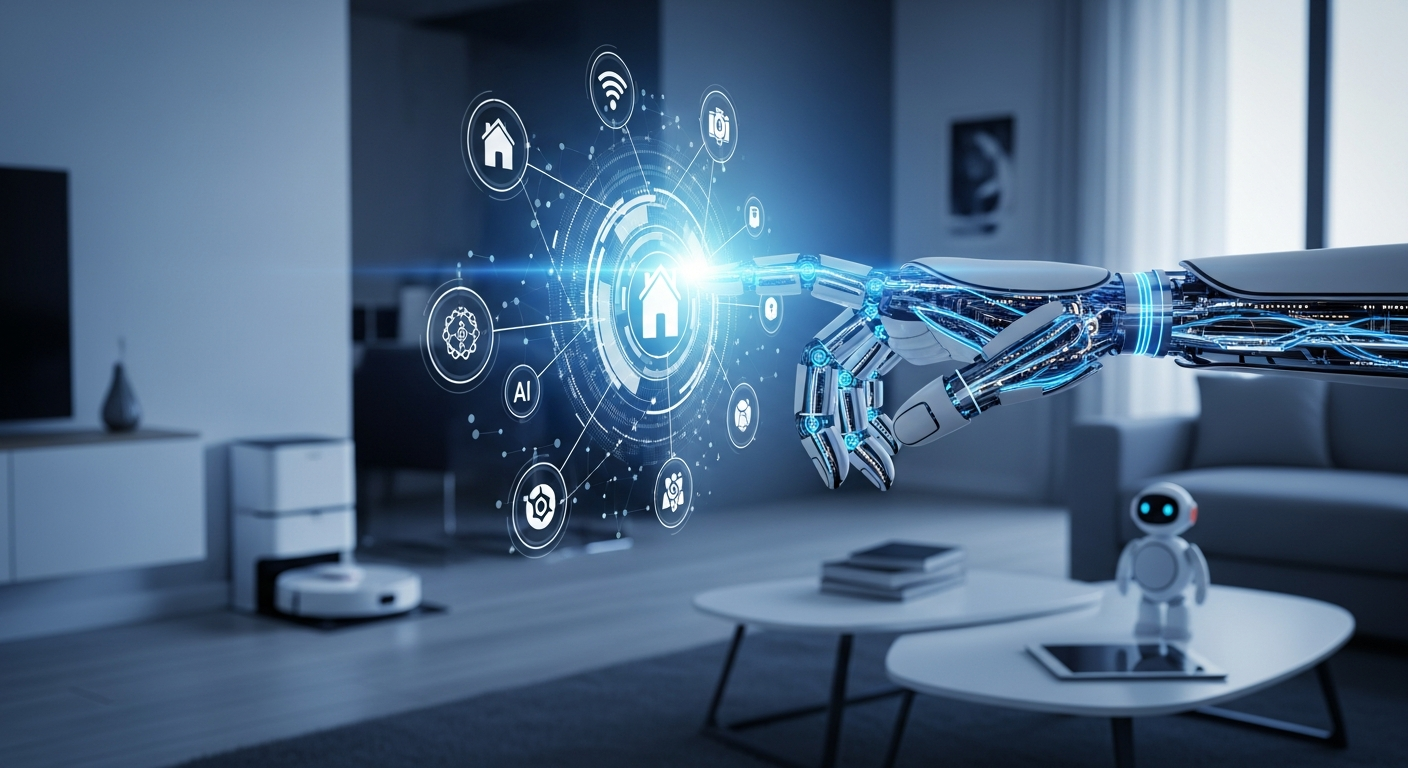
At the core of home robots’ mechanics are several fascinating technologies that have gradually matured over the last decade. AI models like those developed by Google DeepMind power decision-making abilities. Meanwhile, sensors are the unsung heroes of robotics, providing robots with ‘senses’ to understand their environment. Tiny accelerometers, cameras, and ultrasonic sensors work in sync to ensure these robots don’t stumble or crash like a bull in a china shop.
The rise of powerful chips by industry giants such as NVIDIA has allowed for faster and more robust computing right within these diminutive robots. Nvidia’s Jetson platforms, for instance, enable real-time AI computations, essentially granting these robots a brainy upgrade to carry out complex tasks without breaking a sweat (or, well, short-circuiting).
Market Growth and Economic Impact

The market for home robots is not only burgeoning but skyrocketing, with projections indicating a multibillion-dollar industry by 2026. The appetite for such technology stems from its perceived value in enhancing everyday life without human intervention. Companies like Tesla, not one to remain behind in technological revolutions, have expressed interest in producing humanoid robots for domestic utility.
The economic footprint of robotics hints at a transformative trajectory. Jobs, once thought solely owned by humans, are now becoming endpoints for robots, driving a discourse on the future workforce. The anticipated synergy between human and machine poses both an opportunity and a quandary as the landscape of employment evolves.
Challenges and Limitations: What Robots Still Can’t Do

For every achievement in robotics, there’s a stubborn challenge looming close behind. Despite their capacities, robots still grapple with tasks demanding nuanced human judgment or dexterous hand-eye coordination. Folding laundry might seem trivial to humans, but for robots, it could be the equivalent of solving a Rubik’s cube blindfolded.
Fears of technical malfunctions and security vulnerabilities also linger. Imagine a robot vacuum running amok and exporting your living room’s mapped layout to a server somewhere—concerning isn’t it? The ongoing quest for flawlessly safe and reliable robots is akin to an ever-elusive Holy Grail in this field.
Predictions and a Glimpse into the Future

So, what could our techno-abodes resemble as we peer into the crystal ball of 2030? With tech companies forging ahead in integration technologies, human-robot collaboration is poised for leaps that make our present automations look quaint. Robots are being envisioned not just as tools but as true collaborators—perhaps your future sous-chef or more intriguingly, your child’s tutor akin to a metal Mary Poppins.
Strategists and engineers need to focus on advancing AI ethics, improving interactivity, and ensuring compatible ecosystems. Thomas Huynh famously quipped, “In robotics, today’s science fiction is tomorrow’s to-do list.” And indeed, the horizon looks both promising and demanding.
As we stand on the cusp of more pervasive in-home automation, the question we need to ask is, how do we balance marvel with mindfulness? Robots hold an inexhaustible promise of redefining chores and enhancing lifestyles, yet they beckon us to remain vigilant of their ethical implementation and realistic limitations. While they navigate our halls and serve our morning brew, we remain the masters of the buttons that dictate their dance. The real challenge lies in preparing our society and our policies to harmonize with this imminent wave. This leaves us with a canvas half-painted—what will be added next is up to human innovation and imagination.
Thomas Huynh – Admin of RoboZone.top
References & Further Reading:
- MIT Technology Review — https://www.technologyreview.com/
- IEEE Spectrum — https://spectrum.ieee.org/
- McKinsey & Company — https://www.mckinsey.com/
- Stanford AI Lab — https://ai.stanford.edu/
- Harvard Business Review — https://hbr.org/
- NVIDIA Blog — https://blogs.nvidia.com/
- International Federation of Robotics — https://ifr.org/