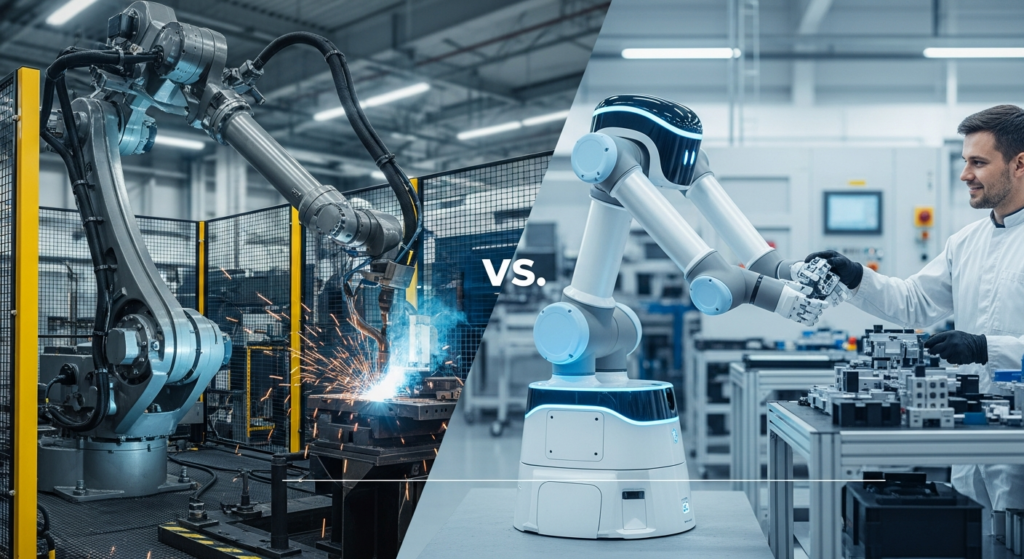
Picture a bustling modern factory. On one side, towering metallic giants hum with precision, assembling car parts with unerring accuracy. On the other, smaller, more agile robots deftly assist a human worker in an intricate task. Welcome to the era where industrial and collaborative robots coexist, shaping the landscape of automation in ways that could only be imagined a few decades ago. Under the keen supervision of Thomas Huynh, RoboZone.top delves into the fascinating dichotomy of industrial and collaborative robots—and the real differences that distinguish these technological marvels.
Understanding Industrial Robots

Industrial robots, the hulking behemoths of the manufacturing world, are quintessential to any conversation about automation. These robust machines are engineered for efficiency and precision, tackling tasks like welding, painting, assembly, and packaging with relentless accuracy. Their origins trace back to the 1960s as rudimentary arms with limited capabilities, but they have since evolved into sophisticated systems integrated with multi-axis motion and intricate control software.
At their core, industrial robots operate in isolated environments. They are beasts of burden performing repetitive tasks in areas cordoned off for safety. This segregation is crucial because their immense power and speed are as much a boon as they are a potential hazard. That’s one of the main distinguishing factors—the separation between man and machine, ensuring that human operators are always out of harm’s way.
Moreover, the rise of AI and machine learning has added an extra layer of intelligence. These robots now possess the ability to adapt to new tasks without exhaustive reprogramming. Think of them as the diligent assembly line worker who never gets tired, a concept which is the backbone of some of the world’s most advanced manufacturing facilities like those of Tesla.
[this image – an assembly line with traditional industrial robots, illustrating the sheer scale and capability of these machines]
The Collaborative Robot Revolution
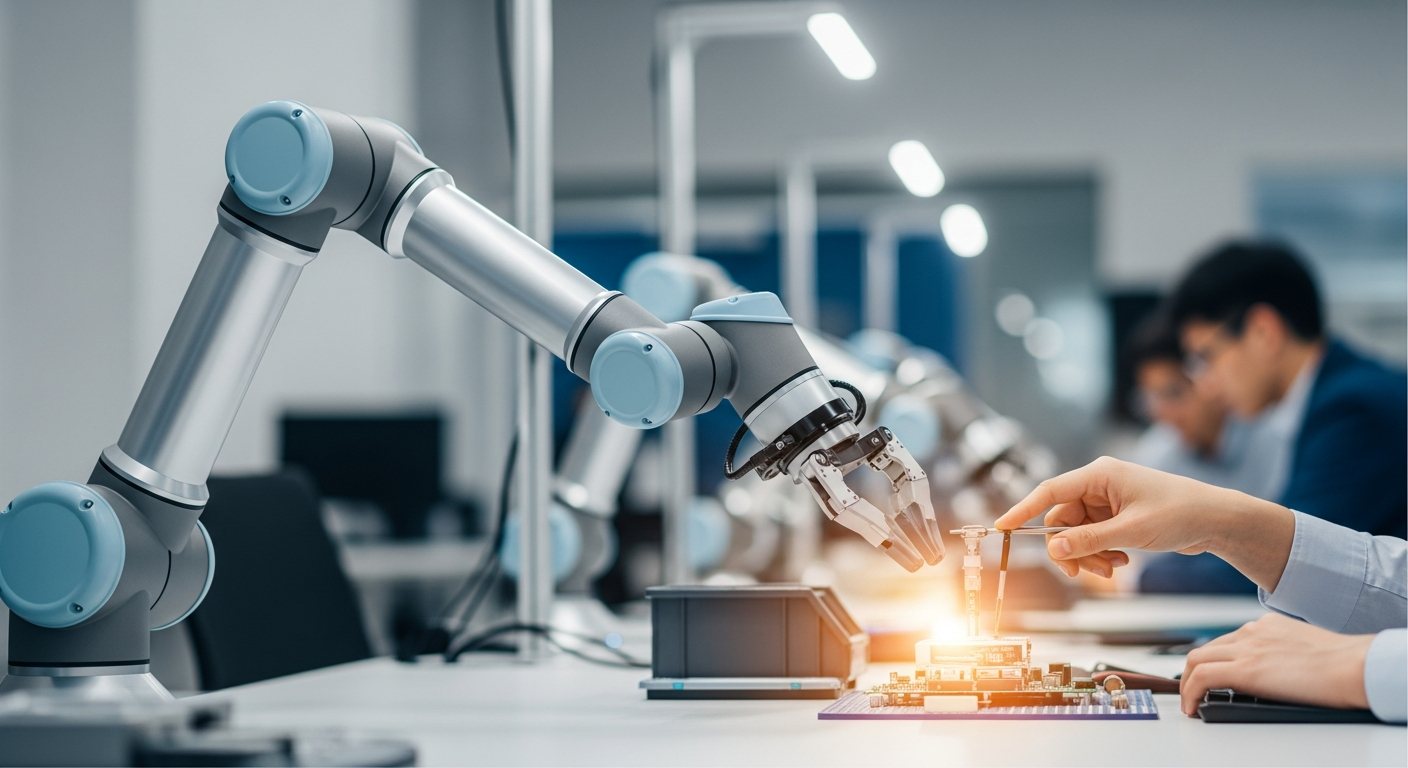
Enter the collaborative robot—or cobot—making waves as the more approachable cousin of the industrial giant. These aren’t the solitary figures of metal might, but are instead designed to work side-by-side with humans. The beauty of cobots lies in their human-like finesse combined with mechanical precision, all wrapped in a package that often seems too adorable for its job description. Companies such as Universal Robots and Rethink Robotics have spearheaded this revolution, making automation accessible to businesses of all sizes.
Cobots come equipped with advanced sensors and safety protocols, allowing them to operate in close proximity to humans without the need for physical barriers. This human-robot interaction is a game-changer, reminiscent of a buddy hiking trip where one carries the supplies while the other handles navigation. The less imposing physical presence means they are more flexible, deployed for diverse tasks like electronic assembly or food packaging with minimal disruption.
Moreover, the intuitive programming languages and user-friendly interfaces simplify setup and operation, eliminating the need for robotics PhDs to program them, which is both a relief and a testament to their accessibility. Imagine having a smartphone app that controls a robotic assistant with a few simple taps—because, essentially, that’s where the technology is heading.
[this image – a collaborative robot in an office environment, illustrating how safe interaction is possible even in shared spaces]
Technical Innovations: AI, Sensors, and More
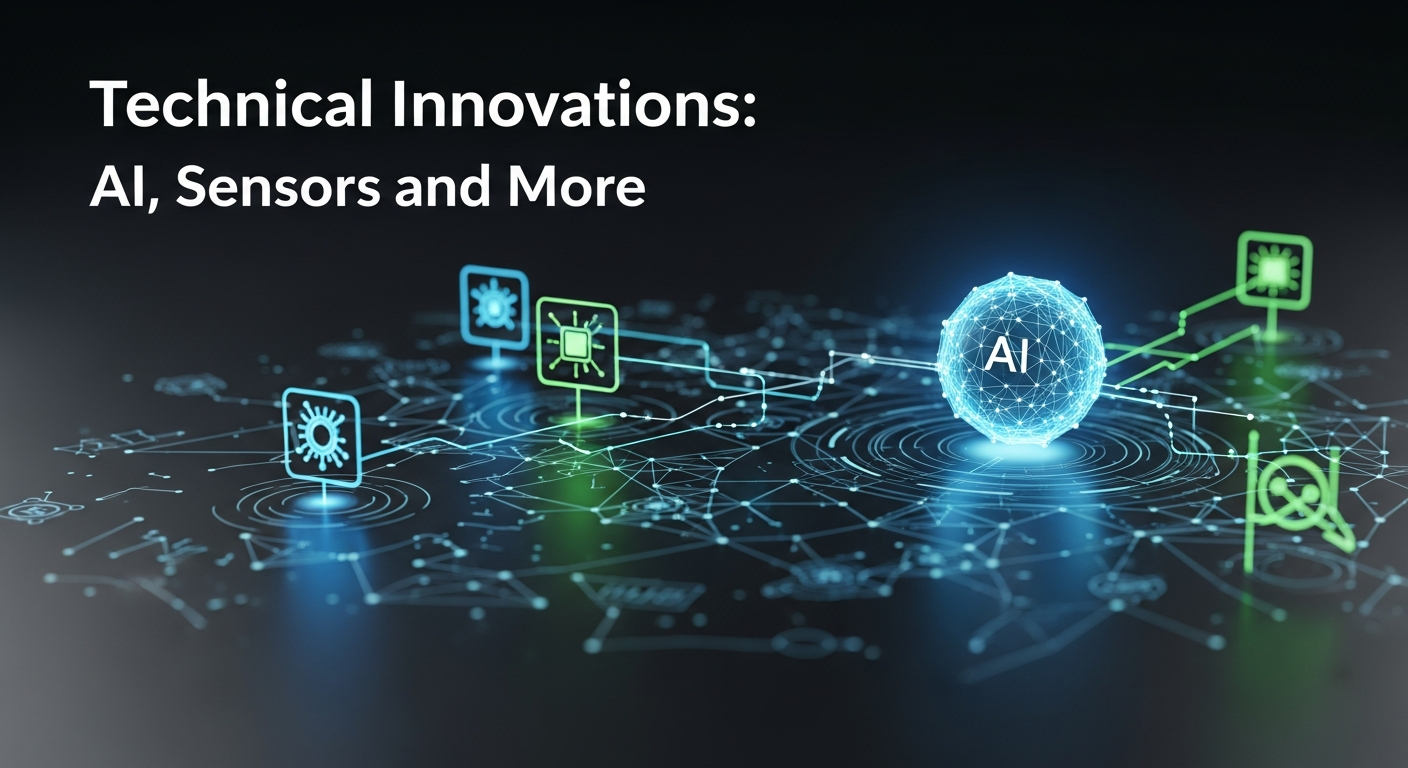
The technical evolution of both industrial and collaborative robots is built on a foundation of state-of-the-art innovations. Foremost among these are AI and machine learning algorithms, which are not just buzzwords but the actual backbone of modern robotics. Machine learning enables robots to understand their environment and make decisions on the fly, essential for cobots that must dynamically respond to the actions of their human counterparts.
Robotic systems are increasingly being outfitted with sophisticated sensors that enable them to perceive their surroundings with unparalleled clarity. These include LIDAR and infrared sensors that map surroundings or pressure-sensitive ‘skins’ that provide tactile feedback. In fact, the chipsets powering these innovations are nothing short of revolution—they hail from the same line as those powering NVIDIA’s gaming and AI applications, optimized for high-speed data processing.
Yet, as the saying goes, ‘all that glitters is not gold,’ and even the most advanced technologies are not without flaws. The integration and interoperability between robotic systems can be complicated, requiring massive investments in research and development. Furthermore, these robots must be ever vigilant against cybersecurity threats, a field of concern as highlighted by recent reports from IEEE Spectrum.
Market Dynamics and Economic Impacts

The robotics market has burgeoned with unprecedented intensity, laying open a terrain filled with opportunities and challenges. As we cruise past 2025, the integration of industrial and collaborative robots is not simply a futuristic vision but a current reality, with vast implications for global economies and job markets.
Market analysis by McKinsey & Company suggests that the global robotics market is poised to grow at a compound annual rate of 26%, hitting over $210 billion by the end of 2026. This growth is driven not just by the large-scale manufacturers but by SMEs adopting affordable cobots, creating democratized automation. It’s like the iPhone effect in the mobile world—a technology once accessible only to the elite is now in everyone’s pocket.
The economic impact is multifaceted. While automation promises increased productivity and reduced operational costs, it’s a double-edged sword that slices at traditional job roles. This transformation necessitates a workforce that’s adaptable, possibly triggering widespread reskilling initiatives—something echoed in the World Economic Forum’s economic reports.
Challenges on the Path to Perfection

Even as automation technologies seem poised to conquer the modern workforce, various challenges present themselves. First and foremost is the issue of reliability and uptime. Industrial robots are known for their robustness, yet cobots—designed for nuanced tasks—sometimes struggle with consistency. Moreover, even the best sensors cannot prevent accidents in unpredictable dynamics, posing safety concerns that must remain at the forefront of continuous development.
Further complicating the landscape is the concern about initial costs and ROI, especially for SMEs looking to make their maiden foray into robotics. And let’s not even talk about regulations, a veritable minefield of compliance issues ranging from safety to data handling, reminding one of trying to assemble IKEA furniture without instructions.
These hurdles are surmountable but require innovative solutions and cooperative efforts across technological, regulatory, and educational divides. As Thomas Huynh often quips, “In an industry moving this fast, even being a little late makes you feel like you’re chasing a speeding train.”
What Lies Ahead: The Future of Connectivity

So where does this leave us on the path of industrial and collaborative robots? It’s a question that intrigues industry experts and business leaders alike. In a landscape that continuously shifting, the next three to five years promise further integration of AI, autonomy, and perhaps most excitingly, the onset of the Internet of Robotic Things (IoRT).
Imagine a world where robots are connected not only to each other but to the very infrastructures they operate within—factories that think and grow, adapting to fulfill ever-evolving production demands. Automation will become more personalized, more intuitive, akin to having a robotic assistant who knows not just what’s on your to-do list but what’s on the horizon.
It’s an optimistic view, but one tempered with the need to address inherent challenges, ensuring privacy, security, and equitable economic transformation as guiding lights. Businesses, developers, and workforce alike must prepare, continuously adapting, like surfers riding an unending wave.
So, what comes next? It’s the steady hum of progress, the understanding that today’s potential is tomorrow’s routine. As Thomas Huynh would remind us, ‘In the world of robots, tomorrow is closer than you think.’
Thomas Huynh – Admin of RoboZone.top
References & Further Reading:
- MIT Technology Review — https://www.technologyreview.com/
- IEEE Spectrum — https://spectrum.ieee.org/
- McKinsey & Company — https://www.mckinsey.com/
- Stanford AI Lab — https://ai.stanford.edu/
- Harvard Business Review — https://hbr.org/
- NVIDIA Blogs — https://blogs.nvidia.com/
- International Federation of Robotics — https://ifr.org/
- World Economic Forum — https://www.weforum.org/