
The Core Concept: Harmonizing Human and Machine
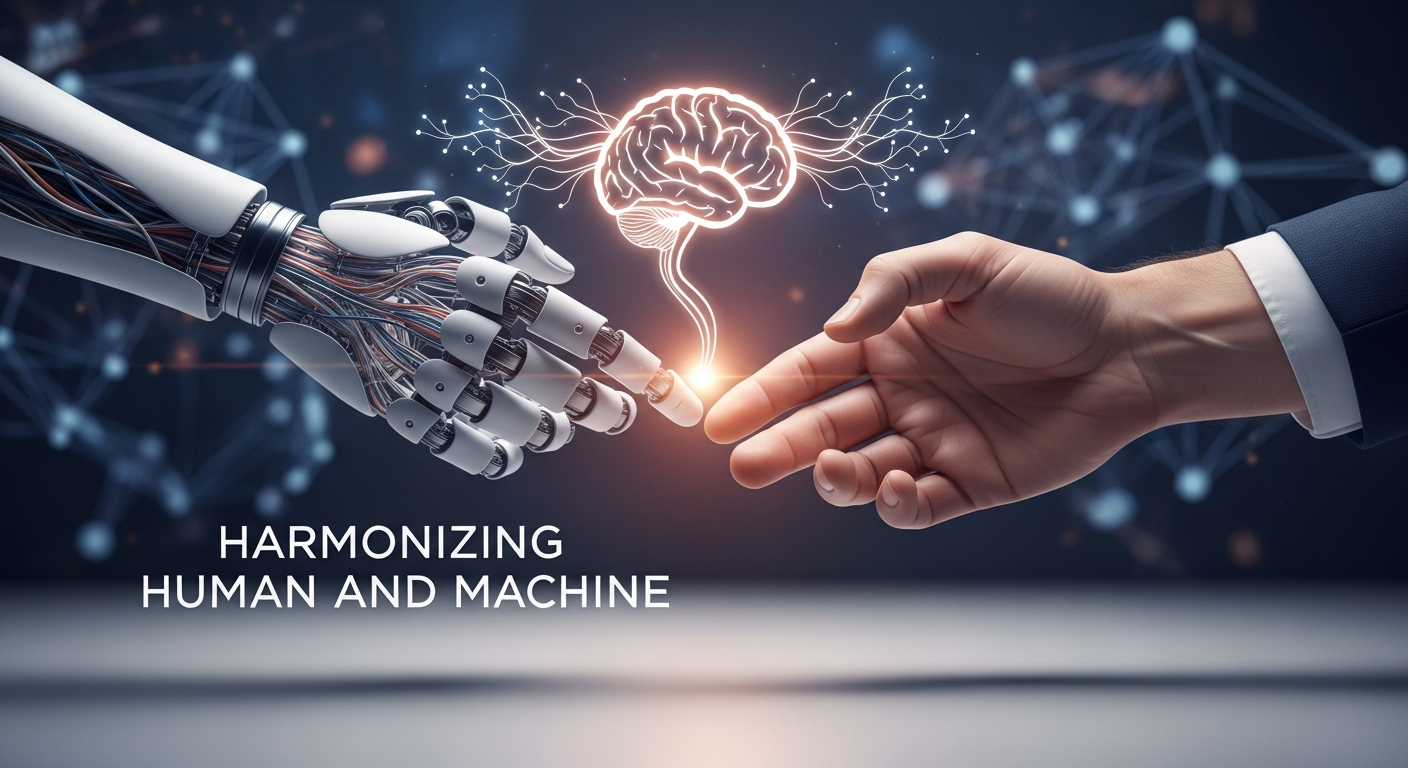
Before we venture deeper into the rabbit hole of robotics, it’s pivotal to ground ourselves in understanding the core concept of human-robot collaboration. At its essence, human-robot collaboration is about creating synergy between humans and machines. This isn’t merely about robots whirring around workplaces; it’s about establishing a partnership where machinery augments human capabilities, making new possibilities a reality.
Automation, which initially sparked fear of widespread job displacement, is evolving into a partnership model where robots handle repetitive or hazardous tasks. This liberates humans to focus on strategic, creative, and problem-solving activities. Experts from the MIT Technology Review point out that this is where things get particularly intriguing. As robots increasingly assume mundane responsibilities, humans can delve into roles that require emotional intelligence and complex decision-making, which are still – thankfully – beyond the grasp of even the most sophisticated AI.
Real-World Applications: Robots Among Us

In recent years, the narrative surrounding robots has shifted dramatically from theoretical musings to tangible applications across a spectrum of industries. Let’s take a gander, shall we? Picture a humanoid robot assisting a human chef in a bustling kitchen, plating dishes with precision and speed. This vision isn’t a mere flight of fancy – companies like Miso Robotics and their robot chef ‘Flippy’ have already ingrained themselves in the culinary world, flipping burgers and frying sides.
Meanwhile, in the industrial sector, we’d find our robotic compatriots, like those produced by Boston Dynamics, making waves with their robust autonomous operations. Adaptability, safety, and efficiency are the trio of principles that guide their deployment in warehouses and manufacturing sites, catering to an ever-evolving supply chain landscape.
The healthcare industry, perhaps, stands to benefit most significantly from this technology. The International Federation of Robotics has noted the increasing integration of robotic surgical systems, which afford surgeons precision capabilities beyond human potential. Robots like the da Vinci Surgical System enhance dexterity and control, turning complex procedures into less invasive and significantly more illustrative feats of modern medicine.
Technical Insights: The Guts and Gears of Collaboration

Peeling away the layers of magic and wonder, we find the intricate, meticulous technology that underpins human-robot collaboration. This domain, like any tech sector ripe for exploration, buzzes with state-of-the-art AI models, advanced robotics systems, and cutting-edge components like NVIDIA’s next-gen processors.
Consider the role of AI. Machine learning, bolstered by neural networks, births robots capable of adaptive learning. MIT Technology Review cites that these models continuously evolve, improving performance with every interaction. Computer vision systems, equipped with sophisticated sensors, allow machines to perceive and understand their environment in real-time, thus reacting with a degree of precision reminiscent of human capability, if not better.
At the heart of these robotic marvels beats the relentless pulse of high-performance chips like those from NVIDIA, propelling data processing and machine learning inference tasks. In partnership with Google DeepMind, neural networks train intelligent robots for complex tasks, underscoring just how essential tech collaborations like these are to the ongoing evolution and adoption of robotics.
Market Analysis: The Economic Pulse of Robotics

As we hurtle onward into a new age of robotics, the market analysis offers a vision that is both economically compelling and strategically informative. McKinsey & Company forecasts substantial growth within the industry, estimating that by 2030 the global robotics market will be worth over $500 billion. This isn’t merely due to the technological advancements alone but also because of the perceived value that human-robot collaboration brings to the table.
Venture capital investments echo this enthusiasm. The past few years have seen a surge in funding for startups focused on collaborative robot solutions. Companies like Universal Robots and Teradyne continue to draw significant attention, and for good reason. Their flexible robotic arms find a home in any industry, showcasing the adaptability and vast potential of robotics in collaborative environments.
The economic impact of this technological shift extends beyond the tech sector. It permeates the fabric of communications, agriculture, retail, and beyond. Experts at the World Economic Forum argue that this move is not just profitable – it’s necessary for sustainable economic growth in the rapidly digitizing global landscape.
Challenges and Limitations: The Roadblocks Ahead

No discussion of human-robot collaboration can omit the hurdles that naturally accompany such pioneering efforts. As glorious as the future looks, challenges remain that stymie unchecked progress. Let’s first address the current limitations of technology. While AI and machine learning are impressive, we aren’t yet at a point where these systems can entirely mimic human intuition and judgment. Consider the imperfections inherent in natural language processing – machines still struggle to fully grasp nuance and context, valuable in dynamic human-robot collaboration.
There are also regulatory challenges to consider. Frameworks governing the deployment and integration of robots in various sectors are in their infancy, requiring robust debate from government officials, tech leaders, and civil society. Harvard Business Review emphasizes the need for inclusive policy-making: a matter of indisputable urgency.
Furthermore, privacy and ethical considerations remain persistently by our side. In an age where data is everything, maintaining privacy and ethical safeguards in interactions between humans and robots is imperative – not just to ease public concerns, but to foster the healthy growth of the sector at large.
Future Predictions: Gearing Up for What’s Next

Where does human-robot collaboration go from here? Gazing into the crystal ball, the next 3 to 5 years promise further embedding of these collaborations into the fabric of everyday life. Analysts from IEEE Spectrum forecast that as technological developments continue at their current pace, we’ll witness even more sophisticated AI models capable of accurately simulating human cognition.
In a not-too-distant future, autonomy systems co-developed by Tesla could revolutionize transport, leading to seamless human-machine navigation. Advanced service robots might serve as companions to the elderly, handling both caregiving and companionship duties. Ethical AI and user-centric design would steer these innovations, ensuring they stick the landing when human considerations are factored into algorithmic design.
The long-term vision? It’s one where the dichotomy between human worker and robotic assistant blurs. Instead, we foresee a landscape where upskilling options in AI and robotics proliferate, bridging the gap through comprehensive education and training. Thomas Huynh often points out that what’s on the horizon thrills both tech experts and laypersons – a world where humans and robots craft achievements that mirror only our wildest imaginings.
Strategic Insights: Preparing for a Synergized Tomorrow

The buzz surrounding human-robot collaboration leaves businesses, developers, and users pondering their role in this revolutionary landscape. For companies, proactive adoption remains a crucial strategy. Recognizing areas where robots can enhance efficiency, production, or customer service will keep entities at the vanguard of industrial evolution.
Developers must focus on creating user-friendly interfaces that simplify human-robot interactions, while also upholding the sanctity of data privacy practices. Simultaneously, they should delve into designing more intuitive AI – technology with empathy is the North Star.
Users, on the other hand, will benefit immensely from educational initiatives that offer insight into both the mechanics and ethical considerations of robotics. Understanding the balance between innovation and societal impact will become indispensable in shaping a future that marries technological marvel with human values.
It’s an intriguing time to live in, as we stand on the threshold of potentiality and progress. The doors are wide open and the possibilities endless, but ongoing partnership and awareness remain keys to crafting the world of tomorrow.
So what comes next? As the dust settles on our deep dive into human-robot collaboration, one thing becomes apparent – the trajectory is pointed firmly upwards. These technological marvels are not lurking threats or science fiction fantasies; they are burgeoning allies poised to redefine what success looks like in myriad industries.
Ultimately, the story of human-robot collaboration is not just about technology but about understanding our evolving place in the world alongside these incredible machines. As Thomas Huynh of RoboZone.top aptly reminds us, ‘the journey promises to be as captivating as anything science fiction has dreamed up.’ We stand witness to the dawn of a new era, eagerly anticipating the exquisite possibilities that our joint human-robot odyssey will bring about.
Thomas Huynh – Admin of RoboZone.top