
The year is 2025, and if there is a single technology driving the gears of modern robotics, it’s AI chips. Among the names that echo through the halls of AI innovation, NVIDIA stands out. It’s not just about creating fast processors; NVIDIA’s dominance in robotics is an intriguing tale of strategic innovation, visionary leadership, and relentless evolution. But to understand the riveting story behind NVIDIA’s prowess, it’s essential to dive into the core concept of AI chips and why they have become the linchpin of robotic advancements.
The Core Concept of AI Chips

AI chips—those diminutive marvels of modern technology—are designed specifically to expedite machine learning and neural-network tasks. Unlike traditional microprocessors, these chips possess architectures tailored for parallel processing. Imagine trying to teach a toddler to recognize objects. You wouldn’t do it one object at a time in painstaking detail; instead, you’d present multiple examples simultaneously. AI chips do just that, accelerating the learning processes that power everything from autonomous vehicles to intelligent drones.
NVIDIA’s approach to AI chips stems from its deep-rooted expertise in graphical processing units (GPUs). Originally, GPUs were intended for rendering complex images in gaming. But it turns out, the challenges of rendering graphics and processing AI are surprisingly aligned. Thomas Huynh often says, ‘NVIDIA’s genius was realizing they were sitting on a gold mine with parallel computing before anyone else did.’ It’s this foresight that propelled them to re-engineer GPUs into specialized AI chips, giving birth to their revolutionary Volta and Ampere architectures.
Real-World Applications Across Industries

AI chips are not mere laboratory curiosities—they have profound real-world applications that stretch across diverse industries. In healthcare, AI-driven diagnostics have taken center stage. Imagine a system that rapidly evaluates complex medical scans to identify tumor growths with unerring accuracy, often before human detection would have been possible. This isn’t a mere vision of the future; it’s a present-day reality at major institutions like the Mayo Clinic.
On the industrial front, robotics powered by NVIDIA chips streamline manufacturing processes, enhancing precision and decreasing wastage. Companies such as Boston Dynamics evolve through the adoption of this technology, setting new standards for efficiency and safety in potentially hazardous environments.
Even in our homes, AI chips are transforming appliances—our smart refrigerators might soon understand our dietary patterns better than we do! Picture a day when your refrigerator orders groceries—aware of your preferences and constraints—to arrive just in time for dinner. As Thomas Huynh puts it, ‘We’re not far from a future where your toaster sneaks in a productivity app.’ Now, that’s food for thought!
Technical Insights into AI Models and Robotics Systems
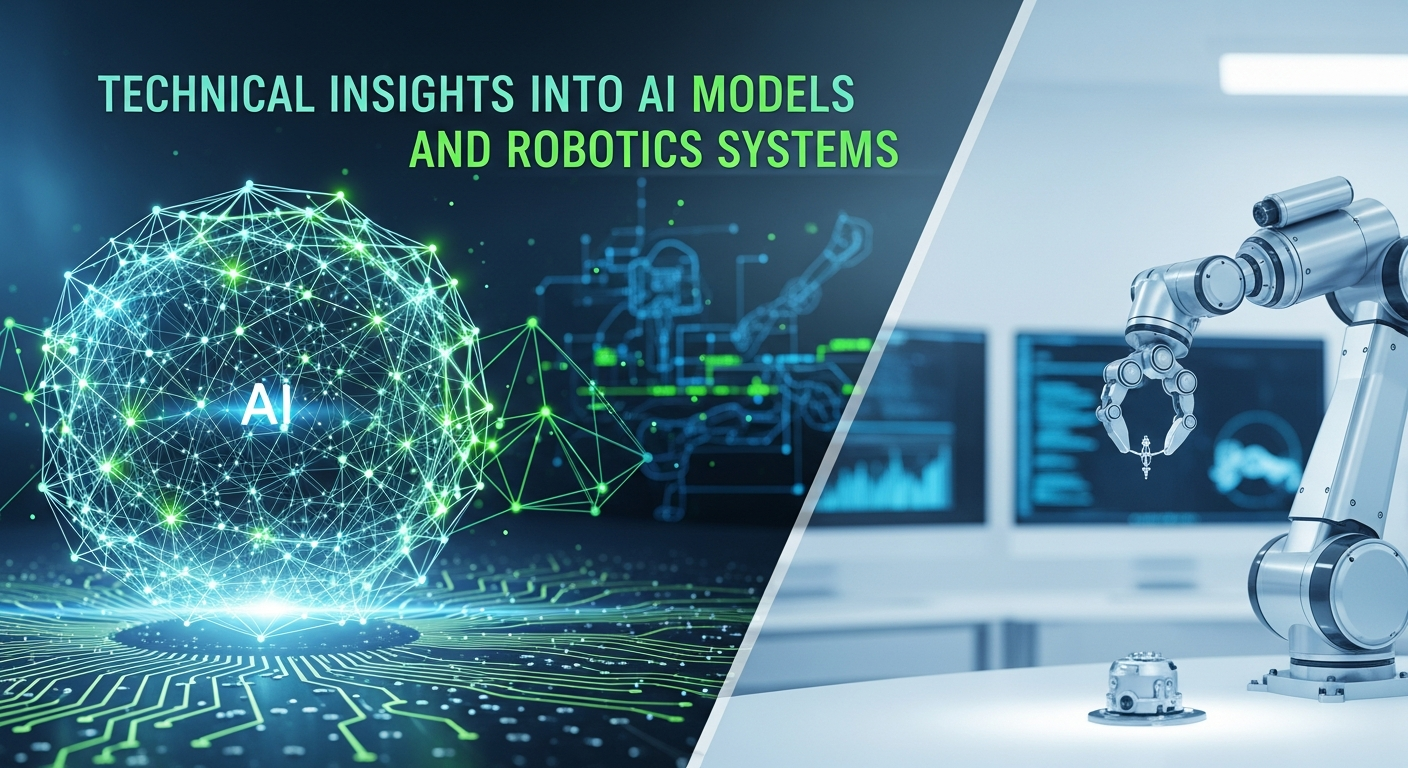
Delve into the technical structure, and you find AI chips are at the heart of sophisticated robotics systems that mimic human intelligence. These chips enable advanced AI models to run deeply nested algorithms at lightning speeds. Take, for example, the sophisticated convolutional neural networks (CNNs) that power image and speech recognition software. By deploying chips with Tensor Cores—as seen in NVIDIA’s latest releases—these models achieve unparalleled performance metrics.
NVIDIA’s Drive platforms are exemplary; these clever systems integrate AI models robustly with peripherals like sensors and actuators, culminating in highly autonomous robotics systems. Deep learning—a method allowing software to learn from data—is optimized by NVIDIA’s neural networks trained on large-scale, labeled datasets. Stanford AI Lab’s research frequently highlights how NVIDIA technology assists in training models that require immense computational power, showcasing NVIDIA’s technological might in practical scenarios.
Market Analysis: Growth and Economic Impact

The AI chip market is not just on an upswing, it’s seeing a tidal wave of growth, consistently outlined by reports from McKinsey & Company. This surge is powered by considerable investments from both public and private sectors, as stakeholders recognize the potential for significant economic impact. In 2026, projections indicate this market could surpass $70 billion, doubling the figures from just a few years prior.
NVIDIA’s strategic partnerships and acquisitions have ensured its robust market leader position. Recent collaborations with tech giants like Tesla and Google DeepMind highlight not just market growth but adaptation to a landscape that’s continuously evolving. Invested heavily in research and development, NVIDIA consistently beats estimates, both in performance metrics and market expectations.
Challenges and Limitations Facing AI Chips

However, it’s not all smooth sailing. AI chips face various hurdles, from technical constraints to ethical quandaries. Current AI systems can falter under ‘edge cases’—situations that lie outside normal operating conditions. Imagine a self-driving car interpreting a plastic bag on the road as something of significance, or an industrial robot misidentifying parts on an assembly line. Such errors, although decreasing, are key areas for improvement.
There are also constraints related to power consumption and heat generation which, despite monumental progress, remain challenges in scaling AI chip architectures. Meanwhile, the ethical implications of AI’s capabilities spur heated debates. As Thomas Huynh says, ‘It’s like giving your toddler a toy and then worrying they might stay up all night playing with it.’
Future Predictions and Long-term Vision

So, what does the future hold for AI chips and NVIDIA’s role in it? Expect a wave of innovation in edge computing—bringing low-latency AI operations closer to end users. NVIDIA is already moving in this direction with systems like Jetson, bringing real-time AI to autonomous applications even in bandwidth-limited settings.
Over the next 3-5 years, enhancements in quantum computing are predicted to complement and potentially revolutionize current chip technologies. The cross-pollination of AI chips with quantum capabilities could catapult robotics into a realm of possibilities that today feels like science fiction.
Long-term, the vision involves significant advancements in artificial general intelligence (AGI) that may complete specialized tasks with human-like cognition. While it’s a goal riddled with challenges, the potential advancements are both exciting and slightly daunting.
Strategic Insights: Preparing for the Future

Naturally, businesses, developers, and users must position themselves strategically for these advancements. For companies, investing in AI infrastructure now could yield a decisive competitive advantage. Developers need to hone skills in AI specialization to bridge the knowledge gap and harness maximum capability from cutting-edge hardware such as NVIDIA’s chips.
Working hand-in-hand with educating users ensures that technology does not alienate but empowers. ‘The magic lies in demystifying complexity,’ as Thomas Huynh often remarks, witnessing how engagement and education can transform futuristic concepts into mainstream realities.
So where does this leave us? NVIDIA’s dominance in AI chips is only one chapter of a much larger story unfolding in the world of robotics and artificial intelligence. As these technologies continue to evolve at lightning speed, the opportunities for innovation are virtually endless, yet not without a fair share of challenges.
What should we really pay attention to? It’s the ongoing narrative of human ingenuity meeting machines’ potential. Collaboration between industries, academia, and public sectors will be crucial in steering this momentum toward creating a future where AI truly serves humanity to its fullest potential.
Whether you’re a tech enthusiast, a business leader, or someone just curious about the digital frontier, the journey of AI chips—and NVIDIA’s critical role in it—is a fascinating story for the ages.
Thomas Huynh – Admin of RoboZone.top
References & Further Reading:
- MIT Technology Review — https://www.technologyreview.com
- IEEE Spectrum — https://spectrum.ieee.org
- McKinsey & Company — https://www.mckinsey.com
- Stanford AI Lab — https://ai.stanford.edu
- Harvard Business Review — https://hbr.org
- NVIDIA Blogs — https://blogs.nvidia.com
- International Federation of Robotics — https://ifr.org
- World Economic Forum — https://www.weforum.org