
This morning, before sitting down to write, I watched a robot vacuum quietly trace its way across a living room floor. It moved with a kind of casual confidence—pausing briefly at a chair leg, recalculating, then continuing forward without hesitation. No drama, no noise, no human intervention.

Ten years ago, that same scene would have felt futuristic.
Today, it barely registers.
And that, in a strange way, is the most important signal we have about where home robotics really stands in 2026. Not in the flashy demos. Not in the humanoid prototypes. But in the quiet normalization of machines doing small, useful things—consistently.
But here’s the part most people misunderstand.
Home robots are not “almost human.”
They are not about to replace your daily routine.
And despite what marketing videos might suggest, they are still far from becoming general-purpose assistants.
Yet.
Because when you look closely—really closely—you begin to see something more interesting.
They are improving in very specific, very meaningful ways.
The Reality Behind the Hype
If you’ve spent any time browsing tech headlines, you’ve probably seen the same narrative repeated over and over again.
“Robots are coming into our homes.”
“Humanoid assistants are just around the corner.”
“AI will handle your daily life.”
It sounds exciting.
But when you step into an actual home in 2026, the reality is far more grounded.

Most households that use robots today rely on a handful of very specific devices:
Robot vacuums.
Robot mops.
Lawn-mowing robots.
And, increasingly, smart home assistants that blur the line between software and physical automation.
These systems are useful—but they are narrow.
They are designed to do one thing well, not everything.
And that distinction matters.
Why Specialized Robots Still Dominate the Home
There’s a reason why robot vacuums have succeeded where more ambitious machines have struggled.
Cleaning floors is a well-defined problem.
The environment is relatively predictable.
The task can be broken down into repeatable actions.
And the consequences of failure are low.
If a robot misses a spot, it’s not a disaster.
This makes it an ideal entry point for robotics.

Companies like iRobot built their entire business around this concept. Over time, their products evolved from random movement patterns to highly intelligent navigation systems using cameras, sensors, and AI.
Today’s models can map entire homes, remember layouts, and optimize cleaning paths.
They don’t just move.
They understand space—at least within a limited context.

The Quiet Evolution of Navigation and Perception
What’s happening under the surface of these devices is where things get interesting.
Modern home robots rely heavily on perception systems—combinations of cameras, lidar, and AI models that allow them to interpret their surroundings.
This is the same foundational technology being developed in more advanced robotics fields.
Research from Massachusetts Institute of Technology and Stanford University has contributed to breakthroughs in computer vision and spatial understanding, many of which eventually make their way into consumer products.

Your robot vacuum may not look like cutting-edge AI.
But in many cases, it’s running simplified versions of the same technologies used in autonomous vehicles and industrial robots.
That’s the hidden story of home robotics.
Progress doesn’t arrive all at once.
It trickles down.
What Home Robots Can Actually Do in 2026
So let’s step away from marketing language and talk about reality.

What can home robots genuinely do today?
They can navigate structured environments with increasing reliability.
They can perform repetitive tasks like vacuuming and mopping with minimal supervision.
They can integrate with smart home systems to automate routines.
And in some cases, they can learn basic patterns—like which areas of your home require more frequent cleaning.
These capabilities may sound modest.
But they represent years of incremental improvement.
And more importantly, they are consistent.
Consistency is what turns a novelty into a product.
Where Things Still Break Down
Now let’s talk about the part that often gets glossed over.
Home robots still struggle with unpredictability.
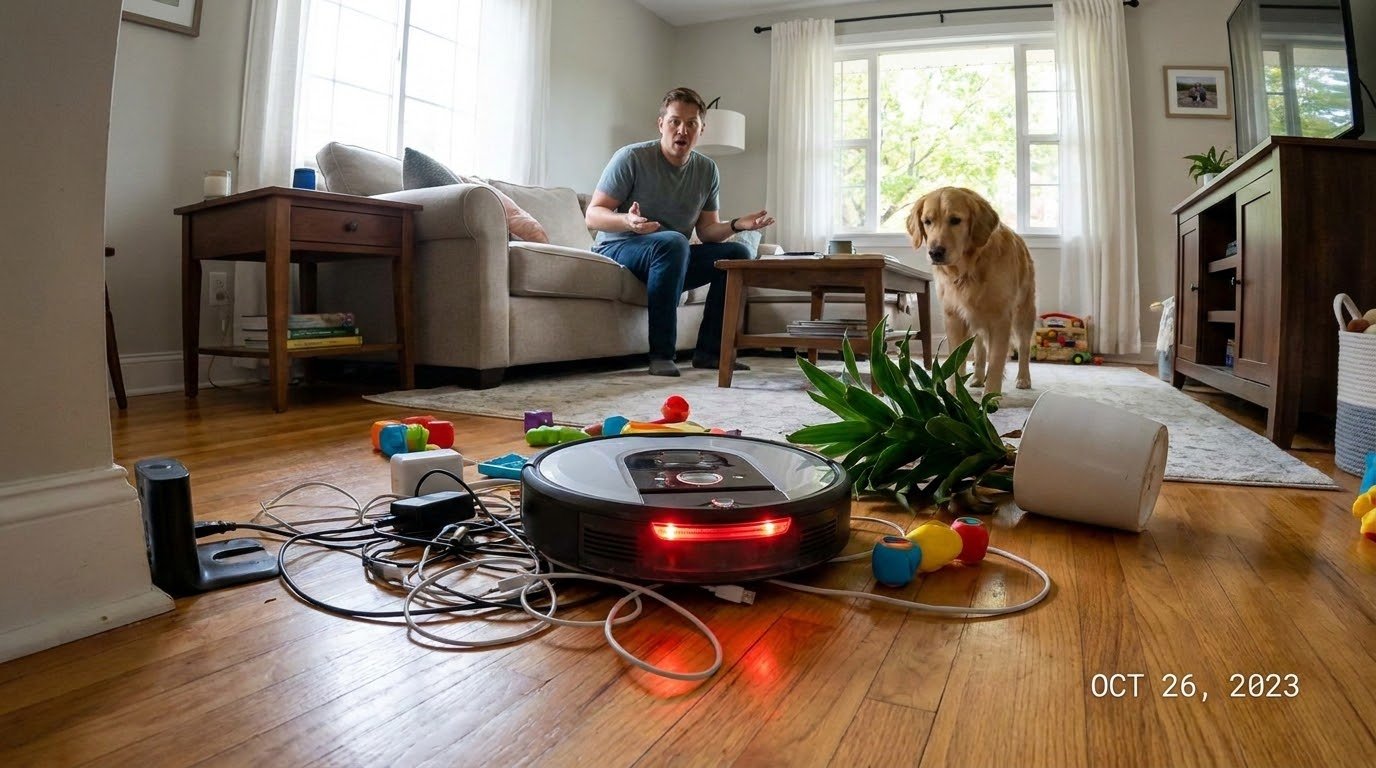
A cluttered floor.
Loose cables.
Unexpected obstacles.
Changes in lighting conditions.
These may seem like minor inconveniences, but for a robot, they can be significant challenges.
Even advanced systems occasionally get stuck, misinterpret objects, or require human intervention.
And then there’s manipulation—the ability to interact with objects beyond simple contact.
This is where home robotics hits a wall.
Picking up a sock from the floor sounds simple.
But from an engineering perspective, it’s incredibly complex.
The robot must recognize the object, understand its shape, adjust its grip, and execute the movement without causing damage or failure.
That’s why most home robots today avoid this problem entirely.
They clean around objects rather than interacting with them.
The Humanoid Promise – And Its Limits
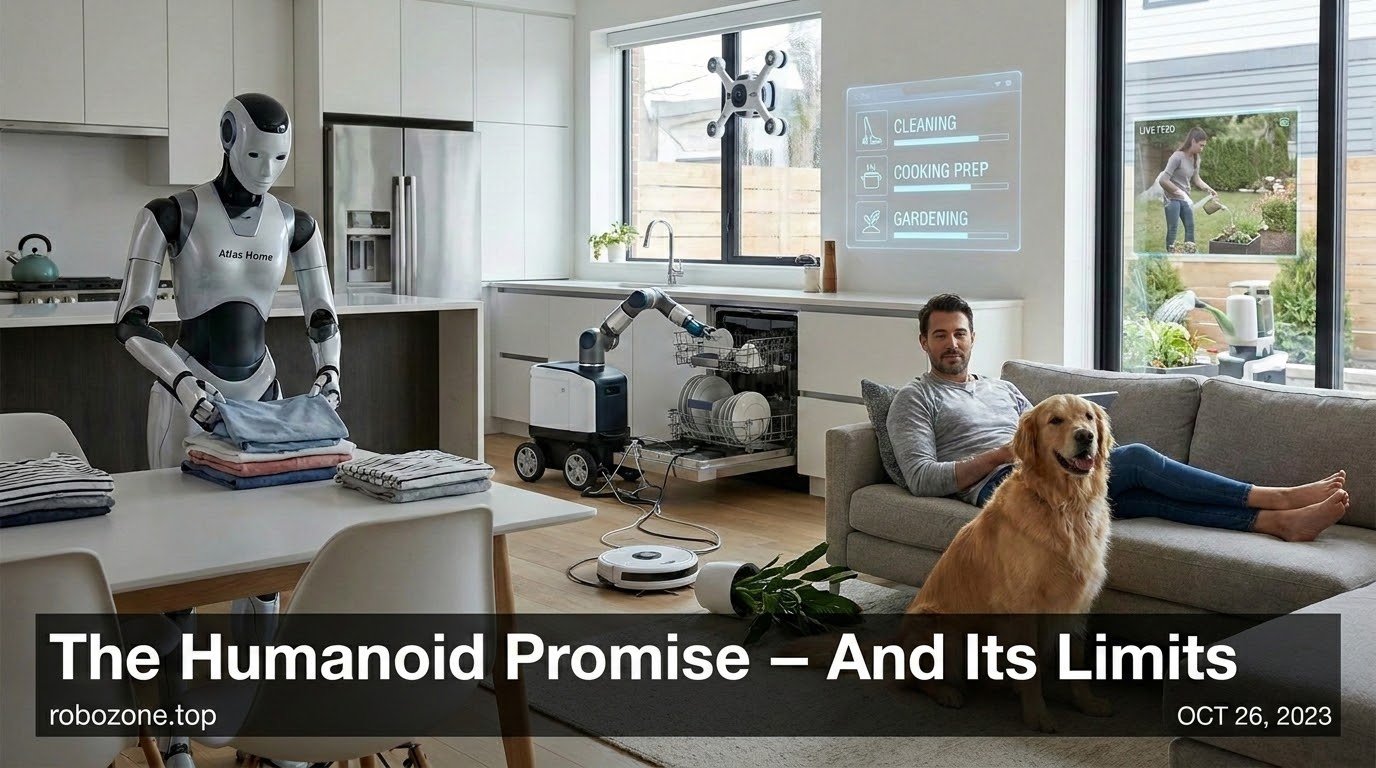
This brings us to one of the most talked-about topics in robotics: humanoid home assistants.
Companies like Tesla and emerging startups such as Figure AI are working on robots that resemble human beings—machines designed to operate in human environments without requiring infrastructure changes.
The idea is compelling.
A single robot that can clean, cook, organize, and assist with daily tasks.
But here’s the reality.
We are not there yet.
Not even close.
Humanoid robots face multiple challenges simultaneously:
Mobility in complex environments.
Dexterity for object manipulation.
Perception in dynamic settings.
And the integration of all these systems into a reliable product.
Each of these problems is difficult on its own.
Combined, they represent one of the hardest challenges in modern engineering.
The Role of AI and Computing Power
Behind all of this progress—and all of these limitations—is a common factor: computation.

Modern robotics depends heavily on AI models that require significant processing power.
This is where companies like NVIDIA come into play.
Their GPUs are used to train the models that power perception, navigation, and decision-making in robotic systems.
Their platforms enable simulation environments where robots can learn tasks before entering the real world.
Without this computational backbone, the current wave of robotics innovation would not be possible.
And as computing power continues to increase, so will the capabilities of home robots.
The Economics of Home Robotics
Another factor shaping the evolution of home robots is cost.
Advanced robotics is expensive.
Sensors, processors, and mechanical components all add to the price.

That’s why most consumer robots today focus on specific tasks.
It’s easier to build an affordable device that does one thing well than to create a general-purpose machine.
But this is likely to change over time.
As production scales and technology matures, costs will decrease.
Capabilities will increase.
And the gap between specialized devices and general-purpose robots will begin to narrow.
A Glimpse Into the Near Future
So what might the next three to five years look like?
Home robots will become more integrated with smart home ecosystems.
They will communicate with other devices, share data, and coordinate tasks.
Perception systems will improve, allowing robots to handle more complex environments.
Basic manipulation capabilities may begin to appear in consumer products.

And perhaps most interestingly, robots may start to take on roles beyond cleaning.
Imagine a robot that can:
Carry objects between rooms.
Assist elderly residents with daily tasks.
Monitor home security in real time.
Adapt to your routines without explicit programming.
These are not far-fetched ideas.
They are logical extensions of the technologies being developed today.
So where does that leave us?
If you were expecting a revolution overnight, you might feel disappointed.
But if you look closely, the trajectory becomes clear.
Home robots are not arriving all at once.
They are evolving.
Quietly.
Incrementally.
And in ways that are easy to overlook until suddenly they become indispensable.
The robot vacuum that once felt like a novelty is now a standard appliance in many homes.
The robot vacuum muti feature

The next generation of devices may follow the same path.
Not as dramatic breakthroughs.
But as steady improvements that gradually reshape how we live.
So what should you actually pay attention to?
Not the flashy demos.
Not the viral videos.
But the small, consistent upgrades.
Better navigation.
Smarter perception.
More reliable performance.
Because those are the signals that matter.
That’s where real progress happens.
And if history is any guide, the future of home robotics won’t arrive with a single groundbreaking product.
It will arrive piece by piece—until one day, you look around your home and realize that machines are quietly handling tasks you once did yourself.
And it all happened without you noticing.

References
MIT Technology Review — https://www.technologyreview.com
Stanford AI Lab — https://ai.stanford.edu
iRobot Technology — https://www.irobot.com
International Federation of Robotics — https://ifr.org
Thomas Huynh – Admin of RoboZone.top