Hello everyone, today is Saturday, December 20, 2025.
A few days before Christmas, houses start to feel different. There’s more movement, more mess, more things happening at once. This morning, while watching a home robot finish its routine and quietly roll back to its charging dock, I caught myself thinking about something that almost never appears in product reviews.
We often ask whether a robot cleans well enough.
We rarely ask what happens after the cleaning is no longer our responsibility.
That question opens a much deeper conversation.
Why Home Robots Are Better Understood as Economic Actors, Not Gadgets
From an economic standpoint, a home robot is not a “smart appliance.” It is a replacement for a category of labor that used to belong to humans. That alone puts it in a very different class of technology.
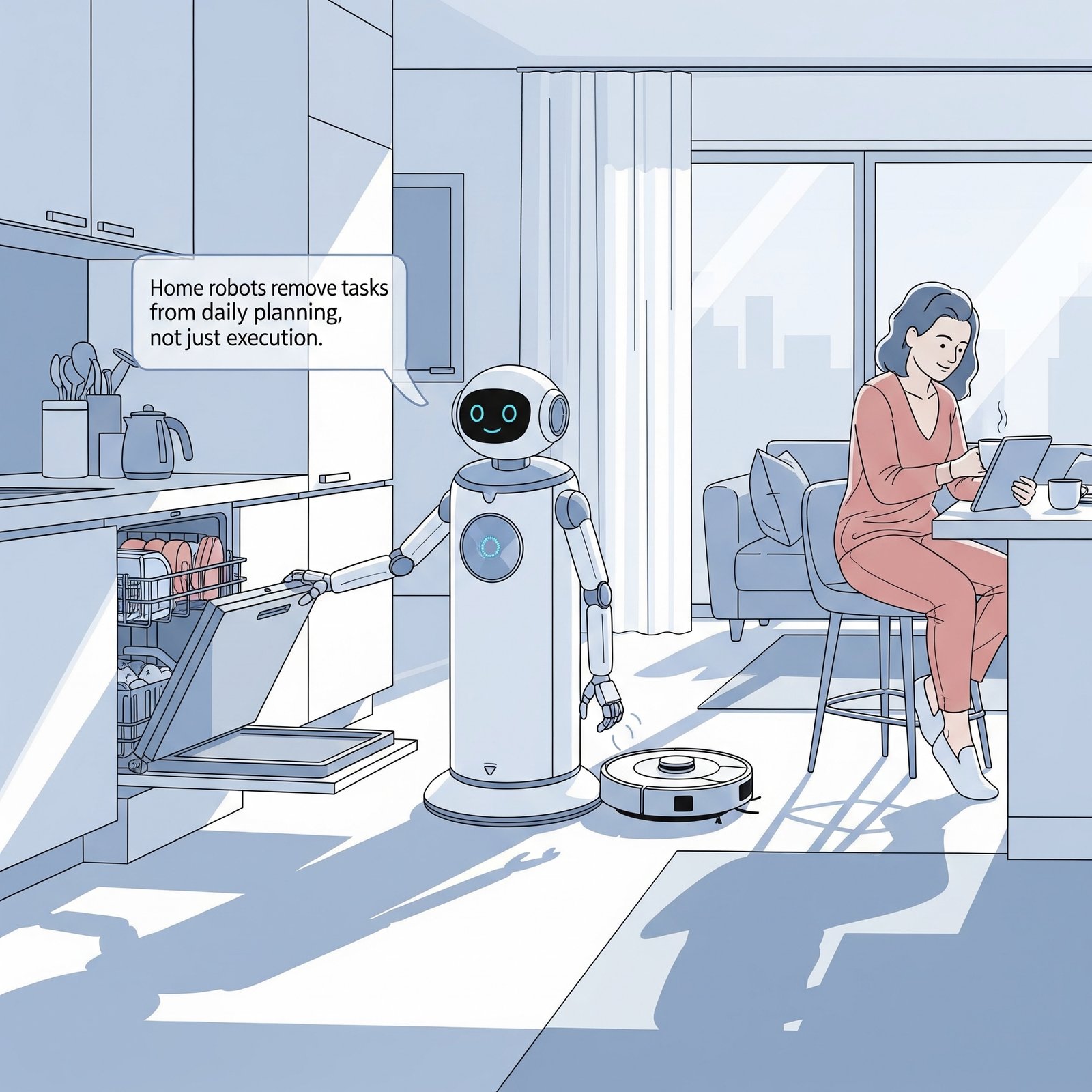
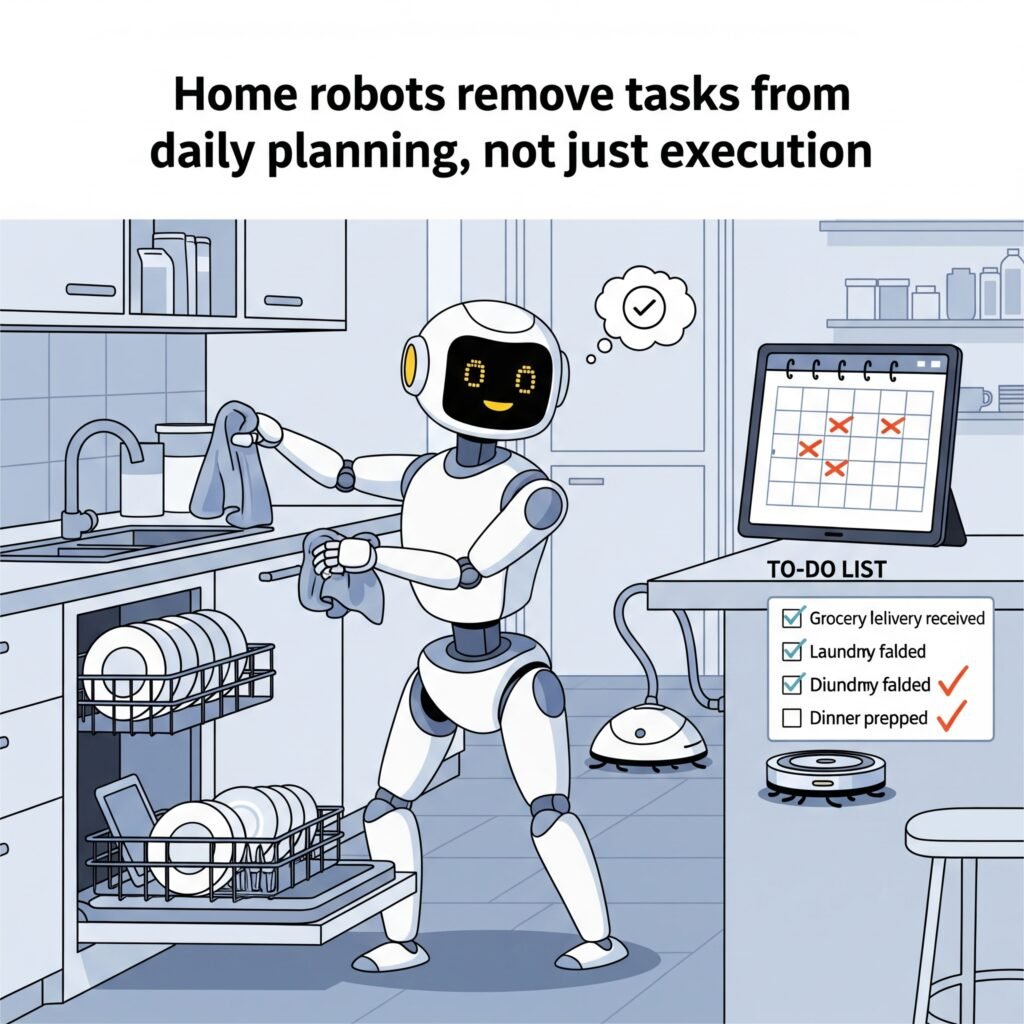
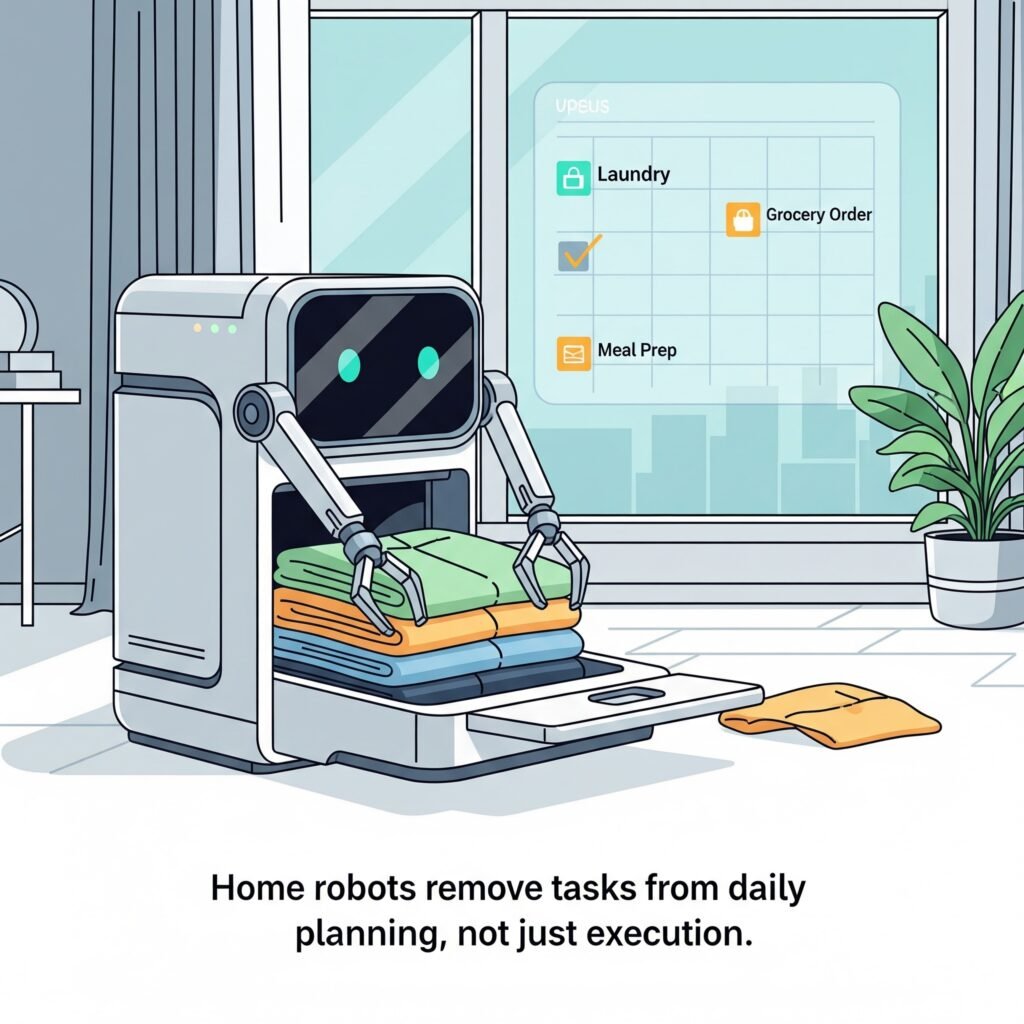
When a dishwasher became common, it didn’t just save time — it permanently removed a task from daily planning. Home robots are doing the same thing, but across a broader set of activities.
According to market data summarized by the International Federation of Robotics, households that adopt service robots rarely revert back to manual alternatives. The reason is not performance perfection. It’s behavioral adaptation.
Once a task disappears from your mental checklist, you stop budgeting time for it entirely.
That’s an economic shift at the household level.
Why Time Saved by Robots Feels Fundamentally Different
MIT Technology Review has repeatedly pointed out an important distinction between digital automation and physical automation. Software saves minutes. Robots save effort.
This matters because effort carries emotional weight. Cleaning a floor is not just time-consuming — it’s mentally taxing. Removing that effort changes how people experience their day.
Interestingly, research into human-robot interaction suggests that people don’t always “use” the saved time productively. Some rest. Some pause. Some do nothing. And that’s not inefficiency — it’s recalibration.
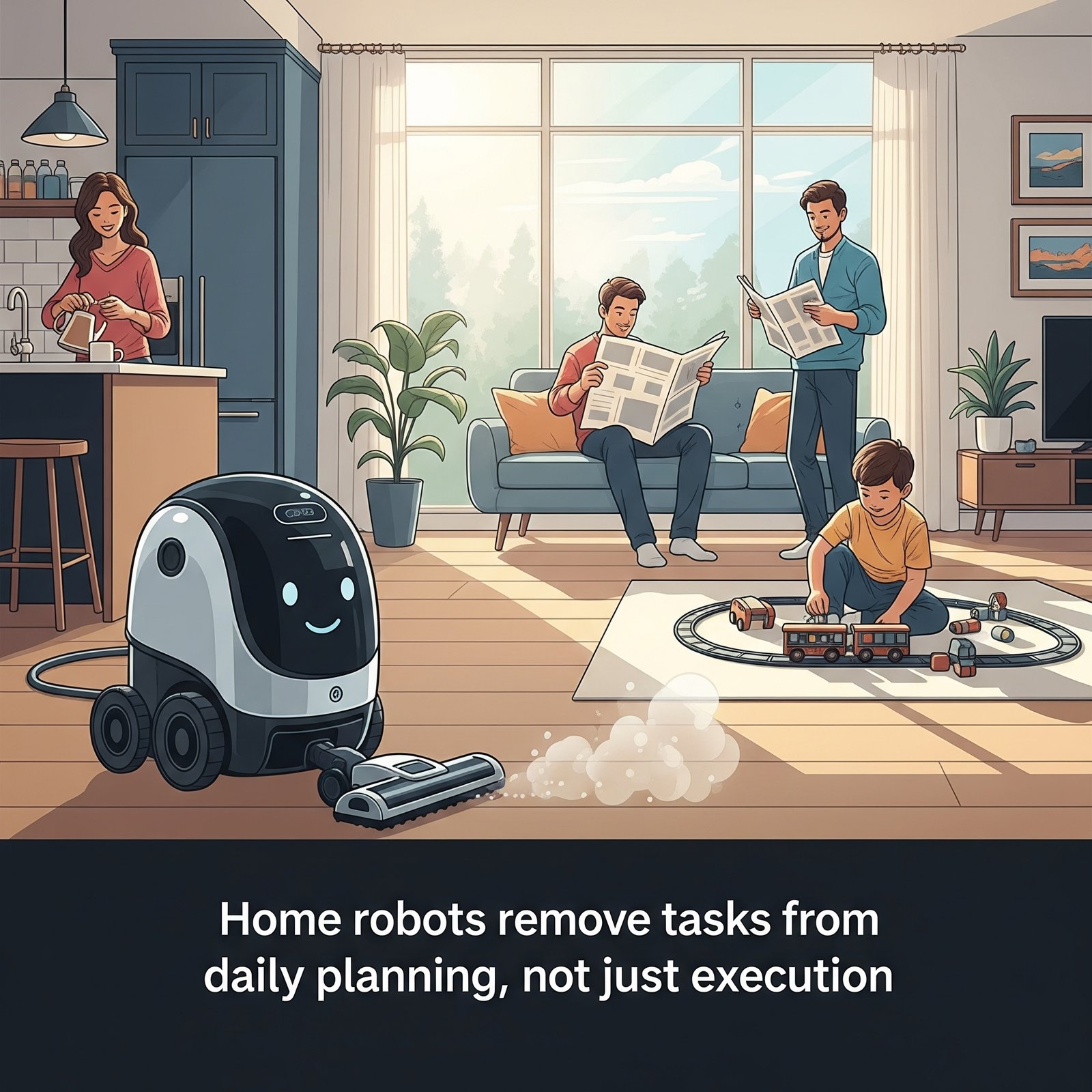
In other words, home robots don’t make people more productive immediately. They make life feel less compressed. Productivity follows later, if at all.
Learning From Boston Dynamics: Reliability Always Beats Features
To understand why home robots evolve slowly, it’s worth looking at companies like Boston Dynamics. Their robots are famous not because they do many things, but because they recover from failure better than almost anything else on the market Smart Home Robots.
That philosophy is quietly influencing consumer robotics. IEEE Spectrum has discussed how the next generation of home robots will prioritize balance, object recovery, and safe failure over flashy autonomy.
A robot that can lift more objects is impressive. A robot that knows when not to lift something is far more valuable.
This design mindset suggests where home robots are heading next.
What Home Robots Will Likely Do in the Next 3–5 Years
Based on current research trajectories and manufacturer roadmaps, several developments feel increasingly plausible.
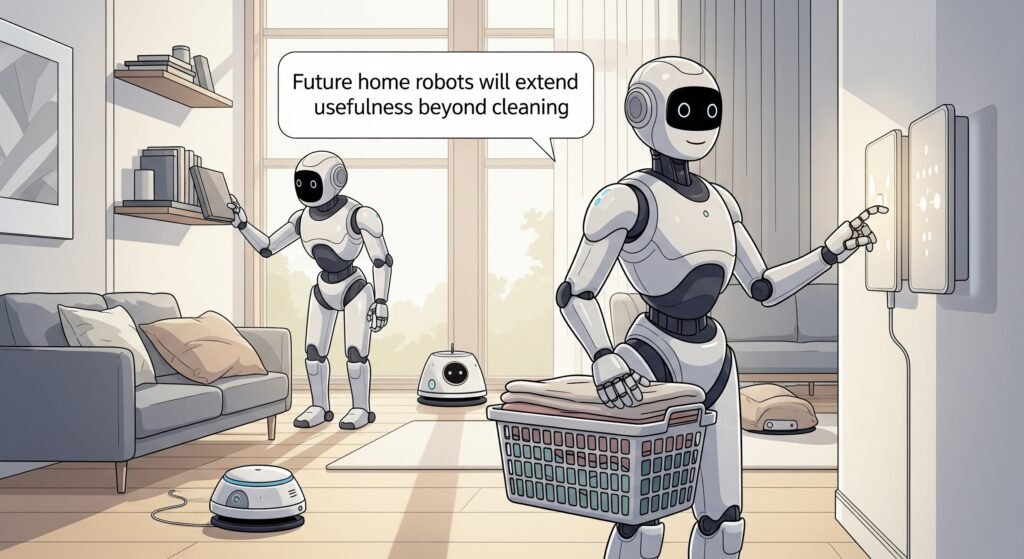
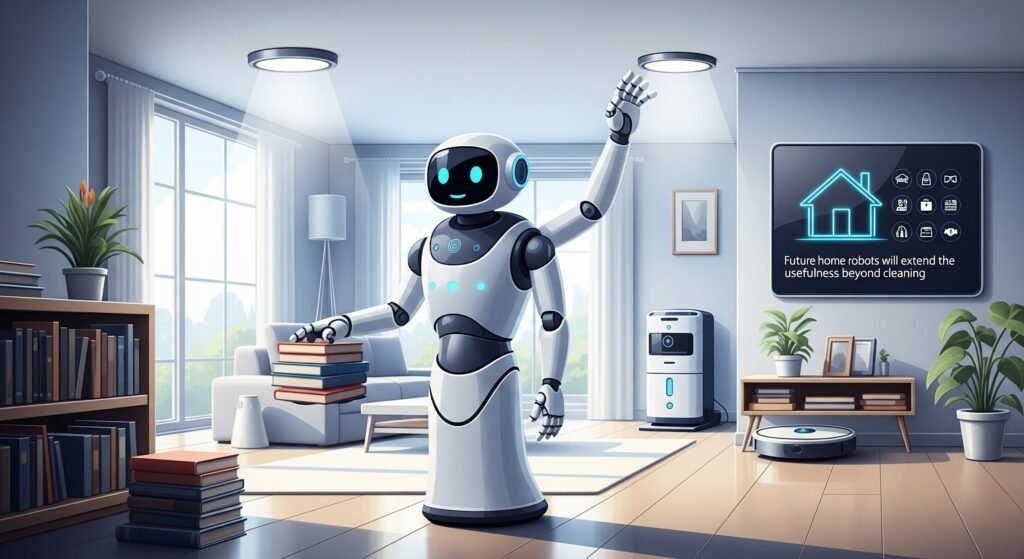
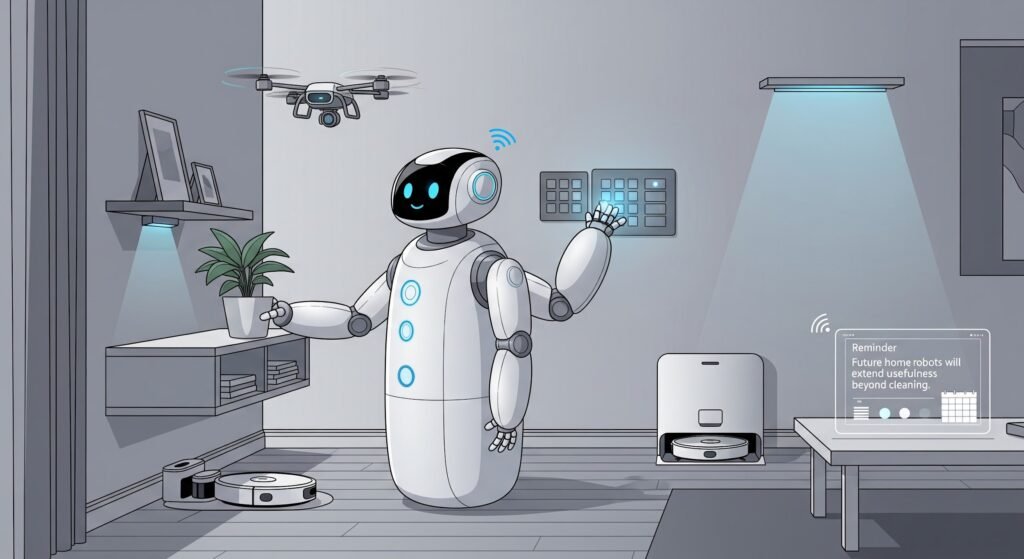
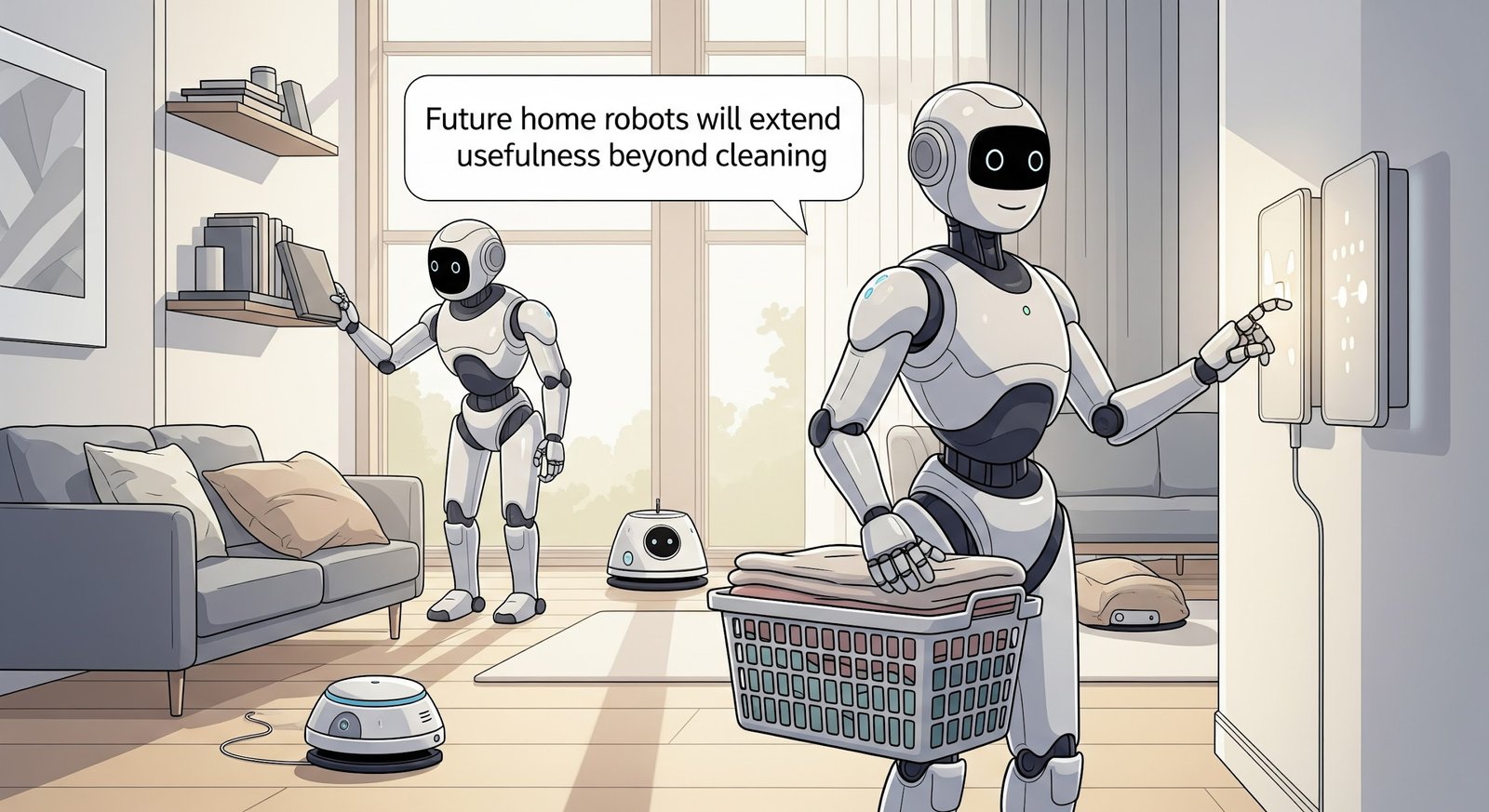
Home robots will likely begin integrating secondary functions that don’t look revolutionary on paper, but matter enormously in daily life. Mobile lighting for night navigation. Voice-linked sound playback that follows users through rooms. Basic object transport — groceries, laundry, tools — within predefined safety limits.
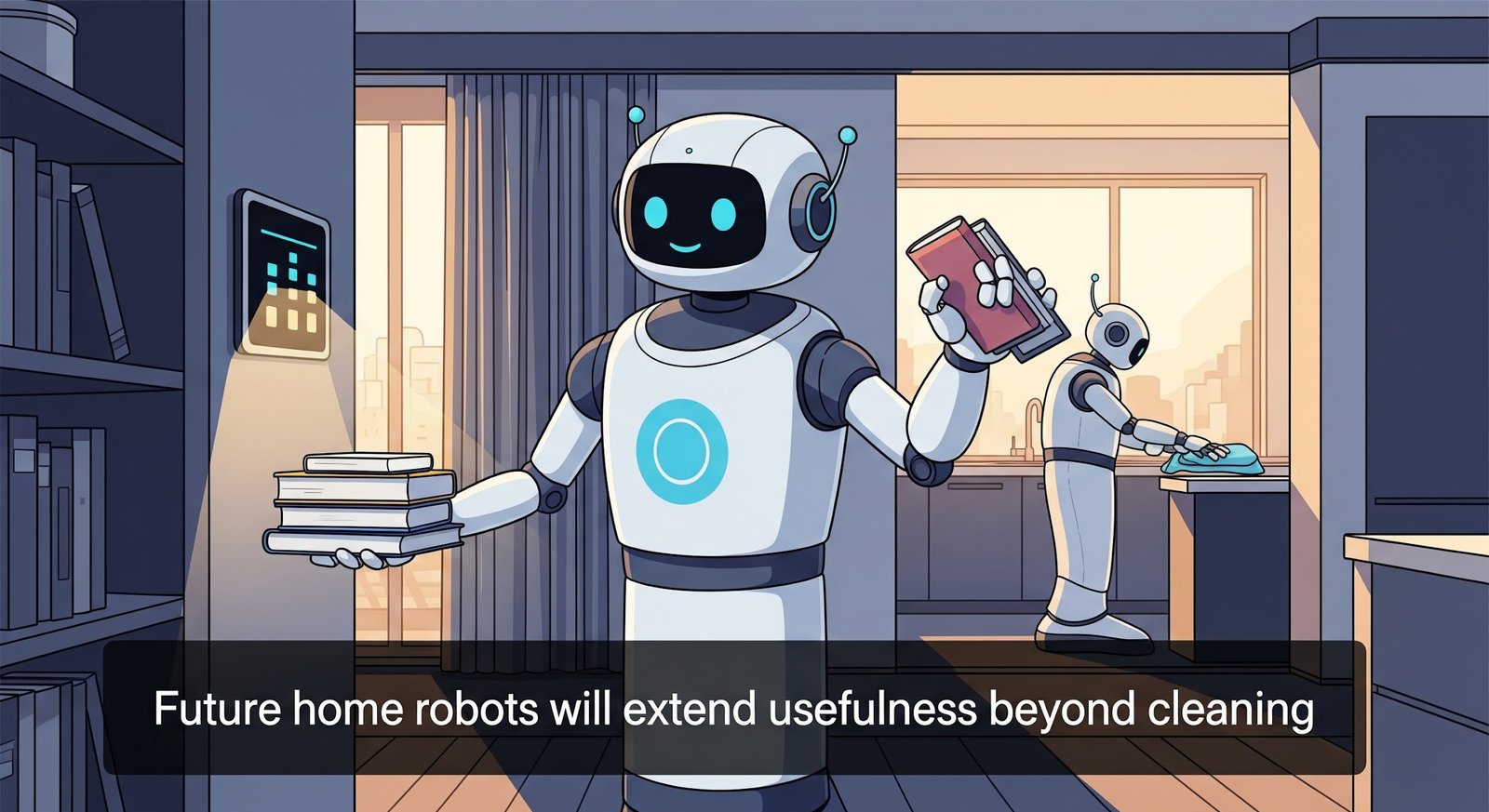
These additions won’t turn robots into humanoid assistants. Instead, they will make them spatially useful in ways static smart devices cannot match.
Over time, this will shift how people think about physical assistance at home. Not as “help,” but as infrastructure.
The Market Reality Behind These Changes
From a business perspective, this slow expansion makes sense. Consumer trust grows faster when expectations are conservative. Manufacturers are intentionally under-promising and over-delivering.
Market forecasts suggest steady growth rather than explosive adoption — a sign that home robotics is entering a stabilization phase similar to early smartphones before mass saturation.
The real value won’t come from selling robots faster. It will come from embedding them deeper into daily habits.
So Where Does This Leave Us?
If we zoom out, the real story of home robots isn’t about cleaning floors better. It’s about reshaping how households distribute effort, attention, and time.
The changes are subtle. They don’t announce themselves. But over years, not months, they accumulate into something transformative.
And perhaps that’s why home robotics feels slow — because it’s changing things that humans rarely notice until they’re already gone.
MIT Technology Review — Automation at Home and the Meaning of Effort
IEEE Spectrum — Why Reliability Matters More Than Intelligence in Robots
International Federation of Robotics — Service Robots and Household Adoption Trends
https://ifr.org/service-robots
Thomas Huynh – Admin of RoboZone.top