Hello everyone, today is Friday, December 19, 2025.
Friday mornings in mid-December always feel a little lighter. The weekend is close, Christmas is almost here, and for many people, work starts to slow down just enough to breathe. While skimming through robotics news and research updates for RoboZone.top this morning, I noticed a familiar pattern in reader emails again.
“AI is exploding everywhere. Why do home robots still feel like they’re moving so slowly?”
It’s an honest question — and one that reveals a misunderstanding about how robotics actually progresses.
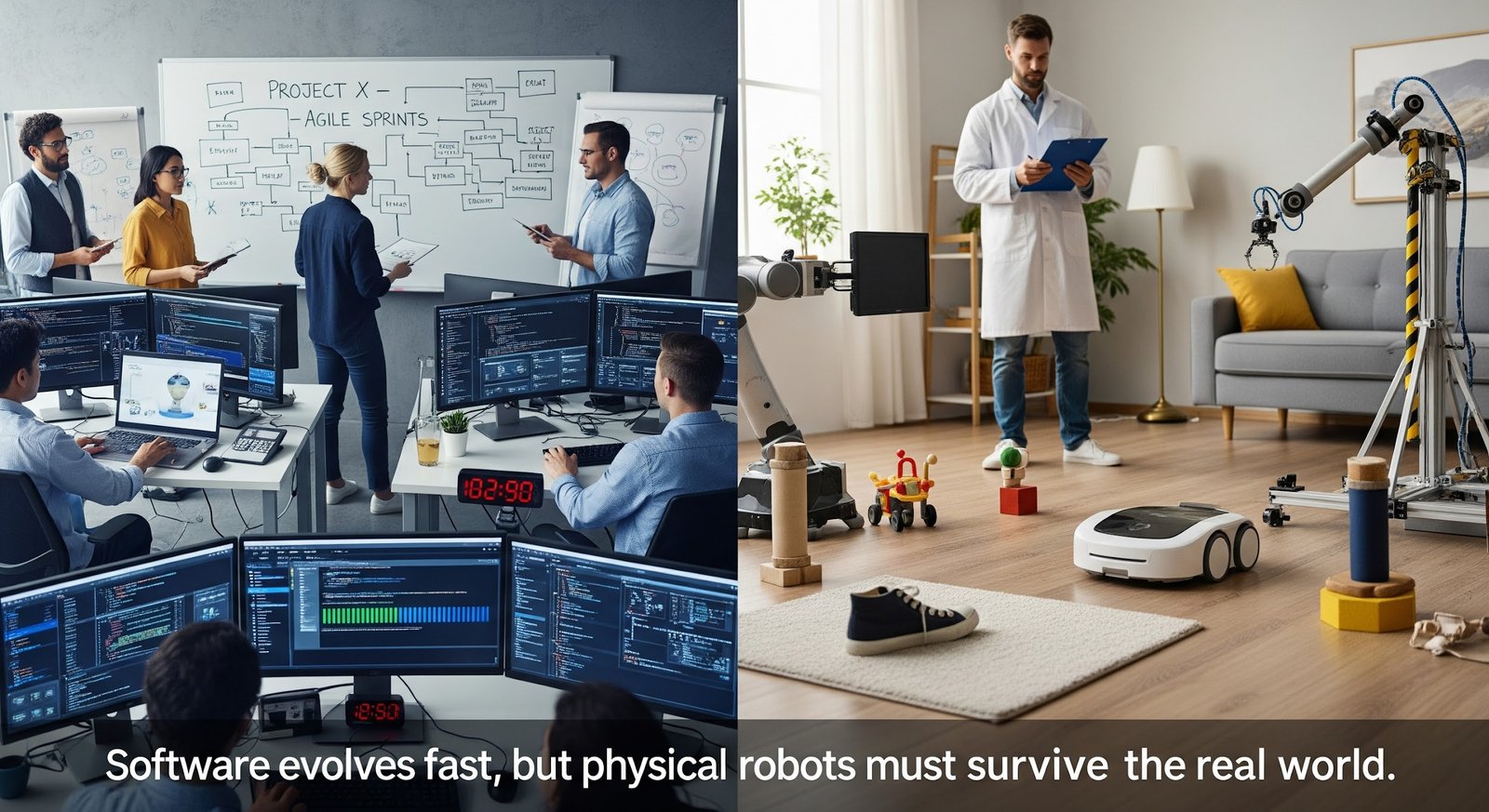
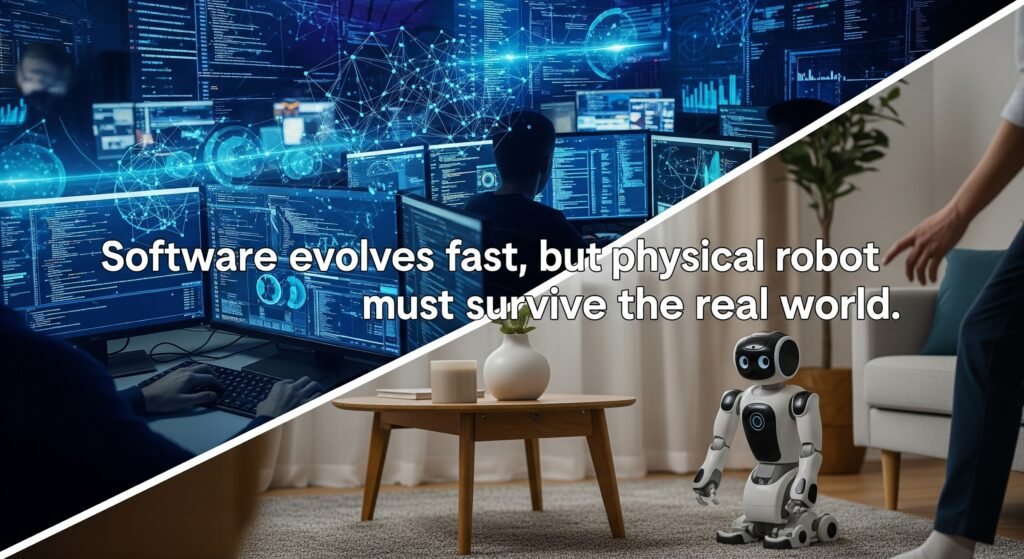
Software Can Move Fast, Physical Robots Cannot

AI software lives in a digital world. It can be trained overnight, updated instantly, and deployed globally with a single push. If something breaks, it’s usually fixed with a patch.
Robots don’t have that luxury.
Every improvement in home robotics must survive the physical world. Motors wear out. Sensors get dirty. Furniture moves. Pets interfere. Gravity never negotiates. What looks like a “small upgrade” in software often requires months of testing when it’s tied to real hardware.
As Thomas Huynh, admin of RoboZone.top, this is something I constantly remind readers when expectations start drifting toward science fiction. Robotics is not slow because engineers lack ideas. It’s slow because reality pushes back.

Why Every Home Is a Stress Test for Robots
In labs, robots perform beautifully. Controlled lighting. Clean floors. Predictable layouts. But once a robot enters a real home, it faces an endless series of micro-problems.
Uneven carpets. Reflective surfaces. Random objects on the floor. Each home becomes a unique environment that no dataset can fully predict.
This is why progress in home robotics often feels incremental. Engineers aren’t just improving performance. They’re trying to make robots fail gracefully. A robot that recovers from mistakes is far more valuable than one that never makes them — because mistakes are inevitable.
The Cost of Getting Robotics Wrong
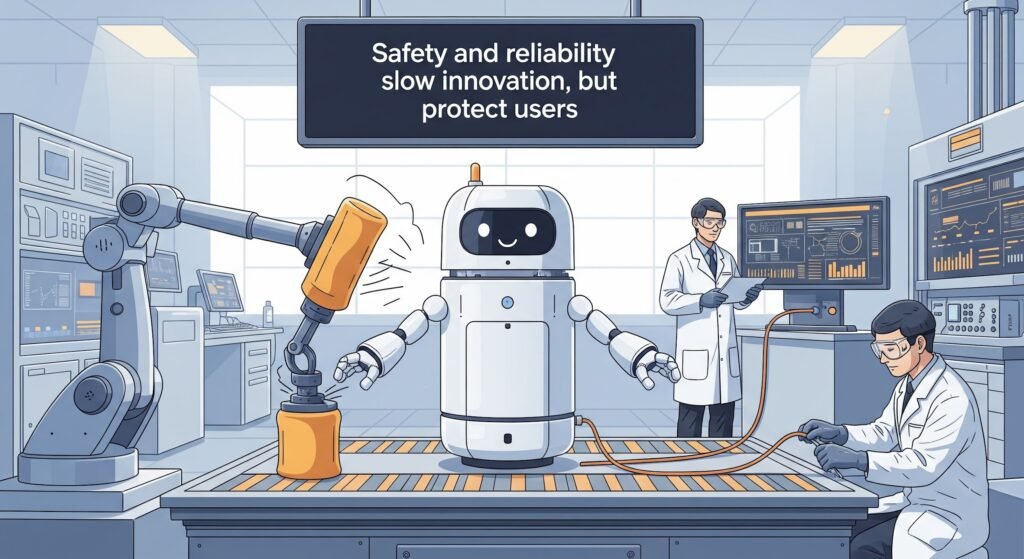
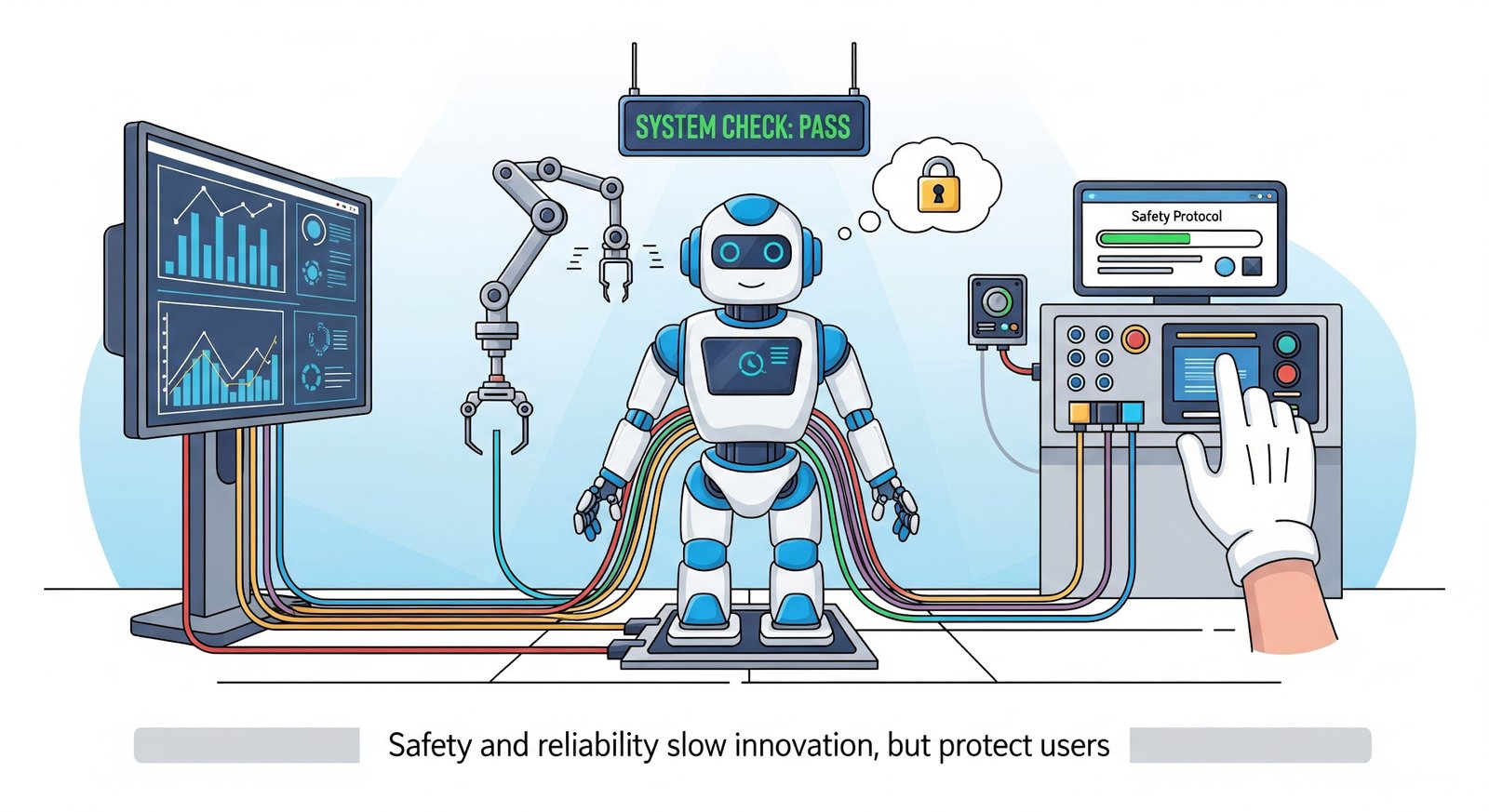
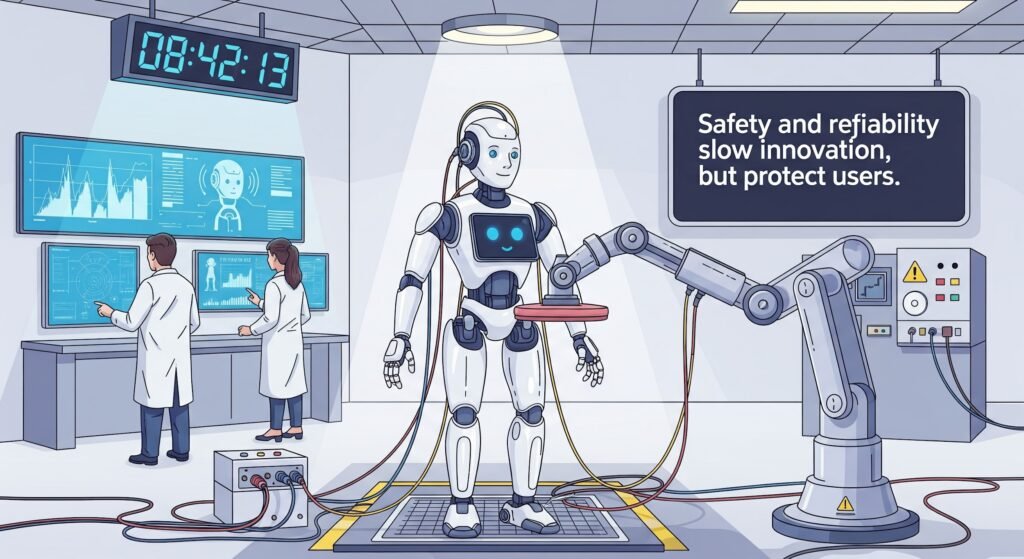
When software fails, users get annoyed. When robots fail physically, people can get hurt. That difference changes everything.
Safety regulations, liability concerns, and long testing cycles slow down innovation by necessity. Manufacturers are cautious because they have to be. A robot that moves incorrectly in a living room isn’t just a bug — it’s a risk.
This is one of the main reasons consumer robotics evolves more conservatively than AI software. Trust, once lost, is hard to rebuild.
Why “Slow Progress” Is Actually a Sign of Maturity
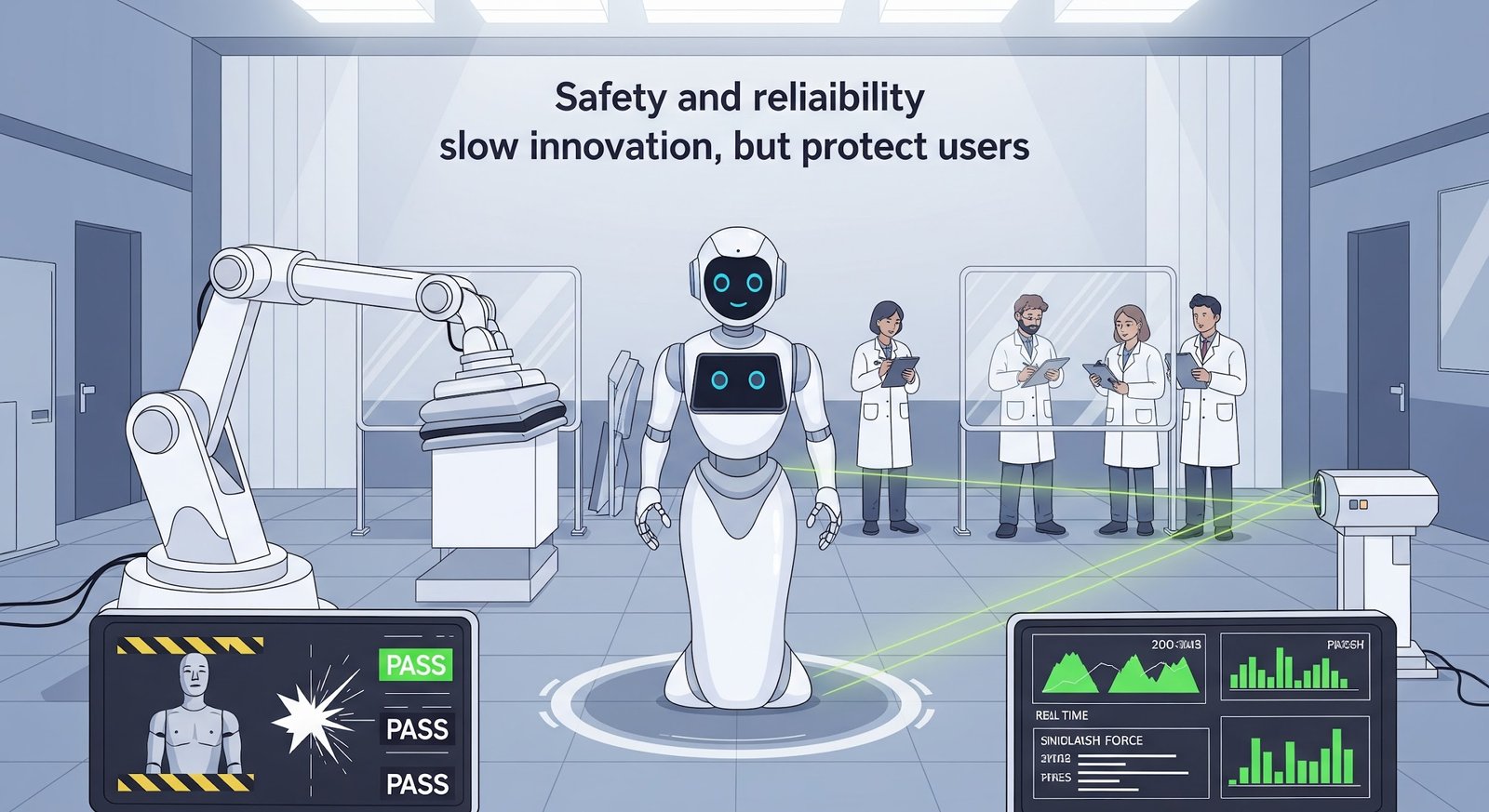
Paradoxically, the slower pace of home robotics may be a sign that the industry is growing up.
Early-stage technologies chase speed and novelty. Mature technologies prioritize reliability, safety, and user trust. Home robots are transitioning from exciting gadgets into household infrastructure — and infrastructure evolves carefully.
This shift doesn’t make headlines, but it builds long-term adoption.
So What Should We Expect Next?
Don’t expect dramatic breakthroughs overnight. Expect steady improvements. Quieter motors. Better navigation. Smarter integration with smart homes. Fewer failures that require human intervention.
The future of home robotics won’t arrive as a single moment. It will arrive quietly, one dependable update at a time.
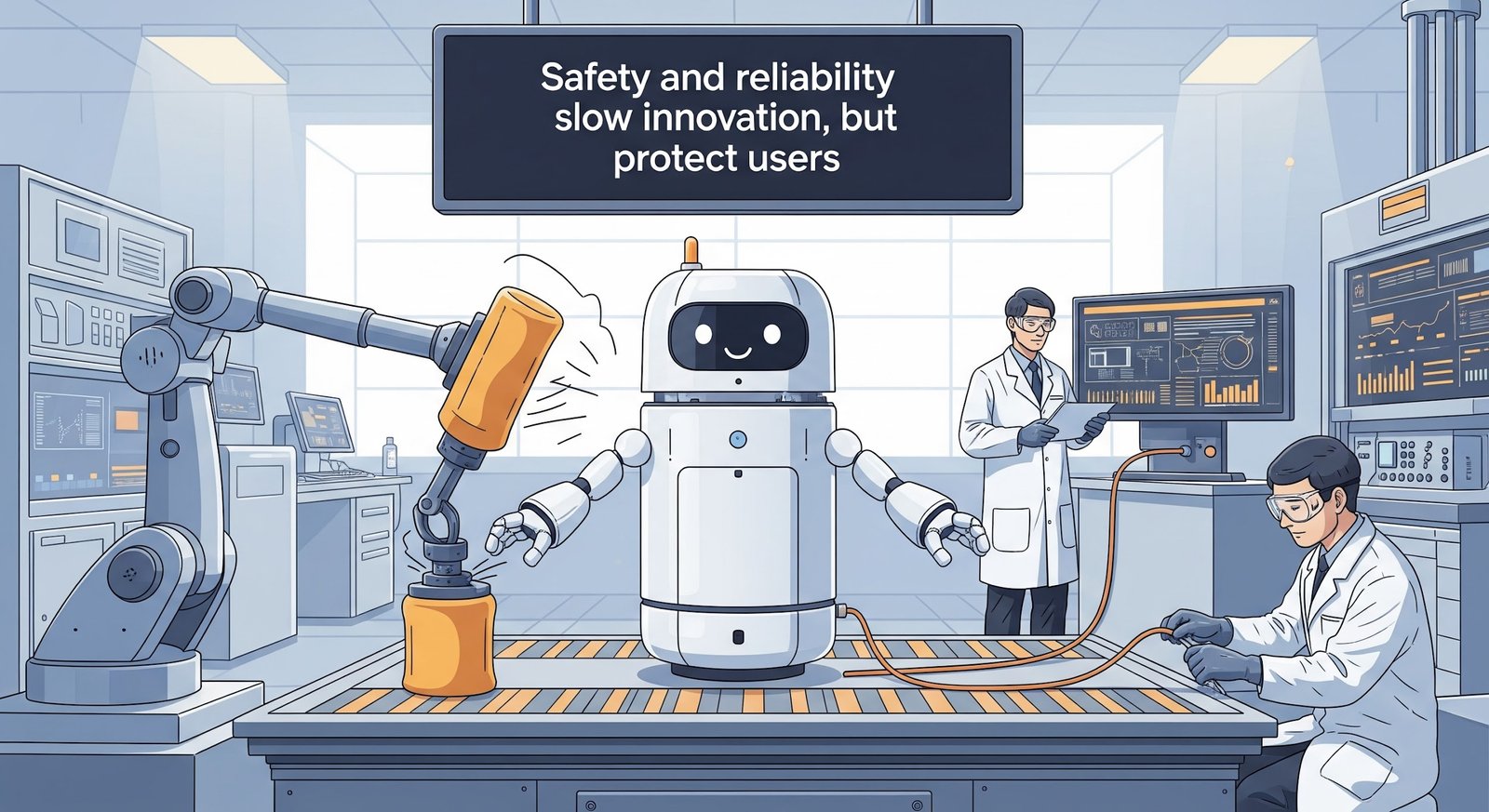
If there’s one thing worth keeping in mind as the year winds down, it’s this: slow progress in robotics doesn’t mean stagnation. It means engineers are taking reality seriously — and that’s exactly what you want when machines start sharing your living space.
MIT Technology: https://www.technologyreview.com/2021/10/19/1037510/ai-robotics-hardware-software-gap/
IEEE Spectrum: https://spectrum.ieee.org/why-robots-are-hard
Boston Dynamics: https://www.bostondynamics.com/blog/building-reliable-robots