Hello everyone, today is Monday, December 15, 2025.
December always feels a little different. The year is winding down, Christmas is just around the corner, and for some reason, the house always feels messier than usual. Maybe it’s because everyone’s home more. Or maybe it’s just that end-of-year fatigue quietly piling up.
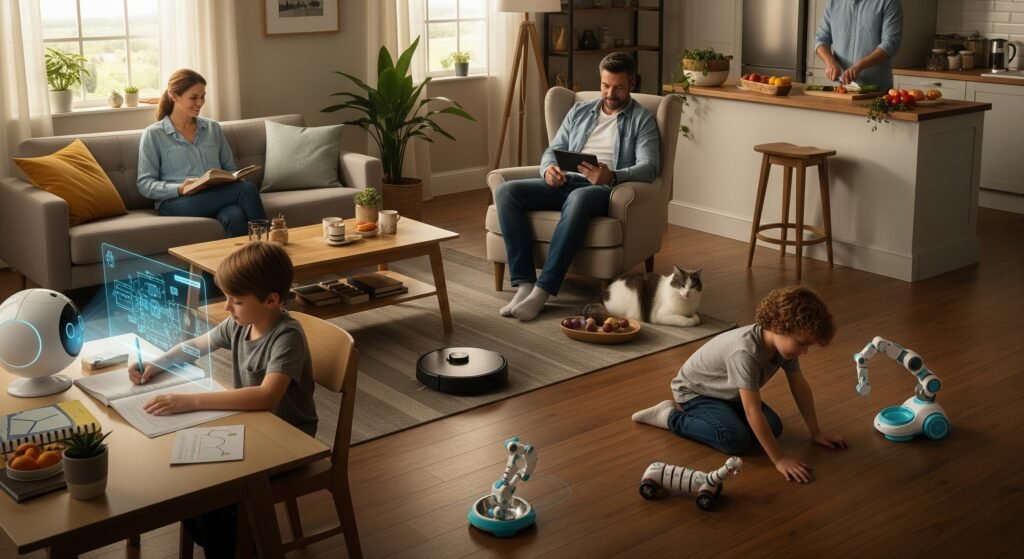
This morning, while watching my robot vacuum glide across the living room floor, I paused for a second. Not because it did something impressive, but because it didn’t. It just worked. Quietly. Efficiently. Almost invisibly.
As Thomas Huynh, admin of RoboZone.top, I spend a lot of time researching robots, testing them, and reading industry reports. And yet, moments like this still catch me off guard. Ten years ago, a machine freely roaming around your home would’ve sounded like a sci-fi fantasy. In 2025, it’s background noise while you make coffee.
And that’s exactly why smart home robots deserve a closer look.
How Home Robots Quietly Became Normal
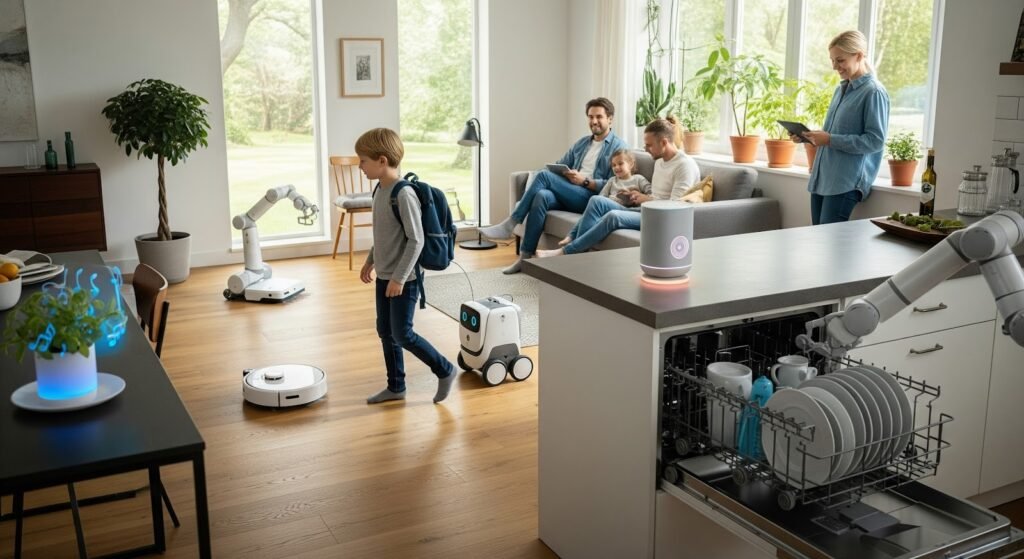
Smart home robots didn’t arrive with dramatic breakthroughs or bold promises. They arrived slowly, and honestly, a bit awkwardly. Early models were clumsy. They bumped into furniture, got stuck under sofas, and seemed to wander aimlessly, like they had no real sense of direction.
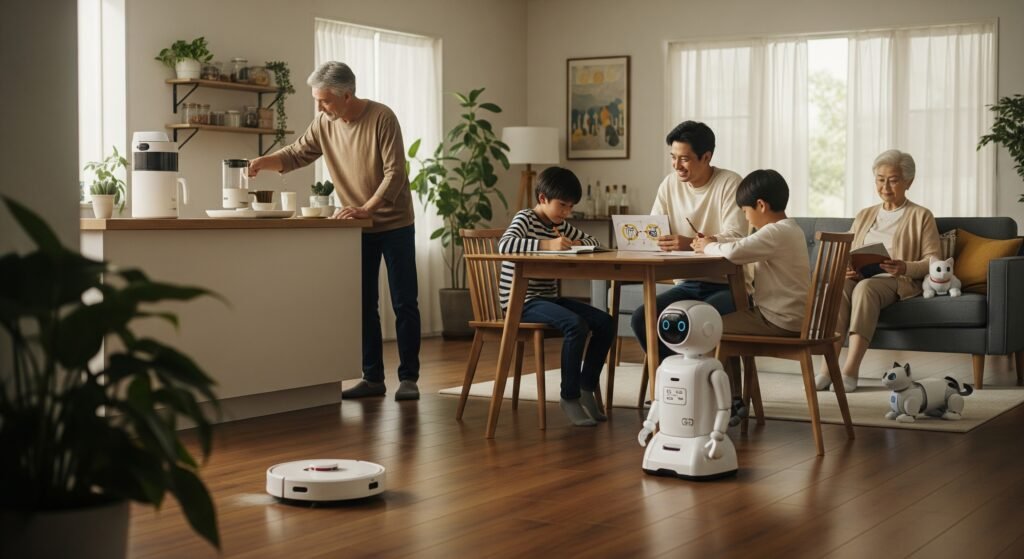
Still, people kept using them. Not because they were impressive, but because they solved one very real problem: repetitive household chores. Even a half-competent helper was better than none.
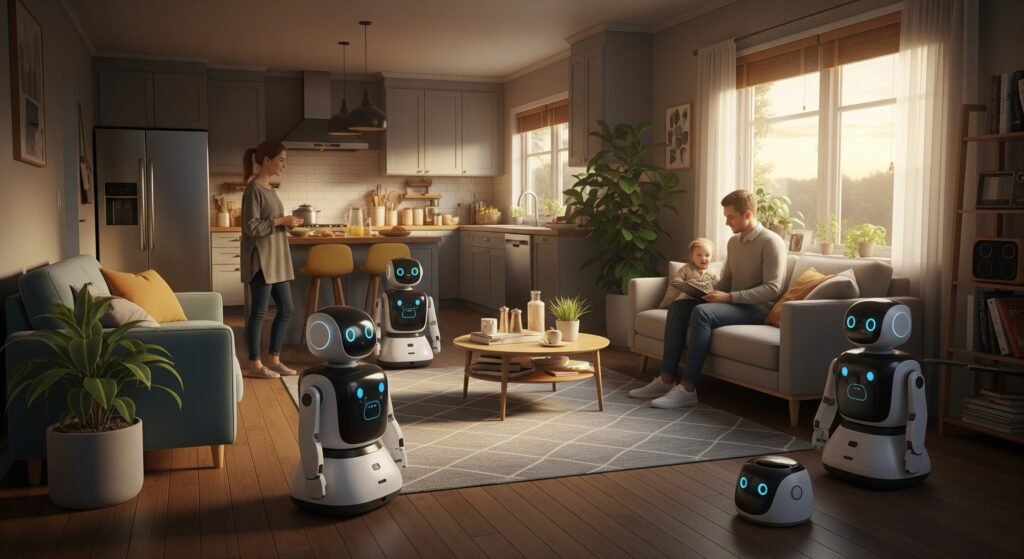
Over time, something changed. Modern home robots stopped moving randomly. They began mapping spaces, remembering layouts, and recognizing obstacles. Instead of reacting blindly, they started adapting. A moved chair was no longer a problem. A new piece of furniture didn’t confuse them for days. The robot simply adjusted and moved on.
The Technology That Made Robots Feel “Smarter”
The biggest shift didn’t come from better motors or cleaner designs. It came from software. Artificial intelligence and machine learning gave robots the ability to interpret their environment instead of just reacting to it.
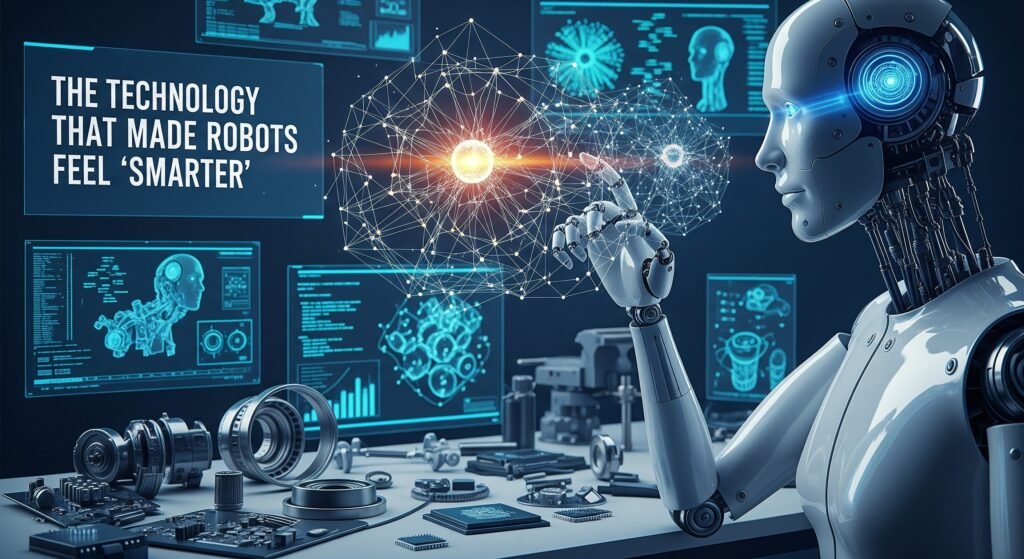
Today’s home robots don’t just follow instructions. They make decisions. They slow down near obstacles, avoid pets, and learn which areas of the house need more frequent attention. It’s not human intelligence, of course, but it’s intelligent enough to feel natural.
Once these robots became part of larger smart home ecosystems, their role expanded even further. They synced with smartphones, followed schedules, and responded to automation rules. Sometimes, you don’t even remember telling the robot to clean — it simply happens when you leave the house.
This is where many people realize that smart home robots are no longer gadgets. They’re systems.
Convenience Is the Real Reason We Let Robots In
Nobody buys a home robot because it looks cool. People buy them because they save time. Time that would otherwise be spent vacuuming, mopping, or repeating the same tasks over and over again.
That saved time adds up. And when technology consistently gives you back hours every month, it becomes very easy to accept it as part of daily life.
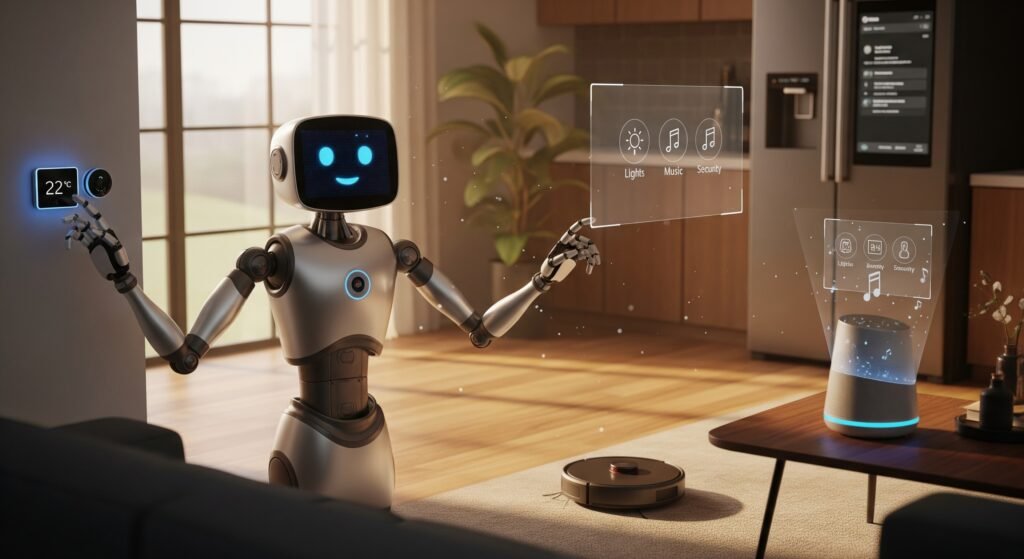
As someone who reviews and researches robots regularly, I’ve noticed that most users don’t care about technical specs after the first week. What they care about is whether the robot quietly does its job without becoming a new problem to manage.
The Side of Home Robots We’re Still Uncomfortable Talking About
Of course, there’s another side to this story. Home robots see your living space. Some of them hear it. They build digital models of your home and send data to servers you’ll never physically see.
That raises uncomfortable questions about privacy, data ownership, and long-term trust. Researchers at MIT Technology Review have pointed out that home robots are shifting from simple appliances to context-aware systems — machines that interpret human environments, not just clean them.
The IEEE has raised similar concerns, especially as robots become more autonomous and more deeply integrated into everyday life. The technology is advancing faster than most people realize, and standards are still catching up.
And yet, adoption continues to grow.
Why People Keep Using Them Anyway
Despite the concerns, people keep welcoming robots into their homes. Not because they fully understand the risks, but because the benefits are immediate and tangible. Clean floors. Automated routines. Less physical strain. Small improvements that quietly improve daily life.
In practice, most users make a trade-off. They accept a certain level of uncertainty in exchange for convenience. It’s not an emotional decision. It’s a practical one.

So Where Do We Go From Here?
Standing here in December 2025, smart home robots no longer feel like the future. They’re already part of our present. They work quietly, often unnoticed, and slowly reshape how we think about household labor and personal space.
The real question isn’t whether robots will become more capable — that part is almost inevitable. The more important question is whether we, as users, stay intentional about how much responsibility and trust we hand over.
If there’s one thing worth remembering, it’s this: the most powerful technologies rarely arrive with fanfare. They slip into our lives, one small task at a time, until we can’t quite remember how things worked without them.
As Thomas Huynh, admin of RoboZone.top
References & Further Reading:
MIT Technology Review — Understanding Home Robotics and Household Automation — https://northwest.education/insights/mit/understanding-home-robotics-and-household-automation/ Northwest Executive Education
IEEE Spectrum — AI Robots: When Will They Be in Our Homes? — https://spectrum.ieee.org/ai-robots IEEE Spectrum
International Federation of Robotics — World Robotics Service Robots — https://ifr.org/wr-service-robots IFR International Federation of Robotics