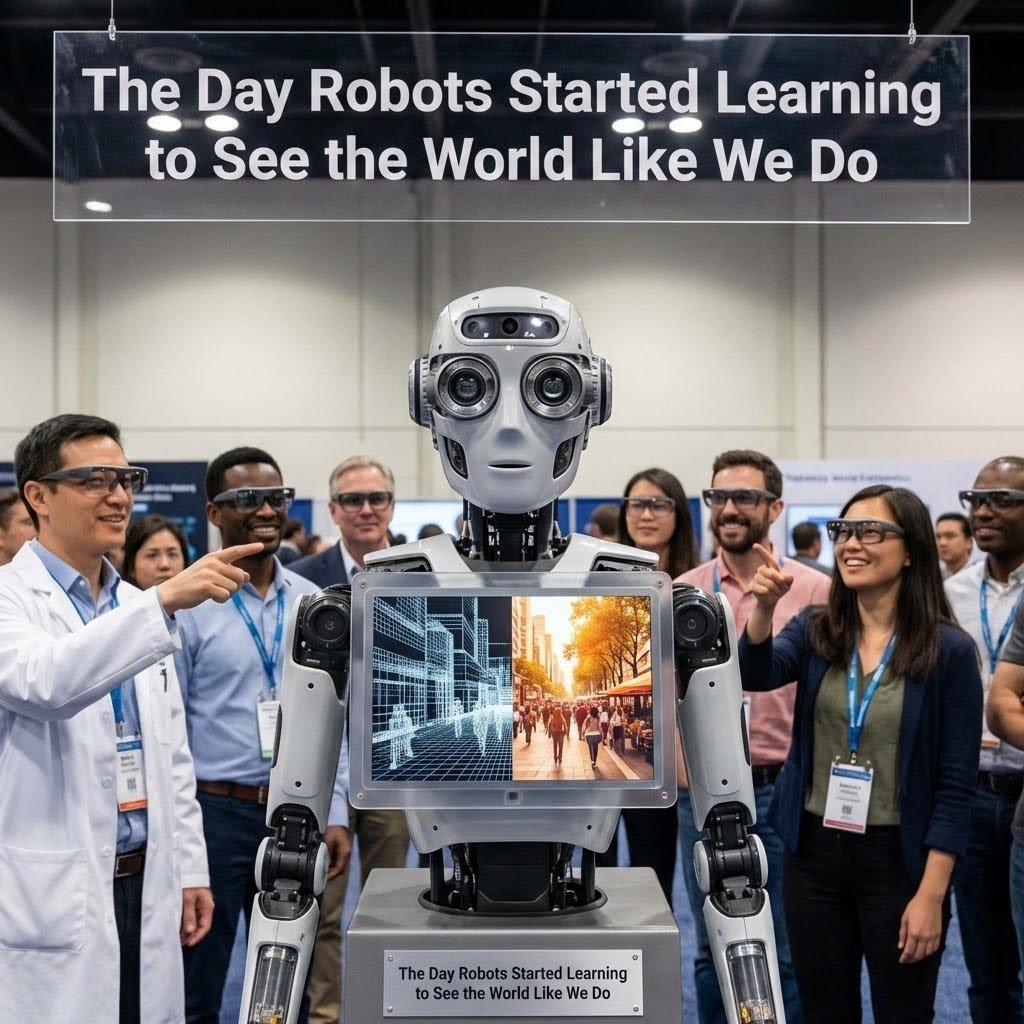
This afternoon, while reviewing several robotics research updates that quietly surfaced over the past few weeks, one theme kept appearing again and again. It wasn’t about faster motors. It wasn’t about stronger robotic arms. And it certainly wasn’t about humanoid robots doing backflips.
Instead, the real story unfolding right now in robotics is something less flashy but far more important.
Robots are finally beginning to see the world in a meaningful way.
For decades, robotic perception was one of the hardest problems in engineering. A robot could move precisely along a preprogrammed path inside a factory, but place that same machine in a living room or a grocery store, and it would be completely lost.
A spilled glass of water?
A backpack lying on the floor?
A chair moved slightly out of place?
To a human, these things barely register as problems. To a robot, they used to be impossible puzzles.
But in the past five years, something remarkable has started happening.
The fusion of artificial intelligence, advanced sensors, and massive datasets has begun to give machines something surprisingly close to visual intuition.
And that shift may prove just as important as the invention of the robot itself.
Why Vision Is the Hardest Problem in Robotics
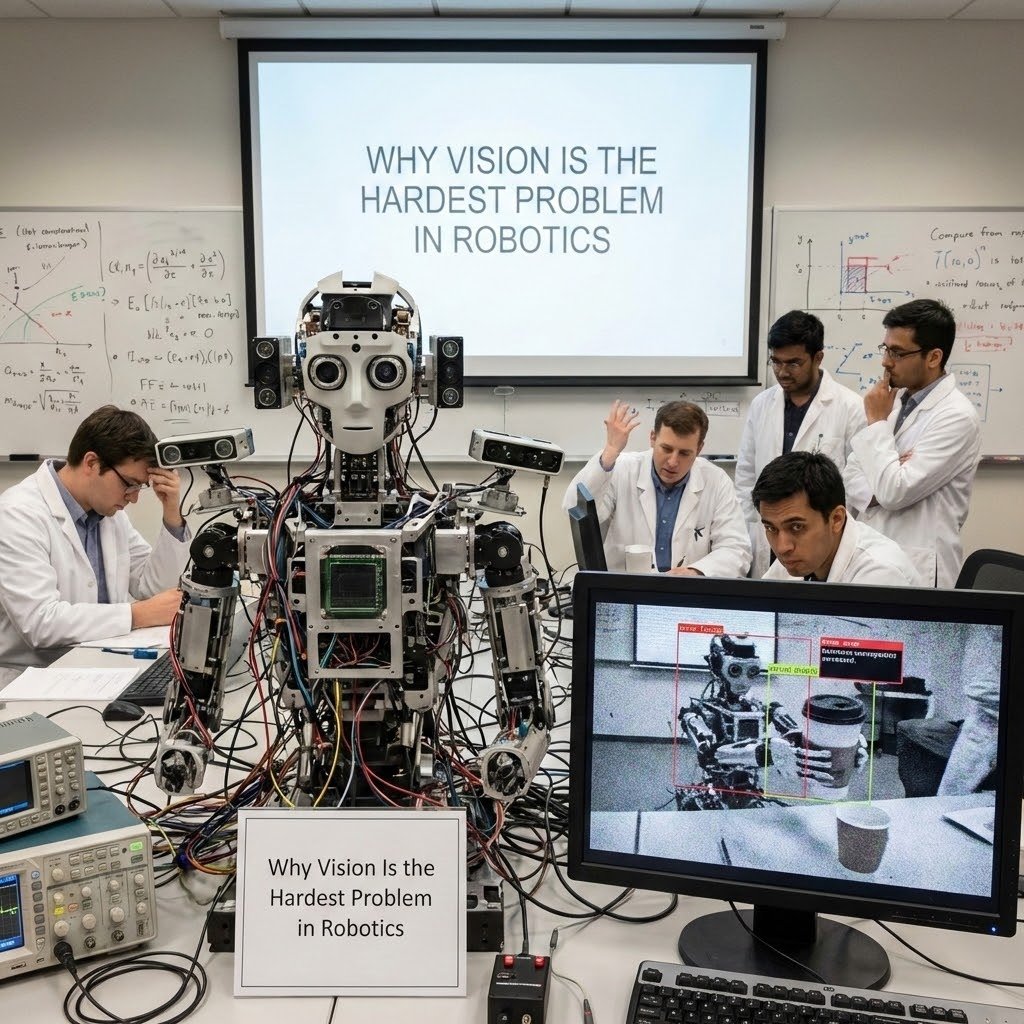
To understand why this breakthrough matters, it helps to think about how humans interact with the world.
Imagine walking into your kitchen.
You instantly recognize the sink, the stove, the refrigerator, and the coffee mug sitting near the counter. You don’t consciously analyze shapes and edges or calculate depth with mathematical formulas. Your brain processes the entire scene almost instantly.
Robots historically couldn’t do this.
Early robotic systems relied on extremely rigid programming. Engineers had to define objects using geometric models. If the environment changed even slightly, the robot would fail.
A classic example comes from early warehouse automation systems. Boxes had to be placed in precise positions with identical orientations. If an item rotated slightly, robotic arms often struggled to grasp it.
This limitation forced engineers to design environments that were optimized for robots rather than for people.
But the world outside factories isn’t so cooperative.
That’s why robotics researchers have spent years trying to solve what is sometimes called the “perception gap.”
How do you give machines the ability to interpret messy real-world environments?
The Deep Learning Breakthrough
The turning point arrived when machine learning researchers began applying neural networks to computer vision.
Deep learning models trained on enormous image datasets could suddenly recognize patterns that traditional algorithms struggled with.
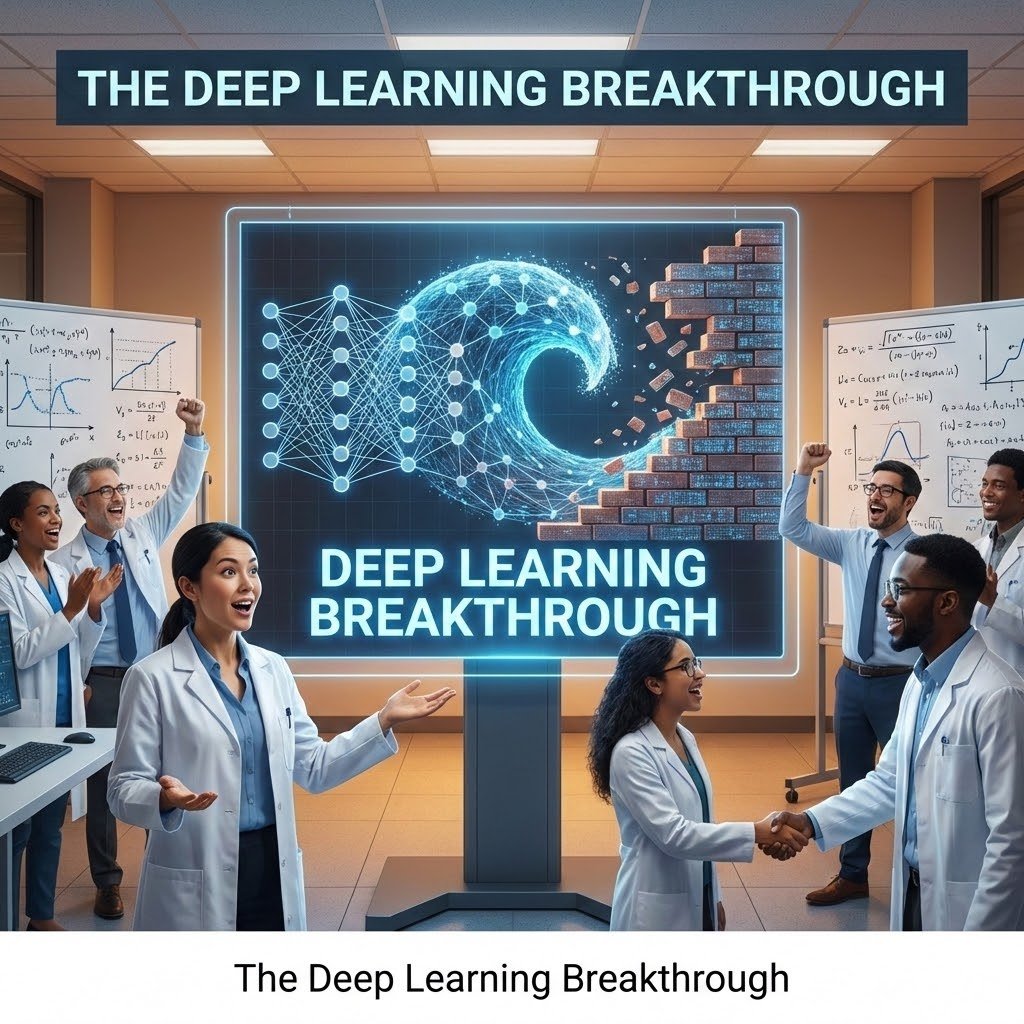
Instead of defining objects with strict mathematical rules, engineers allowed AI systems to learn what objects look like.
Millions of training images taught algorithms how to identify chairs, cups, doors, animals, vehicles, and thousands of other everyday objects.
Research institutions such as Stanford University and Massachusetts Institute of Technology played a crucial role in advancing these systems.
But perhaps the most important factor was computing power.
Training modern vision models requires enormous computational resources, which is why hardware companies like NVIDIA became central players in the robotics revolution.
Their GPU architectures allowed AI researchers to train vision models thousands of times faster than earlier systems.
What emerged from this convergence of software and hardware was something astonishing.
Robots could now interpret scenes rather than simply detect shapes.
From Cameras to Understanding
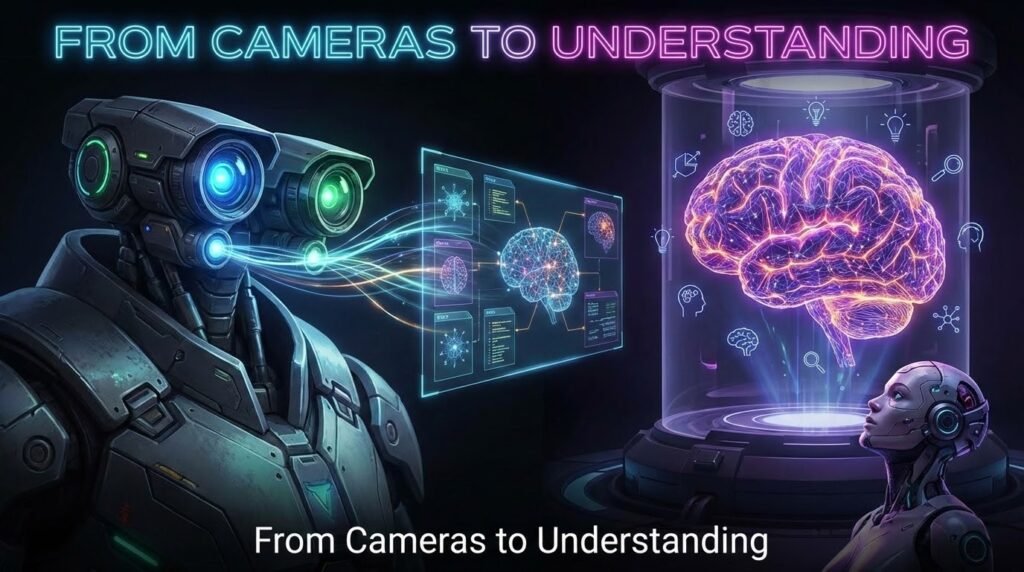
Modern robots rely on an entire suite of sensors to understand their surroundings.
Standard cameras provide visual data. Depth sensors estimate distances. Lidar systems generate three-dimensional maps of environments.
When these inputs are combined with AI models, robots can begin building internal representations of the world around them.
A delivery robot navigating a sidewalk, for example, must distinguish between pedestrians, bicycles, curbs, pets, and street signs.
Each object carries different behavioral implications.
A pedestrian may suddenly change direction. A dog may run unpredictably. A parked car will remain stationary.
Teaching robots to interpret these behaviors is one of the biggest challenges in modern robotics.
Companies like Waymo have invested billions of dollars solving similar problems in the autonomous driving industry.
Although self-driving cars receive most of the attention, many of the underlying perception technologies are now migrating into robotics.
A New Generation of Smart Robots
We’re beginning to see the results of these technological advances in the latest generation of robotic systems.
Warehouse robots are becoming more adaptable. Instead of relying on fixed layouts, they can dynamically navigate changing environments.
Autonomous delivery robots are appearing on college campuses and urban sidewalks.
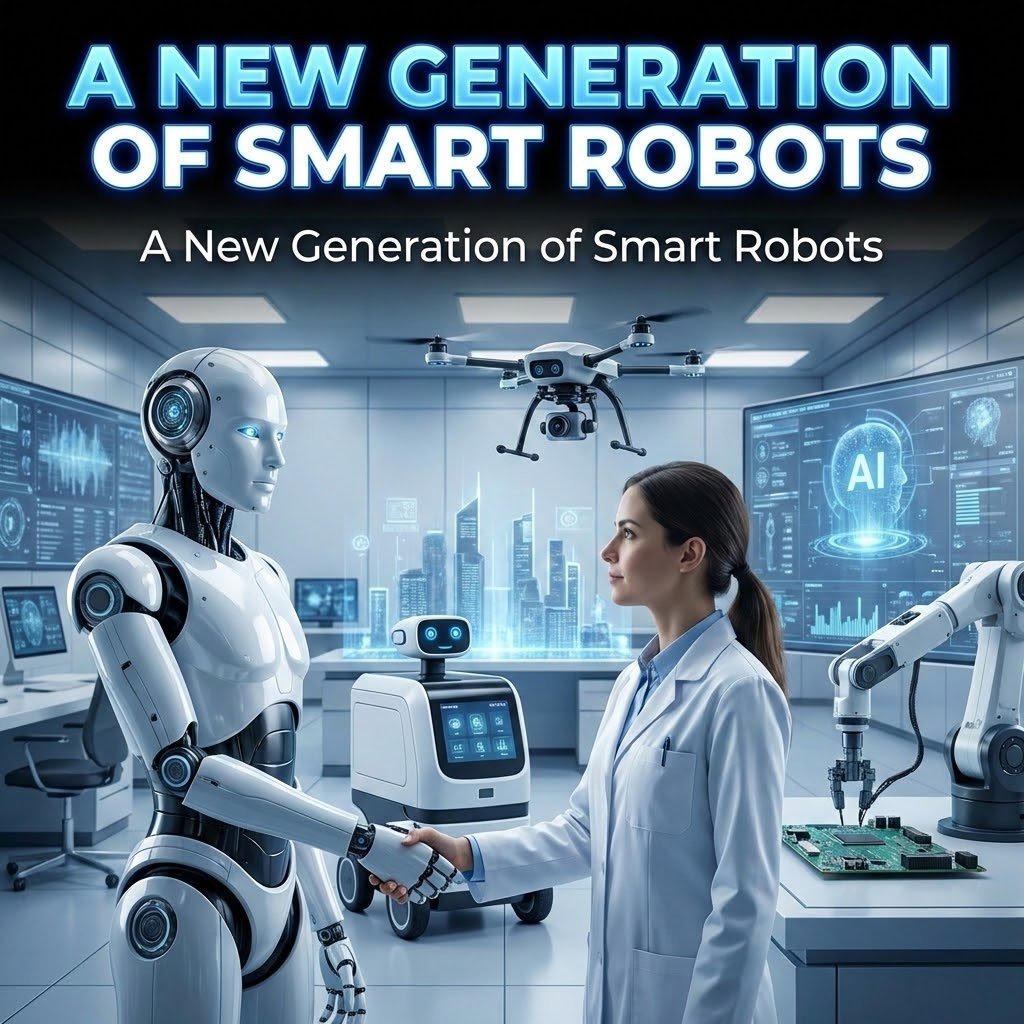
Humanoid robots are beginning to manipulate objects that previously required human dexterity.
Companies like Boston Dynamics have demonstrated robots capable of navigating complex environments while maintaining balance and spatial awareness.
Meanwhile, startups such as Agility Robotics are pushing humanoid robots into logistics environments where perception and mobility must work together seamlessly.
[this image – advanced humanoid warehouse robot using vision sensors to identify and pick packages on a shelf, realistic robotics engineering scene]
The common thread across all these systems is perception.
Without vision, robots are blind.
With vision, they begin to understand.
The Role of Simulation
Another fascinating development in robotics is the use of simulated environments to train machines.
Training robots in the real world can be slow and expensive. Physical hardware breaks. Experiments require supervision. Progress happens gradually.
Simulation changes the equation.
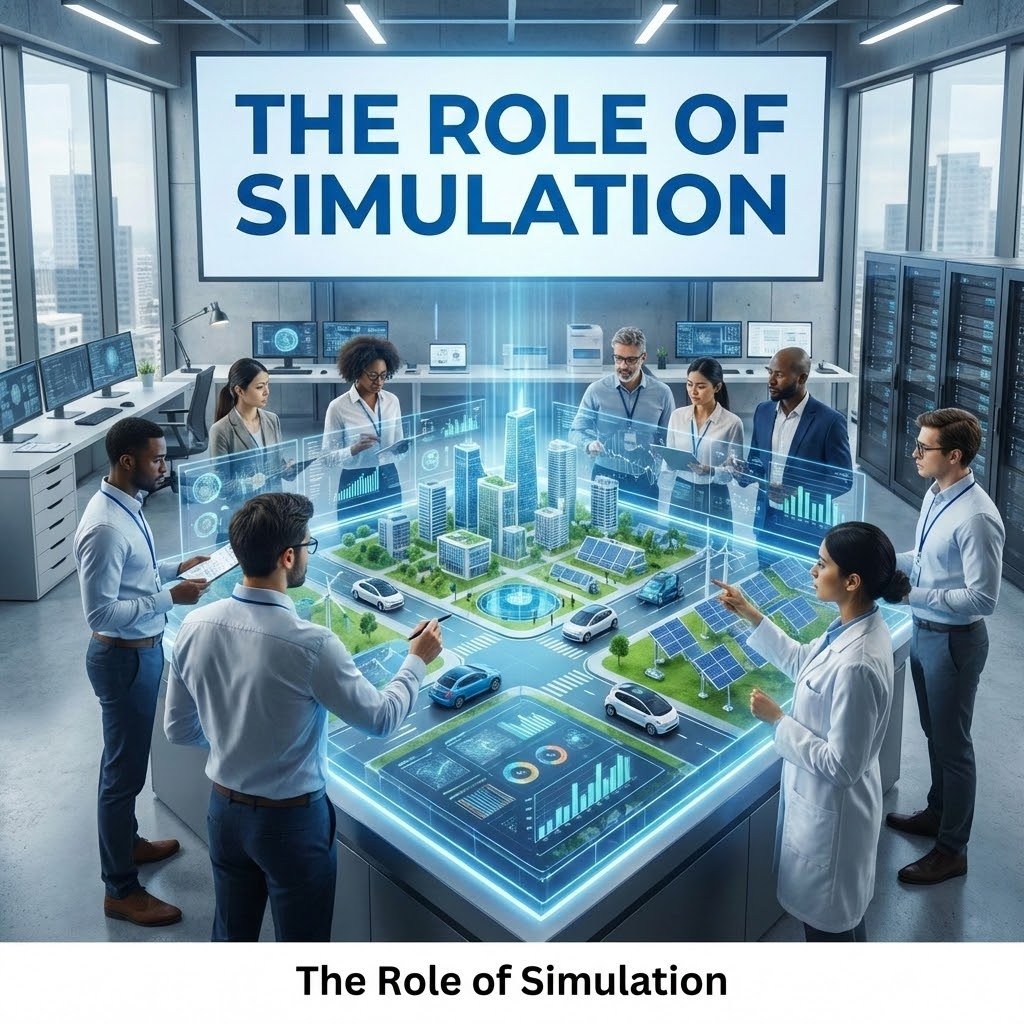
In digital environments, robots can run thousands of experiments per hour. They can make mistakes without causing damage. They can learn from scenarios that would be dangerous or impractical in reality.
Companies like NVIDIA have developed advanced simulation platforms where virtual robots learn tasks before those skills are transferred to real machines.
This technique, known as sim-to-real transfer, has become a major focus in robotics research.
If perfected, it could dramatically accelerate the development of intelligent robots.
Why This Matters for Everyday Life
At this point you might wonder: why does robot vision matter to ordinary people?
The answer lies in the long-term applications.
A robot that understands visual scenes can do far more than follow predetermined paths.
It can help elderly residents move safely around their homes.
It can assist warehouse workers by identifying misplaced items.
It can monitor agricultural crops and detect early signs of disease.
It can inspect infrastructure, pipelines, and power grids.
In each case, vision transforms robots from rigid machines into adaptable tools.
And that adaptability is what makes robotics economically viable across many industries.

The Economic Impact of Perception AI
The robotics market is already expanding rapidly.
According to data from the International Federation of Robotics, global installations of industrial robots have grown consistently over the past decade, with hundreds of thousands of new units deployed each year.
But perception AI could push that growth even further.
Once robots can operate reliably in unstructured environments, entirely new markets open up.
Construction.
Healthcare.
Agriculture.
Retail.
Home services.
Each of these industries contains tasks that are repetitive, dangerous, or physically demanding—exactly the kinds of jobs robots are best suited to perform.
A Glimpse of the Near Future
Over the next three to five years, robotics researchers expect perception systems to become dramatically more capable.
Robots will recognize more objects. They will interpret more complex scenes. They will respond more intelligently to human behavior.
The combination of vision, mobility, and artificial intelligence will gradually produce machines that feel less like tools and more like assistants.
Of course, we are still early in this journey.
Even the most advanced robots today struggle with tasks that children perform effortlessly.
But progress is accelerating.
And once perception technology reaches a certain threshold of reliability, the ripple effects across industries could be enormous.
So What Should We Pay Attention To?
If you want to understand the future of robotics, don’t just watch the machines themselves.
Watch the software.
Watch the AI models.
Watch the companies developing perception systems that allow robots to interpret the world.
Because once machines can see clearly, everything else becomes possible.
And when that happens, the robots of the future may not arrive with dramatic fanfare.
They may simply appear quietly in workplaces, warehouses, hospitals, and homes—performing tasks that once required human eyes and human judgment.
That’s when we’ll know the real robotics revolution has begun.
References: technologyreview.com, spectrum.ieee.org/robotics, ifr.org, ai.stanford.edu
Thomas Huynh – Admin of RoboZone.top