December 22, 2025.
With Christmas just days away, many households are preparing decorations, gatherings, and year-end cleanups. Ironically, this is exactly the kind of domestic chaos that roboticists have been studying for decades — cluttered spaces, unpredictable human behavior, and tasks that change moment by moment.
This morning, while reviewing research papers and industry reports for RoboZone.top, I realized something important.
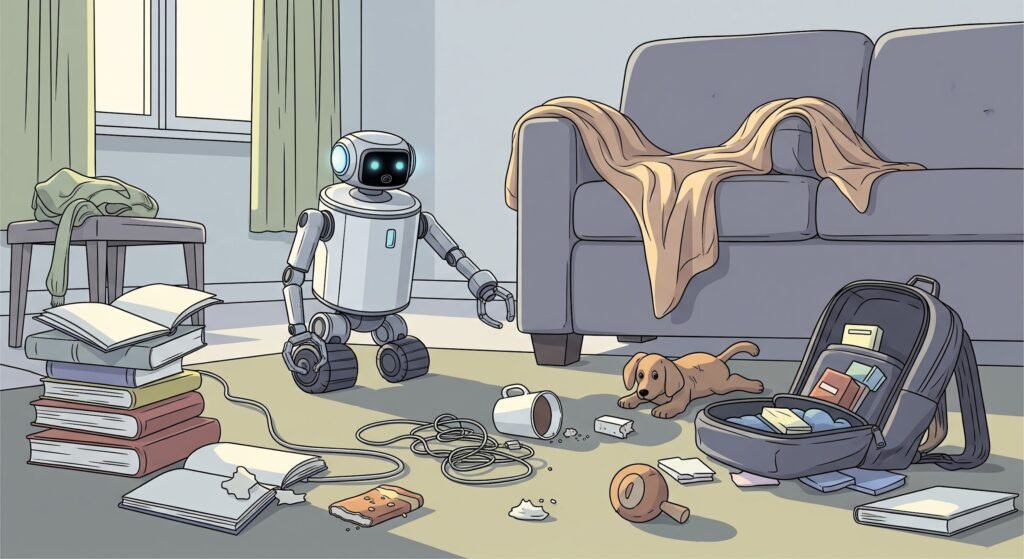
Home robotics is not failing because the technology is weak.
It’s progressing slowly because homes are one of the hardest environments robots can possibly enter.
To understand why, we need to trace the path from academic research to real-world deployment — step by step.
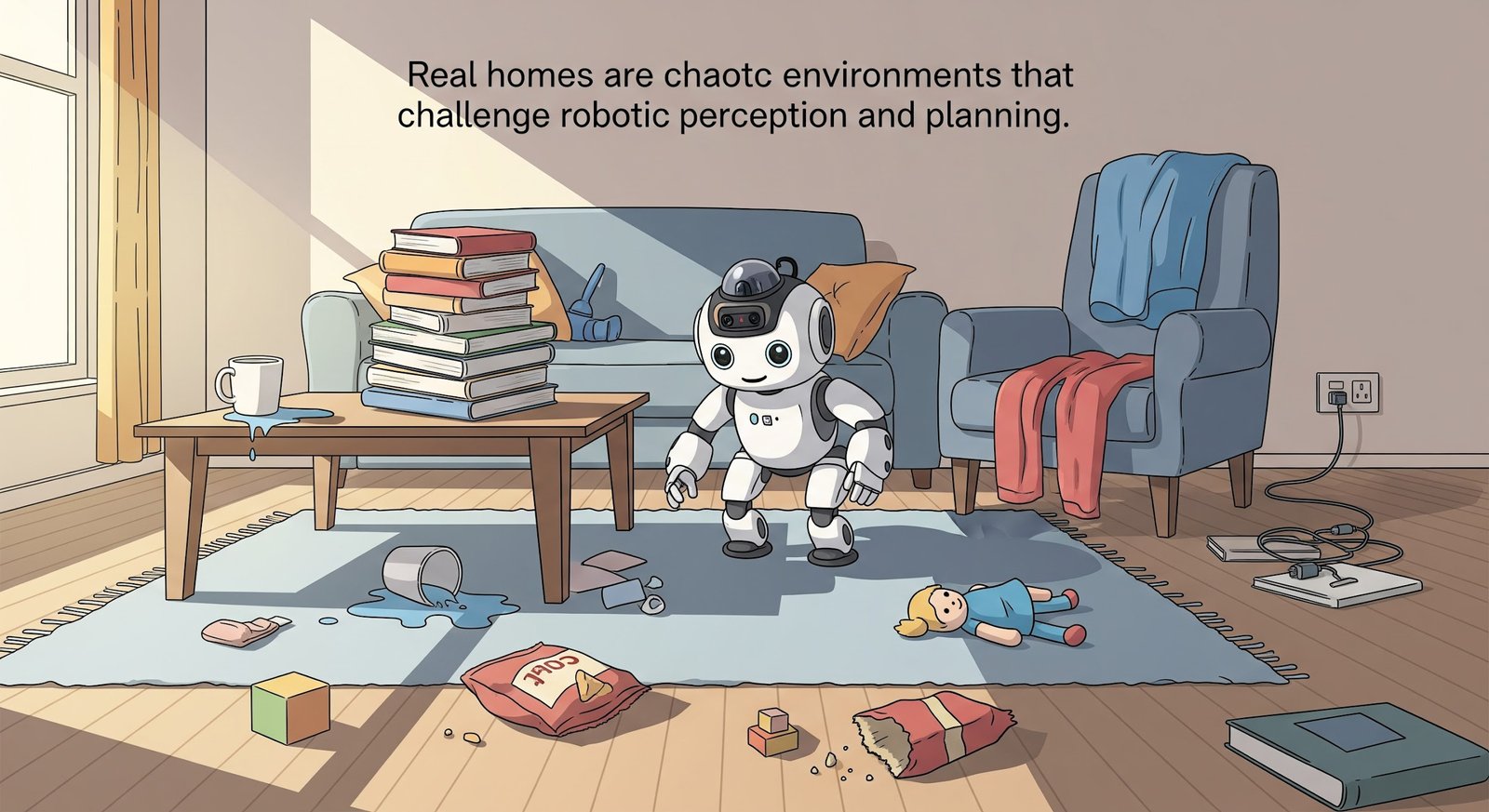
Why Home Environments Are a Nightmare for Robots
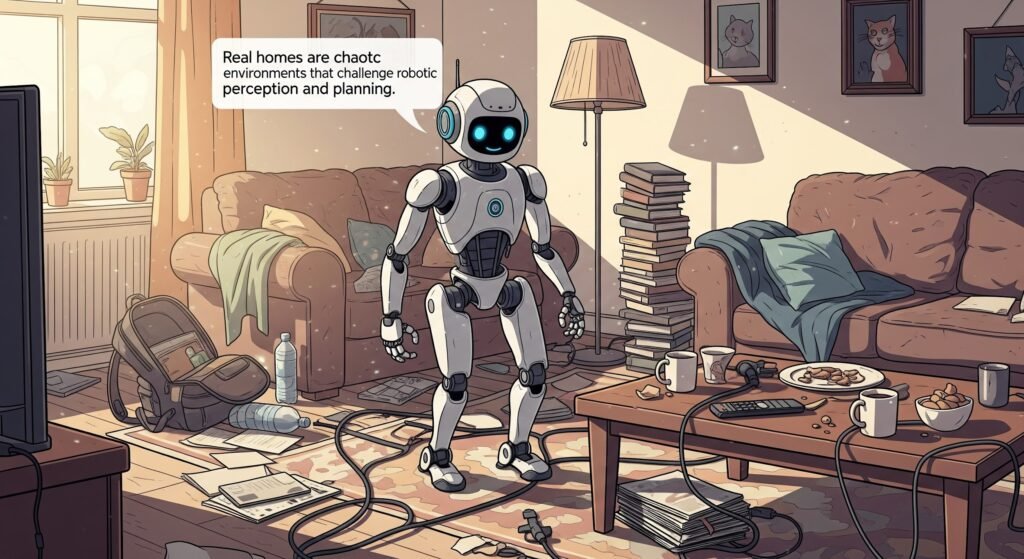
In academic robotics, environments are usually controlled. Floors are flat. Objects are labeled. Lighting is stable. Tasks are repetitive.
Homes are the opposite.
MIT CSAIL published several studies showing that even simple household tasks — such as picking objects off a table — become exponentially harder when object positions change slightly or when human presence introduces uncertainty.
A robot vacuum can map a room once and operate for years.
A robot that folds laundry must adapt every single time.
This explains why consumer robots appear “dumb” compared to their AI hype. They are optimized for survival, not brilliance.
Academic Research: Where the Real Intelligence Is Born
Stanford’s Human-Centered AI Institute has demonstrated that human trust in robots increases not with intelligence, but with predictability.
In one experiment, participants preferred a slower robot that behaved consistently over a faster robot that occasionally made unexpected moves.
This insight directly impacts product design.
It explains why most successful home robots today deliberately limit autonomy. They avoid surprise.
Meanwhile, Oxford Robotics Institute focuses on manipulation research — teaching robots how to grasp objects of unknown shape using tactile feedback. This research is critical for future household robots, but still years away from mass deployment.
These labs are not building products. They are building capabilities.
From Research to Reality: Why Scaling Is So Difficult
Big Tech enters the picture when research becomes reliable enough to scale.
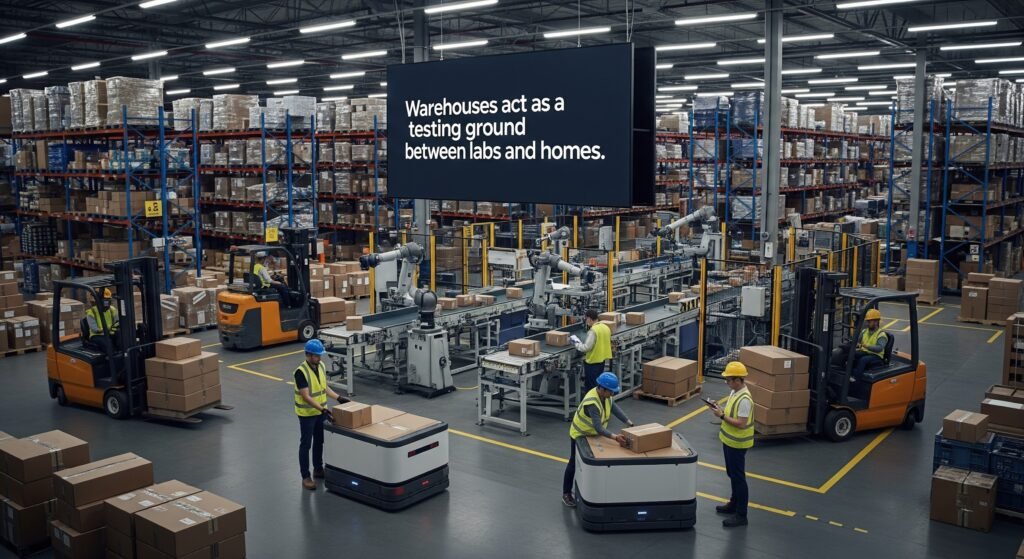
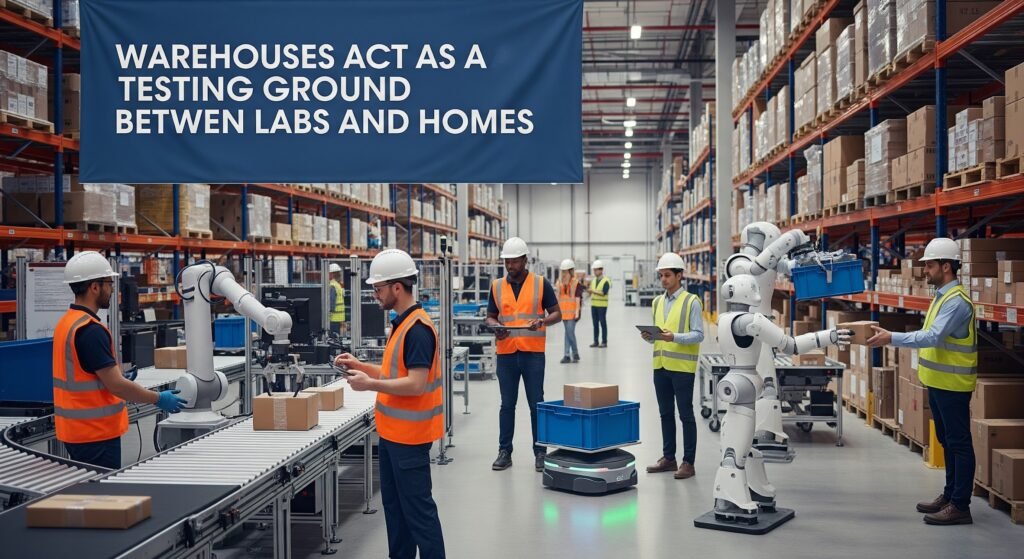
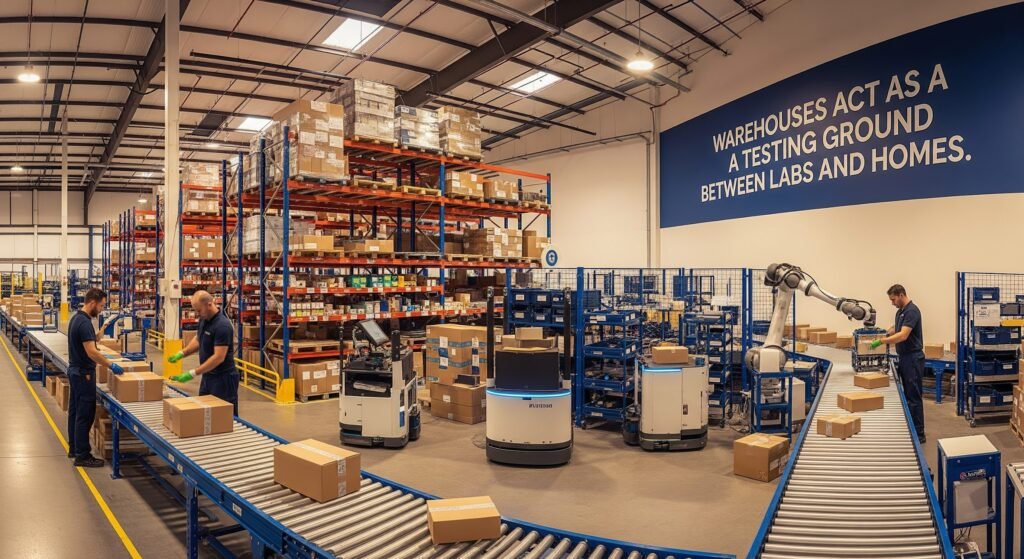
Amazon Robotics did not start with home robots. It started with warehouses — environments that sit halfway between labs and homes.
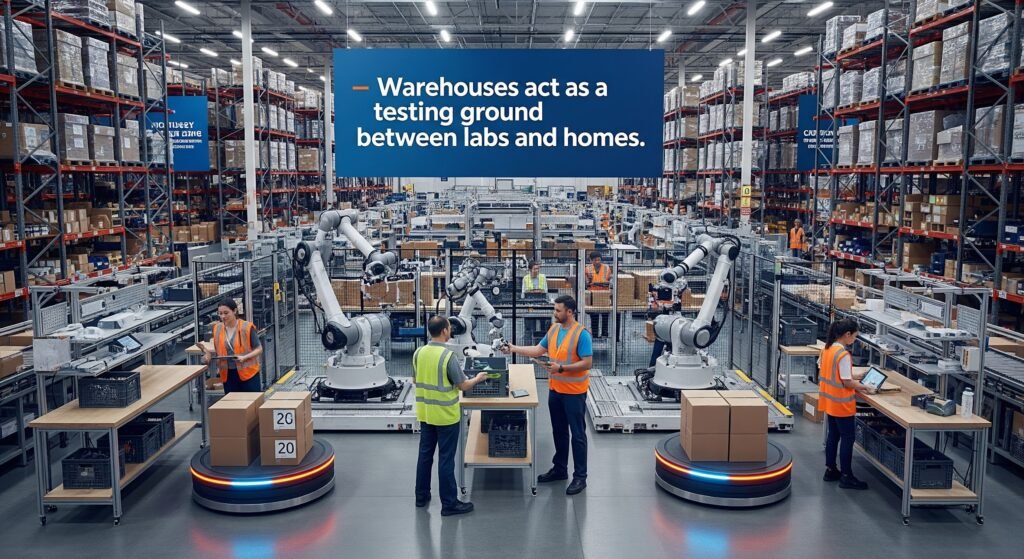
Warehouses are messy, but rule-based. Humans move predictably. Objects follow logistics patterns.
By deploying over 750,000 robots in fulfillment centers, Amazon quietly solved problems in navigation, coordination, and human-robot safety that home robotics desperately needs.
This is why Amazon’s consumer robotics efforts matter more than flashy demos.
They already operate at scale.
The Tesla Question: Are Humanoids a Shortcut or a Distraction?
Tesla’s humanoid ambitions raise an important academic debate.
From a pure engineering standpoint, humanoids are inefficient. Legs consume energy. Balance introduces risk. Complexity increases failure points.
Research from ETH Zurich and Oxford suggests that wheeled, task-specific robots outperform humanoids in domestic environments by orders of magnitude in efficiency.
So why pursue humanoids at all?
Because humanoids reduce cognitive friction. Humans instinctively understand them.
In the long term, once battery density, control systems, and AI planning mature, humanoids may make sense — not because they are optimal, but because they fit human spaces emotionally.
This distinction matters.
Economics of Home Robotics: Why Adoption Is Slower Than Expected
PwC and McKinsey both highlight that household robotics adoption follows income inequality curves.
Early adopters are not families who need robots — they are families who can afford experimentation.
This explains why cleaning robots succeed first. They save time, not livelihoods.
A robot that replaces emotional labor or caregiving enters ethical territory. Regulation slows everything down.
From an economic standpoint, robots must outperform human labor in cost, reliability, and social acceptance — simultaneously.
That bar is extremely high.
What Practical Applications Actually Make Sense Right Now
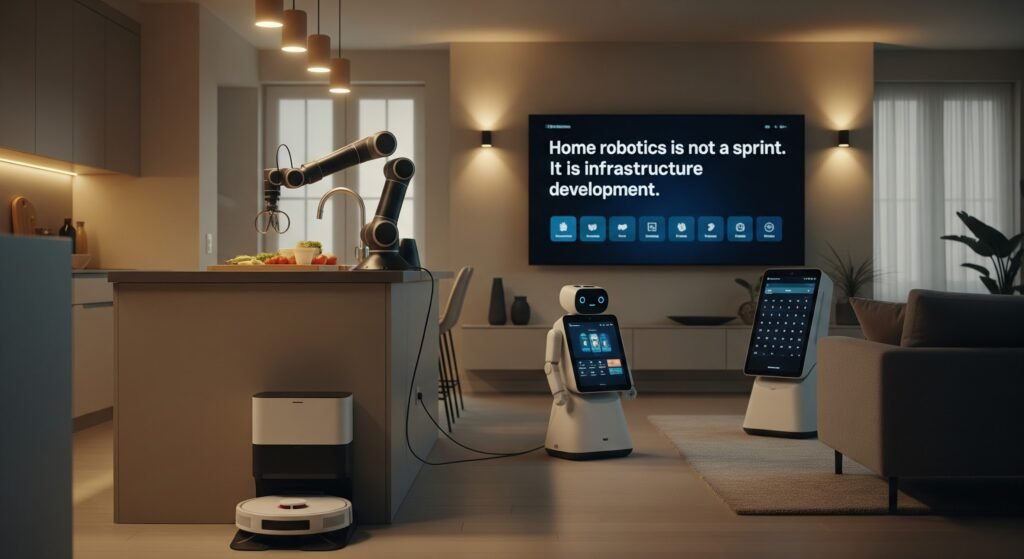
Based on current research and deployment data, realistic near-term applications include:
- Autonomous cleaning and maintenance
- Security and environmental monitoring
- Assistive robotics for aging populations (limited autonomy)
More complex tasks — cooking, caregiving, full household management — remain research challenges, not product opportunities.
Over the next 3–5 years, we are more likely to see robots that augment human routines rather than replace them.
For example, a home robot that:
Cleans floors
Carries heavy items
Provides ambient lighting
Plays music or voice reminders
These hybrid roles reduce expectations while increasing usefulness.
So Where Is All This Headed?
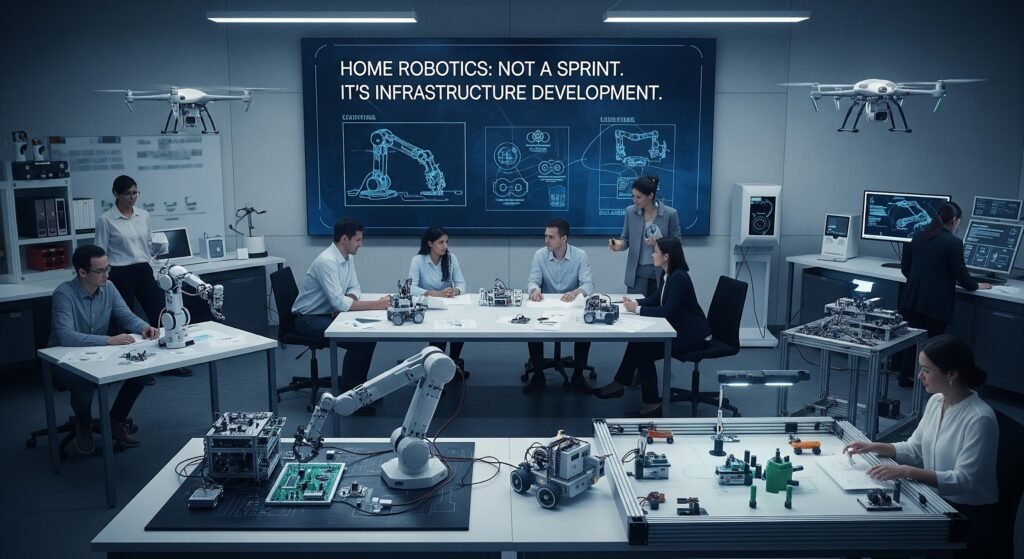
Home robotics is not a sprint. It is infrastructure development.
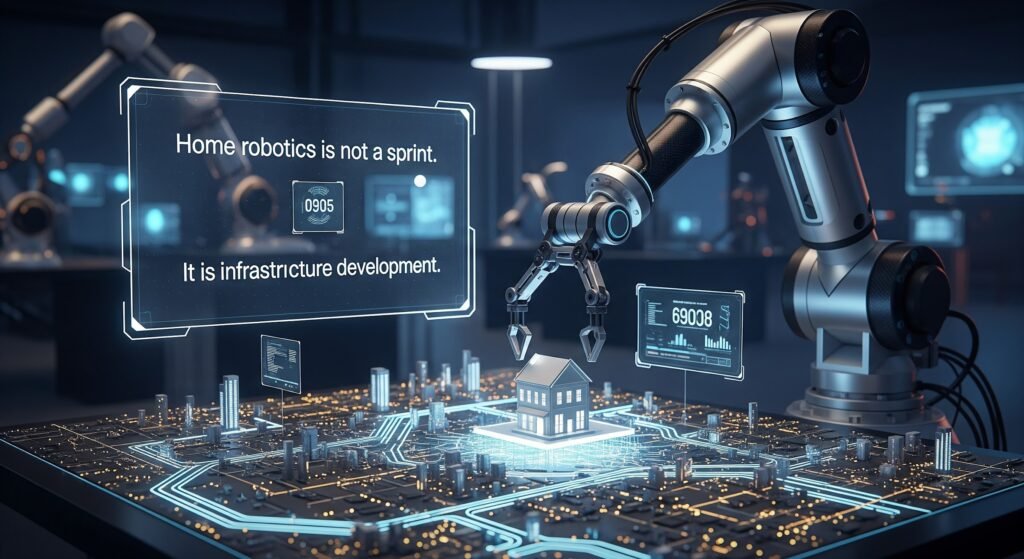
Just as electricity and the internet took decades to mature invisibly before reshaping daily life, robotics is laying foundations quietly.
The winners will not be the most impressive demos, but the systems that integrate naturally into human routines without demanding attention.
And that process is happening right now — slowly, deliberately, and largely out of the spotlight.
References & Further Reading
MIT CSAIL — Robotic Manipulation and Perception Research
https://www.csail.mit.edu/research/robotics
Stanford HAI — Human Trust and Autonomous Systems
https://hai.stanford.edu/research
Oxford Robotics Institute — Household Manipulation Studies
https://ori.ox.ac.uk/research/
PwC — Global Robotics Market Outlook
https://www.pwc.com/gx/en/industries/technology/robotics.html
McKinsey — Automation and the Future of Domestic Work
https://www.mckinsey.com/featured-insights/future-of-work
Thomas Huynh – Admin of RoboZone.top